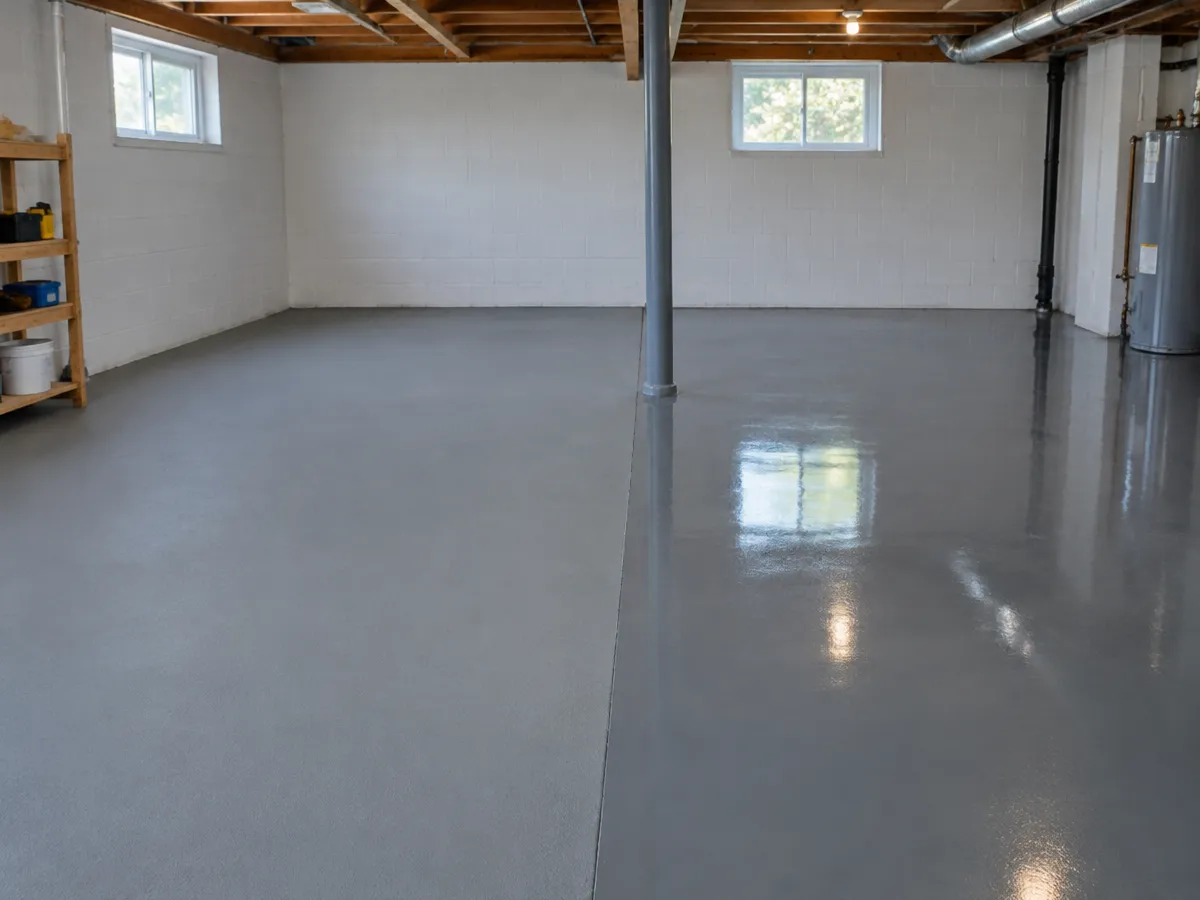
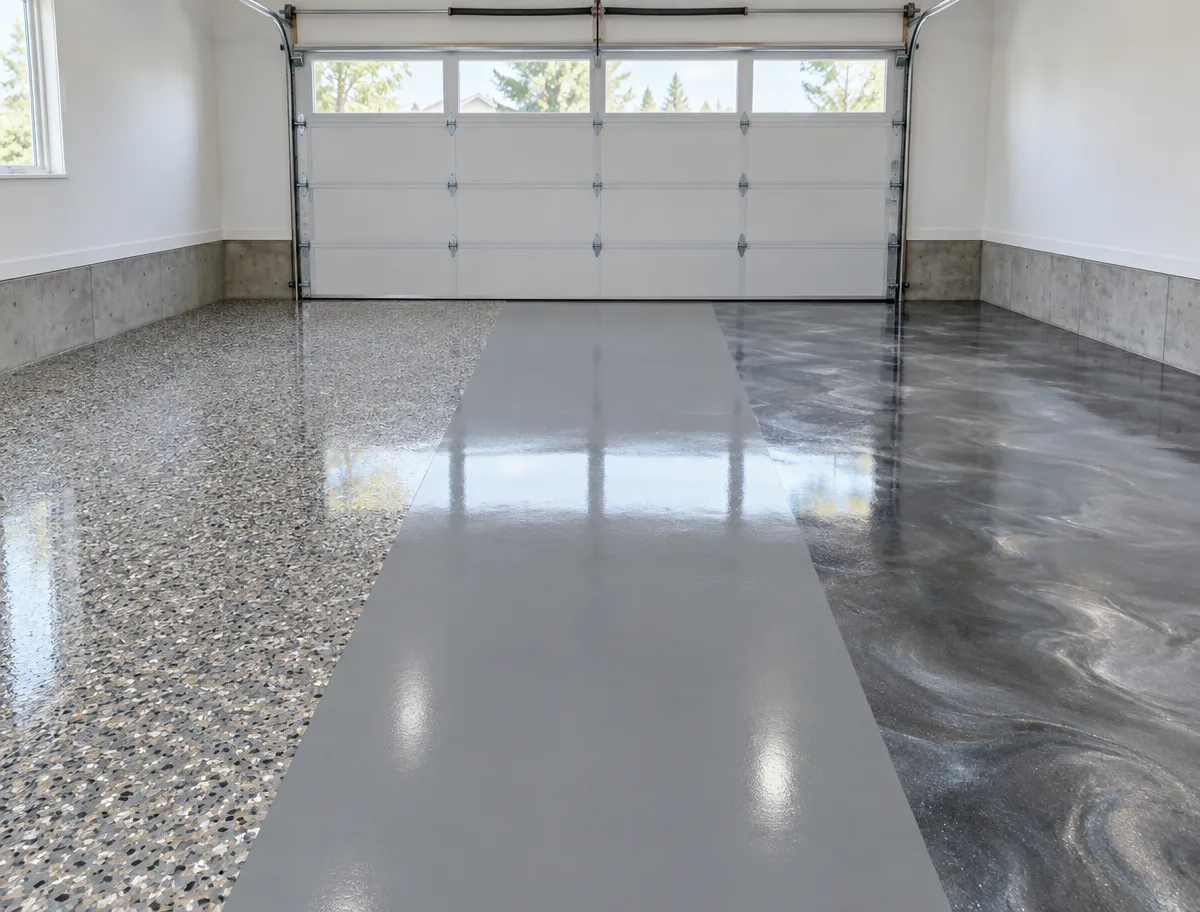
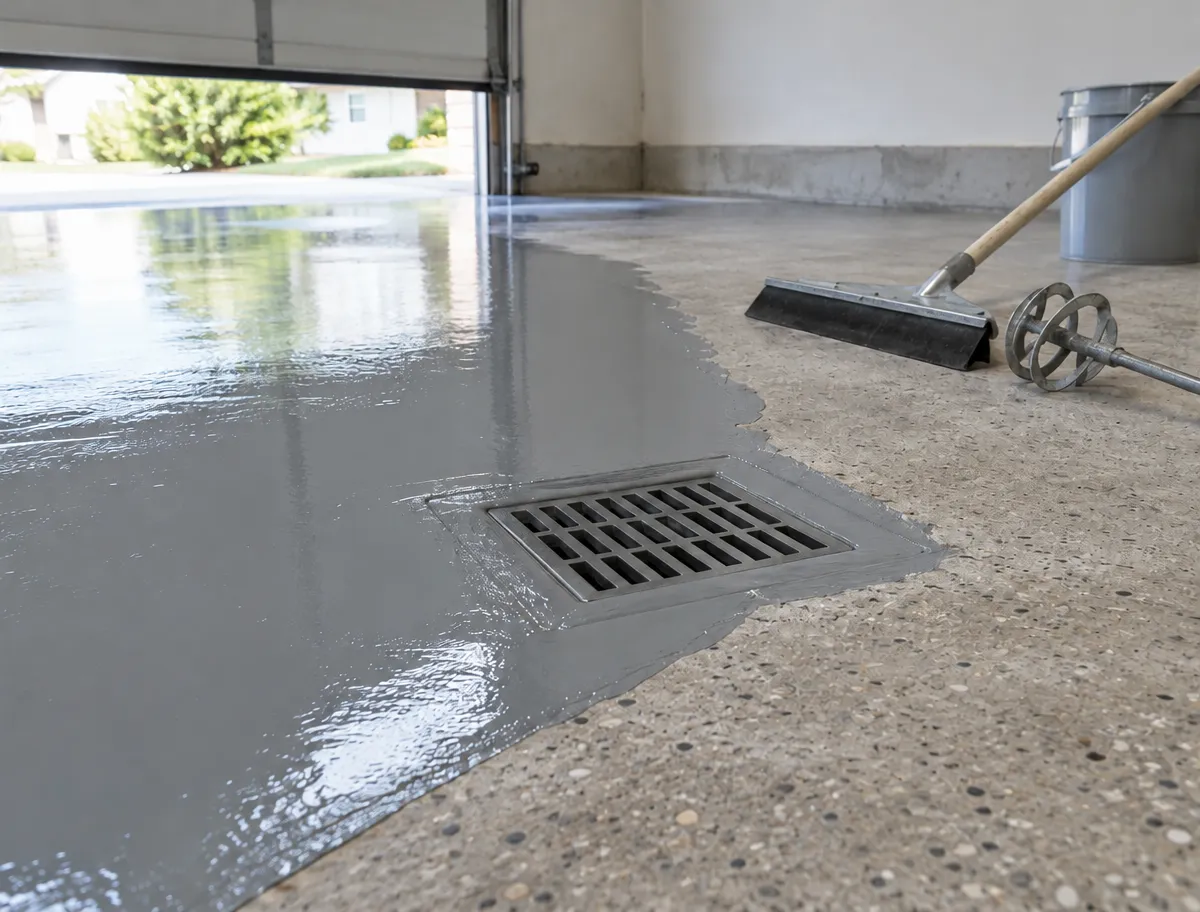
Quick Answer: To clean an epoxy garage floor, dust mop or sweep with a soft-bristle broom a few times a week, then wet mop with a pH-neutral cleaner diluted in warm water whenever the floor looks dull or dirty. Blot oil and other spills right away and treat stains with a cleaner labeled safe for coated floors. In winter, squeegee out salty slush, sweep up dried salt, and mop with a pH-neutral cleaner. Skip acidic or citrus cleaners, abrasive pads, and wax, and check your coating manufacturer’s care guidance before trying anything new.
Cleaning an epoxy garage floor calls for a soft-bristle broom or dust mop for routine dust removal and a pH-neutral cleaner mixed with water for deeper washes. Homeowners should avoid harsh chemicals that can damage the coating. Specialty Concrete Coatings LLC installs durable polyurea systems that resist stains and make maintenance simpler, and the routine below helps any coated garage floor keep its shine.
What Tools Do You Need to Start?
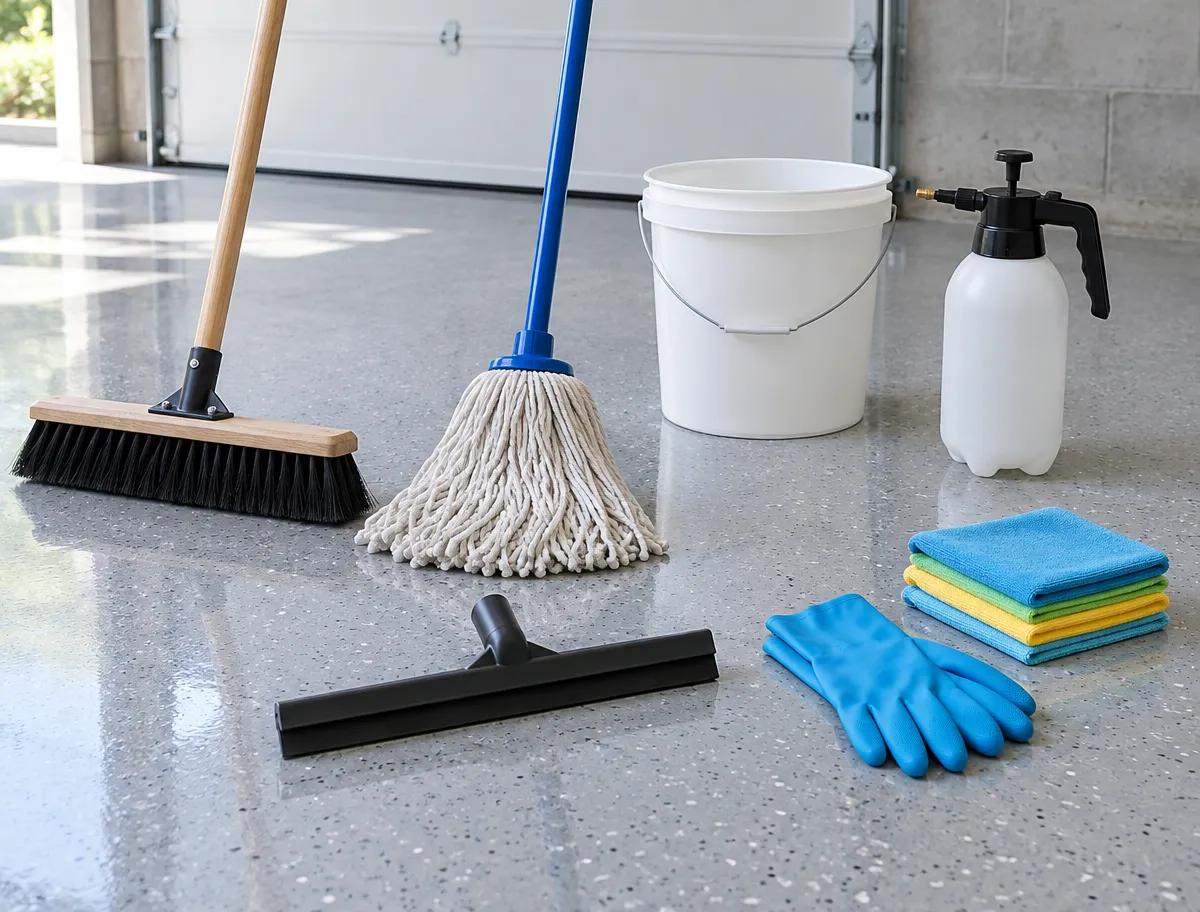
Proper epoxy garage floor maintenance begins with the right cleaning tools. Using the wrong equipment can damage the coating. A small upfront investment in proper supplies helps preserve the floor’s shine and durability for years.
What Is the Most Important Tool for Daily Epoxy Floor Care?
A dust mop or foam mop handles the vast majority of routine cleaning needs. Homeowners typically use these tools whenever dust bunnies appear or spills occur. This simple step keeps abrasive grit from scratching the surface over time.
What Cleaning Solution Is Safe for Epoxy Coatings?
A pH-neutral cleaner is the safest choice for wet cleaning. Harsh chemicals, acidic solutions, and abrasive cleaners can degrade the epoxy finish. The National Terrazzo & Mosaic Association’s care guide for terrazzo and resinous floors likewise recommends only neutral pH materials for mopping and warns against household chemicals such as bleach, vinegar, and ammonia. Dilute the neutral cleaner in a bucket according to the label instructions. If you want a lower-toxicity product, EPA’s Safer Choice product search lists certified cleaners; just confirm the one you pick is pH-neutral.
The complete toolkit for learning how to clean epoxy garage floor surfaces includes these items:
- Soft-bristle push broom: Sweeps up loose dirt, gravel, and leaves tracked in from outside
- Dust mop or foam mop: Captures fine dust and handles routine dry cleaning
- pH-neutral cleaner: Removes grime without attacking the coating’s chemical structure
- Paper towels or cloths: Pick up spilled liquids immediately before they pool or stain
- Bucket: Dilutes the cleaning solution to the proper concentration
- Floor squeegee: Pushes winter slush and rinse water out of the garage
Specialty Concrete Coatings LLC recommends keeping these tools accessible in the garage. Fast spill response helps prevent staining. Regular dust mopping removes the abrasive particles that dull the floor’s gloss. The company’s polyurea and polyaspartic systems resist chemicals and wear, and proper tool selection helps you get the most out of that built-in durability.
How Do You Perform Routine Daily and Weekly Cleaning?
Routine cleaning of an epoxy garage floor requires minimal effort. A quick sweep or dust mop session removes loose debris and preserves the coating’s shine.
Homeowners who skip this simple step risk long-term wear. Repeatedly walking or driving over dirt and gritty debris can eventually scratch the top coat and dull the surface. The fix takes only minutes.
What Tools Are Needed for Daily Epoxy Floor Maintenance?
A dust mop, push broom, or shop vac handles the vast majority of epoxy garage floor maintenance needs. Dust mopping or broom sweeping takes care of most cleaning requirements. Busy commercial spaces often do this daily, while homeowners typically clean when dust bunnies appear or spills happen.
Follow these steps for routine care:
- Remove loose debris with a dust mop, push broom, or shop vac to expose the entire floor surface.
- Inspect for gritty particles tracked in from driveways or sidewalks.
- Spot-clean any visible spills immediately with a damp foam mop and a pH-neutral cleaner diluted in water.
How Often Should an Epoxy Garage Floor Be Swept?
Frequency depends on foot traffic and vehicle use. A garage that sees daily car parking and weekend projects accumulates grit faster than a storage-only space. The key indicator is visible debris. When dust, sand, or road salt appears, sweeping keeps that material from grinding into the clear coat underfoot. A shop vac works well for pulling fine particles from textured chip surfaces. For a quick refresh between deeper cleanings, a foam or sponge mop with diluted pH-neutral cleaner restores luster without leaving residue. Our overview of key maintenance considerations for specialty concrete surfaces covers the bigger picture of caring for coated concrete.
How Do You Deep Clean an Epoxy Garage Floor?
Plan a deep clean every few months, and more often in winter or in a garage used as a workshop. A deep clean removes the film of tire residue, dust, and dried spills that daily sweeping leaves behind:
- Clear the floor. Move vehicles, bins, and mats so you can reach every corner.
- Dry clean first. Sweep or vacuum thoroughly so grit does not turn into an abrasive slurry when it gets wet.
- Treat stains. Pre-treat oil, rust, or tire marks using the methods in the stain table below.
- Mop with a pH-neutral cleaner. Use warm water and a soft mop or soft-bristle deck brush, working in sections.
- Rinse lightly and squeegee. Go over the floor with clean water, then squeegee it out so no cleaner residue dries into a haze.
- Let it dry. Allow the floor to dry fully before parking vehicles again.
Avoid hosing oily wash water out the door. California DTSC’s floor cleanup guide for auto shops and garages warns that hosing down a work area can send contaminated water to storm drains, and recommends mopping up oil first.
📞 Want a Garage Floor That Is Easier to Clean? Specialty Concrete Coatings installs stain-resistant polyurea and polyaspartic floor systems across Greater Pittsburgh and NW Pennsylvania. Request a free garage floor coating quote and find out what your floor needs.
How Do You Remove Oil, Rust, and Other Stains?
Removing oil and rust stains from an epoxy garage floor requires prompt action and the correct cleaning agents. Specialty Concrete Coatings LLC recommends techniques that protect the coating while lifting stubborn discoloration. Use this table as a quick reference:
| Stain | What to use | How to clean it |
|---|---|---|
| Oil and grease | Paper towels, a degreaser labeled safe for coated floors, or a baking soda paste | Blot right away, apply the cleaner, let it sit 5 to 10 minutes, scrub gently with a soft brush, and rinse |
| Rust | A rust remover labeled safe for epoxy and polyaspartic coatings | Follow the label’s dwell time, scrub gently, and rinse completely so no residue is left |
| Tire marks | pH-neutral cleaner or a degreaser labeled safe for coated floors | Let the cleaner sit briefly, then scrub with a soft-bristle brush or non-abrasive pad and rinse |
| Salt film | pH-neutral cleaner in warm water | Sweep up dry salt, mop in sections, change the rinse water often, and let the floor dry |
What Is the Safest Method for Oil Stain Removal?
Oil spills demand quick attention before they have a chance to stain. A pH-neutral degreaser formulated for coated floors breaks down petroleum residue without dulling the finish. For fresh spills, homeowners can also use a paste of baking soda and water. UGA Extension’s guides to removing oil stains and removing automotive grease stains cover methods for hard floors and other surfaces, with safety cautions for each.
How to clean epoxy garage floor surfaces with oil stains follows a simple sequence:
- Blot excess oil with paper towels or absorbent cloths immediately.
- Apply a dedicated degreaser or baking soda paste directly to the stain.
- Let the solution sit for 5 to 10 minutes to draw out the oil.
- Scrub gently with a soft-bristle brush or non-abrasive pad.
- Rinse the area with clean water and wipe it dry to remove all residue.
Harsh scrubbing or wire brushes can damage the clear coat. The goal is lifting the stain, not abrading the surface.
How Are Rust Stains Treated Without Damaging the Coating?
Rust stains form when metal objects sit on the floor and moisture triggers oxidation. These marks call for a rust remover labeled safe for epoxy and polyaspartic coatings. Standard bathroom or kitchen rust cleaners often contain acids that can etch the protective top layer.
The application process mirrors oil removal. The rust remover sits on the stain for the manufacturer’s recommended dwell time. A gentle scrub follows, then a complete rinse. Leftover chemical residue attracts dirt and can create a hazy film over time. Proper epoxy garage floor maintenance includes inspecting for rust after winter, when road salt and wet tools accelerate corrosion. Homeowners who protect their garage floor from road salt reduce the frequency of these stains.
How Do You Remove Tire Marks?
Tire marks are usually rubber residue sitting on top of the clear coat. A pH-neutral cleaner or a degreaser labeled safe for coated floors, a short dwell time, and a soft-bristle brush typically lift them. If the coating itself has softened or lifted where tires sit, that is a different problem; our article on hot tire pickup on epoxy floors explains why it happens.
Can Old, Set-In Stains Be Removed?
Set-in stains present a greater challenge. Multiple applications of degreaser or rust remover may be necessary. The key is patience: allow each treatment adequate dwell time before rinsing. Specialty Concrete Coatings LLC advises against aggressive mechanical methods, which can damage the coating and may affect your floor coating warranty.
How Do You Handle Winter Road Salt Residue?
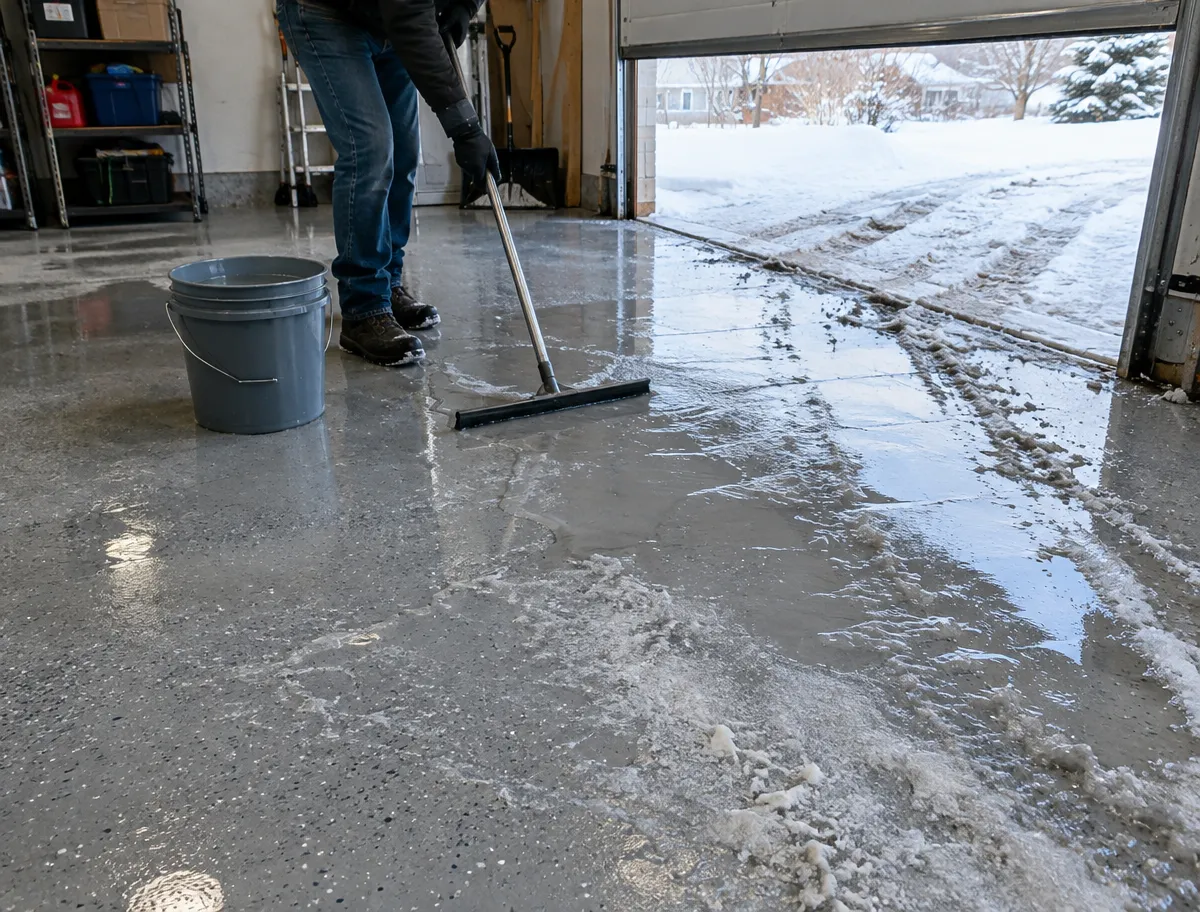
Winter road salt residue deserves prompt attention. Salt left on a coated garage floor draws moisture and leaves a film that can dull the finish over time. Specialty Concrete Coatings LLC recommends fall installation so coatings can cure fully before winter road salt and freeze-thaw cycles begin, as our guide to the best time to coat a garage floor in Pittsburgh explains, but even a properly cured floor needs a consistent salt-removal routine.
What Is the First Step for Removing Salt From an Epoxy Garage Floor?
The first step is getting the slush out. On wet days, squeegee melted snow and salty slush out of the garage before it dries. Once residue has dried, sweep or vacuum the salt crystals. Allowing salt to sit invites moisture and buildup. A shop vacuum or push broom clears the loose debris and exposes the full floor for the next cleaning stage.
What Cleaning Solution Works Best for Salt Residue?
A pH-neutral cleaner mixed with warm water dissolves the remaining salt film without attacking the coating. Avoid spreading harsh chemical deicers directly on the coated floor. Specialty Concrete Coatings applies a UV-stable polyaspartic clear coat that resists chemicals, but routine salt exposure still calls for gentle cleaning agents to preserve that protective layer.
Follow these steps in order:
- Squeegee standing slush toward the garage door so meltwater does not sit on the floor.
- Sweep or vacuum the entire floor to remove dry salt crystals and loose grit.
- Mix a pH-neutral cleaner with warm water in a bucket according to the product’s dilution instructions.
- Mop the floor with the solution, working in sections to lift the salt film.
- Rinse the mop frequently to avoid spreading dissolved salt back onto the surface.
- Allow the floor to air-dry completely before walking on it or returning vehicles.
Consistent epoxy garage floor maintenance through this sequence helps prevent the dull haze that neglected salt exposure can cause. The polyaspartic topcoat provides strong chemical resistance, but no coating is completely immune to months of accumulated deicing compounds. A quick sweep after each snow event helps preserve the floor’s gloss and extend its service life. For more on how salt affects garage floors in this region, see our article on winter salt damage to garage floors in Pennsylvania.
What Cleaning Products Should You Avoid?
Protecting a coated garage floor means avoiding certain cleaning products. The wrong cleaner can dull the finish, create slip hazards, and may affect the warranty on polyurea and polyaspartic systems. Always check your coating manufacturer’s care guidance before trying a new product.
What Happens If Abrasive Cleaners Are Used on Epoxy Floors?
Abrasive cleaners and stiff scrub pads can scratch the surface of epoxy and polyaspartic coatings. Specialty Concrete Coatings LLC builds its floors to resist abrasion and chemicals, but scratches from steel wool or gritty powders can break through the clear coat. That damage lets moisture and road salt work into the coating. Once the surface layer is compromised, the floor loses gloss and becomes harder to clean.
Why Are Acidic Cleaners a Problem for Coated Garage Floors?
Acidic cleaners like vinegar and citrus-based products can dull the finish. Over time, acidic solutions can etch the polyaspartic clear coat, creating tiny pits that trap dirt. Homeowners who use vinegar solutions when figuring out how to clean epoxy garage floor surfaces may unknowingly accelerate wear. A pH-neutral cleaner helps preserve the coating.
Oil-based soaps and waxes can leave a slippery residue on the surface. The company designs its floors as low-maintenance surfaces that resist wear in demanding conditions, and waxy buildup defeats that purpose. The residue attracts dust and tire marks. It can also create a fall risk in a space where footing matters.
Pressure washers can force water under the coating at edges and seams. High-pressure spray may lift the coating from the concrete slab, and moisture trapped underneath can lead to delamination and bubbling. A damp mop and mild cleaner handle routine cleaning tasks safely.
What Should an Epoxy Garage Floor Maintenance Calendar Look Like?
A simple schedule keeps maintenance from slipping. Adjust it for how hard you use the garage:
| How often | Task |
|---|---|
| As needed | Blot spills right away; squeegee out slush on snowy days |
| Weekly | Dust mop or sweep; spot-clean drips and tire marks |
| Monthly (weekly in winter) | Wet mop with a pH-neutral cleaner; remove salt film |
| Every few months | Deep clean: move everything, pre-treat stains, mop, rinse, and squeegee |
| Each spring | Deep clean after salt season; inspect for rust spots, chips, or worn areas |
| Each fall | Clear clutter, check door seals and drainage, and stock cleaner before winter |
If you notice chips, worn traffic lanes, or areas where the coating is lifting, have them looked at early. Our guide on how to extend the life of your concrete surfaces offers more long-term care tips.
Frequently Asked Questions
What cleaning solution is safe for an epoxy garage floor?
A pH-neutral cleaner mixed with warm water is the safest choice for routine mopping. Avoid acidic, citrus, and harsh alkaline cleaners, and check your coating manufacturer’s care guidance.
What tool removes daily dust from an epoxy garage floor?
A soft-bristle broom, dust mop, or foam mop removes daily dust. This keeps abrasive grit from scratching the coating over time.
How do you handle an oil spill on an epoxy garage floor?
Blot the spill immediately, then use a degreaser labeled safe for coated floors or a baking soda paste with gentle scrubbing. Rinse and wipe the area dry afterward.
How do you clean road salt off an epoxy garage floor?
Squeegee out slush, sweep or vacuum dried salt, then mop with a pH-neutral cleaner in warm water, rinsing the mop often. Let the floor dry before parking on it again.
Can you use vinegar or a pressure washer on an epoxy garage floor?
It is best to avoid both. Vinegar and other acidic cleaners can dull and etch the clear coat over time, and a pressure washer can force water under the coating at edges and seams. A mop and a pH-neutral cleaner are safer.
TL;DR — How to Clean an Epoxy Garage Floor at a Glance
- Sweep or dust mop weekly with a soft-bristle broom or foam mop to keep grit from scratching the clear coat.
- Mop with a pH-neutral cleaner in warm water, and deep clean every few months or more often in winter.
- Blot oil right away and treat oil, rust, and tire marks with cleaners labeled safe for coated floors.
- In winter, squeegee out slush, sweep up dried salt, and mop with a pH-neutral cleaner.
- Avoid acidic or citrus cleaners, abrasive pads, wax, and pressure washers, and check the manufacturer’s care guidance.
- Next step: Request a free garage floor coating quote from Specialty Concrete Coatings.
Related Resources
- Garage Epoxy Floor Coatings
- Pittsburgh, PA Concrete Coating Company
- How Long Does an Epoxy Floor Last?
- Epoxy Floor Yellowing Prevention
- Why Epoxy Garage Floors Peel and How to Fix It
- Understanding Concrete Coating Weather Resistance
Get a Free Garage Floor Coating Quote
A clean epoxy garage floor comes down to a simple, consistent routine: sweep often, use a pH-neutral cleaner, and address spills and salt promptly. Avoiding abrasive pads, acidic solutions, and pressure washers helps protect the polyaspartic clear coat and preserve the floor’s gloss for years. By following these steps, homeowners can keep a durable, low-maintenance surface that resists wear and keeps the garage looking its best. If your current floor is worn, stained, or peeling, a professional coating can make it far easier to keep clean. Contact Specialty Concrete Coatings today for a free, no-obligation quote.
About Specialty Concrete Coatings: Specialty Concrete Coatings is a concrete coating contractor serving Greater Pittsburgh and Northwest Pennsylvania, specializing in garage, basement, patio, and commercial floor coatings. The team provides free estimates and installs durable, low-maintenance polyurea and polyaspartic floor systems matched to each space. Contact us today for a free, no-obligation quote.