⚡ DIRECT ANSWER
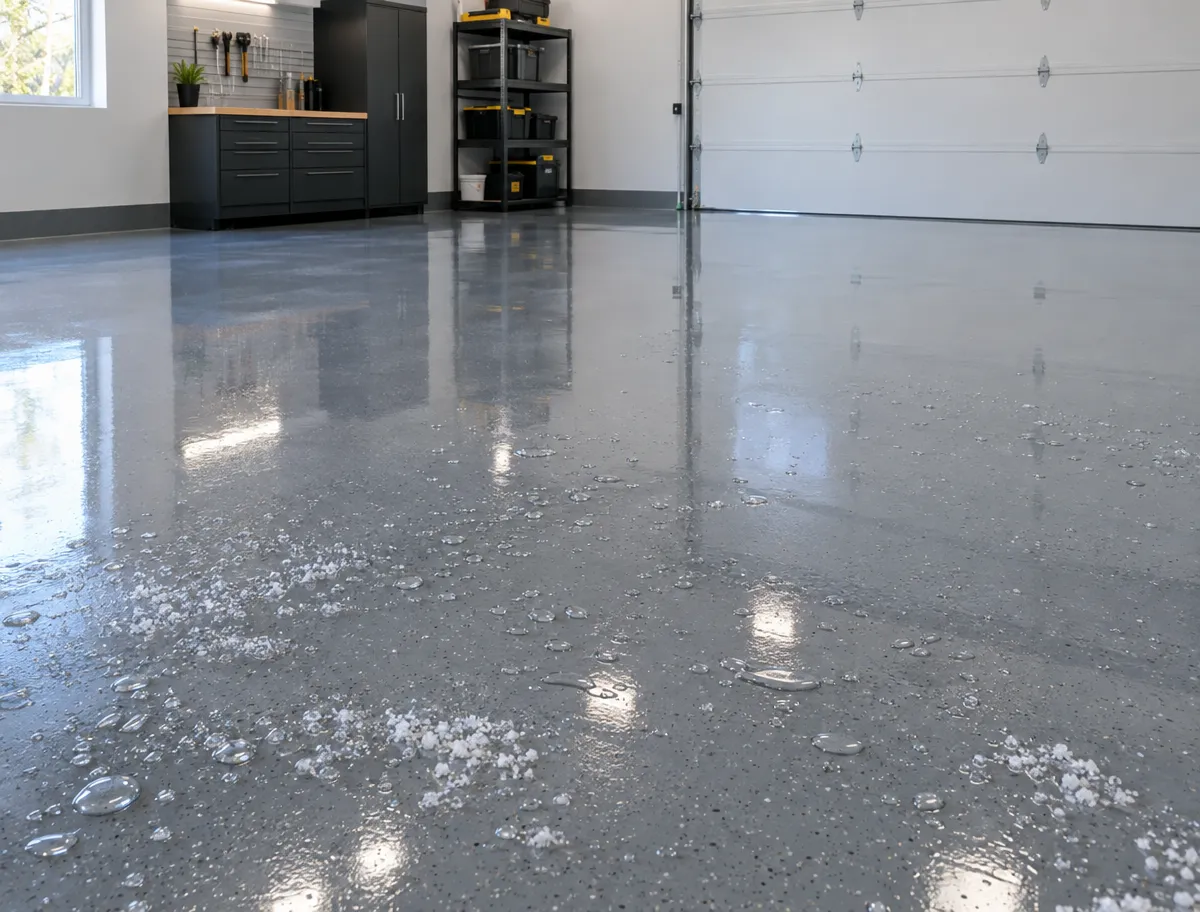
Epoxy floors turn yellow because standard aromatic epoxy resin breaks down under UV light — a process called UV oxidation. It’s a chemistry limitation, not a workmanship defect. The most effective prevention is adding a UV-stable polyaspartic topcoat over the epoxy base, which blocks UV degradation and maintains a clear finish for 10+ years. Learn how our garage floor coating systems are built to prevent this.
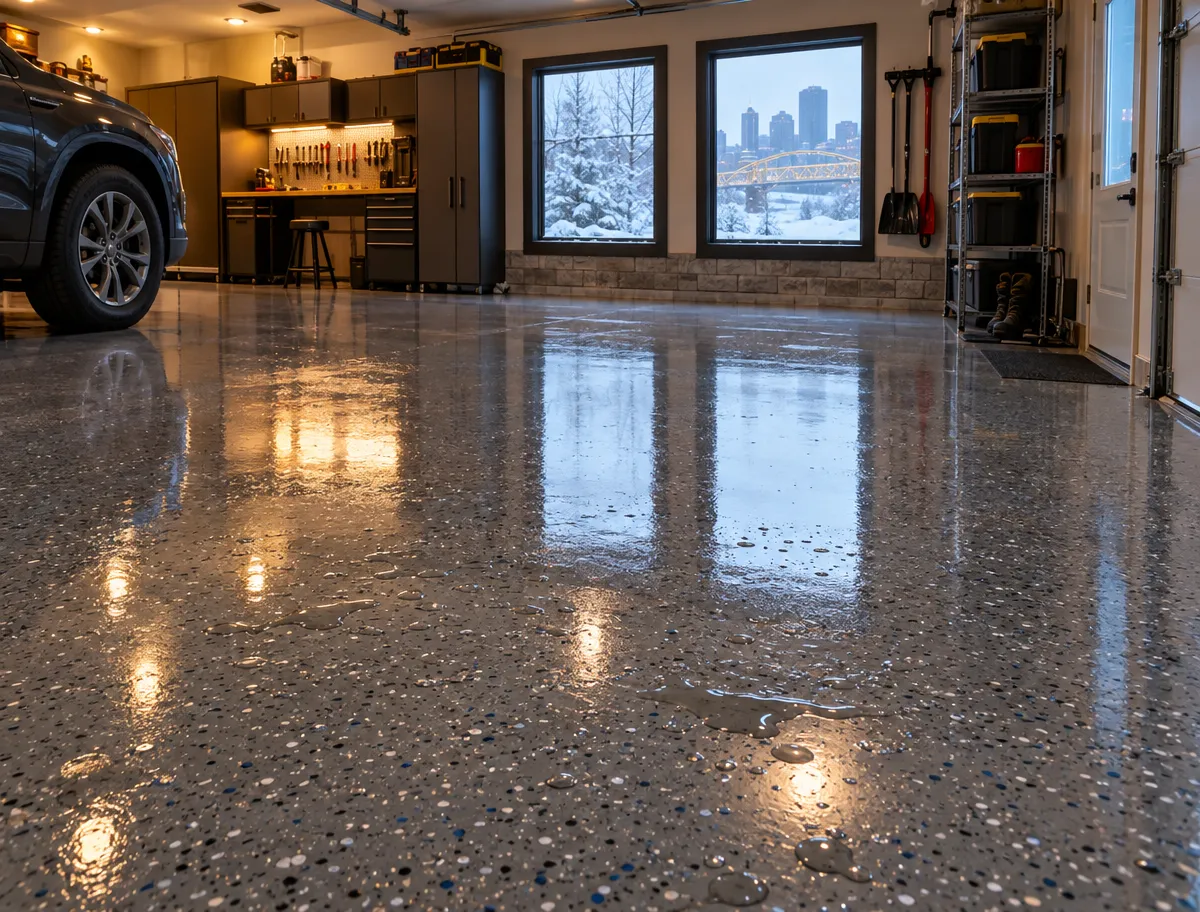
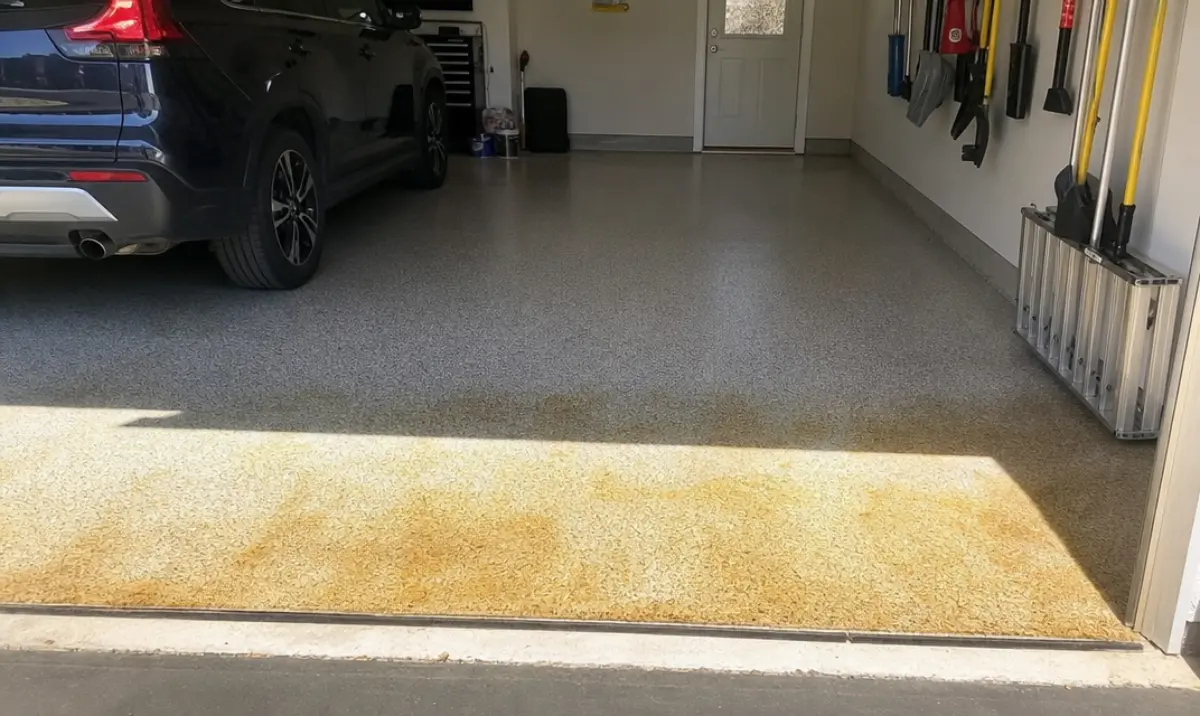
If you’ve noticed your garage floor developing an amber or yellow tint — especially near windows or the garage door — you’re not alone. It’s one of the most common complaints from homeowners across New Castle, Pittsburgh, and Western Pennsylvania.
The good news: it’s fully preventable when you choose the right coating system. Our garage epoxy floor coating services are specifically formulated to avoid this — here’s why it happens and what to do about it.
What Actually Causes Epoxy Floors to Turn Yellow?
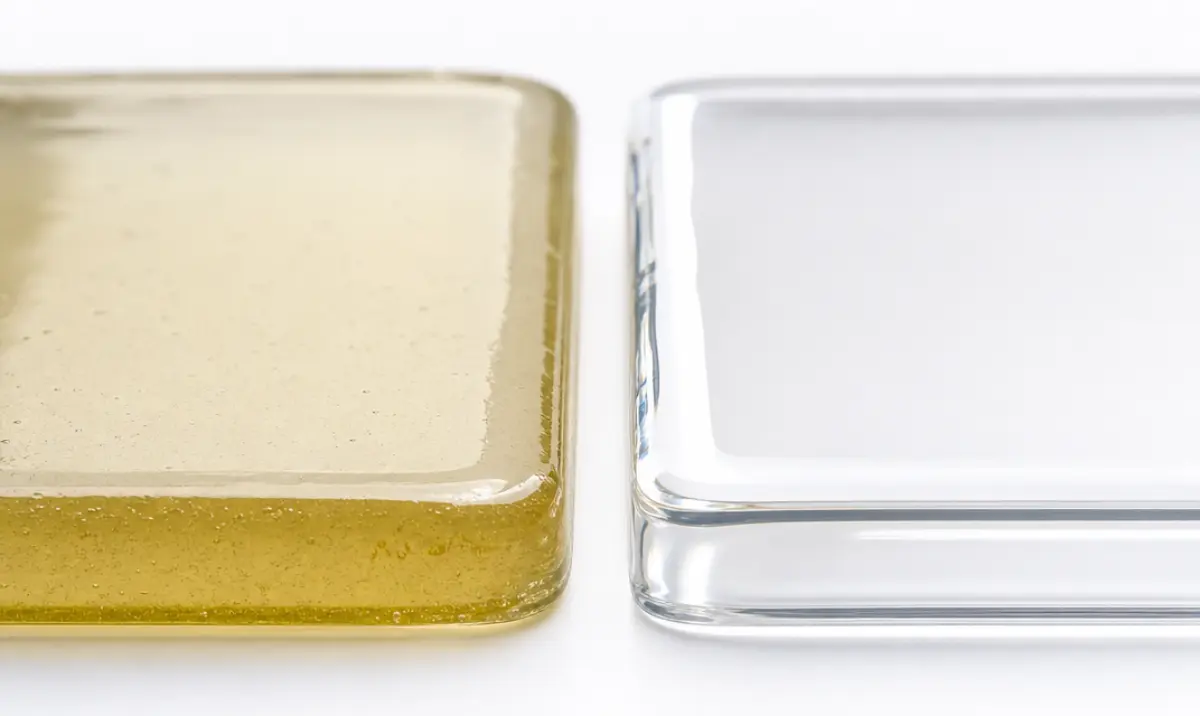
Standard epoxy resins are built on aromatic compounds — specifically bisphenol-A (BPA) based chemistry. When these molecules are exposed to UV radiation from sunlight or even fluorescent lighting, they undergo a photochemical reaction that produces yellow-tinted byproducts. This is called UV oxidation.
It happens regardless of installation quality or product price — it’s a fundamental material science limitation of aromatic chemistry. This is why our team always recommends pairing any epoxy base with a UV-stable topcoat. For context on how 100% solids epoxy compares to water-based formulas in terms of UV resistance, see our full guide.
The 3 Main UV Triggers
- Direct sunlight through garage windows or doors — the most common cause in residential garages
- Indirect UV exposure — UV rays penetrate clouds and gradually degrade aromatic epoxy even in shaded garages
- Fluorescent and certain LED lighting — specific light spectrums accelerate indoor oxidation over time
| Cause | Speed of Yellowing | Severity |
| Direct sunlight (south-facing garage) | Fast — 6–12 months | High |
| Indirect outdoor UV (shaded) | Moderate — 1–3 years | Medium |
| Indoor fluorescent lighting | Slow — 3–5 years | Low–Medium |
| High humidity + UV | Accelerates oxidation | Medium |
| PA freeze-thaw cycling | Stresses coating, worsens UV damage | Medium |
Is Yellowing Permanent — Can a Yellow Epoxy Floor Be Fixed?
Yes, yellowing is permanent within the coating layer itself — it cannot be reversed by cleaning or polishing. However, it can be stopped and improved depending on severity:
- Light yellowing (uniform tint, no peeling)
Apply a UV-stable polyaspartic topcoat to halt further yellowing and restore surface gloss
- Moderate yellowing with haze
Lightly diamond-grind the surface, then apply a polyaspartic topcoat
- Heavy yellowing with delamination
Full removal and recoat required — grind back to bare concrete and restart
If your current floor is already peeling as well as yellowing, see our epoxy garage floor peeling causes and fixes guide before deciding on a repair approach.
Which Epoxy Products Yellow the Fastest?
Not all epoxy floors yellow at the same rate. Formulation matters enormously — and this is exactly where most big-box DIY kits fall short.
| Epoxy Type | UV Resistance | Expected Yellowing Timeline |
| Standard aromatic epoxy (DIY kits) | ❌ None | 6–18 months in sunny garages |
| Water-based epoxy paint | ❌ Very low | 3–12 months |
| 100% solids aromatic epoxy | ❌ Low | 1–2 years |
| Aliphatic epoxy (UV-stable formula) | ✅ Moderate | 3–7 years |
| Polyaspartic topcoat over epoxy base | ✅ High | 10+ years, minimal yellowing |
| Full polyaspartic (no epoxy base) | ✅ Very high | 15+ years, near-zero yellowing |
Most DIY kits sold at hardware stores use standard aromatic epoxy — the type most prone to yellowing. For a full breakdown of product performance, see our polyaspartic vs. epoxy comparison guide and our review of the best garage floor coatings in 2026.
What Is a Polyaspartic Topcoat and How Does It Prevent Yellowing?
Polyaspartic coatings are a subclass of polyurea — aliphatic (non-aromatic) compounds that contain built-in UV inhibitors. Unlike standard epoxy, their molecular structure does not react with UV light in a way that produces yellow byproducts.
When applied as a topcoat over an epoxy base, polyaspartic acts as a UV shield — protecting the epoxy layer beneath. For a deeper look at how polyaspartic coatings work, including pros, cons, and cost, see our polyaspartic coating pros and cons guide.
Key Properties That Prevent Yellowing
| Property | Benefit for Yellowing Prevention |
| Aliphatic chemistry | Does not oxidize or yellow under UV exposure |
| Built-in UV inhibitors | Absorbs and disperses UV before it reaches epoxy layer |
| High optical clarity | Maintains true color and gloss over time |
| Fast cure (2–4 hours) | Reduces contamination risk during installation |
| Chemical resistance | Resists oil, road salt, and cleaners that accelerate degradation |
| Flexible bond | Handles PA freeze-thaw cycles without micro-cracking |
Wondering if the upgrade is worth the price difference? Read our is polyaspartic worth the extra cost guide for a full cost-value breakdown.
Epoxy vs. Polyaspartic Topcoat: Full UV Resistance Comparison
| Feature | Standard Epoxy Alone | Epoxy + Polyaspartic Topcoat |
|---|---|---|
| UV Resistance | ❌ Low — yellows within 1–2 yrs | ✅ High — 10+ years clarity |
| Color Stability | ❌ Amber/yellow tint develops | ✅ True color maintained |
| Gloss Retention | ⚠️ Dulls as yellowing progresses | ✅ High gloss retained |
| Scratch Resistance | ⚠️ Moderate | ✅ High — polyaspartic adds hardness |
| Chemical Resistance | ⚠️ Moderate | ✅ High — oil, salt, acids |
| Lifespan (garage) | 3–7 years before recoat needed | 10–15 years with maintenance |
| Best For | Indoor no-window basement/utility | Garages, sunlit spaces, commercial |
For full pricing on each system, see our polyaspartic floor coating cost guide and our epoxy floor coating cost per square foot breakdown.
How Long Before an Epoxy Floor Starts to Yellow?
Timeline varies based on UV exposure, product type, and environment. Here’s what homeowners in Western Pennsylvania typically experience:
| Scenario | Approx. Timeline | Notes |
| South-facing garage, full windows, DIY kit | 6–12 months | Visible yellowing within first summer |
| Attached garage, 1 small window, big-box epoxy | 1–2 years | Most common DIY complaint we receive |
| 100% solids epoxy, minimal sun | 3–5 years | Slower but still progresses |
| 100% solids epoxy + aliphatic topcoat | 7–10 years | Minor tinting only |
| Epoxy base + polyaspartic topcoat (pro install) | 10–15+ years | Industry-recommended for UV-exposed garages |
For more on how long floor coatings last overall, see our how long does an epoxy floor coating last guide and our polyaspartic lifespan guide.
Does Location Matter? Epoxy Yellowing in Pittsburgh & Western PA
Yes — and Western Pennsylvania presents specific conditions that accelerate UV degradation:
- High UV index in summer (June–August)
Pittsburgh averages UV index 7–9 during peak summer — classified ‘High’ to ‘Very High’ — enough to cause visible yellowing within a single season on unprotected aromatic epoxy.
- Freeze-thaw cycles in winter
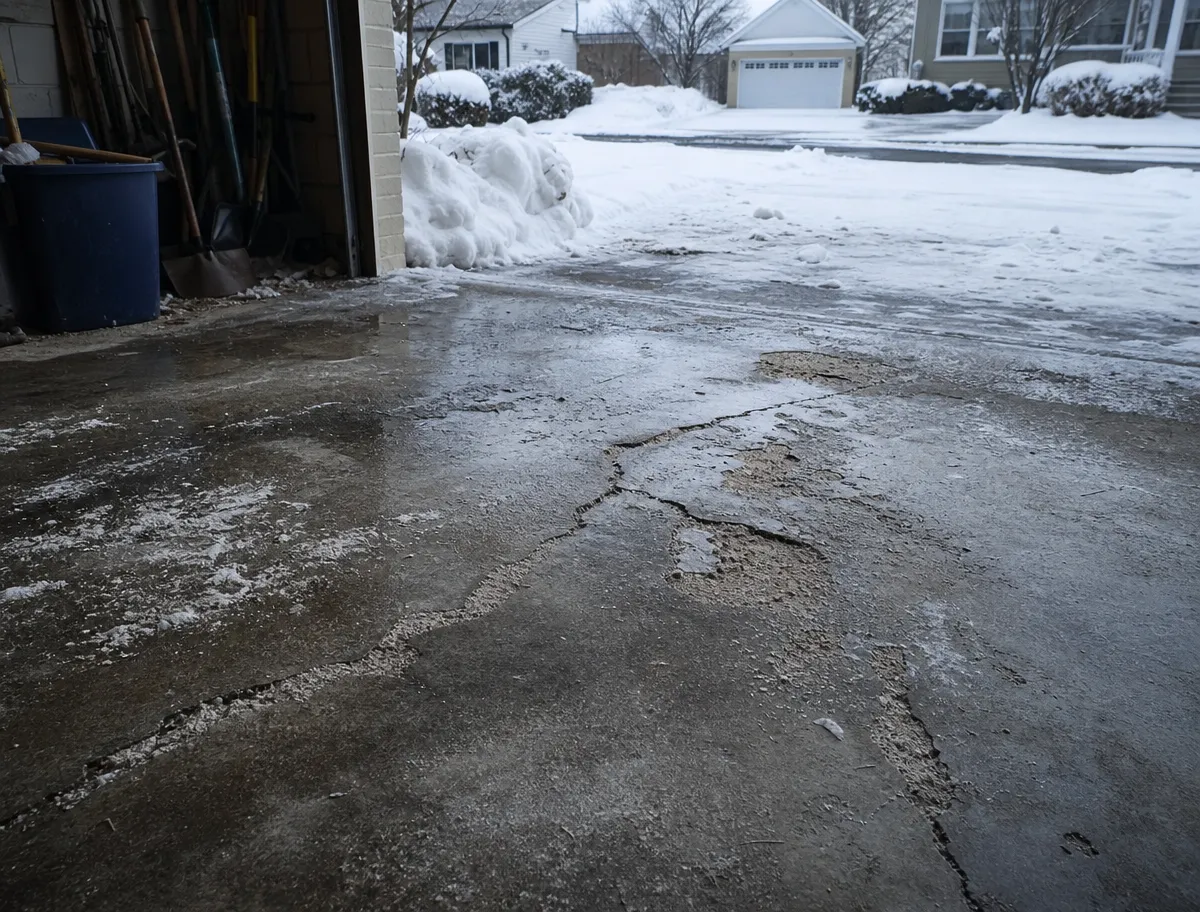
Temperature swings cause micro-movement in concrete, stressing the coating layer and creating micro-cracks that accelerate oxidation when UV exposure returns each spring.
- Humidity fluctuations
Western PA’s humid continental climate means moisture vapor cycling, which interacts with UV-degraded epoxy to produce surface haze and faster yellowing.
For more on how PA climate affects floor coatings, see our garage floor coating Pittsburgh PA guide. We serve New Castle, Pittsburgh, Butler, Mercer, and all of Northwest Pennsylvania.
Prevention Checklist: How to Choose a Coating That Won’t Yellow
| # | Checklist Item | Why It Matters |
| 1 | Avoid aromatic epoxy products for UV-exposed areas | Chemically guaranteed to yellow — no installation quality compensates for the chemistry |
| 2 | Specify ‘aliphatic’ or ‘UV-stable’ in your product brief | Aliphatic chemistry resists UV oxidation at the molecular level |
| 3 | Always include a polyaspartic topcoat in the spec | The topcoat is your UV barrier — omit it and the epoxy below will yellow |
| 4 | Assess garage sun exposure before specifying | South/west-facing garages need maximum UV protection |
| 5 | Ask for a product data sheet (TDS) confirming UV rating | TDS will state ‘aliphatic’ or ‘yellowing resistance’ — verify before signing |
| 6 | Request a written warranty covering color change | Reputable contractors back UV stability in writing |
Also see our common epoxy floor coating problems guide and our DIY vs professional garage floor coating comparison for more on how coating selection affects long-term performance.
Want a Floor That Stays Clear for 10+ Years?
| Specialty Concrete Coatings LLC — New Castle, PA
Every floor we install includes a UV-stable polyaspartic topcoat as standard — not as an upsell. We’ve seen what PA summers do to bare epoxy floors, and we refuse to install a system that yellows in two years. Serving: New Castle · Pittsburgh · Butler · Mercer · Cranberry Twp · Wexford Get a Free UV-Resistant Floor Coating Quote → View Garage Floor Coating Services | See Our Gallery | Read Our Warranty |
Conclusion / TL;DR — Key Takeaways
📌 Quick Summary
- Epoxy floors yellow because aromatic epoxy resin undergoes UV oxidation — a chemistry issue, not a workmanship defect.
- Once yellowing occurs, it cannot be reversed by cleaning. Grinding and recoating is the only fix.
- Standard DIY epoxy kits and water-based paints yellow fastest — often within 6–18 months in sunny garages.
- A polyaspartic topcoat over an epoxy base is the most effective prevention — UV barrier for 10–15+ years.
- Western PA’s high UV index and freeze-thaw climate make UV-stable coatings especially important in this region.
- Always request an aliphatic or UV-stable product spec and a written warranty that covers color change.
- Specialty Concrete Coatings includes a polyaspartic topcoat on every installation — no exceptions.
FAQ
Why did my epoxy floor turn yellow so fast?
Standard aromatic epoxy starts oxidizing immediately upon UV exposure. In south or west-facing garages with direct sunlight, visible yellowing can appear within the first summer. The product chemistry — not the installer — is the primary cause. Most big-box DIY kits use the most UV-sensitive formulas available.
Can you apply polyaspartic over existing yellowed epoxy?
In most cases, yes — if the existing coating is fully bonded with no peeling or bubbling. The surface must be lightly ground to create a profile, then a polyaspartic topcoat applied. This halts further yellowing and restores gloss, though it won’t reverse the existing amber tint underneath. If the floor is peeling too, see our epoxy garage floor peeling causes and fix guide first.
Is polyaspartic worth the extra cost over standard epoxy?
For any UV-exposed garage — yes, absolutely. The cost difference between an epoxy-only system and an epoxy + polyaspartic system is modest; the lifespan difference is 5–10+ years. See our is polyaspartic worth the extra cost guide and polyurea vs epoxy cost comparison for detailed pricing.
Does color affect how quickly epoxy yellows?
Yes — light and clear coatings show yellowing far more visibly than dark colors like charcoal or gray. However, yellowing is still occurring chemically in dark floors; it’s just less visible. UV inhibitors in the topcoat are the only true solution regardless of color choice.
What is the best epoxy floor coating that doesn’t yellow?
A 100% solids epoxy base paired with a UV-stable polyaspartic topcoat comes closest to a non-yellowing system. Full polyaspartic (no epoxy base) offers the highest UV resistance. For a comparison, see our best garage floor coating 2026 guide.
Does Specialty Concrete Coatings warranty against yellowing?
Yes. Our coating systems include a written warranty covering UV degradation and color change. Visit our warranty page or contact us to discuss specifics for your project.