Quick Answer: Coating around a garage floor drain works best when the concrete around the drain is diamond ground, cracks and spalls are repaired, and the coating is carried cleanly to the inside edge of the drain body instead of stopping at a taped-off line that leaves a raised lip. The joint where the drain meets the slab should be sealed with a filler suited to the drain type, the grate should stay free of coating, and pooling or low spots should be fixed first. In Western Pennsylvania, where drains handle snowmelt and road salt, this detailing helps keep the floor from peeling at its most vulnerable spot.
Garage floor coating around drains requires careful detailing to prevent peeling and water intrusion. Specialty Concrete Coatings mechanically prepares surfaces by diamond grinding, applies a high-adhesion basecoat, broadcasts vinyl color chips, and seals the system with a clear coat. At the drain, the joint between the concrete and the drain body is filled and sealed so water runs into the drain instead of under the coating. Done correctly, this approach creates a durable, water-resistant transition that stands up to heavy use and chemical exposure.
What Types of Garage Floor Drains Are There?
Most residential garages in Greater Pittsburgh and Northwest Pennsylvania fall into one of three setups. Each one changes how the coating is finished and where water tends to collect.
- Center (round or square) drains: A single drain body, usually near the middle of the slab, with the concrete sloped toward it from several directions.
- Trench or channel drains: A long, narrow drain, often across the garage door opening or down the center of the bay, covered by a removable grate. Many are made of plastic or polymer concrete rather than cast iron.
- No drain: The slab is simply sloped toward the overhead door so water runs out of the garage. These floors still need attention to low spots where meltwater can sit.
Whatever the setup, builders typically pitch the concrete toward the drain or the door. That slope directs water, grit, and salt toward one seam, which is why the drain edge deserves more attention than any other part of the floor.
Why Does a Garage Floor Drain Need Special Coating Prep?
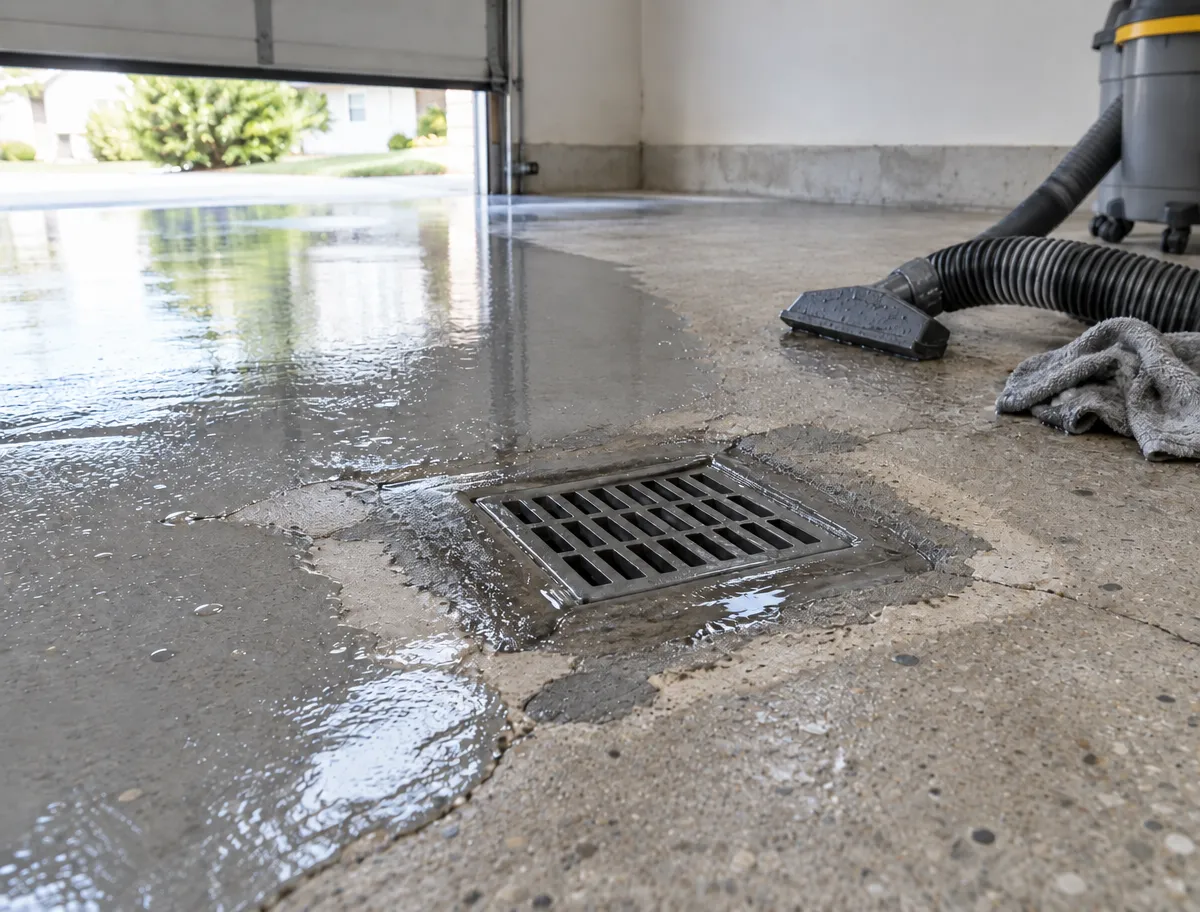
A garage floor drain demands specialized preparation because the surrounding area endures constant water flow, debris, and chemical exposure. Standard coating edges left untreated around a drain create a failure point that can compromise the floor system. Because the slope sends everything toward one vulnerable seam, small detailing mistakes there show up first.
What Happens If the Coating Edge Isn’t Sealed Properly?
A thick epoxy and clear coat system that stops short of the drain leaves a noticeable lip at the drain edge. This raised edge catches debris and water flow, and it tends to chip and lift under regular use. Once the edge opens up, water can work its way underneath and accelerate delamination.
How Do Cracks Near Drains Cause Bigger Problems?
Cracks developing next to a drain can let water seep past the coating and into the slab, or into the space below on elevated or split-level floors. Commercial washdown areas show how quickly this can happen, and residential garages face a similar risk from snowmelt and salt brine. Over time, water penetrating an unsealed drain perimeter can contribute to slab deterioration.
Specialty Concrete Coatings addresses these risks through a multi-step preparation process:
- Mechanically grind the concrete surrounding the drain to create a proper bonding profile.
- Repair any existing cracks or spalls with high-strength concrete menders before coating application.
- Extend the coating system to the interior edge of the drain body rather than taping off short of it.
- Fill and seal the joint between the drain and the slab with a material suited to the drain type.
This approach eliminates the failure-prone lip and creates a seamless transition that holds up to constant moisture exposure. For garages with sloped floors, proper drain detailing keeps the coating edge from becoming the first point of failure. The same process applies to full garage floor coating projects across the region.
Why Do Garage Floor Drains Matter More in Winter?
Western Pennsylvania winters put the drain area under the most stress. Snow and ice ride in on tires and undercarriages, melt on the warmer slab, and run toward the drain carrying road salt and grit. That salt brine is hard on bare concrete and on any coating edge that isn’t fully sealed.
- Meltwater: Repeated melting and refreezing near the door and drain works water into any open crack or joint.
- Salt brine: Chloride-laden water concentrates at the drain and at low spots, where it can attack exposed concrete. Our guide to winter salt damage on garage floors in PA covers what that damage looks like.
- Pooling: Water that sits instead of draining leaves salt residue behind as it evaporates and keeps the drain edge wet for days.
A sealed coating that runs cleanly into the drain helps brine flow away instead of soaking into the slab. For more on limiting winter damage, see our tips on protecting your garage floor from road salt.
📞 Planning a Coating Around Your Garage Drain? Specialty Concrete Coatings details every drain edge as part of the installation across Greater Pittsburgh and NW Pennsylvania. Request a free garage floor coating quote and we’ll look at your drain, slope, and slab condition.
What Tools and Materials Are Used Around a Drain?
Proper preparation around a garage floor drain calls for specific tools and materials before any coating touches the concrete. The surface must be ground back to clean, solid concrete, which requires mechanical grinding equipment, a diamond cup wheel, and a heavy-duty vacuum for dust control. Skipping this step leaves contaminants that can lead to early coating failure.
What Preparation Tools Are Essential for Drain Edges?
A V-shaped notch cut into the concrete next to the drain increases the bonding surface for the coating. If cutting a V is not possible, chipping away some concrete next to the drain achieves a similar result. This step typically uses an angle grinder with a diamond blade, or a cold chisel and hammer.
What Materials Seal the Drain Transition Properly?
Flexible polyurea joint filler handles control joints in garage floors, but the drain edge may need different treatment. Channel drains made of plastic can expand and contract at different rates than concrete, so the coating system must bridge this transition without cracking.
- Grind the concrete surface back to clean, solid material.
- Cut a V-shaped notch along the drain edge to increase bonding surface.
- Remove all dust and debris with a vacuum before coating.
- Apply the coating system to the prepared drain edge.
Specialty Concrete Coatings LLC serves Greater Pittsburgh and Northwest Pennsylvania from its base in Sandy Lake, PA. The company’s crew handles this preparation as part of the installation process.
How Do You Prepare the Concrete Around the Drain?
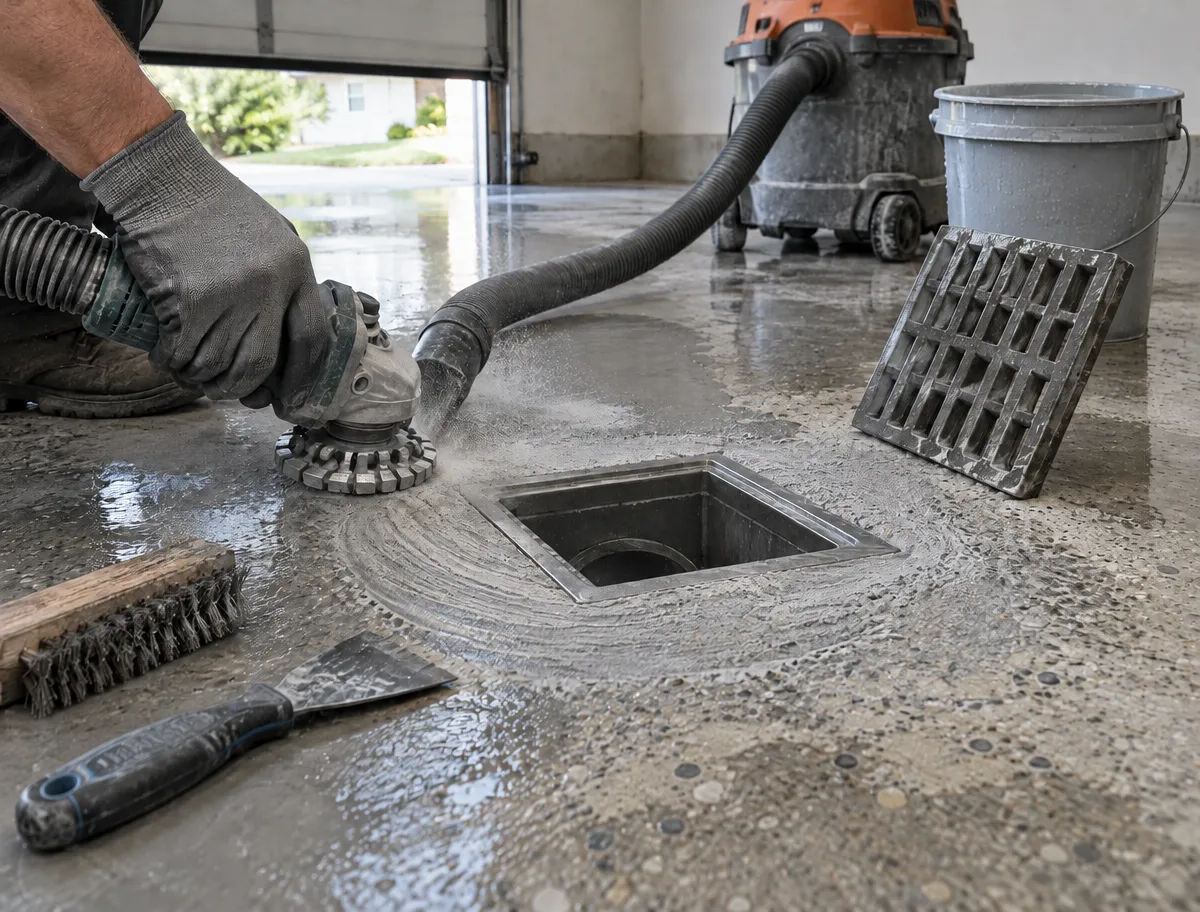
Preparing the concrete around a garage floor drain requires mechanical grinding and precise edge work. Without proper preparation, coatings can peel away from drain perimeters early, opening pathways for water intrusion and slab damage. The International Concrete Repair Institute’s guideline on selecting concrete surface preparation for coatings describes the preparation methods and surface profiles the industry uses before coatings go down.
What Is the First Step When Exposing the Drain Area?
The first step removes any tile or material surrounding the drain to expose bare concrete. Specialty Concrete Coatings LLC mechanically prepares surfaces by diamond grinding, which creates the profile necessary for coating adhesion. This grinding extends right to the drain edge, removing contaminants that interfere with bonding.
How Do You Handle the Transition Between the Drain and the Slab?
Creating a strong transition requires cutting or chipping a small channel next to the drain body. A V-shaped cut gives the coating more surface area to grip. When a V-cut isn’t possible, chipping away some concrete next to the drain is an acceptable alternative. This step prevents the thin feathered edge that cracks under traffic and water flow.
The preparation sequence follows these steps:
- Remove tile, grout, or existing coatings around the drain to expose sound concrete.
- Diamond-grind the exposed slab, including the immediate drain perimeter.
- Cut a V-shaped channel or chip away concrete beside the drain for added bonding surface.
- Inspect for cracks and spalls in the prepared area.
- Repair all defects with concrete menders before any coating application.
Cracks and spalls receive immediate attention. The company repairs these defects with concrete menders, restoring a sound surface before the basecoat goes down. Skipping this repair step can allow moisture to travel beneath the coating system, causing delamination that starts at the drain and spreads outward. A properly prepared drain perimeter helps the entire floor system perform as one.
What Is the Best Way to Coat Up to the Drain Edge?
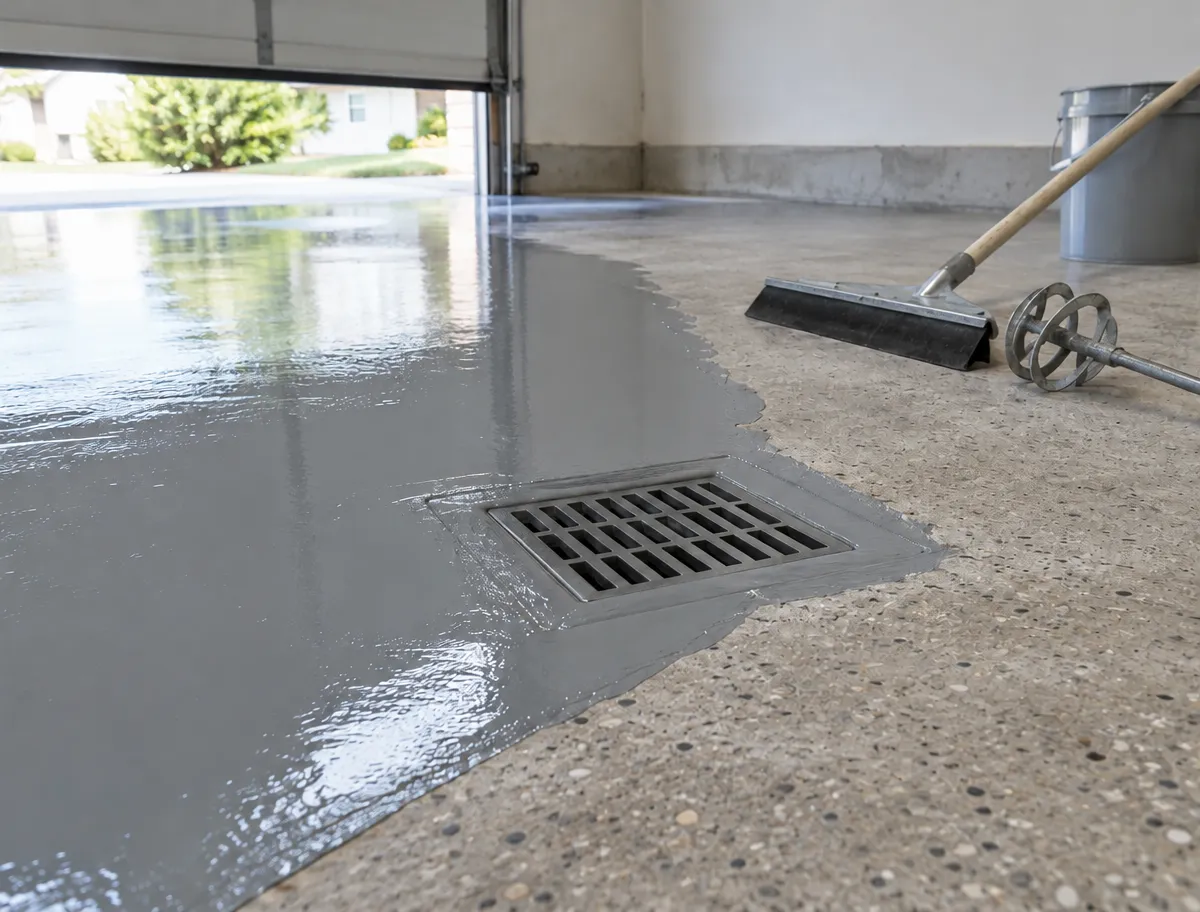
The best approach extends the coating material directly to the inside edge of the garage floor drain body. Taping off the drain edge creates a raised lip that tends to fail under water flow and debris, and that lip becomes a peeling point once grit starts moving across the floor.
Why Does Taping Off a Drain Cause Coating Failure?
Taping off the drain edge leaves a distinct ridge where the thick coating stops. Water, dirt, and road salt collect at that ridge. The constant abrasion and moisture attack the exposed edge. Extending the coating to the inside edge of the drain body eliminates that vulnerable seam.
Should the Coating Go on the Drain Grate?
No. The coating should finish at the drain body, not on the removable grate. Grates need to lift out for cleaning, and coating them can narrow the openings, glue the grate in place, or flake off as the grate shifts. Keep the grate out during installation and set it back once the clear coat has cured.
How Does the Coating System Bond Near the Drain?
Specialty Concrete Coatings applies a high-adhesion basecoat across the entire slab, including the area right up to the drain opening. This basecoat locks into the mechanically ground concrete surface, and that bond helps keep water from creeping underneath the coating at the drain perimeter. AMPP’s overview of concrete surface preparation and coating selection explains why inspection and preparation come before choosing a coating.
The installation process follows a precise sequence:
- Diamond-grind the concrete around the drain to open the surface profile.
- Apply the high-adhesion basecoat to the inside edge of the drain body.
- Hand-broadcast vinyl color chips across the wet basecoat for slip resistance and a customized look.
- Scrape excess chips to create a uniform texture.
- Apply a final clear coat that seals the entire system, including the drain edge.
The clear coat encapsulates the chip layer and the basecoat edge, so no exposed lip remains. The result is a seamless transition that channels water into the drain without catching debris or lifting over time.
How Do You Fix Pooling and Low Spots Before Coating?
A coating follows the shape of the slab underneath it. It won’t change the pitch of the floor, so any water that pools today will still pool after the floor is coated. Fixing those areas first keeps salt brine from sitting on the finish.
- Rinse the floor or watch it after a snowy drive-in, and mark where water sits instead of running to the drain or door.
- Check whether the pooling comes from a shallow low spot, a settled section, or a drain set higher than the surrounding concrete.
- Fill shallow low spots and repair damaged areas with suitable repair or patching materials before grinding and coating.
- Have larger slope or settlement problems evaluated before coating, since they may need concrete work rather than surface repair.
Settled or cracked concrete near a drain is common in older garages. Our article on how coatings can help with cracked concrete explains what can be repaired as part of a coating project.
How Do You Avoid Common Drain-Coating Mistakes?
A garage floor drain coating failure usually starts at the edge. A thick coating buildup creates a pronounced lip that can crack and delaminate under regular use, especially where debris and water flow concentrate. When coating thickness isn’t managed at the drain, that edge is often the first thing to go.
What Causes Coating Failure Around a Drain?
Material selection at the transition point is a common culprit. A flexible polyurea joint filler works well in control joints, but it can be too soft for the high-wear area directly beside a drain, where a harder epoxy-based filler may give better edge stability. The right choice depends on the drain type and how much the joint moves. The coating system must bond firmly to the drain body without creating a stepped profile that catches tires, shovels, and wash-down debris.
How Should the Drain Edge Be Prepared?
Elaborate floor cut-outs around drains are usually unnecessary, and simpler approaches often work as well or better. The coating should extend cleanly to the inside edge of the drain body rather than stopping short with a taped-off margin. This technique eliminates the failure-prone lip.
Specialty Concrete Coatings LLC follows a disciplined preparation sequence for every installation. The crew mechanically grinds the concrete surface, repairs cracks with concrete menders, and applies a high-adhesion basecoat that transitions smoothly at the drain perimeter. High-build systems such as 100% solids epoxy provide thickness for durability, so the edge has to be finished carefully to avoid an abrupt step. A UV-stable polyaspartic clear coat seals the entire surface, including the drain boundary, for a uniform finish that resists chemical exposure and abrasion. The system returns to service quickly: foot traffic can typically resume in about 12 hours, and vehicles can drive on the surface in about 48 hours. Actual cure times vary with temperature, humidity, and the products used.
Do Local Rules Affect Where a Garage Drain Can Discharge?
They can. Rules on where garage and shop floor drains may empty vary by state and municipality, and they are stricter for commercial and automotive spaces. At the federal level, the U.S. EPA treats floor drains in vehicle service areas that empty into a septic system or dry well as motor vehicle waste disposal wells, which are restricted. State agencies publish their own guidance, such as the Minnesota Pollution Control Agency’s fact sheet on floor drains, separators, and holding tanks for commercial sites.
Requirements for residential garages differ by location, so check with your municipality or local building department before adding a drain or changing where one discharges. A coating project works with the drain you already have; it doesn’t change where the water goes.
How Do You Maintain a Coated Floor Around the Drain?
A little routine care keeps the drain flowing and the coating edge in good shape, especially through winter.
- Clean the grate: Lift it out periodically and clear sand, leaves, and debris so water doesn’t back up onto the floor.
- Rinse salt: During winter, rinse or squeegee salt brine toward the drain regularly instead of letting it dry on the floor.
- Check the edge: Look at the joint around the drain each spring and fall, and have any chips or gaps addressed early.
- Use gentle cleaners: A pH-neutral cleaner and a soft mop or brush are usually enough for a coated floor.
For more upkeep tips, see our maintenance considerations for specialty concrete surfaces.
Frequently Asked Questions
Why does a garage floor drain need special coating prep?
The drain area endures constant water flow, debris, and chemical exposure, and a coating edge left unfinished there becomes a failure point. Grinding, crack repair, and carrying the coating to the inside edge of the drain body help prevent peeling.
Should the floor coating go over the drain grate?
No. The coating should finish at the drain body, not on the removable grate. Coating the grate can narrow the openings, lock it in place, or flake off as it moves.
Can you coat a garage floor that has no drain?
Yes. Many garages have no drain and are sloped toward the door instead. Low spots where water pools should be repaired before coating, because the coating follows the existing slope.
Are there rules about where a garage floor drain can discharge?
Often, yes. Discharge rules vary by state and municipality and are stricter for commercial and automotive spaces. Check with your local building department before adding a drain or changing where one empties.
How do I keep road salt from damaging the coating near my drain?
Rinse or squeegee salt brine toward the drain regularly in winter, keep the grate clear so water doesn’t back up, and have any chips at the drain edge repaired early.
TL;DR — Coating Around a Garage Floor Drain at a Glance
- Diamond grinding creates the bonding profile needed for coating adhesion around garage floor drains.
- A V-shaped notch beside the drain adds bonding surface and prevents thin, feathered edges.
- Carry the coating to the drain body’s inside edge to avoid the raised lip that peels, and keep coating off the grate.
- Repair cracks and fix pooling or low spots before coating; the coating follows the existing slope.
- Rinse salt brine toward the drain in winter and check local rules before changing where a drain discharges.
- Next step: Request a free garage floor coating quote from Specialty Concrete Coatings.
Related Resources
- Garage Epoxy Floor Coating
- Pittsburgh, PA Concrete Coating Company
- Why Epoxy Garage Floors Peel and How to Fix It
- Does Epoxy Crack in Cold Weather?
- Common DIY Garage Floor Coating Problems
- Best Garage Floor Coating for 2026
Get a Free Garage Floor Coating Quote
A garage floor drain doesn’t have to be a weak point in a coating system. Proper preparation, including diamond grinding, crack repair, fixing low spots, and extending the coating to the inside edge of the drain body, eliminates the failure-prone lip that plagues many installations. Homeowners who address the drain perimeter during the coating process help protect the entire slab from moisture intrusion and premature wear. Contact Specialty Concrete Coatings today for a free, no-obligation quote.
About Specialty Concrete Coatings: Specialty Concrete Coatings is a concrete coating contractor serving Greater Pittsburgh and Northwest Pennsylvania, specializing in garage, basement, patio, and commercial floor coatings. The team handles surface preparation, crack repair, and drain detailing as part of every installation so the finished floor performs as intended. Contact us today for a free, no-obligation quote.