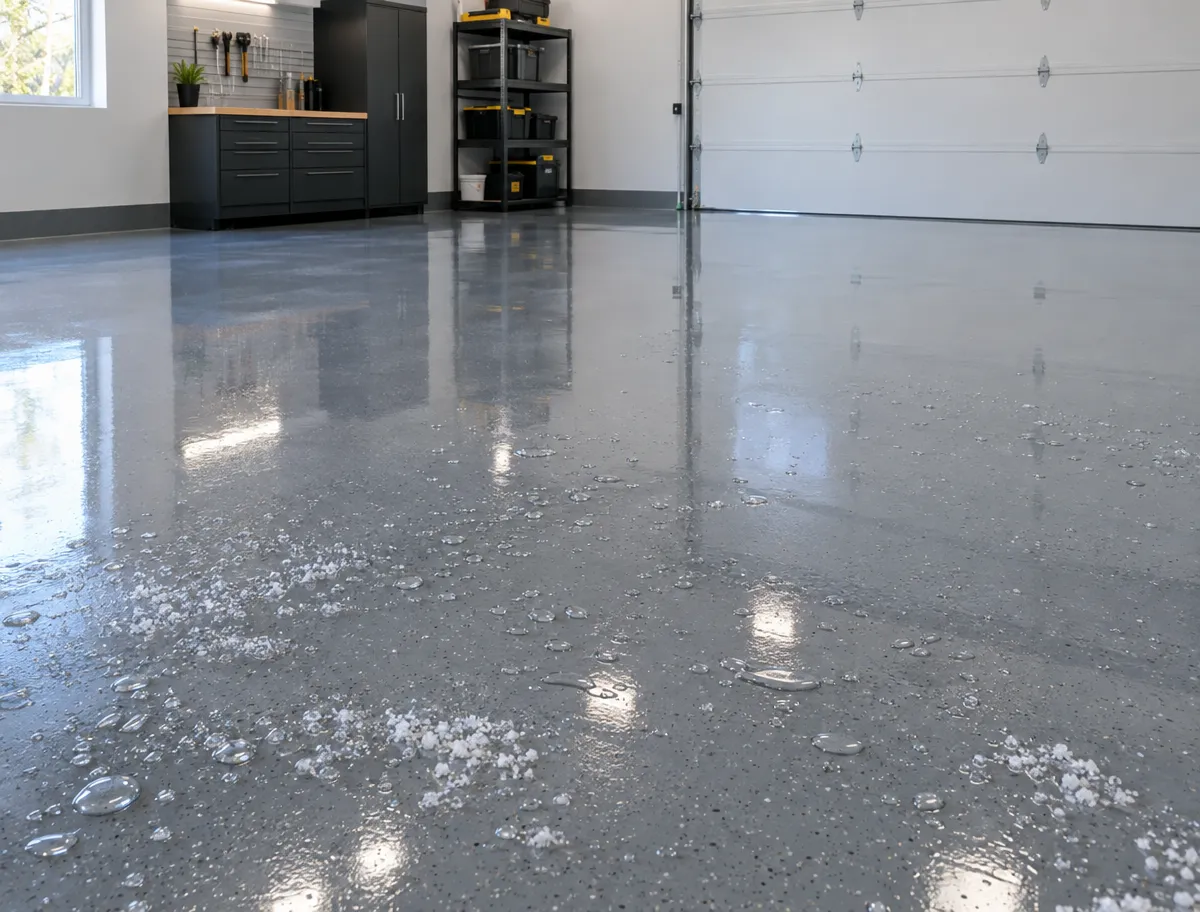
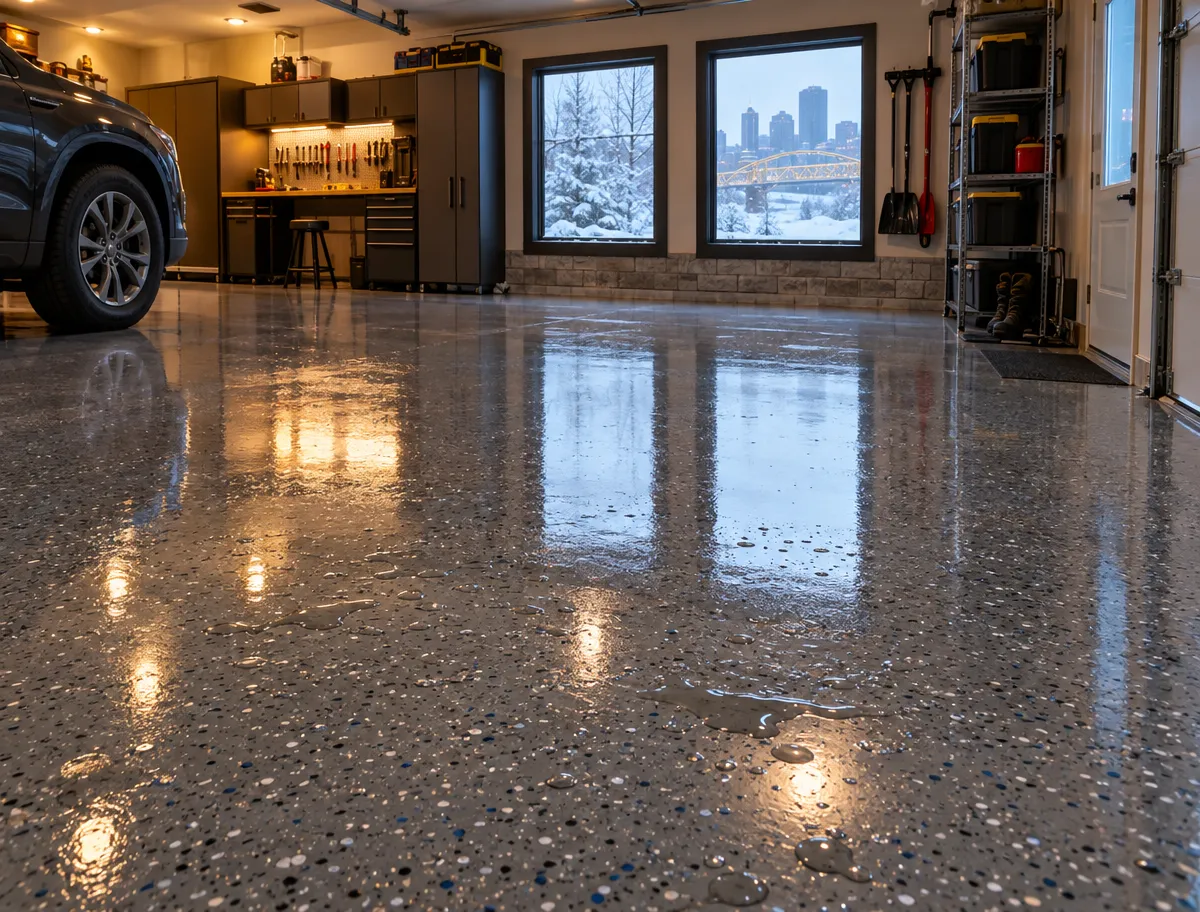
Quick Answer: The best time to coat a garage floor in Pittsburgh is fall, when cool, dry conditions let coatings cure fully before winter road salt and freeze-thaw cycles begin. Epoxy systems need slab temperatures above 50°F, limiting installation to late spring through early fall. Polyurea polyaspartic coatings cure in temperatures as low as -20°F, so they can be installed any time of year, including the dead of a Pittsburgh winter.
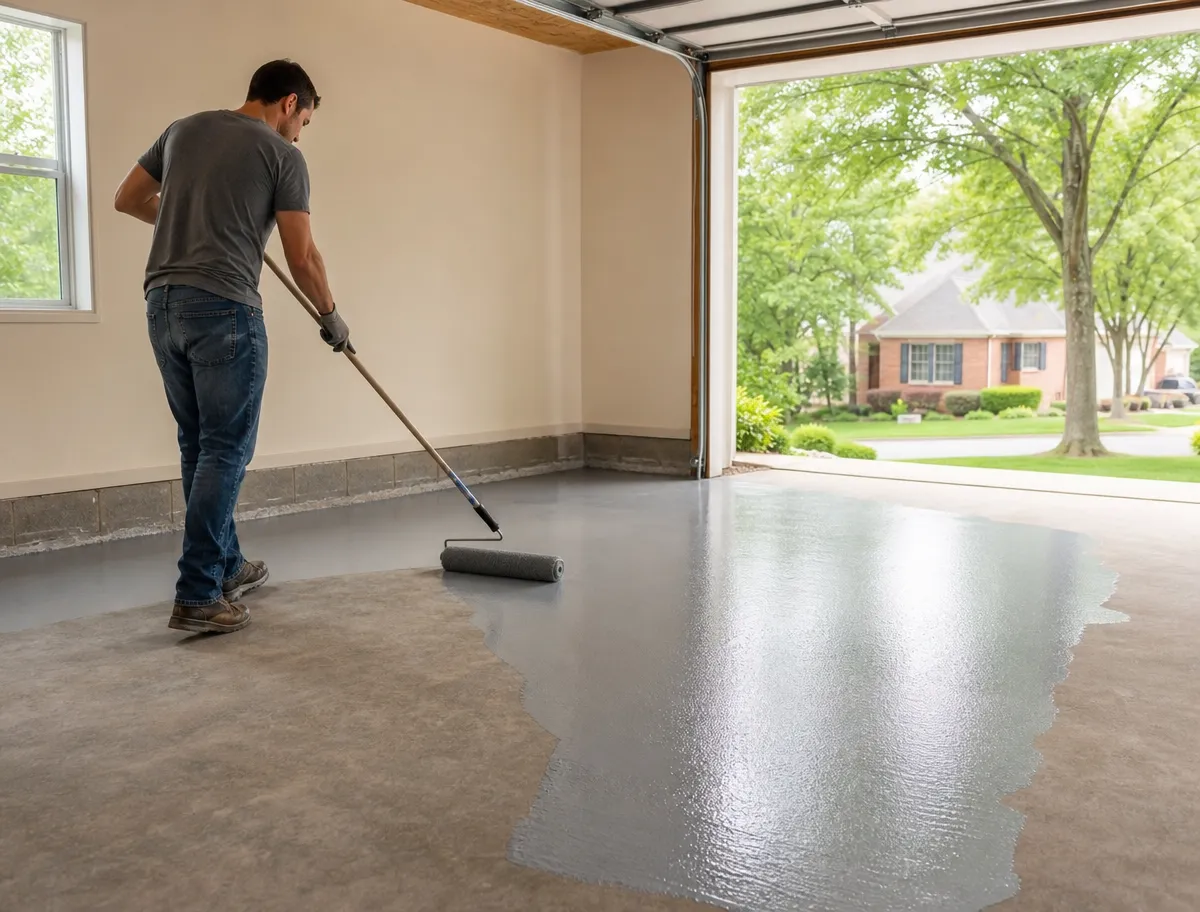
Key Takeaways
- Polyurea polyaspartic coatings cure in temperatures as low as -20°F, making winter installation viable year-round.
- Epoxy coatings require late spring through early fall installation due to temperature and humidity sensitivity requirements.
- Polyurea polyaspartic systems finish in one day and complete regardless of seasonal temperature swings or humidity.
- Fall represents an ideal installation window, allowing homeowners to prepare garage floors before winter weather arrives.
When Should You Coat Your Garage Floor in Pittsburgh?
Fall and early winter offer the strongest window for most Pittsburgh homeowners. The right answer depends on the coating system chosen. Concrete left bare through a Pittsburgh winter takes a beating year after year. Snow, road salt, and repeated freeze-thaw cycles chip away at unprotected slabs. A garage floor exposed to even one more harsh season loses ground it never fully recovers. Deciding on the best time to coat a garage floor in Pittsburgh starts with understanding what winter does to concrete before protection goes down.
Curing conditions matter just as much as timing. A coating system needs stable temperature and manageable humidity to bond correctly and hold up for years. Rush the process in the wrong conditions, and the surface risks peeling, bubbling, or uneven texture down the road.
Pittsburgh’s climate makes this timing especially important. Forecast data from the National Weather Service Pittsburgh office and the historical trends tracked by NOAA’s Climate at a Glance tool both point to the fall shoulder season as the driest, most temperature-stable stretch for exterior concrete work before winter precipitation sets in.
Why does fall work so well for garage floor coatings?
Cooler air and lower humidity create dependable curing conditions before winter salt and slush arrive. Getting the coating installed in fall means the floor is fully protected before the first heavy snowfall hits the region.
Does winter timing still matter for garage floors?
Yes. Waiting too long into winter risks trapping moisture and cold beneath the surface during application, which can compromise the cure. Scheduling ahead of the coldest stretch avoids that risk entirely.
Coating Priorities by Season
| Season | Priority |
|---|---|
| Fall | Ideal curing conditions, protection before salt season |
| Winter | Requires careful temperature management |
| Spring/Summer | Humidity control becomes the main factor |
Specialty Concrete Coatings LLC, based in Sandy Lake, PA, serves homeowners throughout Greater Pittsburgh with scheduling built around these seasonal realities.
Does Coating Type Change the Best Season?
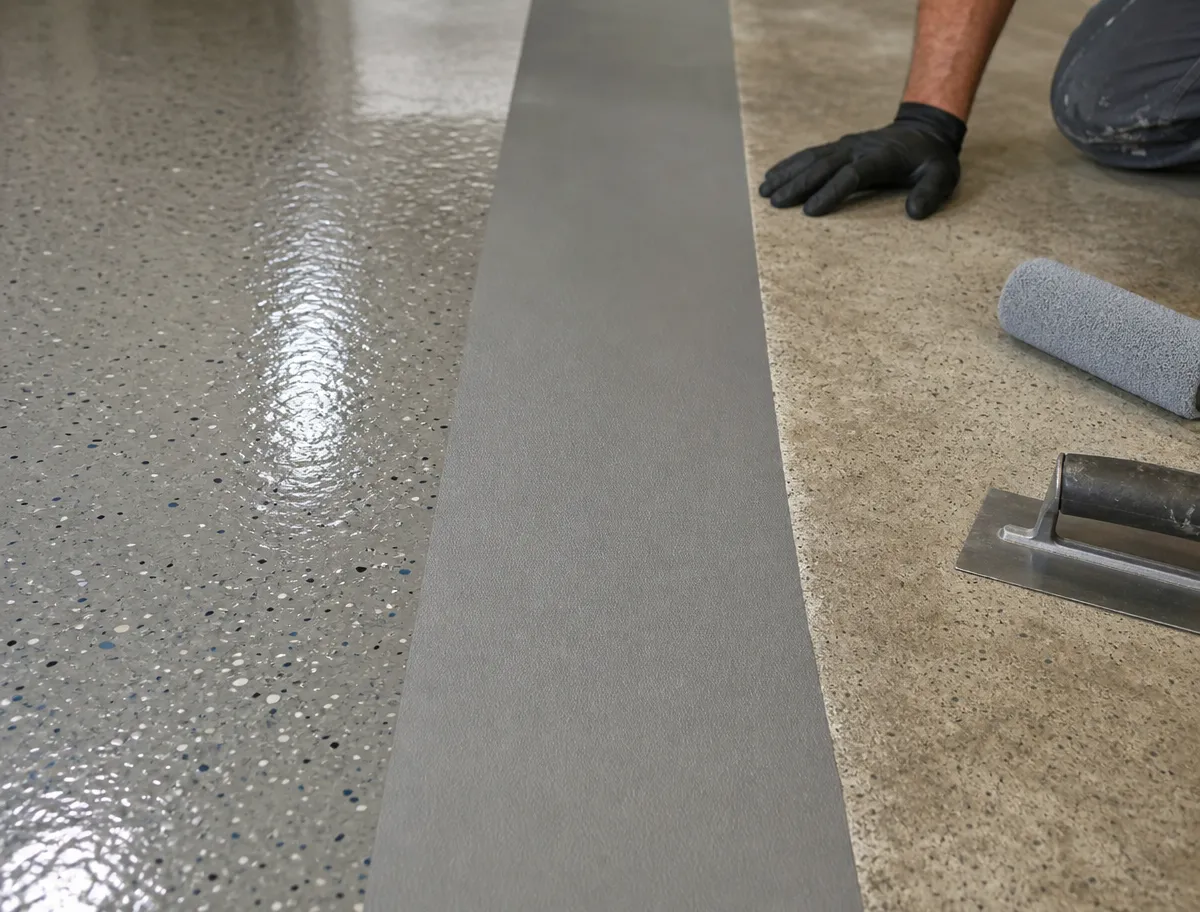
Yes, coating chemistry determines the calendar. Polyurea polyaspartic systems install in any season across Western Pennsylvania, including the depths of January and February. Traditional epoxy demands a much narrower window. The difference comes down to how each material cures on a cold Pittsburgh slab.
Polyurea coatings cure in temperatures as low as -20°F. Humidity swings and sudden cold snaps, common through a Pittsburgh winter, don’t interfere with the cure. That flexibility means a garage floor project can move forward in December without waiting for warmer months. The finished coating still hardens on schedule.
Epoxy behaves differently. Once slab temperatures drop below 50°F, epoxy simply will not cure properly, leaving the surface soft, tacky, or prone to premature failure. That limitation restricts epoxy installations to late spring through early fall, a window that shrinks fast once autumn chill sets in around Pittsburgh.
Can epoxy be installed during a Pittsburgh winter?
Epoxy installation isn’t recommended once outdoor and slab temperatures fall below 50°F, which rules out most of a Pittsburgh winter. Homeowners set on an epoxy finish need to schedule during the warmer stretch between late spring and early fall to get a proper cure.
Why does polyurea handle cold weather better than epoxy?
Polyurea’s chemical makeup allows it to cure at temperatures far below what epoxy tolerates, down to -20°F. That cold-weather resilience, paired with resistance to humidity swings, makes it the more dependable choice for year-round scheduling — a pattern consistent with the American Concrete Institute’s guide to concrete floor and slab construction, which stresses substrate temperature and moisture control as the biggest variables in a lasting coating bond.
| Coating Type | Cure Temperature Limit | Installable Season in Pittsburgh |
|---|---|---|
| Polyurea polyaspartic | As low as -20°F | Year-round, including January/February |
| Epoxy | Fails below 50°F | Late spring through early fall only |
For homeowners weighing timing against material choice, comparing polyurea and epoxy garage floor systems side by side removes the seasonal guesswork entirely, and the International Concrete Repair Institute’s standards for surface preparation give contractors a shared benchmark for prepping the slab correctly no matter which system is chosen.
🎯 Ready to schedule before Pittsburgh’s first freeze? Get a free, no-obligation quote from Specialty Concrete Coatings LLC and lock in your fall installation date.
Why Is Fall the Smartest Time to Schedule?
Autumn wins the calendar for most Pittsburgh-area garages, hands down. Scheduling a coating before winter locks the floor in place before road salt season returns, giving concrete a fighting chance against the months ahead. Specialty Concrete Coatings LLC treats this window as the single best opportunity for homeowners across Greater Pittsburgh and Northwest Pennsylvania to get ahead of the damage cycle rather than react to it later.
Consider what’s coming. Once snow starts falling, PennDOT spreads nearly 600,000 tons of road salt across the region every year. That chloride-heavy slush rides home on tires, pools on bare concrete, and works its way into every hairline crack before refreezing overnight. A garage floor without protection absorbs that punishment season after season, and the damage compounds.
Fall installation flips that script. The concrete stays dry, temperatures remain moderate, and the coating cures fully before the first salt truck rolls out. Many contractors across the industry consider best time coat garage floor Pittsburgh planning during autumn to be one of the smartest calls a homeowner can make to protect and upgrade concrete before winter arrives.
Homeowners exploring epoxy and concrete floor coating options can lock in a fall install date before the first hard freeze reaches the region.
Does the fall timing advantage apply to every coating type?
Not equally. Polyurea polyaspartic systems cure fast regardless of season, so fall offers convenience more than necessity for those installations. Epoxy, however, depends heavily on stable temperatures, making fall’s mild weather a genuine cure-quality advantage rather than just a scheduling preference.
What happens if a homeowner waits until winter?
Waiting means the slab absorbs at least one full season of salt exposure, moisture cycling, and freeze-thaw stress unprotected. Repairs often cost more once staining and surface pitting have already set in. Booking early avoids that gap entirely.
How Do Pittsburgh Winters Damage Unprotected Concrete?
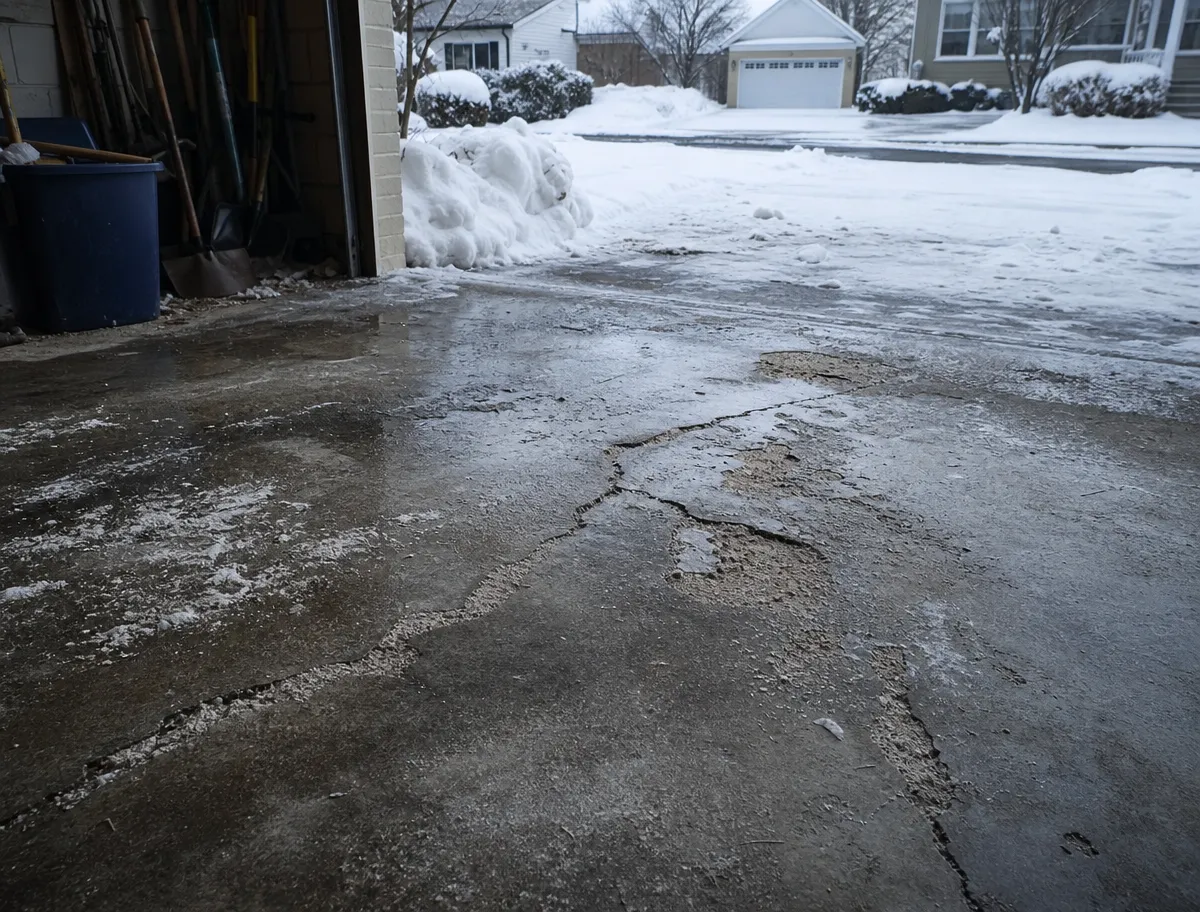
Freeze-thaw cycles cause the most damage to unsealed garage slabs across the region. Water seeps into microscopic pores in the concrete, then freezes and expands, popping the surface in a process called spalling. Each winter storm repeats the cycle, and the damage compounds year over year.
Salt brine tracked in on tires adds a second threat. Chlorides from road salt penetrate the slab and accelerate corrosion inside the concrete matrix, weakening it from within. Combined with freeze-thaw stress, this chemical attack turns a small surface crack into a structural problem within a few seasons.
Why does concrete crack faster in a Pittsburgh garage than elsewhere?
Pittsburgh’s swing between winter freezes and spring thaws puts unusual stress on bare concrete. Vehicles bring in slush loaded with de-icing salt. That brine sits against the slab long after the snow melts outside. The chloride exposure and moisture cycling happen far more often here than in milder climates, which shortens the life of unprotected floors.
The two threats work together:
- Spalling — trapped water freezes, expands, and fractures the surface layer.
- Chloride corrosion — salt brine breaks down the concrete matrix from the inside.
- Compounding wear — repeated freeze-thaw exposure widens existing cracks each season.
Protective coatings address both problems at once. A properly installed system significantly enhances durability and reduces maintenance needs against these environmental and mechanical factors, sealing the surface before water and salt ever reach the pores below. Choosing the best time to coat a garage floor in Pittsburgh matters because it determines how well that protective layer bonds and cures before winter conditions return. For a closer look at seasonal prep, see our guide to winter-proofing your concrete floor before the first freeze.
Can You Coat a Garage Floor in Winter?
Winter installation works for Pittsburgh garages, provided the system is polyurea polyaspartic rather than epoxy. Cold temperatures, road salt, and freeze-thaw cycles make winter feel like the wrong season for a project. The right coating technology removes that barrier entirely. Specialty Concrete Coatings LLC serves Greater Pittsburgh from its Sandy Lake, PA base, giving homeowners scheduling flexibility no matter the month.
Cure temperature separates the two systems. Polyurea polyaspartic coatings cure in conditions as low as -20°F, complete in a single day, unaffected by humidity or seasonal swings. Epoxy, by contrast, needs warmer slab temperatures to set properly, which pushes those installations toward late spring through early fall.
Does cold weather affect coating quality?
Cold weather does not compromise a polyurea polyaspartic system’s finish or bond strength. The chemistry is engineered for cold-weather curing, so a February installation performs identically to one done in July.
Choosing the best time to coat a garage floor in Pittsburgh often means choosing the right product, not just the right season:
- Polyurea polyaspartic: cures in extreme cold, ready in one day, ideal for winter scheduling
- Epoxy: requires warmer slab temperatures, restricted to late spring through early fall
Professional crews also manage air quality during application. EPA guidance on volatile organic compounds and OSHA’s ventilation requirements for coating operations both call for proper airflow when applying solvent-based products — one more reason to leave installation to a trained crew rather than attempting a closed-garage DIY pour in winter.
Pittsburgh homeowners frequently remark on the striking, showroom-quality look their coated floor achieves compared to bare concrete, regardless of the season it was installed. To see how these systems perform across all four seasons, read more about how weather resistance affects coating longevity.
Frequently Asked Questions
What is the best season to coat a garage floor in Pittsburgh?
Fall offers the strongest window, with cooler air and lower humidity creating dependable curing conditions before winter salt and slush arrive, protecting the floor before heavy snowfall hits.
Can garage floors be coated during a Pittsburgh winter?
Yes, if using polyurea polyaspartic systems, which cure in temperatures as low as -20°F and finish in one day regardless of seasonal temperature swings or humidity.
Why doesn’t epoxy work as well for winter installation?
Epoxy coatings require slab temperatures above 50°F, limiting installation to late spring through early fall due to temperature and humidity sensitivity requirements.
How long does a polyurea garage floor coating take to cure?
Polyurea polyaspartic coatings finish in as little as one day and cure fast enough to walk on within hours, regardless of the season or outdoor humidity.
Does Specialty Concrete Coatings LLC serve the Pittsburgh area?
Yes. Specialty Concrete Coatings LLC is based in Sandy Lake, PA, and serves homeowners throughout Greater Pittsburgh and Northwest Pennsylvania with garage floor coating installation year-round.
TL;DR — Best Time to Coat a Garage Floor in Pittsburgh at a Glance
- Fall is the ideal season for most Pittsburgh garage floor coating projects, offering cool, dry curing conditions before winter salt arrives.
- Polyurea polyaspartic coatings cure in temperatures as low as -20°F, so they can be installed any month of the year, including winter.
- Epoxy coatings require slab temperatures above 50°F, limiting installation to late spring through early fall.
- Untreated concrete left through a Pittsburgh winter suffers compounding freeze-thaw and road-salt damage year after year.
- Ready to lock in your installation date? Request a free quote from Specialty Concrete Coatings LLC today.
Conclusion
In closing, timing your garage floor coating installation around Pittsburgh’s seasonal conditions ensures optimal results and faster return to service. Spring and fall offer the ideal balance of temperature stability and low humidity that our polyurea and polyaspartic systems require for proper curing. By planning your project during these favorable windows, you protect your investment and enjoy a durable, attractive finish that withstands the region’s demanding weather for years to come.
Related Resources
- Garage Floor Coating Services
- Concrete Coating Company in Pittsburgh, PA
- Polyaspartic Floor Coating Cost Guide
- Is Polyaspartic Worth the Extra Cost?
- The One-Day Garage Floor Coating Process
- Polyurea Concrete Coating Explained
Get a Free Garage Floor Coating Quote
Every Pittsburgh garage is different, and the right coating system — and the right season to install it — depends on your slab’s condition, your schedule, and how you use the space. Contact Specialty Concrete Coatings LLC to request a free, no-obligation quote and find the best time to coat your garage floor before Pittsburgh’s next winter arrives.
About Specialty Concrete Coatings
Specialty Concrete Coatings LLC is a Sandy Lake, PA-based residential and commercial concrete coating contractor serving homeowners throughout Greater Pittsburgh and Northwest Pennsylvania. The team installs polyurea, polyaspartic, and epoxy garage floor systems engineered to handle the region’s harsh winters, road salt, and freeze-thaw cycles.