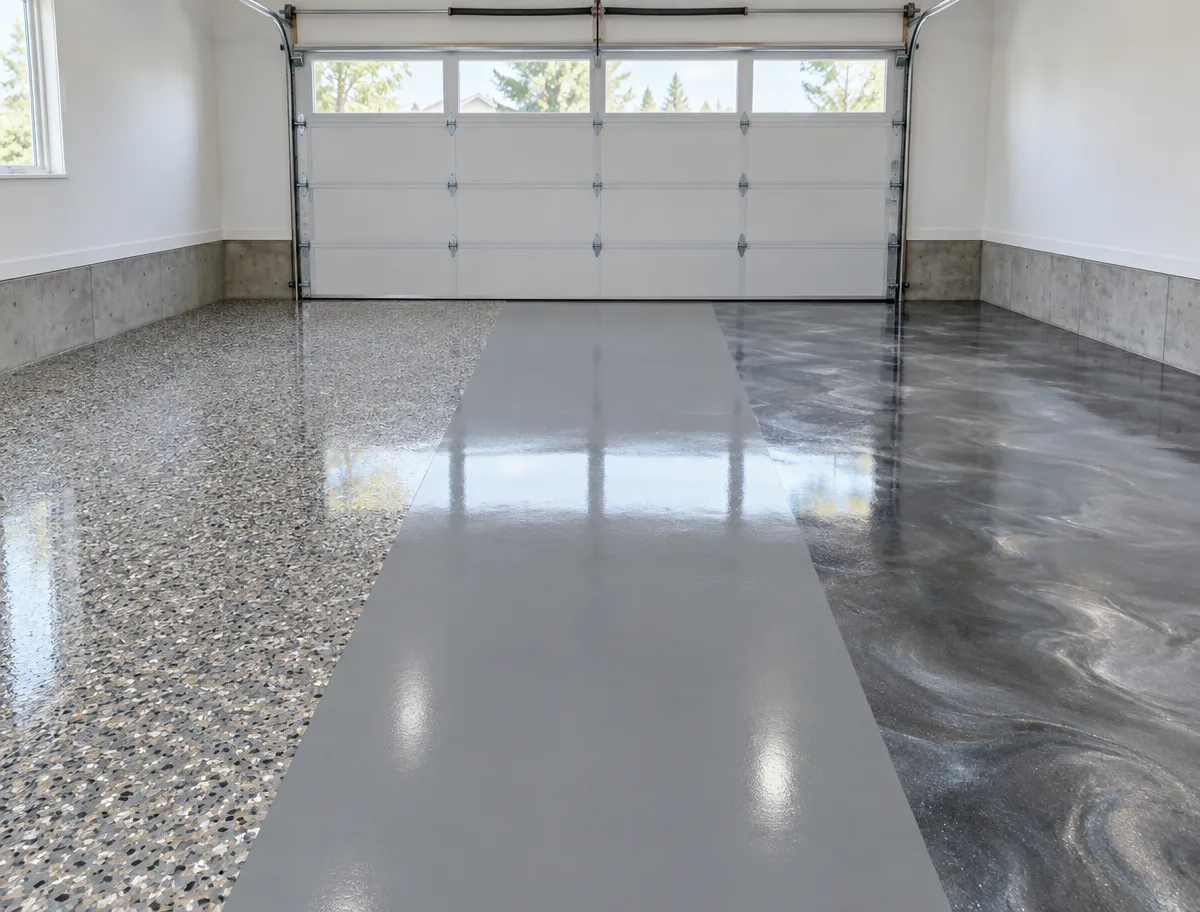
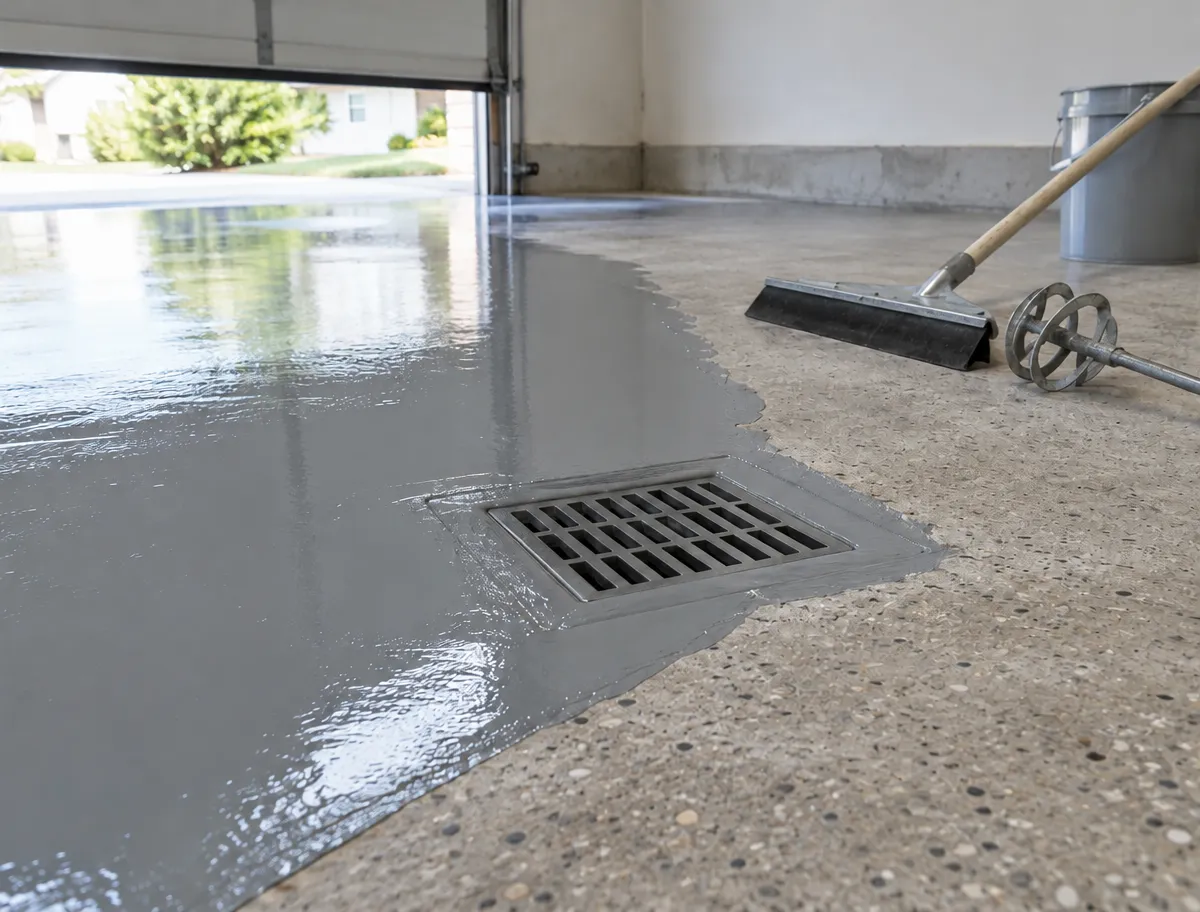
Quick Answer: Basement floor paint is a thin, budget-friendly cosmetic coat that only holds up on dry, low-traffic slabs. In Western Pennsylvania basements, moisture vapor rising through the concrete often makes paint bubble, peel, and flake. An epoxy coating chemically bonds into a thicker layer that resists moisture, stains, and abrasion, so it is the better choice for finished basements, laundry rooms, home gyms, and workshops. Paint costs less upfront but needs frequent touch-ups. Whichever you choose, test the slab for moisture first.
Why does paint fail on basement floors?
Basement floor paint fails because it forms a thin, weak film that cannot withstand the persistent moisture and physical demands of a below-grade concrete slab. Standard floor paint scratches, peels, and requires frequent touch-ups every few years, making it a temporary cosmetic fix rather than a lasting solution.
How does moisture destroy painted basement floors?
Moisture vapor emission is the most common type of basement moisture in Western Pennsylvania. This invisible pressure pushes water vapor up through the concrete slab, where it becomes trapped beneath the paint film. The coating bubbles, loses adhesion, and eventually flakes away in sheets. Pittsburgh’s climate compounds the problem. Wet springs, humid summers, and freeze-thaw winters create persistent moisture challenges that paint cannot withstand.
Test before you coat. A calcium chloride test under ASTM F1869 measures how much moisture vapor a slab releases, and our guide on whether you can epoxy a damp basement floor explains what the results mean for your coating choice.
Why does paint peel and chip so quickly?
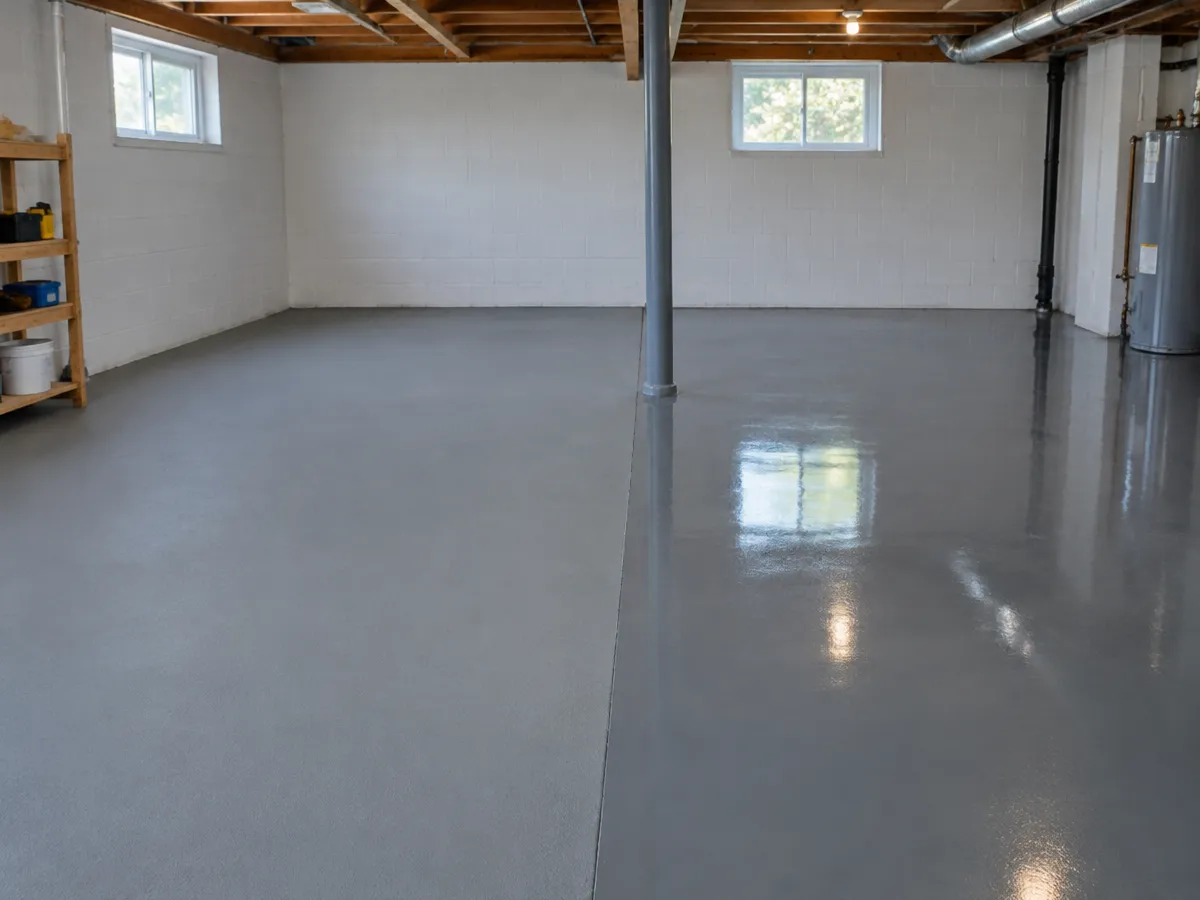
Floor paint is a basic coating designed to enhance appearance while offering minimal protection. It lacks the strength and durability needed for basement conditions. Even light foot traffic abrades the thin surface. Hot water or cleaning solutions accelerate deterioration. Within a few years, the floor looks worn and requires another application. Homeowners who choose paint instead of professional coatings face different long-term durability and maintenance outcomes.
| Failure Factor | Impact on Painted Basement Floors |
|---|---|
| Moisture vapor emission | Bubbling, adhesion loss, peeling |
| Surface abrasion | Scratching, thinning, worn appearance |
| Cleaning chemicals | Accelerated breakdown of the coating |
| Freeze-thaw cycles | Cracking and delamination from slab movement |
Specialty Concrete Coatings addresses these failures with polyurea and polyaspartic systems engineered for Western Pennsylvania’s demanding conditions. The company’s moisture-specific basement solutions begin with a professional moisture assessment before any coating is applied.
Can a painted basement floor ever last?
A painted floor requires repainting frequently under normal conditions. In a damp Pittsburgh basement, that timeline shortens considerably. The coating scratches, peels, and loses its appearance after just a few seasons. No amount of surface preparation eliminates the moisture vapor rising through the slab. Paint simply cannot form the impermeable barrier a basement demands.
How does epoxy outperform paint in basements?
Epoxy outperforms paint in basements because a resin-and-hardener coating chemically bonds into a strong, long-lasting surface that resists moisture, stains, and abrasions. Paint sits on top of the slab as a thin cosmetic film. That difference decides how a basement floor performs under gym equipment, storage, and everyday foot traffic.
The gap shows up in coating thickness. Epoxy systems build a thick layer, while paint measures only a thin film. A film that thin chips, peels, and stains under heavy use, so homeowners face frequent touch-ups. Epoxy delivers superior durability, chemical resistance, and longevity, which makes it ideal for high-traffic and heavy-use spaces.
| Criterion | Epoxy coating | Basement floor paint |
|---|---|---|
| Thickness | Thick layer | Thin film |
| Bond to slab | Chemical bond | Surface film |
| Moisture, stain, abrasion resistance | Resists all three | Minimal protection |
| Best use | High-traffic, heavy-use areas | Light foot traffic |
| Upfront cost | Higher | Lower |
Why does surface preparation matter so much?
Epoxy only bonds as well as the slab allows. Specialty Concrete Coatings mechanically prepares every surface by diamond grinding, repairs cracks and spalls with concrete menders, and applies a high-adhesion basecoat. This multi-step process gives the coating a clean, profiled surface to grip. Skipping preparation undercuts the chemical bond that makes epoxy durable in the first place.
Is epoxy the right choice for a Pittsburgh basement?
Western Pennsylvania basements face wet springs, humid summers, and freeze-thaw winters, so moisture resistance carries real weight. Epoxy resists moisture, stains, and abrasions, which suits a finished basement used as a gym or craft room. Homeowners weighing options can review basement epoxy floor coating guidance before committing. Paint costs less upfront, yet its limited protection rarely survives heavy use.
📞 Ready to Get Started? Specialty Concrete Coatings offers free quotes and on-site moisture assessments for basements across Greater Pittsburgh and Northwest Pennsylvania. Request your free basement floor quote to find out which system your slab can support.
What makes polyurea better than standard epoxy?
Polyurea basecoats deliver significantly stronger bond strength and impact resistance than standard epoxy. That extra toughness matters in demanding conditions, where constant traffic, dropped tools, and chemical exposure test every square foot of a floor.
Specialty Concrete Coatings pairs a polyurea basecoat with a UV-stable polyaspartic clear coat. This combination resists yellowing, abrasion, and chemicals, so the finish holds its appearance far longer than a basic coating. Homeowners weighing basement floor paint against a professional system should note the gap in performance. A thin cosmetic coating offers minimal protection, while a polyurea system is engineered to last.
| Feature | Polyurea System | Standard Epoxy |
|---|---|---|
| Bond strength and impact resistance | Significantly stronger | Lower |
| UV stability | UV-stable polyaspartic topcoat resists yellowing | Prone to yellowing |
| Return to service | Walk on in about 12 hours, drive on within 48 hours | Slower cure |
| Best fit | Busy basements and high-traffic spaces | Lighter-traffic spaces |
| Upfront cost | Higher | Lower |
How fast can homeowners use the floor again?
Polyurea systems cure fast. Most clients can walk on the floor in about 12 hours and drive on it within 48 hours. That quick turnaround keeps a basement remodel on schedule instead of stalling it for days.
Is epoxy ever the smarter choice?
Epoxy remains a lower-cost option for lighter-traffic spaces. For a busy basement, though, polyurea is the stronger long-term choice. The polyurea versus epoxy comparison breaks down how each system performs under heavy use.
Can paint ever be a good basement choice?
Paint earns a place in a narrow set of basement scenarios. A budget-friendly, cosmetic option for low-traffic areas, basement floor paint applies easily but delivers limited protection. Homeowners weighing a quick refresh against a long-term finish should understand where that trade-off holds and where it fails.
| Criterion | Basement floor paint | Professional polyurea system (Specialty Concrete Coatings LLC) |
|---|---|---|
| Upfront cost | Lower | Higher |
| Lifespan | Limited; requires frequent recoating | Engineered for long-term service |
| Moisture performance | Bubbles and peels when moisture is present | Built for Western PA slab moisture |
| Maintenance | Frequent touch-ups | Low-maintenance surface |
| Best use | Low-traffic, appearance-secondary spaces | Finished, high-use basements |
Pricing note: The cost comparisons in this article are for general guidance only. Actual costs vary based on basement size, slab condition, moisture levels, and the coating system selected, and pricing can change at any time. Contact Specialty Concrete Coatings for a current, accurate quote.
When does paint make sense?
Paint suits low-traffic areas where appearance is secondary and frequent reapplication is acceptable. A storage corner or a lightly used craft zone fits that profile. Chipping, peeling, and staining remain likely, and painted floors typically need frequent touch-ups within a few years, so lower upfront cost carries higher long-term maintenance.
Why does paint fail in Western PA basements?
Pittsburgh’s wet springs, humid summers, and freeze-thaw winters push moisture through basement slabs. Specialty Concrete Coatings LLC warns that a coating chosen without regard to moisture conditions will bubble, peel, and fail within months. Paint offers no defense against that pressure. Homeowners comparing basement concrete floor finish options gain a clearer view of which systems survive below grade.
Which coating system should Pittsburgh homeowners choose?
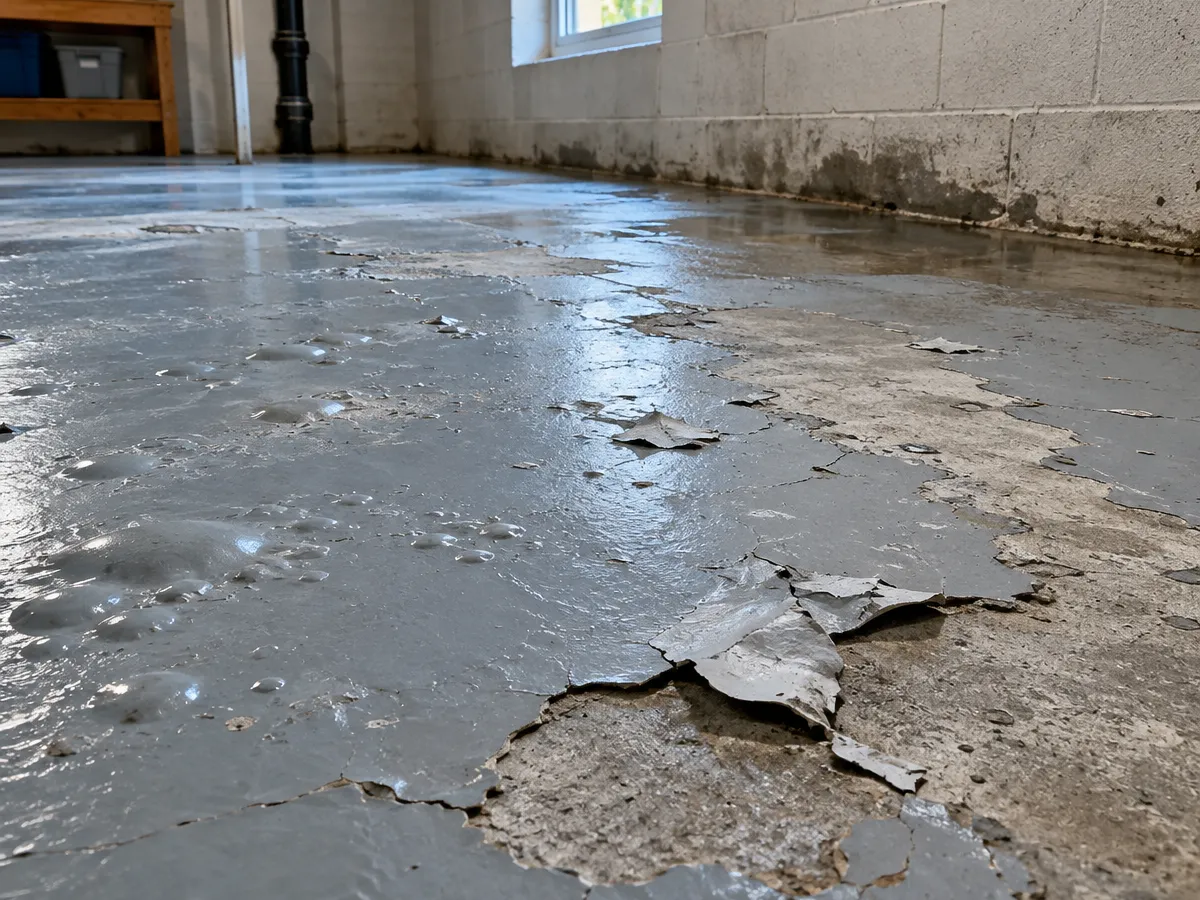
Specialty Concrete Coatings delivers a polyurea-based system engineered for Western Pennsylvania’s punishing basement conditions. Standard basement floor paint peels and blisters when moisture pushes up through the slab, a failure Pittsburgh homeowners encounter within a single wet season. The company’s multi-layer approach eliminates that risk through mechanical preparation and moisture-tolerant chemistry.
The process begins with diamond grinding to open the concrete’s pores. Cracks and spalls receive repair with concrete menders before a high-adhesion basecoat locks onto the prepared surface. Vinyl color chips are hand-broadcast for customized aesthetics and slip resistance, then a final clear coat seals everything into a low-maintenance, stain-resistant floor. Homeowners select from a curated palette of chip blends that complement any basement design.
How does polyurea compare to basement floor paint for moisture resistance?
Paint sits on top of the concrete as a thin film. Moisture vapor migrating upward lifts that film and causes bubbling within months. Polyurea bonds into the slab itself. The chemical cure creates a poreless barrier that blocks hydrostatic pressure, the primary failure mechanism in Pittsburgh’s clay-heavy soils.
What does the installation timeline look like for a Pittsburgh basement?
Specialty Concrete Coatings completes most basement projects in a single day. The crew handles everything from initial diamond grinding through final cleanup. Homeowners walk on the surface after approximately 12 hours and return furniture after 24 hours. The company provides free quotes and guides clients through material and color selection before scheduling.
| Coating Type | Moisture Resistance | Typical Lifespan | Maintenance |
|---|---|---|---|
| Specialty Concrete Coatings Polyurea System | Excellent; bonds into slab, blocks hydrostatic pressure | 15+ years with proper care | Occasional damp mopping |
| Basement Floor Paint | Poor; lifts and peels with moisture vapor | Limited; requires frequent recoating | Frequent touch-ups required |
For over 15 years, Specialty Concrete Coatings has served Pittsburgh and Western PA with expert moisture assessments and estimates. The company manages every project from consultation through professional installation, ensuring homeowners receive a basement floor coating system that withstands freeze-thaw cycles and persistent humidity. Financing options and a stated warranty program support the investment.
Frequently Asked Questions
Can you use basement floor paint on a damp slab?
No. Paint sits on the surface as a thin film, so moisture vapor rising through a damp slab pushes it off as bubbles and peeling. Test the slab first; if moisture is present, a professionally installed, moisture-tolerant coating system is the better option.
How long does basement floor paint last compared to epoxy?
Painted basement floors usually need touch-ups within a few years, and sooner in damp or high-traffic spaces. A professionally installed epoxy or polyurea system is built to last much longer; Specialty Concrete Coatings rates its polyurea system for 15+ years with proper care.
Is epoxy worth the extra cost for a basement floor?
For finished basements, laundry rooms, home gyms, and workshops, usually yes. Epoxy costs more upfront, but it resists moisture, stains, and abrasion and avoids the repeated repainting that paint requires. Costs vary by project, so request a quote for current pricing.
Why does paint fail on basement floors?
Paint forms a thin, weak film that cannot withstand persistent moisture and physical demands, which leads to scratching, peeling, and frequent touch-ups.
How soon can you use a basement floor after a professional coating?
With a polyurea system, most homeowners can walk on the floor in about 12 hours and move furniture back after about 24 hours. Cooler temperatures can extend cure times.
TL;DR — Basement Floor Paint vs Epoxy at a Glance
- Basement floor paint forms a thin cosmetic film that suits only dry, low-traffic spaces.
- Moisture vapor rising through the slab makes painted floors bubble, peel, and flake.
- Epoxy chemically bonds into a thicker layer that resists moisture, stains, and abrasion.
- Polyurea basecoats add stronger bond strength and a faster return to service than standard epoxy.
- Paint costs less upfront, but frequent touch-ups add up over time.
- Ready to upgrade? Call Specialty Concrete Coatings for a free basement floor quote and moisture assessment.
Related Resources
- Basement Floor Coatings
- Pittsburgh, PA Concrete Coatings
- Best Concrete Coating Options for Your Basement Floor
- Can You Epoxy a Damp Basement Floor?
- Basement Concrete Floor Finish Options
- How Long Does an Epoxy Floor Last?
Get a Free Basement Floor Coating Quote
For Pittsburgh homeowners, the choice comes down to a single question: do you want a floor that survives the first wet season or one that serves your basement for years? Paint fails predictably under moisture pressure, while a professionally installed polyurea system bonds into the slab and blocks that failure mechanism. Investing in the engineered solution eliminates the cycle of peeling, touch-ups, and replacement that paint guarantees.
Contact Specialty Concrete Coatings to schedule a free moisture assessment and quote for your basement floor.
About Specialty Concrete Coatings: Specialty Concrete Coatings LLC transforms residential and commercial concrete across Greater Pittsburgh and Northwest Pennsylvania with polyurea, polyaspartic, and epoxy floor systems. For over 15 years, the team has handled every project from diamond-ground prep to the final clear coat, with free quotes, financing options, and a warranty program.