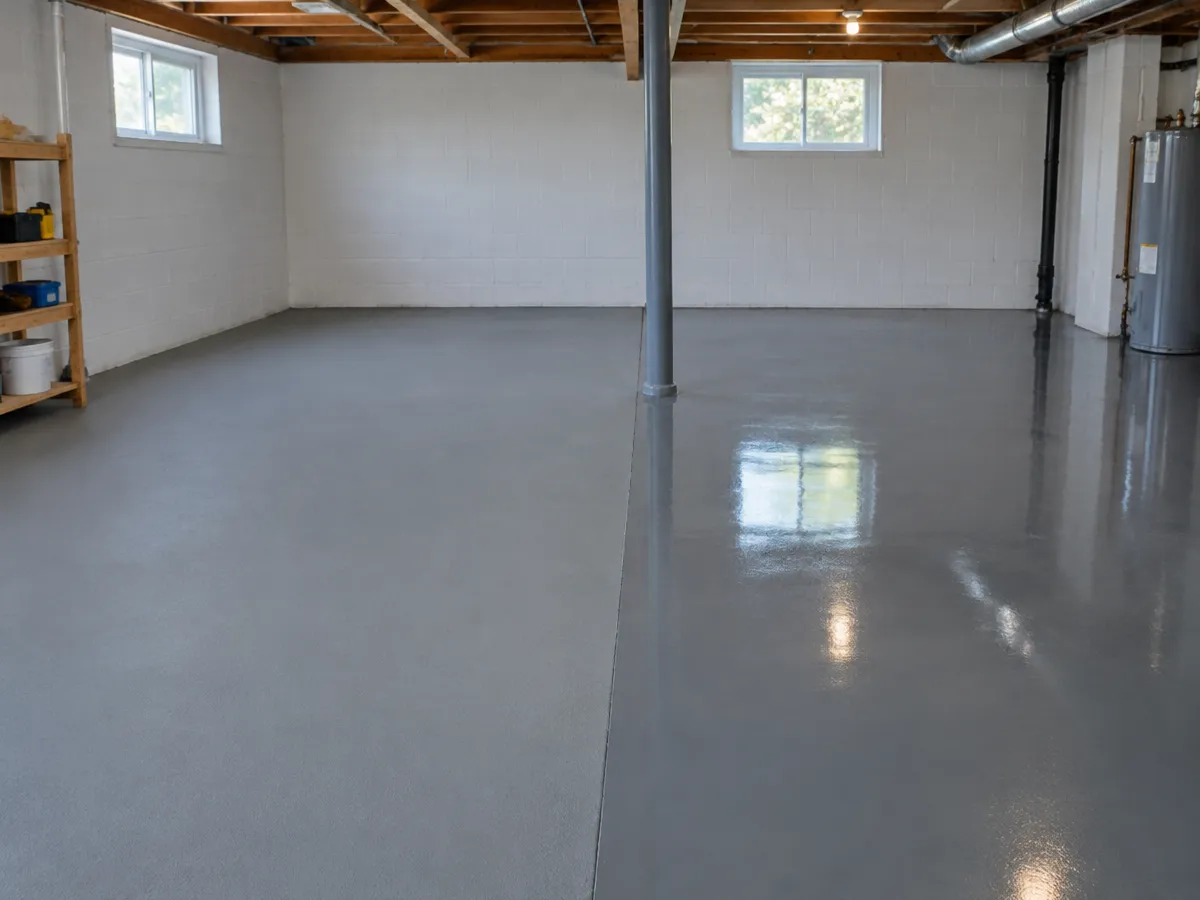
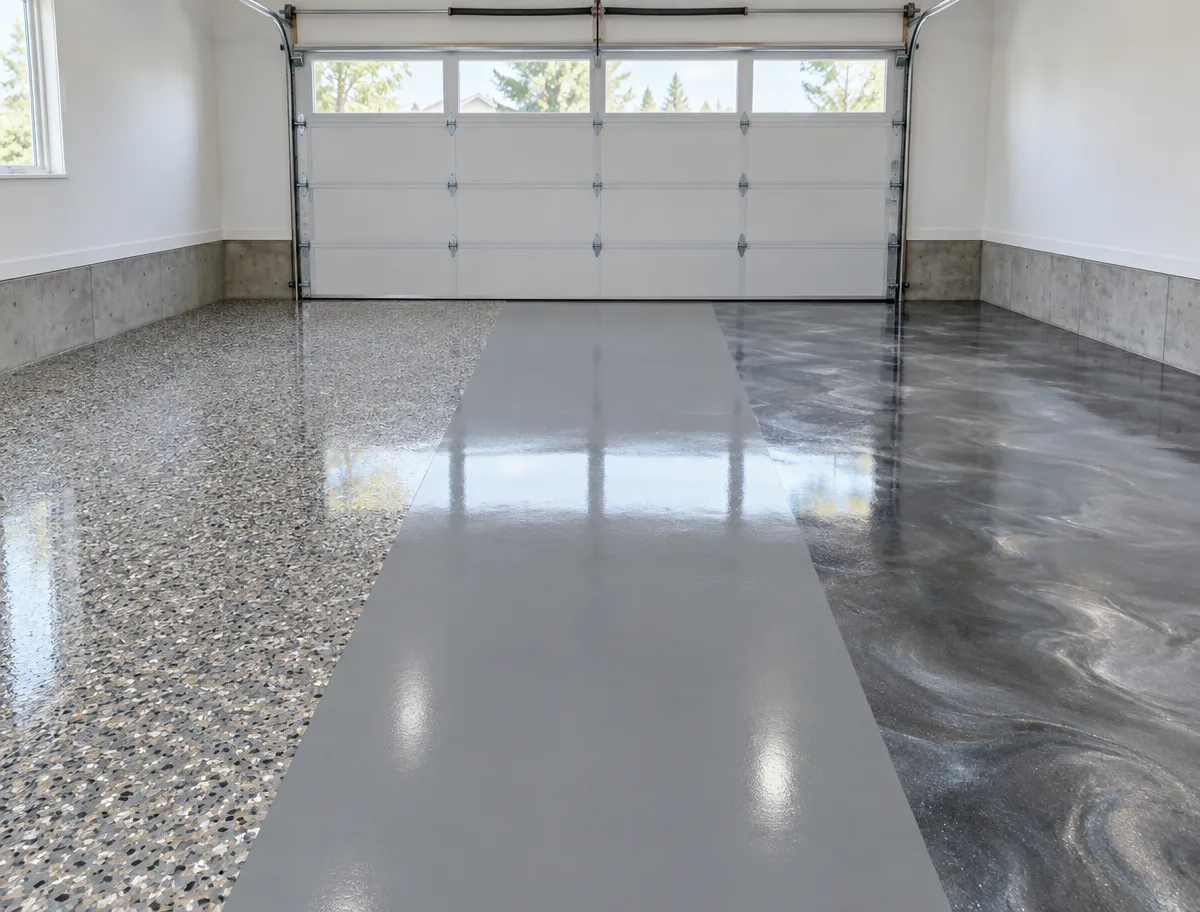
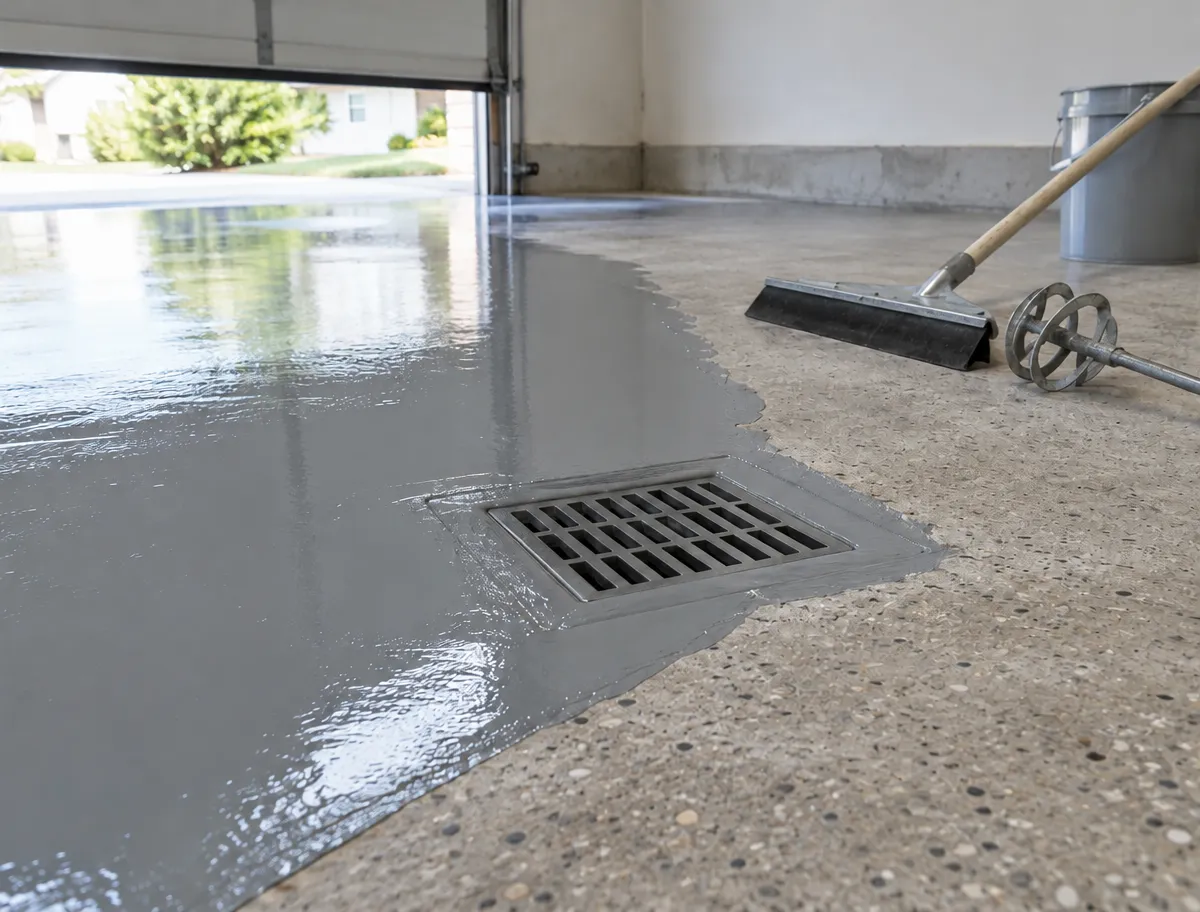
Quick Answer: For most garages, a flake (chip) finish is the most practical choice. The broadcast vinyl chips hide dirt, tire marks, and minor imperfections, and the texture adds slip resistance. A solid color epoxy floor gives a clean, uniform look but shows stains, scratches, and slab flaws more readily, so it suits lighter-use spaces. Metallic epoxy creates a high-gloss, marbled look but needs a near-perfect slab and fits showroom-style garages best. Choose based on how you use the garage and how much dirt you want hidden, not just on looks.
Flake finishes hide dirt and imperfections best, making them a strong fit for high-traffic garages. Solid color coatings offer a clean, uniform look but show more stains and scratches. Metallic epoxy creates a high-gloss, liquid-like appearance that demands a near-perfect concrete slab underneath. Specialty Concrete Coatings LLC recommends flake systems for most residential garages in Pennsylvania, and this guide explains why, along with when the other finishes make sense.
What Makes a Garage Floor Finish Last?
A garage floor’s longevity depends on three factors: how the space is used, the condition of the concrete, and how you want the floor to look five years out. Property owners who overlook any of these risk premature coating failure. The right finish choice, paired with proper installation, helps prevent costly rework.
For Pittsburgh and Northwest Pennsylvania homeowners, seasonal extremes put garage floors to the test. Specialty Concrete Coatings LLC brings more than 15 years of regional experience to residential concrete surfaces. Flake vs solid color epoxy garage floor decisions start with the materials and preparation underneath, not just aesthetics.
How Does the Base Coat Material Affect Floor Lifespan?
The foundation layer separates coatings that endure from those that fail early. Specialty Concrete Coatings LLC uses a polyurea basecoat designed for strong adhesion to properly prepared concrete. A UV-stable polyaspartic clear coat seals the floor, resisting yellowing, abrasion, and chemical damage. The American Concrete Institute’s guide for the use of polymers in concrete offers background on how polymer materials are used with concrete.
Why Does Surface Preparation Matter More Than the Coating Itself?
A coating bonds only as well as the concrete beneath it. The company’s process begins with mechanical diamond grinding that opens the slab’s pores for adhesion. Cracks and spalls are repaired with concrete menders before any basecoat goes down, and a high-adhesion basecoat follows. Skipping these steps can lead to delamination. Finish selection also depends on concrete condition: a damaged slab undermines every option, from uniform solid color to textured flake floors.
Industry test methods show how seriously the coatings field takes bond and moisture. Bond strength to concrete can be measured with the ASTM D7234 pull-off adhesion test method, and moisture coming up through a slab can be checked with the ASTM F1869 moisture vapor emission test. Ask your installer how they evaluate the slab before coating.
| Durability factor | Polyurea/polyaspartic system (Specialty Concrete Coatings) | Typical solid color epoxy |
|---|---|---|
| Base layer | Polyurea basecoat designed for strong adhesion | Epoxy; some products can chip under impact |
| UV resistance | UV-stable clear coat resists yellowing | Many epoxies can yellow over time without a UV-stable topcoat |
| Chemical resistance | Resists road salt and automotive fluids | Varies; some systems are prone to hot-tire pickup |
| Surface prep | Diamond grinding plus concrete mender repairs | Varies; DIY kits often rely on acid etching |
A garage floor finish lasts when preparation depth matches material quality. The flake system’s chip broadcast adds slip resistance and hides minor imperfections, while solid color floors need near-perfect concrete to avoid highlighting flaws. Specialty Concrete Coatings LLC pairs its polyurea basecoat with diamond-ground preparation so the floor can stand up to Pittsburgh’s freeze-thaw cycles and winter road salt season after season. If yellowing is a concern, our guide to preventing epoxy floor yellowing explains what causes it.
Why Choose a Flake Finish for Your Garage?
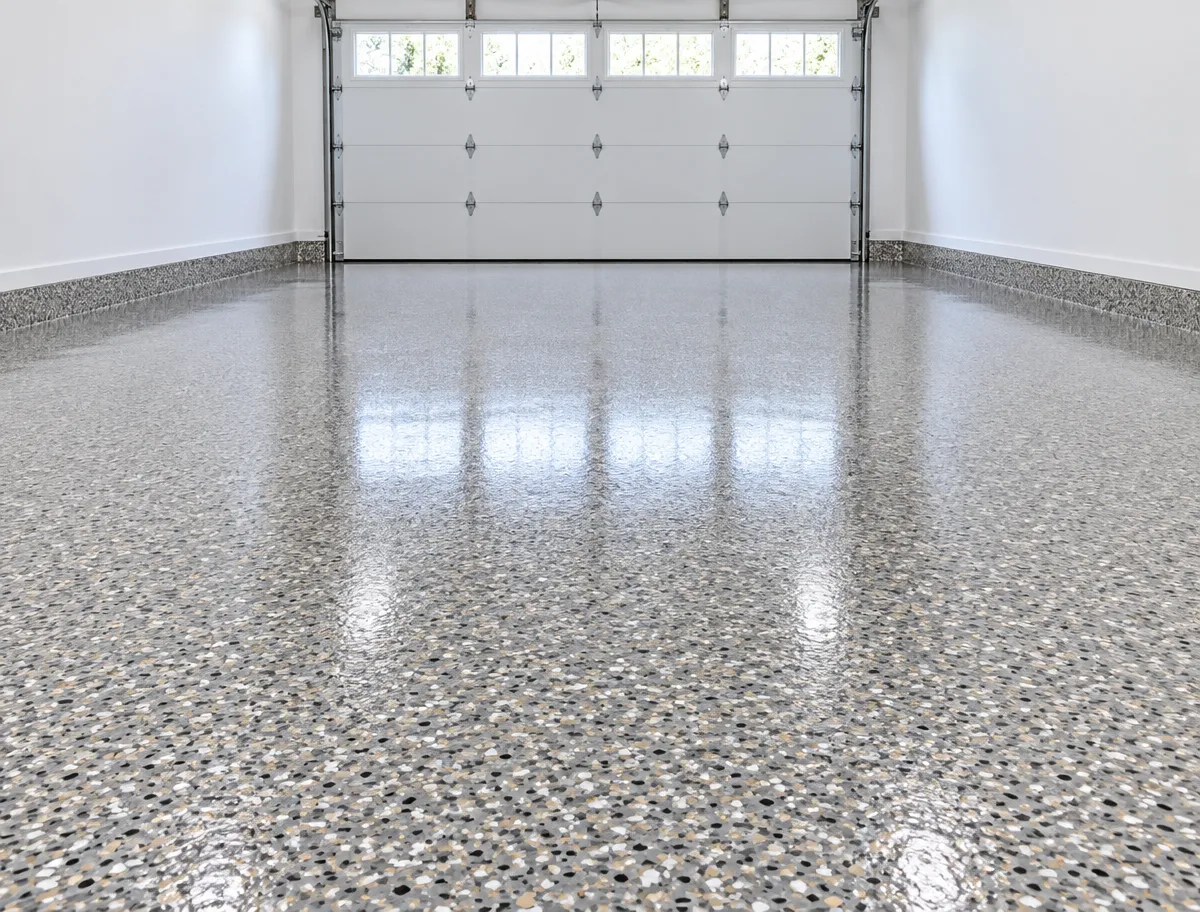
A flake finish delivers a textured, multicolor surface that hides wear and provides slip resistance under demanding garage conditions. Specialty Concrete Coatings LLC installs this system with vinyl color chips hand-broadcast across the floor for customized aesthetics and reliable traction.
The flake vs solid color epoxy garage floor decision hinges on how the surface performs over time. Solid color floors show scratches, tire marks, and stains more readily. Flake systems break up that visual wear with a field of multicolor chips, making them practical for garages that see daily vehicle traffic, tool drops, and chemical spills.
How Does the Flake Installation Process Work?
Specialty Concrete Coatings LLC follows a disciplined sequence:
- Diamond-grind the slab and repair cracks and spalls.
- Apply the high-adhesion basecoat.
- Hand-broadcast vinyl color chips into the wet basecoat for customized aesthetics and slip resistance.
- Scrape away excess chips for a uniform texture.
- Apply a final clear coat that locks the chips in place and protects the surface from abrasion and chemicals.
What Is the Difference Between Full and Partial Broadcast?
In a full broadcast, chips are applied until the basecoat is completely covered, so none of the base color shows through. This gives the most texture, the best camouflage for dirt and wear, and the most consistent look. In a partial broadcast, chips are scattered more lightly so the base color shows between them. Partial broadcast creates a smoother, more speckled look but hides less and offers less texture. Specialty Concrete Coatings LLC installs full-flake finishes for garages, where hiding wear matters most.
How Fast Can a Flake Floor Be Used?
The flake system is part of a one-day installation capability. Typical timelines run approximately 12 hours to walk on, 24 hours to move heavier items, and 48 hours to drive on in garage applications. Actual cure times vary with temperature, humidity, and the products used. That speed minimizes disruption for busy households, as explained in our overview of one-day garage floor coating.
The flake finish suits homeowners who want durability without sacrificing design flexibility. Specialty Concrete Coatings LLC pairs that flexibility with a fast return to service, making the flake system a strong choice for active garages.
📞 Not Sure Which Finish Fits Your Garage? Specialty Concrete Coatings offers free quotes across Greater Pittsburgh and NW Pennsylvania. Request a free garage floor coating quote and we’ll help you compare flake, solid color, and metallic options for your slab and how you use the space.
How Does Solid Color Epoxy Perform?
Solid color epoxy delivers a clean, modern look with one uniform color and sharp edges. The simplest system involves pigment mixed into the epoxy base coat, which is rolled out as a uniform color and then protected with a topcoat. On day one, solid color floors photograph beautifully and feel like an upgrade, but that first impression can fade under real use.
Scratches, scuffs, and tire tracks become more visible over time because no pattern breaks up the surface. Homeowners who park vehicles daily or use the garage as a workshop often notice this quickly, and the floor needs more frequent attention to keep its appearance.
What Makes Solid Color Epoxy Vulnerable to Visible Wear?
The uniform surface leaves little room for error. Pigment mixed into the base coat produces a single, uninterrupted color field, and the topcoat seals the system but adds no visual texture. Imperfections stand out against the monochrome background. Garage floors endure dropped tools, dragged equipment, and hot tires, and solid color finishes tend to show each incident. Some epoxy systems are also prone to hot tire pickup, which is more noticeable on a plain surface.
How Does the Installation Process Compare to Flake Systems?
Solid color installation follows a straightforward sequence: the crew mixes pigment into the base coat, rolls it out evenly, and finishes with a clear topcoat. Flake systems add a critical step, with vinyl chips hand-broadcast into the wet base coat before the topcoat seals everything. This extra layer creates the pattern that helps hide scratches. Specialty Concrete Coatings LLC pairs the look of flake with the adhesion of a polyurea basecoat, and for homeowners weighing flake vs solid color epoxy garage floor options, the difference in visible wear tends to grow with every season of use.
What Does a Metallic Epoxy Finish Offer?
A metallic epoxy finish combines epoxy resin with metallic pigments to create a seamless, high-gloss floor with a marbled, almost three-dimensional look. Light reflects off the pigments suspended in the resin, producing swirls and waves that can resemble natural stone, flowing water, or polished metal. Because the pattern forms as the pigments move during installation, no two metallic floors look exactly alike.
The trade-offs are practical. Metallic finishes need a near-perfect slab, show dust and grit more than flake, and are smooth unless a slip-resistant additive is used. Popular picks include silver, natural stone tones, and custom blends. See our metallic epoxy floor installations in Pittsburgh for more on how these floors are built and where they work best.
How Do Flake, Solid Color, and Metallic Finishes Compare?
This side-by-side view matches each finish to the way your garage is actually used.
| Factor | Flake (full broadcast) | Solid color | Metallic |
|---|---|---|---|
| Hides dirt and wear | High; chips camouflage dust, salt, and scuffs | Low; uniform color shows marks | Low to moderate; gloss shows dust and scratches |
| Slip resistance | Higher; chip texture adds grip | Moderate; smooth unless an additive is used | Lower when wet; smooth unless an additive is used |
| Repairability | Easiest to blend; chips help hide touch-ups | Repairs may show as color or sheen differences | Hardest to match; each pattern is unique |
| Look | Textured, speckled, multicolor | Clean, uniform, modern | Glossy, marbled, high-end |
| Best spaces | Daily-use garages, workshops, basements | Light-use garages and hobby spaces | Showroom-style garages and low-grit spaces |
Slip resistance depends on the finish, any additives, and whether the floor is wet or oily. There is no single federal slip-resistance number for floors; OSHA explains in its standard interpretation on static coefficients of friction that it does not require a specific value. If traction is a priority, a textured flake finish is usually the safest bet for a garage.
How Do You Pick a Chip Blend for Your Garage?
Once you settle on flake, the next decision is the chip blend. Specialty Concrete Coatings offers a curated palette of blends that complement garages, basements, patios, and commercial interiors. You can browse the full range of named blends before your consultation and narrow it to two or three favorites.
- Light blends brighten a dim garage and help hide dust and dried salt residue, though they can show oil and tire marks.
- Dark blends hide oil drips and tire marks well but can show dust, sawdust, and white salt residue in winter.
- Mid-tone, multicolor blends are the most forgiving overall and suit most daily-use garages.
- Match the exterior and interior: Pick a blend that works with your siding, trim, cabinets, or wall color, so the garage feels like part of the house.
How Should You View Chip Samples?
- Look at samples in your own garage, under your own lighting, rather than only online or in a showroom.
- Check them with the overhead door open and closed, and at different times of day.
- Lay samples on the floor, not against a wall, since that’s the angle you’ll see every day.
- Compare the sample with photos of finished floors in our project gallery to see how a blend reads across a full slab.
Which Finish Wins for Pittsburgh Garages?
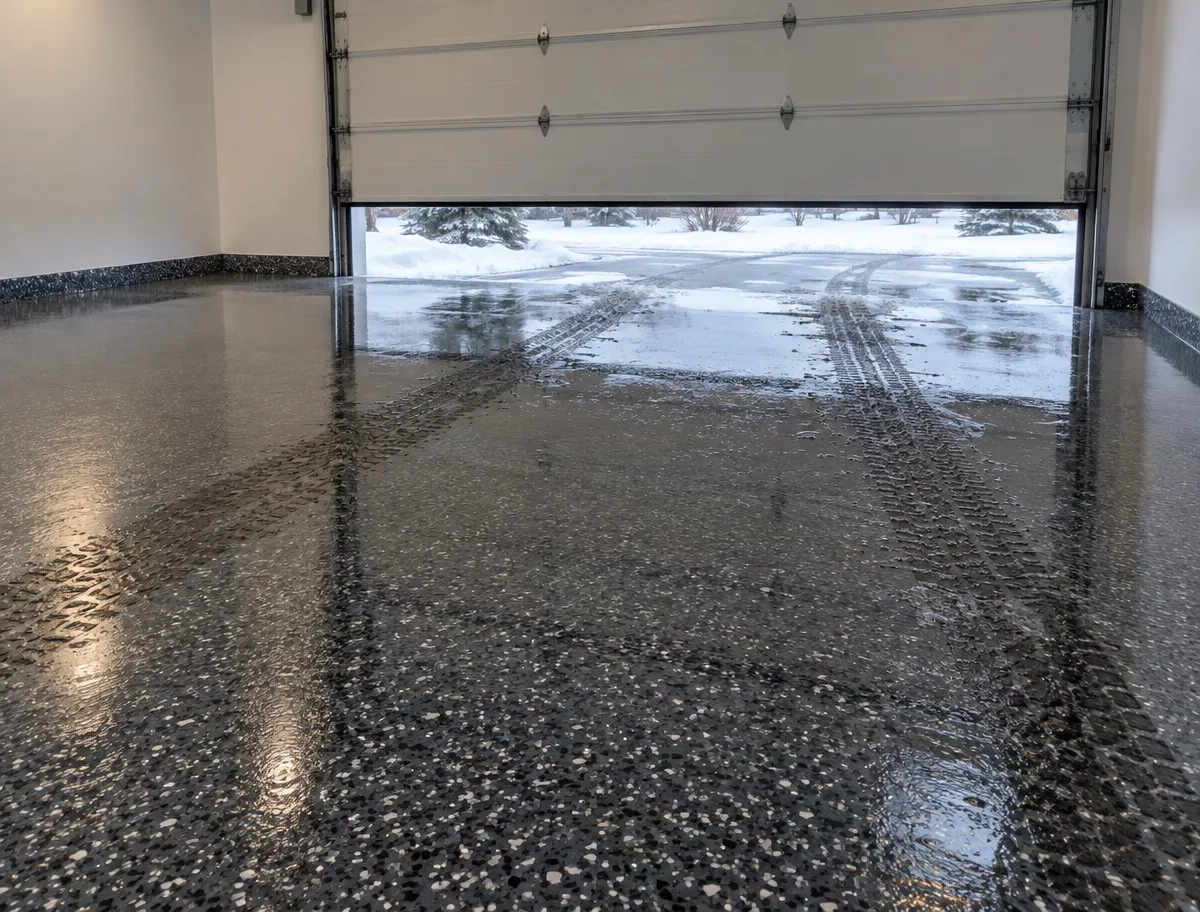
Flake vs solid color epoxy garage floor systems each bring distinct advantages to a Pittsburgh property. The right choice depends on how the floor must perform through freeze-thaw cycles, road salt exposure, and heavy daily use. Specialty Concrete Coatings LLC, based in Sandy Lake, PA, installs both finishes across Greater Pittsburgh and Northwest Pennsylvania and guides homeowners through material and color selection from the initial consultation to final cleanup.
How Do Pittsburgh Winters Affect Each Finish?
Solid color epoxy delivers a clean, uniform surface, but that smooth finish shows scratches, salt stains, and tire marks. Flake systems help hide those imperfections, with multicolor chips that camouflage winter grime and minor wear. The base chemistry matters too: the company’s polyurea polyaspartic system can cure in much colder temperatures than many traditional epoxies (as low as -20°F, according to the company), which can extend the installation season into the colder months.
Which Finish Offers Better Long-Term Durability?
| Criteria | Flake finish | Solid color finish |
|---|---|---|
| Scratch visibility | Low (chips help mask damage) | High (uniform surface reveals wear) |
| Slip resistance | Higher (textured chip broadcast) | Lower (smooth surface) |
| Winter installation | Possible in colder conditions with a polyurea base | Often limited to warmer temperature windows with epoxy |
| Aesthetic flexibility | Custom chip blends available | Limited to a single pigment |
Fall is a popular installation window for either system. Homeowners who schedule before winter weather arrives protect their concrete from months of road salt and moisture. Specialty Concrete Coatings LLC provides free quotes and manages every project from consultation through professional installation. With the right coating chemistry, a cold weather installation can extend that window further.
Does a Flake Floor Cost More Than Solid Color?
Material and labor costs shift with the complexity of the broadcast process. Flake systems require additional steps, including hand-broadcasting chips, scraping excess material, and applying a clear topcoat, while solid color floors skip the broadcast. The trade-off is appearance over time: a flake floor hides the evidence of Pittsburgh’s harsh seasonal swings, while a solid color floor needs more frequent attention to look its best.
Pricing note: Any cost comparisons in this article are for general guidance only. Actual costs vary based on garage size, slab condition, repairs needed, and the system and finish chosen, and pricing can change at any time. Contact Specialty Concrete Coatings for a current, accurate quote.
Frequently Asked Questions
Which garage floor finish hides dirt and imperfections best?
A full-broadcast flake finish hides dirt, tire marks, and minor imperfections best, which makes it a strong fit for high-traffic garages. Solid color and metallic finishes show more wear.
What does a solid color epoxy floor require to avoid highlighting flaws?
Solid color coatings need near-perfect, well-prepared concrete, because the uniform surface makes cracks, patches, stains, and scratches easier to see.
Why does Specialty Concrete Coatings LLC recommend flake systems for most residential garages in Pennsylvania?
Flake systems hide dirt and wear, add slip resistance, and handle winter salt and daily vehicle traffic well, which suits most Pennsylvania garages.
What is the difference between full and partial flake broadcast?
A full broadcast covers the basecoat completely with chips for maximum texture and camouflage. A partial broadcast scatters fewer chips so the base color shows through, giving a smoother look that hides less.
Is metallic epoxy a good choice for a garage floor?
It can be for showroom-style garages with light use. Metallic epoxy needs a near-perfect slab, shows dust and scratches more than flake, and is smoother unless a slip-resistant additive is used.
TL;DR — Flake vs Solid Color vs Metallic Garage Floors at a Glance
- Flake finishes hide dirt and imperfections best, making them a strong fit for high-traffic garages.
- Solid color coatings show more stains and scratches and need near-perfect concrete to avoid highlighting flaws.
- Metallic epoxy creates a high-gloss, marbled look but needs a near-perfect slab and suits low-grit, showroom-style spaces.
- Longevity depends on how the space is used, the condition of the concrete, and how you want the floor to look five years out.
- Pick chip blends in your own garage light; light blends hide dust and salt, dark blends hide oil and tire marks.
- Next step: Browse chip colors and request a free quote from Specialty Concrete Coatings.
Related Resources
- Garage Floor Coatings
- Pittsburgh, PA Concrete Coating Company
- Polyaspartic vs Epoxy Garage Floor
- Best Garage Floor Coating for 2026
- How Long a Polyaspartic Floor Lasts
- Garage Floor Coating in Pittsburgh, PA
Get a Free Garage Floor Coating Quote
For Pittsburgh homeowners weighing flake versus solid color epoxy, the decision comes down to how the floor must perform through winter salt, heavy traffic, and daily wear. A flake finish hides the evidence of that use while delivering slip resistance and design flexibility, making it the practical choice for most active garages. Solid color suits those who prioritize a uniform look and accept the upkeep it needs, and metallic fits showroom-style spaces. Start by browsing our garage floor chip colors, then contact Specialty Concrete Coatings today for a free, no-obligation quote.
About Specialty Concrete Coatings: Specialty Concrete Coatings is a concrete coating contractor serving Greater Pittsburgh and Northwest Pennsylvania, specializing in garage, basement, patio, and commercial floor coatings. The team helps homeowners choose the right finish and chip blend for how they use their space, and installs every system with full surface preparation. Contact us today for a free, no-obligation quote.