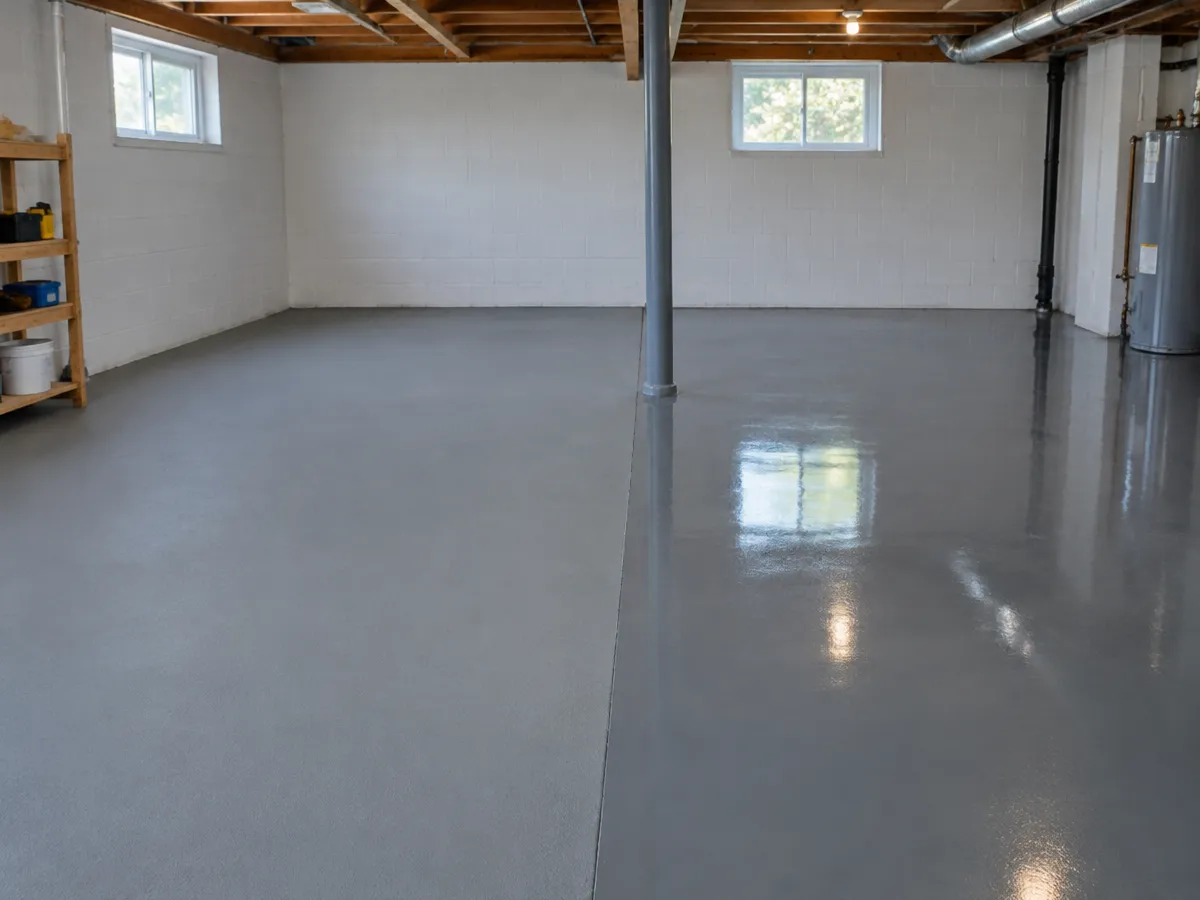
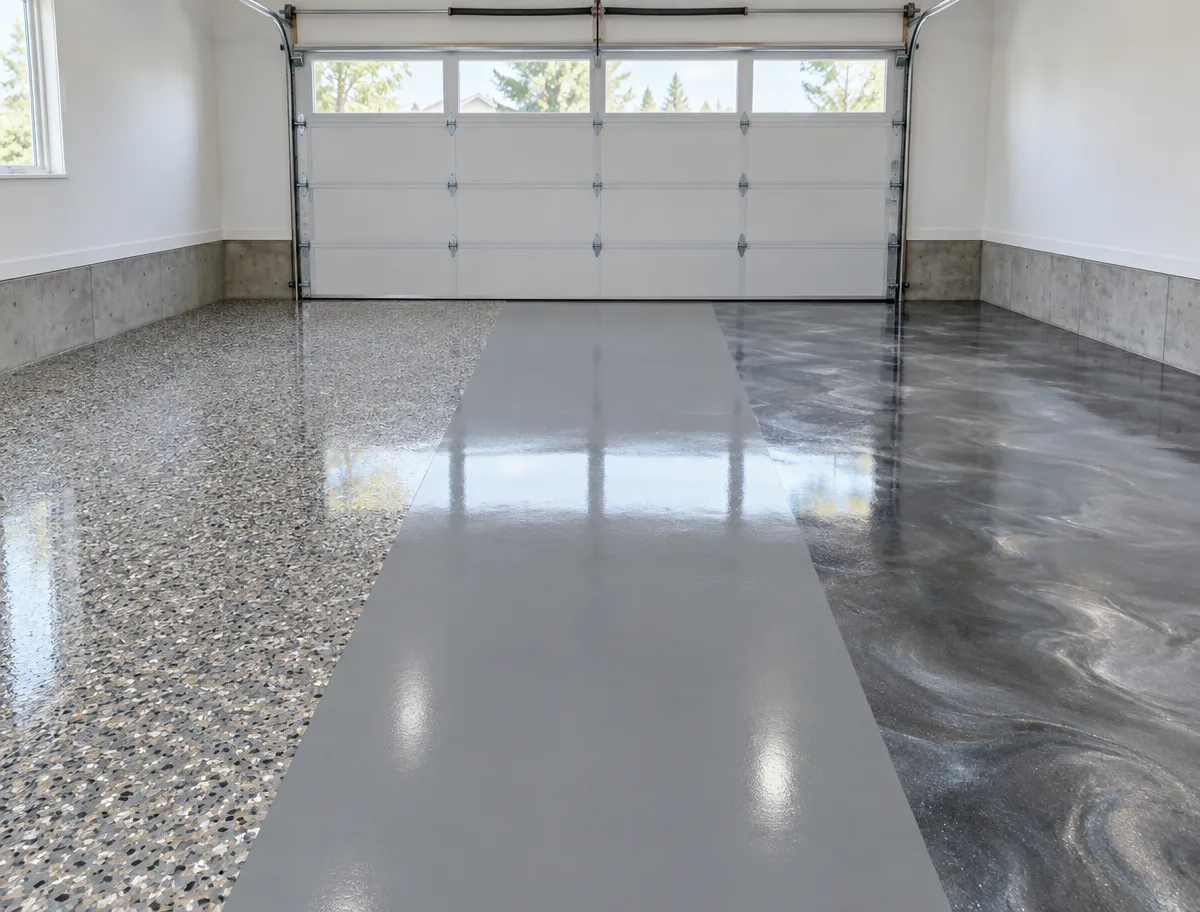
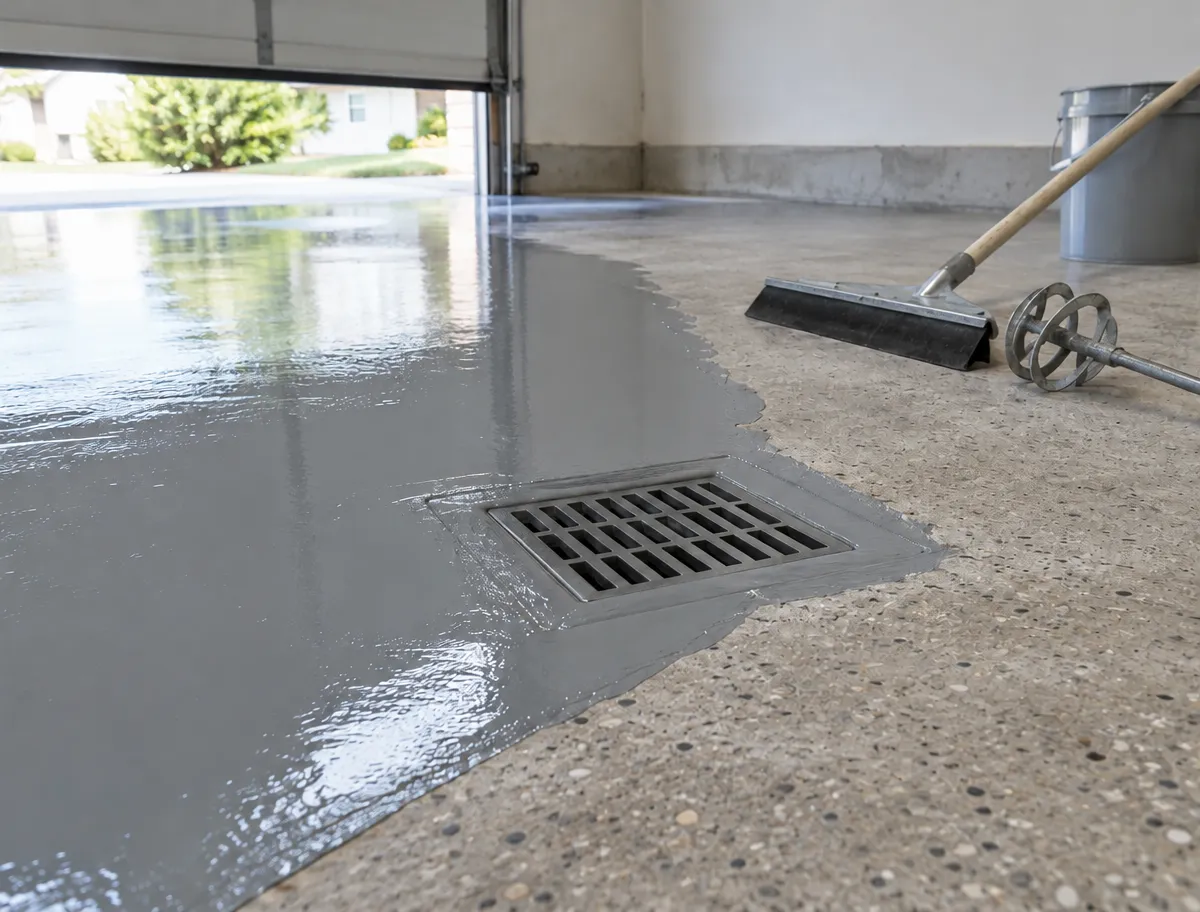
Quick Answer: A garage floor sealer either soaks into the concrete (penetrating silane or siloxane) or forms a thin film on top (acrylic) to help repel water, salt, and dust. It leaves the floor looking much the same and needs periodic reapplication. A floor coating, such as epoxy or a polyurea and polyaspartic system, bonds to properly prepared concrete as a thicker film that adds stain and chemical resistance and a finished look. A sealer can be enough for tight budgets, exterior slabs, or utility spaces. A coating is usually the better fit for a garage you park in, work in, or want to look finished.
A garage floor sealer works in or on the concrete to help block moisture and dust, while a coating builds a protective surface layer. Epoxy delivers a decorative, chemical-resistant finish, and polyurea and polyaspartic coatings can generally be installed in colder conditions than standard epoxy, which opens up more of the year for installation. Specialty Concrete Coatings LLC installs epoxy and polyurea coating systems across Pittsburgh and Northwest Pennsylvania.
What’s the Difference Between a Sealer and a Coating?
A penetrating garage floor sealer soaks into the concrete slab and works from within. A coating sits on top of the surface as a decorative, chemical-resistant layer. These two products serve different purposes, and choosing the wrong one for how you use the garage can lead to early wear and wasted money.
The distinction matters most when homeowners evaluate concrete sealer vs epoxy systems for their garage. A penetrating sealer absorbs into the concrete pores and helps repel water and dissolved salts without changing the floor’s appearance. An epoxy or polyurea coating builds a thicker film on the surface that resists chemicals, stains, and abrasion while delivering a finished, decorative look. AMPP’s overview of concrete surface preparation and coating selection describes the same split: sealers penetrate the surface to reduce permeability, while coatings form a film on top.
How Does a Penetrating Sealer Protect Concrete?
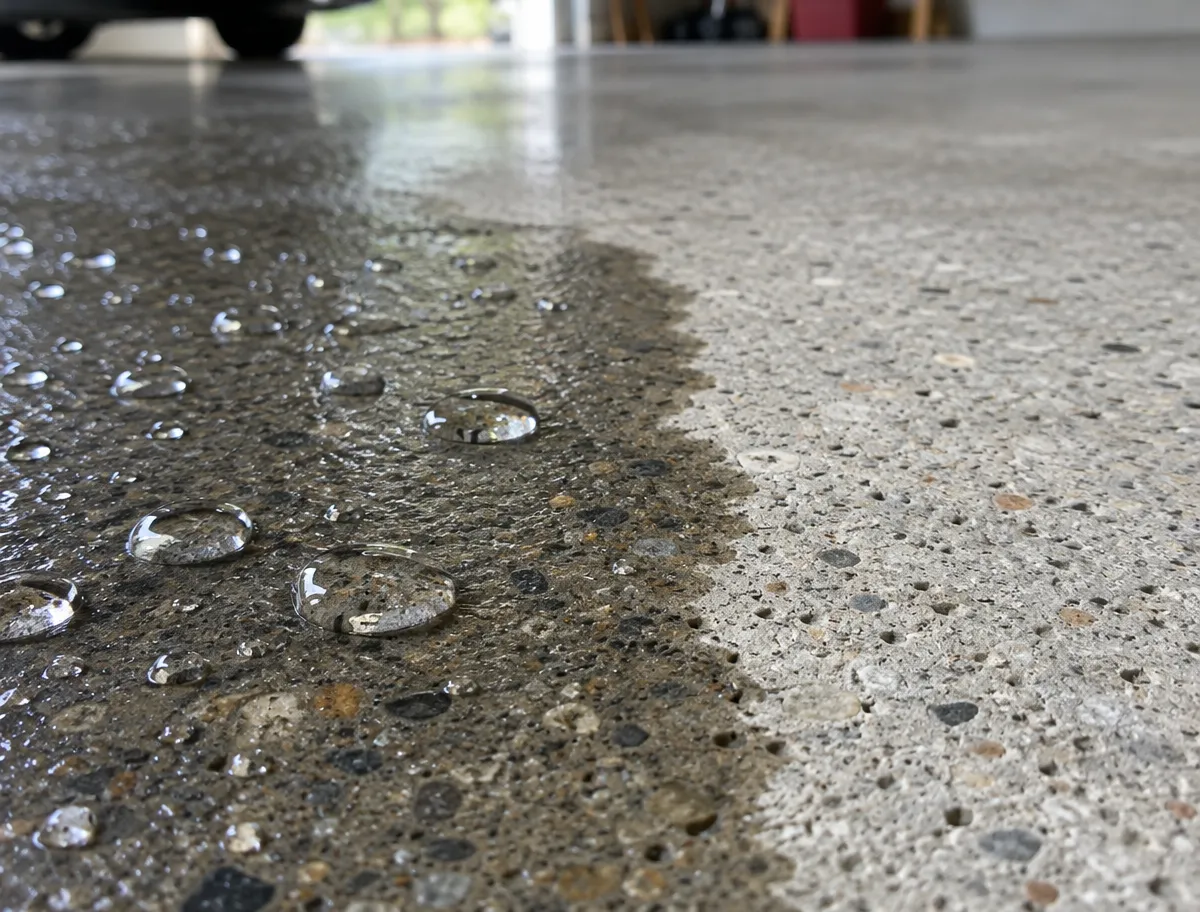
A penetrating concrete sealer forms a water-repellent zone just inside the slab. The material soaks into the porous concrete and lines the pores so that water, deicing salts, and other contaminants have a harder time getting in. This protection happens invisibly, and the floor looks essentially unchanged after application.
Preparation requirements are modest for penetrating sealers. The surface needs a thorough cleaning, but extensive grinding or profiling is usually unnecessary. The tradeoff is clear: sealers provide useful internal protection but offer no aesthetic upgrade and limited resistance to surface chemicals or staining.
What Does a Floor Coating Add That a Sealer Cannot?
A floor coating creates a thicker, durable film across the entire surface. Epoxy and polyurea systems add chemical resistance, impact protection, and a completely transformed appearance. Specialty Concrete Coatings applies polyurea basecoats with UV-stable polyaspartic clear coats designed to resist yellowing, abrasion, and chemical attack.
The installation process is more labor-intensive. Surfaces require diamond grinding for proper adhesion, crack repairs, and multiple application steps. The result is a floor built to handle hot tire pickup, oil spills, and heavy foot traffic, with customizable color chip blends. Homeowners gain both protection and a finished showroom look that a penetrating sealer cannot provide.
| Feature | Penetrating Sealer | Floor Coating (Epoxy/Polyurea) |
|---|---|---|
| Protection | Inside the concrete; repels water and salts | On the surface as a film; resists oil, solvents, and stains |
| Look | None; floor looks unchanged | Full decorative finish with color options |
| Chemical resistance | Limited | High |
| Lifespan and reapplication | Effectiveness fades over time; needs periodic reapplication | Longer-lasting finish; topcoat may need maintenance after years of wear |
| Slip resistance | Similar to bare concrete | Adjustable with chips or anti-slip additives |
| Preparation required | Thorough cleaning | Diamond grinding and crack repair |
| Installation time | Hours | Often one day for polyurea systems |
| Relative cost | Lower upfront cost | Higher upfront cost |
| Best for | Utility areas, exterior slabs, budget projects | Finished garages, workshops, showrooms |
Pricing note: The cost comparisons in this article are for general guidance only. Actual costs vary based on garage size, slab condition, needed repairs, and the product or system chosen, and pricing can change at any time. Contact Specialty Concrete Coatings for a current, accurate quote.
What Types of Garage Floor Sealers Are There?
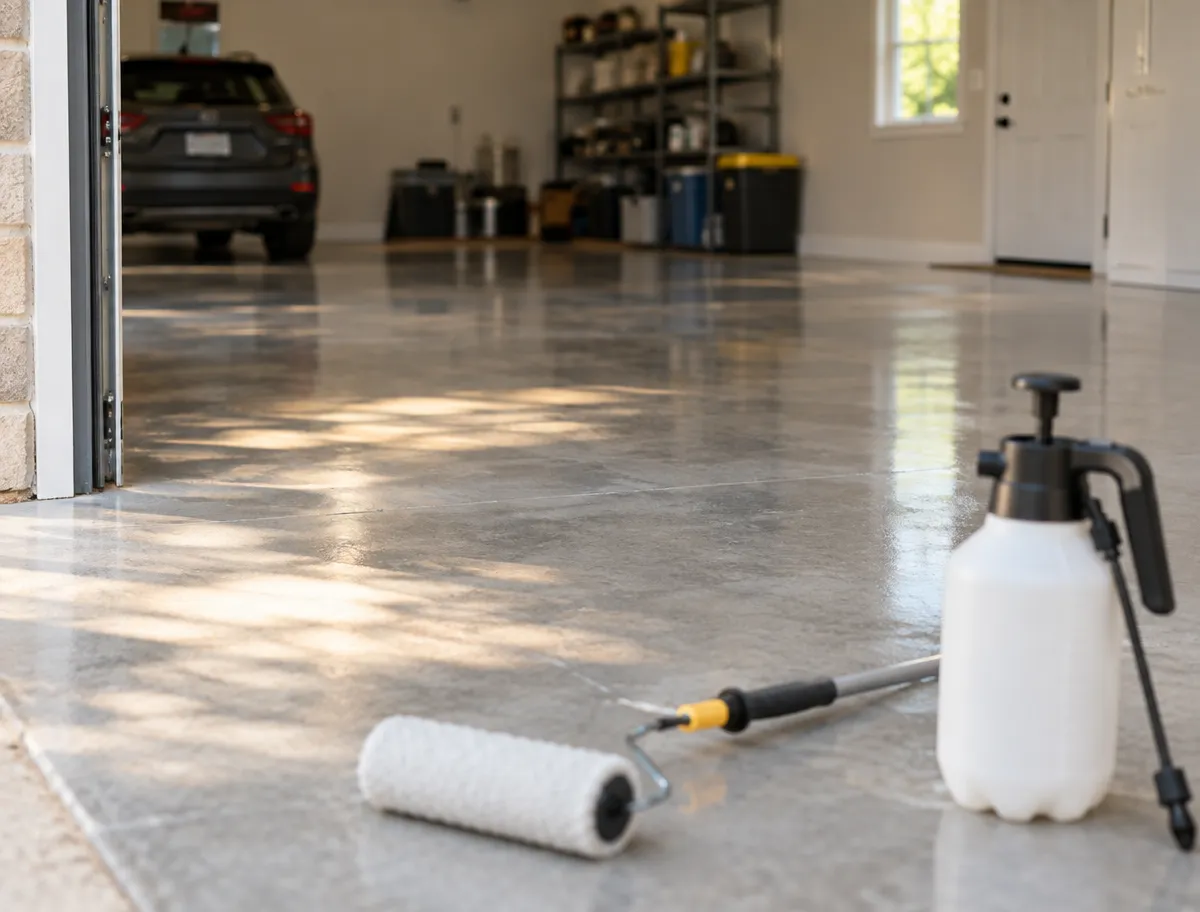
Garage floor sealers fall into two broad groups, and both are different from a full coating system:
- Penetrating sealers (silane, siloxane, siliconate): Soak into the concrete and repel liquid water and the salts dissolved in it while still letting water vapor escape. They do not change the look of the floor.
- Topical acrylic sealers: Form a thin film on the surface that can add a slight sheen and make cleanup easier, but they tend to wear in traffic lanes and under hot tires.
- Coating systems (epoxy, polyurea, polyaspartic): Thicker, bonded films applied over ground concrete. These are coatings rather than sealers, with much higher stain, chemical, and abrasion resistance.
Iowa State’s National Concrete Pavement Technology Center reviewed this category in its evaluation of penetrating sealers for concrete, noting that silane and siloxane treatments keep liquid water out while allowing vapor to pass, and that their effectiveness tends to decline over time, so reapplication is needed. The Federal Highway Administration’s summary of overlays and sealers also separates penetrating sealers from film-forming sealers, which can wear away under abrasion.
How Do Penetrating Sealers Protect Your Garage Floor?
Penetrating garage floor sealer products absorb into the top of the concrete slab. They line the pores with a water-repellent layer that helps keep out water, salts, and other contaminants. This internal shield reduces moisture intrusion from above without changing the floor’s appearance or texture.
The protection mechanism differs from surface coatings. A penetrating sealer works below the surface, while epoxy and polyurea systems build a protective layer on top. Specialty Concrete Coatings installs high-build polyurea and polyaspartic coating systems that deliver both a decorative finish and surface durability. Penetrating sealers serve a different purpose: they help preserve raw concrete in spaces where appearance matters less than basic moisture and salt protection. If winter salt is your main concern, our guide to protecting your garage floor from road salt covers that topic in detail.
Which Concrete Surfaces Benefit Most From a Penetrating Sealer?
Workshops, welding areas, utility spaces, and exterior slabs often gain the most from penetrating sealers. These areas prioritize moisture protection and concrete preservation over a finished look. Homeowners seeking stain resistance and a polished appearance typically choose a full garage floor coating instead.
How Does the Protection Compare to Epoxy or Polyurea Coatings?
The concrete sealer vs epoxy comparison comes down to a trade-off. Penetrating sealers help the concrete resist moisture and deterioration with minimal surface preparation. Epoxy and polyurea coatings provide a decorative, chemical-resistant finish that transforms the floor’s look. Specialty Concrete Coatings’ polyurea systems combine fast cure times with UV-stable clear coats for garages, basements, and commercial spaces. A penetrating sealer preserves what exists; a coating system creates something new.
| Protection Type | Penetrating Sealer | Epoxy/Polyurea Coating |
|---|---|---|
| Moisture protection | Water-repellent zone inside the concrete pores | Surface film keeps spills and liquids on top |
| Appearance | Invisible, no gloss or color change | Decorative finish with color chips and gloss |
| Best use case | Workshops, utility rooms, welding spaces, exterior slabs | Garages, basements, showrooms, retail floors |
| Surface prep needed | Thorough cleaning | Mechanical grinding for adhesion |
Silane, siloxane, and siliconate formulations are the most common penetrating sealer chemistries. They react within the concrete’s surface to create a water-repellent barrier that still lets the slab breathe, so liquid water beads on the surface while vapor can escape. Keep in mind that a sealer only treats the top of the slab. FHWA guidance on preventive treatments for concrete notes that moisture can still enter through the bottom and sides of a slab, which is why sealers and coatings are not a substitute for good drainage.
📞 Not Sure Whether Your Floor Needs a Sealer or a Coating? Specialty Concrete Coatings serves Greater Pittsburgh and NW Pennsylvania. Request a free garage floor coating quote and get a recommendation based on how you actually use your garage.
When Is a Sealer Enough, and When Isn’t It?
A sealer is often enough when:
- Budget is the priority and you mainly want to slow down water and salt absorption.
- The slab is outdoors, such as a walkway, patio, or driveway apron, where a breathable, low-sheen treatment makes sense.
- The space is purely utilitarian, like a storage area or welding corner where looks do not matter.
- You plan to coat later and want basic protection in the meantime (ask first, because some sealers must be ground off before a coating can bond).
A coating is usually the better choice when:
- You park daily drivers inside, especially through slushy Western Pennsylvania winters.
- You work on vehicles and spill oil, brake fluid, or solvents.
- You want a finished look with color, gloss, and easy wipe-up cleaning.
- Hot tire pickup or staining has been a problem with a previous sealer or paint.
Why Choose a Professional Coating Over a Sealer?
A professional coating transforms a garage floor into a finished, decorative surface. A garage floor sealer helps the concrete repel moisture without changing its appearance.
Specialty Concrete Coatings delivers a different outcome than a penetrating sealer. The company applies a polyurea basecoat designed for strong adhesion to properly prepared concrete. That basecoat receives a UV-stable polyaspartic clear coat on top, which is designed to resist yellowing, abrasion, and chemical damage. A sealer offers none of these protective layers. If you are comparing coating chemistries, our breakdown of polyaspartic vs epoxy garage floors explains the differences.
What Does a Professional Coating Provide That a Sealer Cannot?
A coating creates a decorative, finished look. A sealer leaves the concrete looking much as it did before. Homeowners who want stain resistance and visual appeal choose a coating. Those who only need basic moisture protection might consider a sealer. The trade-off is clear: sealers preserve the status quo, while coatings upgrade it.
How Does the Installation Process Differ Between Coatings and Sealers?
Specialty Concrete Coatings follows a multi-step process on every project. The crew mechanically prepares the surface by diamond grinding. Cracks and spalls are repaired with concrete menders. A high-adhesion basecoat bonds to the prepared slab. A sealer requires far less preparation, but that simplicity comes with less protection. Professional resinous flooring specifications, such as the Department of Defense’s guide specification for resinous flooring, call for mechanical surface profiling and moisture vapor testing before a coating goes down. A garage floor coating is more labor-intensive, but it typically provides better overall surface protection.
| Feature | Specialty Concrete Coatings System | Penetrating Sealer |
|---|---|---|
| Surface preparation | Diamond grinding, crack repair | Thorough cleaning |
| Base layer | Polyurea basecoat designed for strong adhesion | No build layer |
| Topcoat | UV-stable polyaspartic clear coat | None |
| Appearance | Decorative, finished look | Unchanged concrete |
| Chemical resistance | High | Limited |
| Installation time | Typically one day, professional crew | Quick application |
The polyurea system cures quickly and is designed to bond tightly to ground concrete. Sealers lack the film that helps absorb impact and resist hot tire pickup. For homeowners who park vehicles, store equipment, or want a showroom-quality floor, a professional coating offers benefits a sealer cannot.
Can You Coat Over a Sealed Garage Floor?
Often yes, but not directly over the sealer. Both penetrating and topical sealers are designed to repel liquids, and that can keep a new coating from bonding. Acrylic sealers leave a film that has to come off, and penetrating sealers can affect how well a coating soaks in and grips. That is why professional installers diamond grind the slab to remove old sealers and open fresh concrete before coating.
A quick check is to sprinkle a little water on the floor. If it beads up instead of darkening the concrete, a sealer is probably still active. Skipping removal is one of the common reasons covered in our article on why epoxy garage floors peel. If your floor was sealed in the past, mention it when you request a quote so the crew can plan the right preparation.
What Should Pennsylvania Homeowners Consider for Durability?
Durability in Pennsylvania depends on how a floor handles moisture and wide temperature swings. A floor that fails early costs homeowners more than doing it right the first time. Specialty Concrete Coatings addresses these regional conditions with a polyurea and polyaspartic system, and our guide to concrete coating weather resistance explains how different products hold up to the elements.
Pittsburgh’s climate, with wet springs, humid summers, and freeze-thaw winters, creates persistent moisture challenges in concrete slabs. Moisture vapor moving up through a slab can contribute to bubbling or delamination when a coating is not matched to the floor’s conditions. Specialty Concrete Coatings uses a polyurea basecoat with flexibility intended to help it move with the slab, and evaluates moisture before recommending a system.
Temperature tolerance also matters. Many epoxy products need slab temperatures of roughly 50°F or warmer, which tends to limit installation to the warmer months, as covered in our guide to the best time to coat a garage floor in Pittsburgh. The polyurea and polyaspartic system Specialty Concrete Coatings installs is rated to cure in temperatures as low as -20°F, so cold-weather installation is possible through much of the year when conditions are managed properly.
How Does Installation Speed Affect Long-Term Durability?
Faster installation reduces the window for dust, debris, and moisture to affect the surface while it cures. Polyurea and polyaspartic systems can often be completed in one day. Extended multi-day installations leave floors exposed longer during the critical curing window.
Which Coating Type Handles Pennsylvania’s Freeze-Thaw Cycles Best?
Rigid coatings are more prone to cracking under thermal stress. Polyurea and polyaspartic coatings are generally more flexible than standard epoxy, which helps them move with the concrete slab rather than separating from it. That flexibility is useful when sub-freezing nights give way to thaws, a cycle that repeats many times each winter across Western Pennsylvania.
Which Option Is the Right Choice for Your Garage?
The right choice depends on how the garage is used and what the homeowner values most. A penetrating garage floor sealer helps protect concrete from within by repelling water and salts. A coating system builds a decorative, high-performance layer on top. For Pittsburgh homeowners who want both protection and a finished look, Specialty Concrete Coatings offers a polyurea and polyaspartic system as an alternative to both sealers and standard epoxy.
How Does a Garage Floor Sealer Compare to a Professional Coating?
A sealer soaks into the concrete and leaves the surface looking unchanged. It helps resist moisture and deicing salts but offers no impact protection or aesthetic upgrade. A professional coating creates a thicker, chemical-resistant surface that hides many imperfections and can add slip-resistant texture. Specialty Concrete Coatings installs a polyurea basecoat topped with a UV-stable clear coat.
What Makes a Coating the Best Garage Floor Sealer Alternative?
The best alternative replaces invisible protection with visible durability. Specialty Concrete Coatings has served Pittsburgh and Western PA for over 15 years. The company provides free quotes and guides clients through material and color selection, including a range of chip color blends to complement any garage interior. The result is a low-maintenance surface designed to resist wear, chemicals, and hot tire pickup.
| Feature | Penetrating Sealer | Specialty Concrete Coatings Polyurea System |
|---|---|---|
| Surface appearance | No change to concrete | Decorative chip blends, custom colors |
| Moisture protection | Repels liquid water; stays breathable | Surface film keeps spills on top; moisture from below is evaluated before install |
| Chemical resistance | Limited | High resistance to oil, salt, and solvents |
| Installation window | Wide temperature range | Rated to cure as low as -20°F |
| Return to service | Hours | Typically walk in about 12 hours; drive in about 48 hours |
| Longevity | Requires periodic reapplication | Long-lasting finish with proper care |
The company’s process supports one-day installation in many cases. Typical timelines allow foot traffic in approximately 12 hours, heavier items after about 24 hours, and vehicles after about 48 hours. Actual cure times vary with temperature, humidity, and the products used.
Does the Concrete Sealer vs Epoxy Debate Still Matter?
The old debate leaves out a third option. Many epoxy coatings need warmer slab temperatures and can struggle when moisture vapor moves through the slab. Penetrating sealers help protect against moisture but leave concrete vulnerable to staining and abrasion. Specialty Concrete Coatings uses a polyurea basecoat designed for strong adhesion and a polyaspartic topcoat designed to resist yellowing, giving homeowners moisture-aware protection and a decorative finish in a single installation day in many cases.
Frequently Asked Questions
What is the main difference between a garage floor sealer and a coating?
A penetrating sealer soaks into the concrete to help repel water, salt, and dust, while a coating builds a thicker protective surface layer for chemical and stain resistance and a finished look.
Does a penetrating sealer change the appearance of my garage floor?
No. A penetrating sealer absorbs into the concrete pores, so the floor looks essentially unchanged after application. Topical acrylic sealers can add a slight sheen.
What preparation does a floor coating require that a sealer does not?
Coatings require diamond grinding and crack repair for proper adhesion, while penetrating sealers generally need only a thorough cleaning.
How often does a garage floor sealer need to be reapplied?
Sealers lose effectiveness over time, so they need periodic reapplication. How often depends on the product, traffic, and exposure to water and road salt. A simple water-bead test can show when the floor is absorbing water again.
Can you put epoxy or another coating over a sealed garage floor?
Usually not directly. Sealers are designed to repel liquids and can prevent a coating from bonding, so the floor is typically diamond ground to remove the old sealer and open fresh concrete before coating.
TL;DR — Garage Floor Sealer vs Coating at a Glance
- Penetrating sealers help keep water and salts out of concrete without changing the floor’s appearance, but they need periodic reapplication.
- Epoxy and polyurea coatings form a thicker surface film that resists chemicals, stains, and abrasion and adds a finished look.
- A sealer can be enough for tight budgets, exterior slabs, and utility spaces; a coating suits garages you park or work in.
- Coatings require diamond grinding and crack repair, and old sealers usually have to be removed before coating.
- Polyurea and polyaspartic systems can generally be installed in colder conditions than standard epoxy.
- Next step: Request a free garage floor coating quote from Specialty Concrete Coatings.
Related Resources
- Garage Concrete Coating
- Pittsburgh, PA Concrete Coating Company
- Best Garage Floor Coating for 2026
- Winter Salt Damage on Garage Floors in PA
- Polyurea Concrete Coating Explained
- How Much Does Garage Floor Coating Cost?
Get a Free Garage Floor Coating Quote
For Pennsylvania homeowners, the choice between a sealer and a coating comes down to whether invisible protection or a durable, finished surface matters more. A sealer helps guard against moisture but leaves concrete vulnerable to stains and wear, while a professional coating system adds a decorative, longer-lasting finish. The right decision depends on how the garage is used and what you value most. Contact Specialty Concrete Coatings today for a free, no-obligation quote.
About Specialty Concrete Coatings: Specialty Concrete Coatings is a concrete coating contractor serving Greater Pittsburgh and Northwest Pennsylvania, specializing in garage, basement, patio, and commercial floor coatings. The team provides free estimates and helps homeowners choose a system matched to how they use their floors. Contact us today for a free, no-obligation quote.