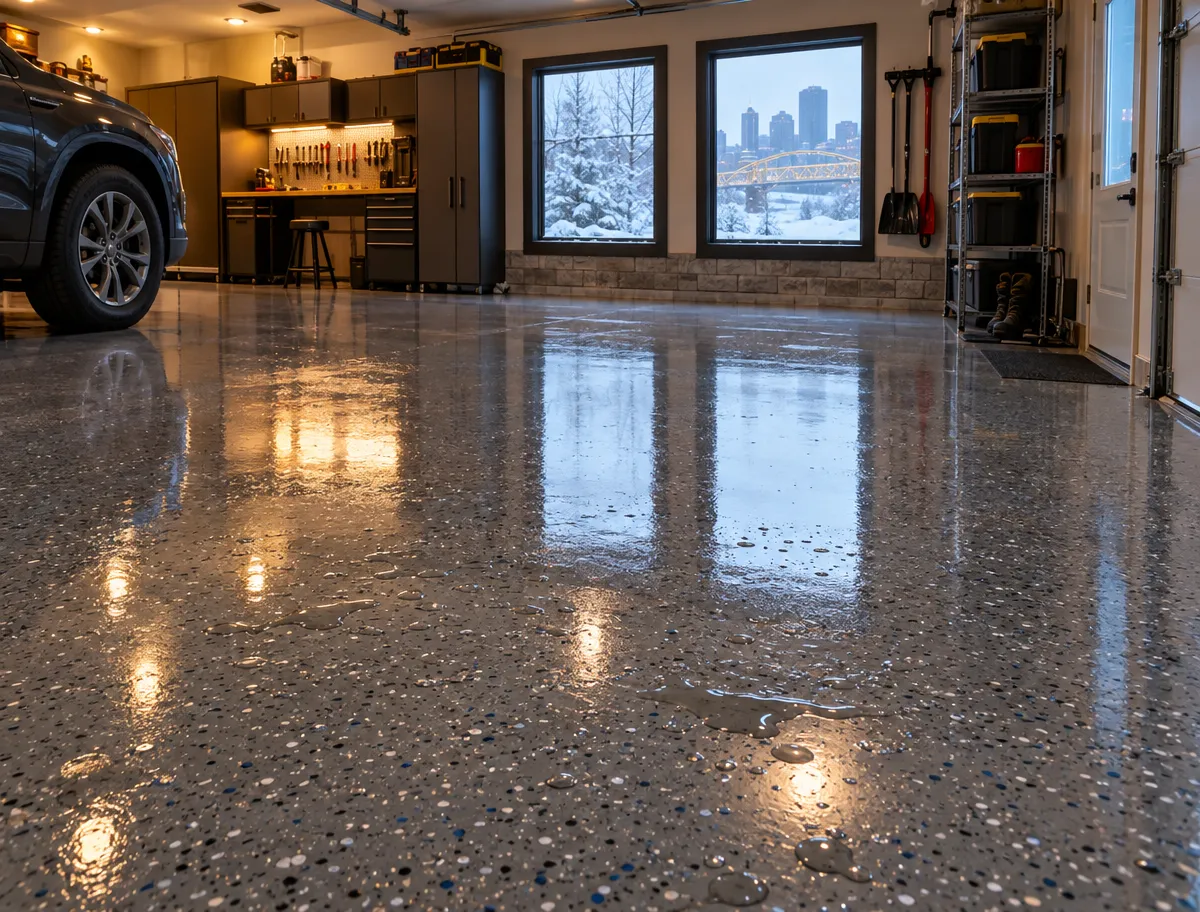
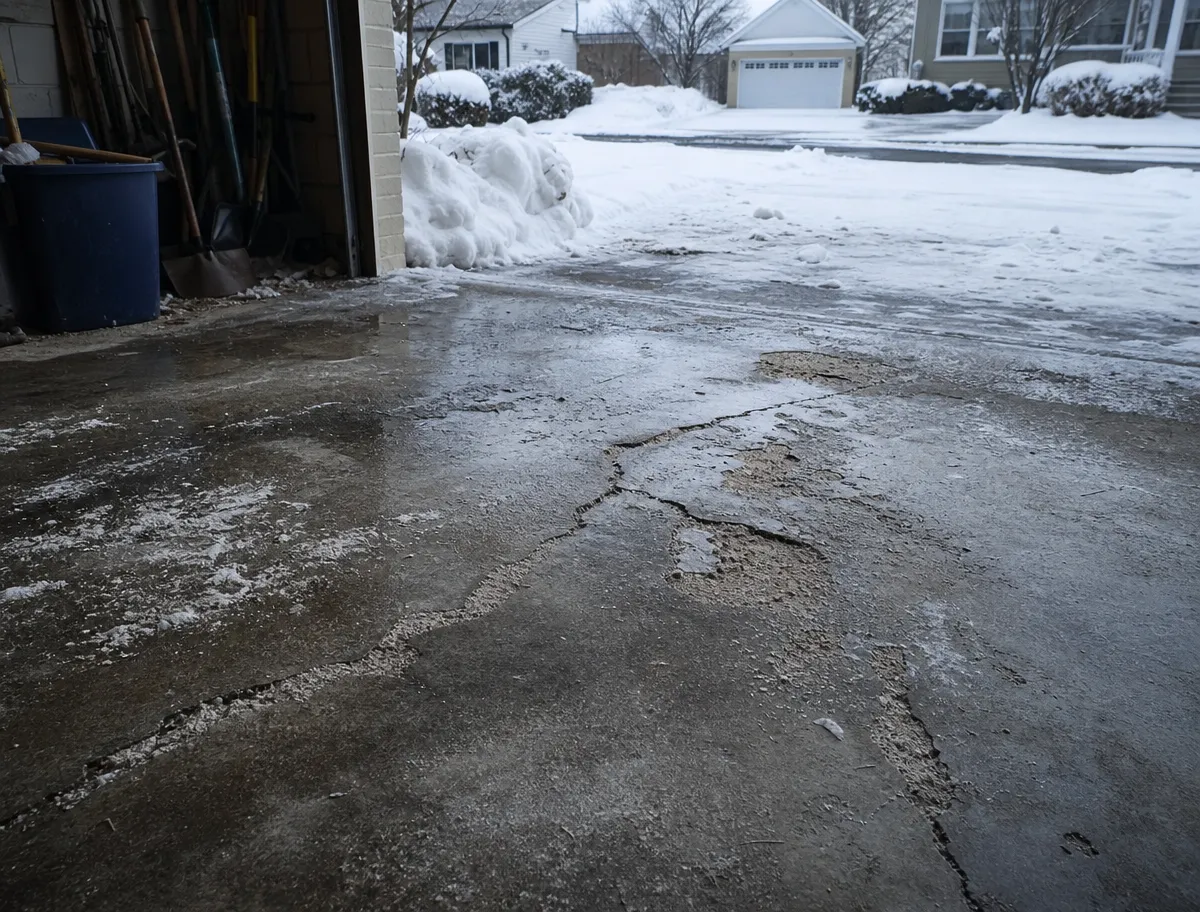
Quick Answer: You protect a garage floor from road salt damage in Western PA by removing chloride residue promptly and sealing the concrete with a coating system that blocks salt penetration. Bare concrete absorbs chloride from tracked-in slush every winter, corroding the slab from within. A polyurea basecoat topped with a UV-stable polyaspartic clear coat gives daily-use garages the strongest barrier against salt, moisture, and freeze-thaw stress, while penetrating sealers offer lighter protection for low-traffic garages. Specialty Concrete Coatings LLC installs these systems throughout Western Pennsylvania.
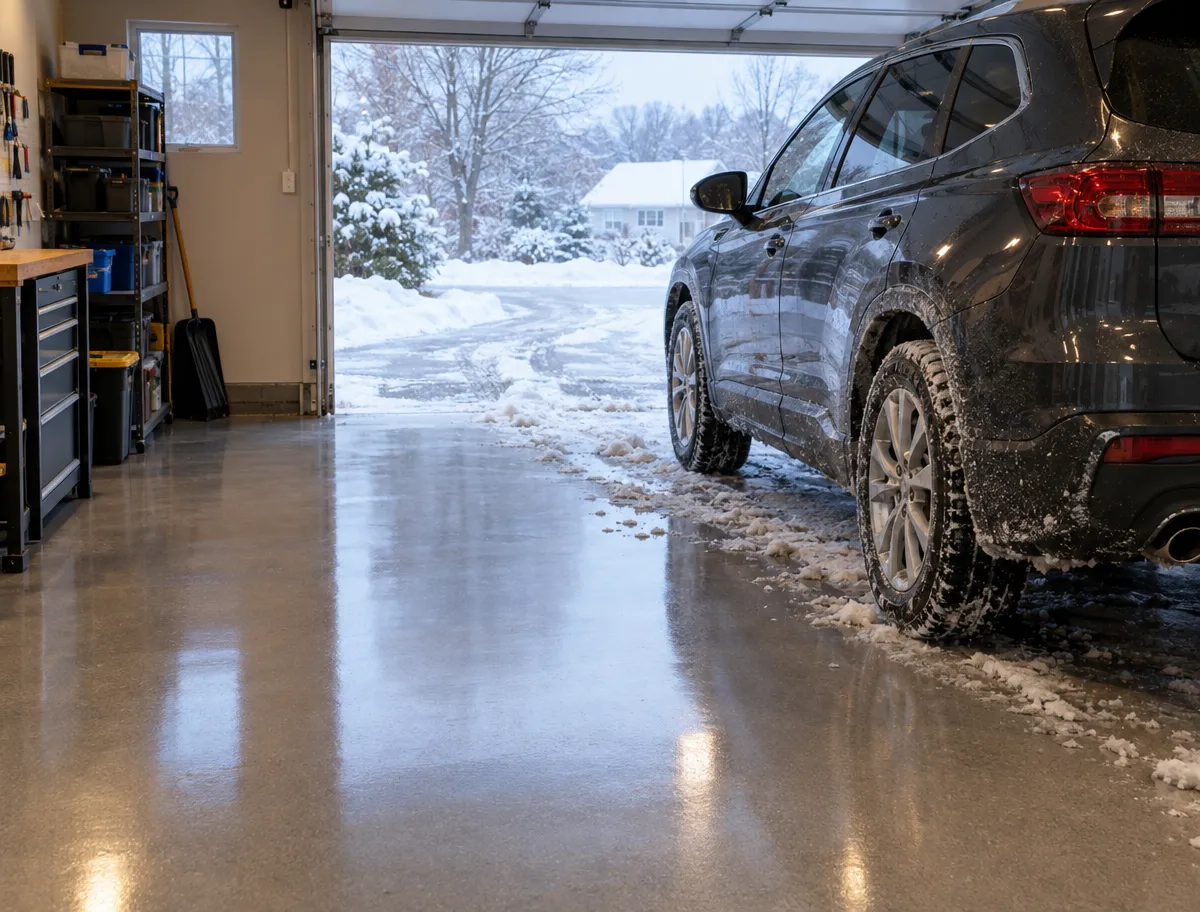
Western Pennsylvania garage floors need a sealed, non-porous barrier to resist winter road salt and the chloride damage it carries. Specialty Concrete Coatings LLC installs a polyurea basecoat, stronger than traditional epoxy, topped with a UV-stable polyaspartic clear coat that blocks salt penetration, resists chemicals, and withstands Western Pennsylvania winters. Garages return to vehicle use quickly after installation.
What Should You Know Before Protecting Your Floor?
Winter road treatments across Western Pennsylvania deposit millions of pounds of salt on roadways each season, as documented in PennDOT’s winter weather preparation guidance. That salt rides into garages on tires and boots. Homeowners from Pittsburgh to Erie face the same root problem: chloride-laden slush tracked onto bare concrete. It slowly breaks down the surface. One Pittsburgh homeowner researching floor sealers before winter noted that the region’s heavy salt use made protection a top priority for a brand-new garage floor — a concern shared by property owners across the Pittsburgh metro and Northwest Pennsylvania.
No single fix solves every situation. Several protect garage floor road salt strategies exist, ranging from penetrating sealers to full coating systems, and the right choice depends on the floor’s age, prior damage, and how the garage gets used. Roadway salting itself can’t be controlled — PennDOT crews will keep treating highways every winter — but the garage floor is different. Homeowners can repair existing salt damage and build lasting protection against future deterioration.
Can a Damaged Garage Floor Still Be Protected?
Yes. Cracked or pitted concrete can be repaired and then sealed or coated, restoring both function and appearance. Waiting longer only allows freeze-thaw cycles and additional salt exposure to deepen existing damage.
Before selecting a system, Pennsylvania homeowners should consider:
- Current floor condition (cracks, spalling, surface scaling)
- Garage usage (daily vehicle parking versus occasional storage)
- Desired timeline for completing the project before winter salting begins
Why Does Road Salt Damage Concrete Floors?
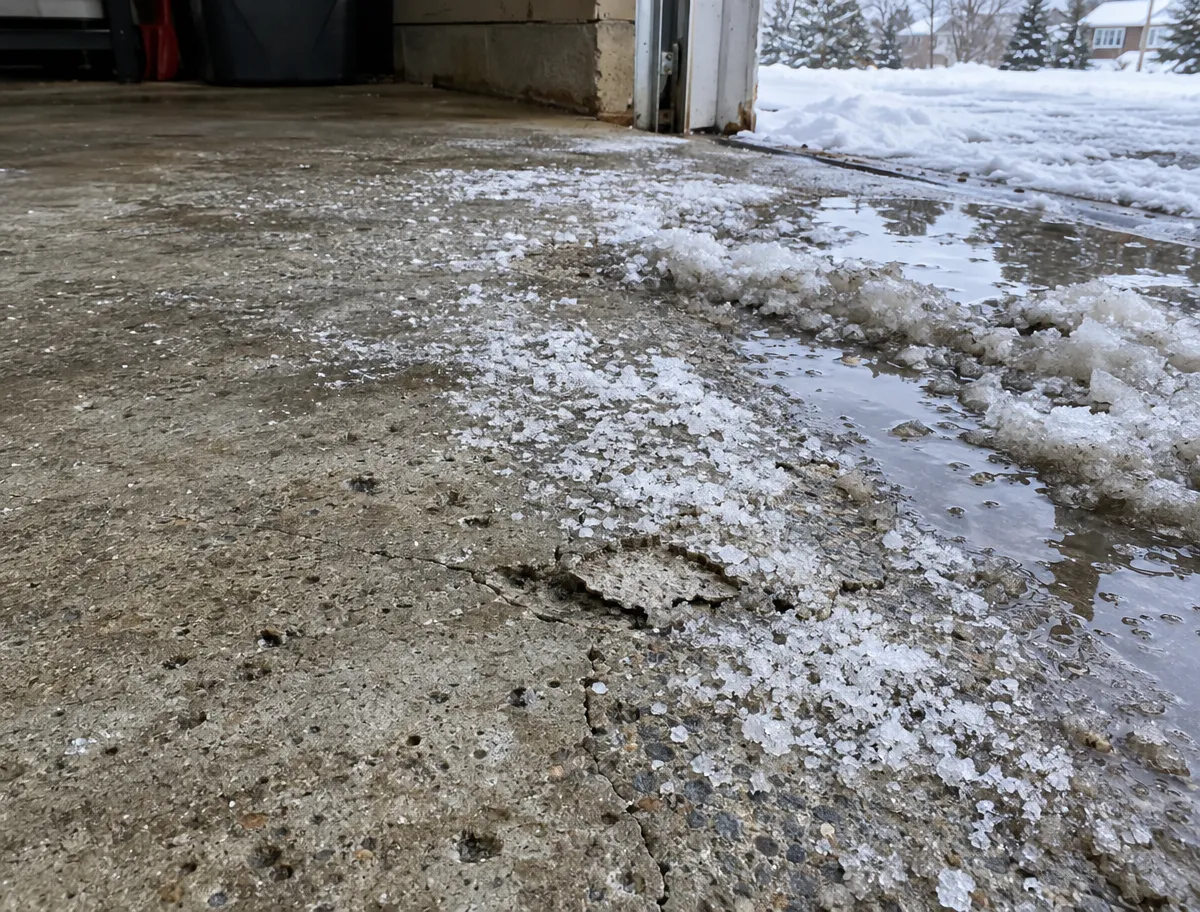
Chloride ions inside road salt penetrate the surface of a concrete slab and trigger a chemical reaction inside the material itself, a process detailed in the Pennsylvania Aggregates and Concrete Association’s guidance on protecting concrete from deicer damage. That reaction breaks down the internal structure of the concrete, a process known as spalling. Pennsylvania garages take on this damage every winter. Plows and municipal crews spread salt across highways from the Pittsburgh region up through the northwestern counties. Vehicles carry that salt straight into the garage on tires and undercarriages, night after night, through months of freezing temperatures.
Left unaddressed, this chloride exposure does more than sit on the surface. Corrosion sets in over time — a process the Federal Highway Administration’s research on corrosion-induced concrete deterioration describes in detail — weakening the slab and creating conditions for real structural damage. Homeowners who skip protective measures often discover the cost of that neglect years later, when cracking and crumbling concrete require far more extensive repair than a simple garage floor coating would have prevented.
Does Road Salt Only Cause Cosmetic Damage?
No. While salt does leave unsightly white stains and chalky residue across a garage floor, the harm runs deeper than appearance. Chloride penetration corrodes the concrete matrix from within. Surface staining is often the first visible sign of that deeper deterioration.
Can Homeowners Just Keep Salt Out of the Garage?
Not entirely. Even careful homeowners cannot stop salt from entering. It rides in on boots, shoe soles, and tire treads with every winter trip. A durable protect garage floor road salt strategy matters because exclusion alone never works.
Common salt-related warning signs include:
- White, powdery residue on the slab surface
- Small pits or flaking patches near tire tracks
- Hairline cracks that widen after freeze-thaw cycles
- Rough or crumbling texture along garage floor edges
How Do You Clean and Prep the Floor?
Proper cleaning and preparation determine whether a Pennsylvania garage floor survives another winter of road salt exposure. Salt residue left untreated works its way into porous concrete, and removing it later takes far more effort than most Western PA homeowners expect. Simply hosing down the surface rarely solves the problem, especially once chloride staining has set in.
Pittsburgh-area garages see heavy salt tracked in from treated roads for months at a time. A strong cleaning solution, not just water, breaks down that residue before it causes deeper corrosion, an approach consistent with the Oregon Department of Transportation’s research on mitigating chloride deicer effects on concrete. Skipping straight to a power washer is a common mistake. Without pretreatment, the pressure can drive salt further into the slab instead of lifting it out, worsening the damage over time.
Recommended prep sequence for Pennsylvania garage floors:
- Sweep away loose debris, gravel, and dried salt buildup.
- Apply a concentrated concrete cleaning solution to dissolve embedded salt and chloride stains.
- Let the solution sit according to label instructions before agitating with a stiff brush.
- Rinse thoroughly, then inspect for pitting, spalling, or surface discoloration from prior salt exposure.
- Allow the slab to dry completely before any coating work begins.
Does a Newer Garage Floor Still Need This Treatment?
Yes. Even a freshly poured slab with a clean, attractive finish needs sealing before winter sets in. Concrete that looks pristine after just a few months of use still absorbs chloride once road salt and melting snow start tracking in on tires.
Can Homeowners Skip Professional Cleaning and Prep?
Attempting a shortcut usually backfires. Diamond grinding and mender application, standard steps in a professional polyurea and epoxy installation, address damage that surface cleaning alone can’t fix. Specialty Concrete Coatings LLC brings this preparation process to garages throughout Greater Pittsburgh and Northwest Pennsylvania, ensuring the basecoat bonds properly and the finished floor stands up to another salt-heavy winter.
📞 Ready to Get Started? Don’t wait for another salt-heavy winter to pit and stain your garage floor. Contact Specialty Concrete Coatings LLC today for a free quote on garage floor protection throughout Western Pennsylvania.
Which Coating Best Blocks Road Salt Damage?
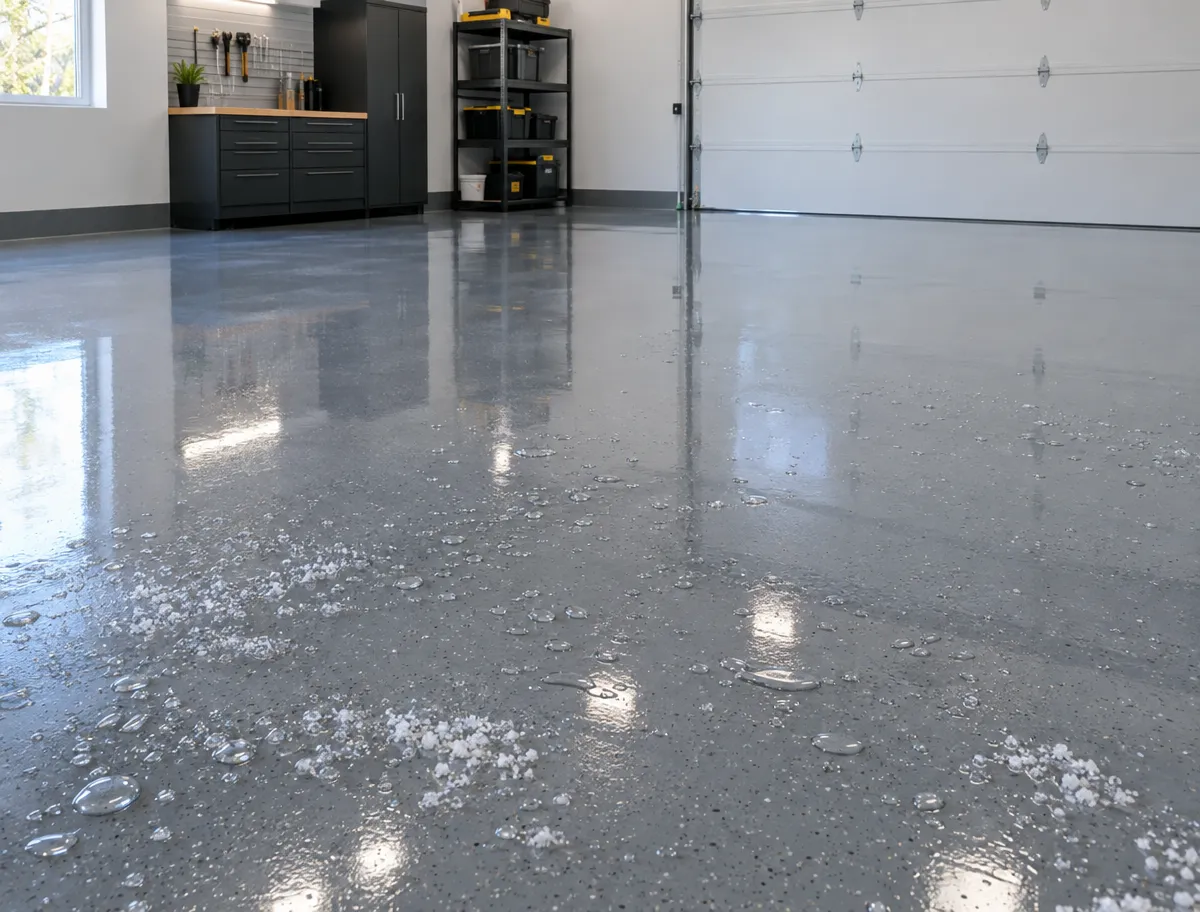
A polyurea basecoat topped with a polyaspartic clear coat blocks road salt damage better than a bare penetrating sealer because the layered system resists chloride penetration while sealing the surface against moisture and abrasion. Pennsylvania winters bring months of de-icing chemicals into garages on tires and boots, and unprotected concrete absorbs that salt with every freeze-thaw cycle. Protective coatings are considered essential for concrete surfaces because they significantly improve durability and reduce maintenance caused by environmental exposure like road salt. Without a barrier system, homeowners across Western PA face pitting, scaling, and crumbling slabs within a handful of winters.
Sealers vs. Full Coating Systems: What’s the Difference?
Many Pittsburgh-area homeowners researching how to protect a garage floor from road salt damage find themselves weighing two very different approaches. One option soaks into the concrete itself; the other builds a protective layer on top.
| Option | How It Works | Best For |
| Penetrating sealer | Absorbs into concrete pores, blocks moisture from within | Light-traffic garages, DIY application |
| Epoxy or polyurea coating | Sits on the surface, forms a durable topcoat | Daily vehicle traffic, heavy salt exposure |
Sealers offer an easy, do-it-yourself option and modest protection. A full coating system delivers far greater resistance to chloride penetration, staining, and surface wear over time.
How Much Does a Protective Coating Cost in Pennsylvania?
Professionally installed polyurea and epoxy systems across Pittsburgh and Western Pennsylvania are typically priced per square foot, with final pricing depending on garage size, existing floor condition, and the complexity of the chosen color design. Every project varies, so an accurate number requires an on-site or photo-based evaluation.
Specialty Concrete Coatings LLC, headquartered in Sandy Lake, PA, installs these systems for homeowners throughout Greater Pittsburgh and Northwest Pennsylvania. The crew mechanically prepares each slab, repairs cracks, and applies a high-adhesion basecoat before sealing it with a UV-stable clear coat. That combination gives Pennsylvania garages a surface built to withstand winter after winter of salt, slush, and freeze-thaw stress — protection a surface sealer alone cannot match, backed by a written warranty.
What Mistakes Let Salt Damage Return?
Salt damage returns when homeowners repair the surface but skip the habits that caused the damage in the first place. Pennsylvania drivers watch road crews douse highways with salt and deicers every winter. Few connect that same chemical exposure to the concrete sitting inside their own garage. The mistake is treating sidewalk and garage floors as separate problems, when chloride residue tracked in on tires and boots attacks both surfaces identically.
A second common error involves skipping protective coatings altogether because the climate feels too harsh to bother. Western Pennsylvania winters are demanding. That intensity is exactly why sealing or coating the floor pays off rather than getting skipped. Neglecting this step costs homeowners more than curb appeal. It forfeits a cleaner surface for stored belongings, tools, and vacation boxes that would otherwise stay salt-free.
Does a DIY Sealer Actually Stop Salt Damage?
Many Pennsylvania homeowners search for penetrating sealers marketed as an easy weekend fix. These products can slow moisture absorption. They rarely match the abrasion resistance and adhesion strength that a professionally installed coating system delivers over years of freeze-thaw cycles.
Common return-of-damage mistakes include:
- Ignoring salt residue tracked in from the driveway instead of rinsing it off regularly.
- Assuming one sealer application lasts indefinitely without reapplication or inspection.
- Choosing a thin DIY product over a system engineered to protect the garage floor from road salt long-term.
Avoiding these missteps keeps floors cleaner, safer, and more resistant to future corrosion.
TL;DR — Protecting Your Garage Floor From Road Salt at a Glance
- Road salt’s chloride ions penetrate bare concrete and corrode it from within, a process called spalling.
- Warning signs include white residue, pitting, hairline cracks, and crumbling edges near tire tracks.
- Proper cleaning and prep — not just a hose-down — must happen before any sealer or coating goes on.
- A polyurea basecoat with a UV-stable polyaspartic topcoat gives Western PA garages the strongest barrier against salt and moisture.
- Penetrating sealers offer a lighter, DIY-friendly option for low-traffic garages, but daily-use garages need a full coating system.
- Next step: Contact Specialty Concrete Coatings LLC for a free garage floor protection quote before winter salting begins.
Frequently Asked Questions
How does road salt damage garage floors?
Chloride ions penetrate the concrete surface and trigger a chemical reaction that breaks down the material internally, a process called spalling. Over time this causes corrosion, weakening the slab and leading to structural damage.
What coating system protects Western PA garage floors from salt?
Specialty Concrete Coatings LLC installs a polyurea basecoat, stronger than traditional epoxy, topped with a UV-stable polyaspartic clear coat. This system blocks salt penetration, resists chemicals, and withstands Western Pennsylvania winters.
Can a garage floor already damaged by salt still be protected?
Yes, cracked or pitted concrete gets repaired and then sealed or coated, restoring function and appearance. Waiting longer only lets continued salt exposure deepen the existing damage.
How much does a protective garage floor coating cost in Pennsylvania?
Pricing for polyurea and epoxy garage floor systems in Western Pennsylvania is calculated per square foot and depends on garage size, existing floor condition, and design complexity. An on-site or photo-based evaluation gives homeowners an accurate quote.
Should I choose a penetrating sealer or a full coating system?
Penetrating sealers absorb into the concrete and suit light-traffic garages or DIY application. A polyurea or epoxy coating system sits on the surface and delivers far stronger resistance to chloride penetration for garages with daily vehicle traffic and heavy winter salt exposure.
Related Resources
- Garage Floor Coatings in Western PA
- Pittsburgh, PA Concrete Coating Services
- Choosing Between Epoxy and Polyurea for Your Garage Floor
- Understanding Concrete Coating Weather Resistance
- Key Maintenance Considerations for Specialty Concrete Surfaces
- Winter-Proofing Your Concrete
Get a Free Garage Floor Protection Quote
In closing, protecting your garage floor from road salt damage requires a proactive approach that combines regular maintenance with a durable, professionally applied coating system. By addressing salt exposure head-on through proper surface preparation and high-performance finishes engineered to resist chemical damage, you safeguard your investment and maintain a clean, attractive garage for years to come. Your concrete deserves protection built to withstand Western Pennsylvania winters. Contact Specialty Concrete Coatings LLC today for a free, no-obligation quote.
About Specialty Concrete Coatings LLC: Specialty Concrete Coatings LLC, headquartered in Sandy Lake, PA, specializes in polyurea and epoxy floor coating systems for garages, basements, patios, and commercial spaces throughout Greater Pittsburgh and Northwest Pennsylvania. Contact us for a free, no-obligation quote on protecting your concrete from Western Pennsylvania’s harsh winters.