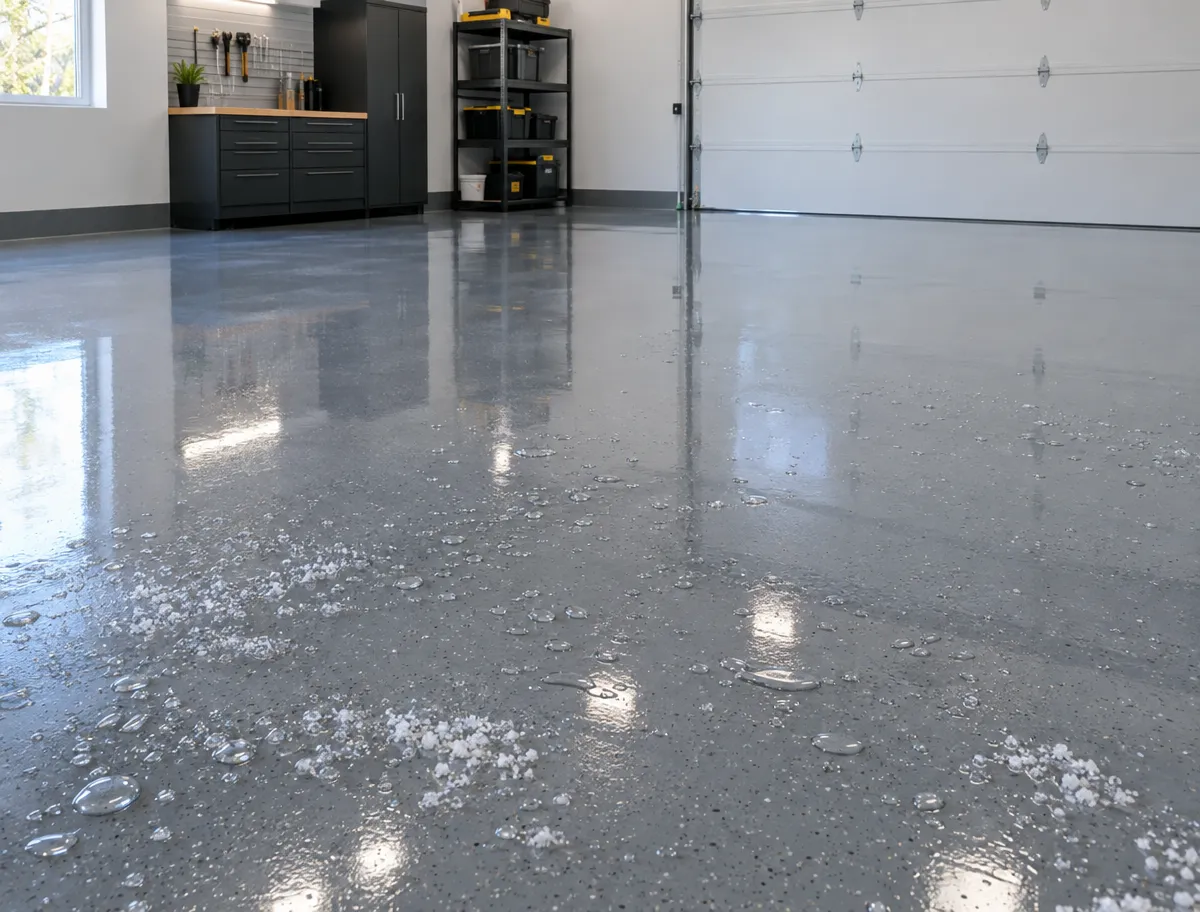
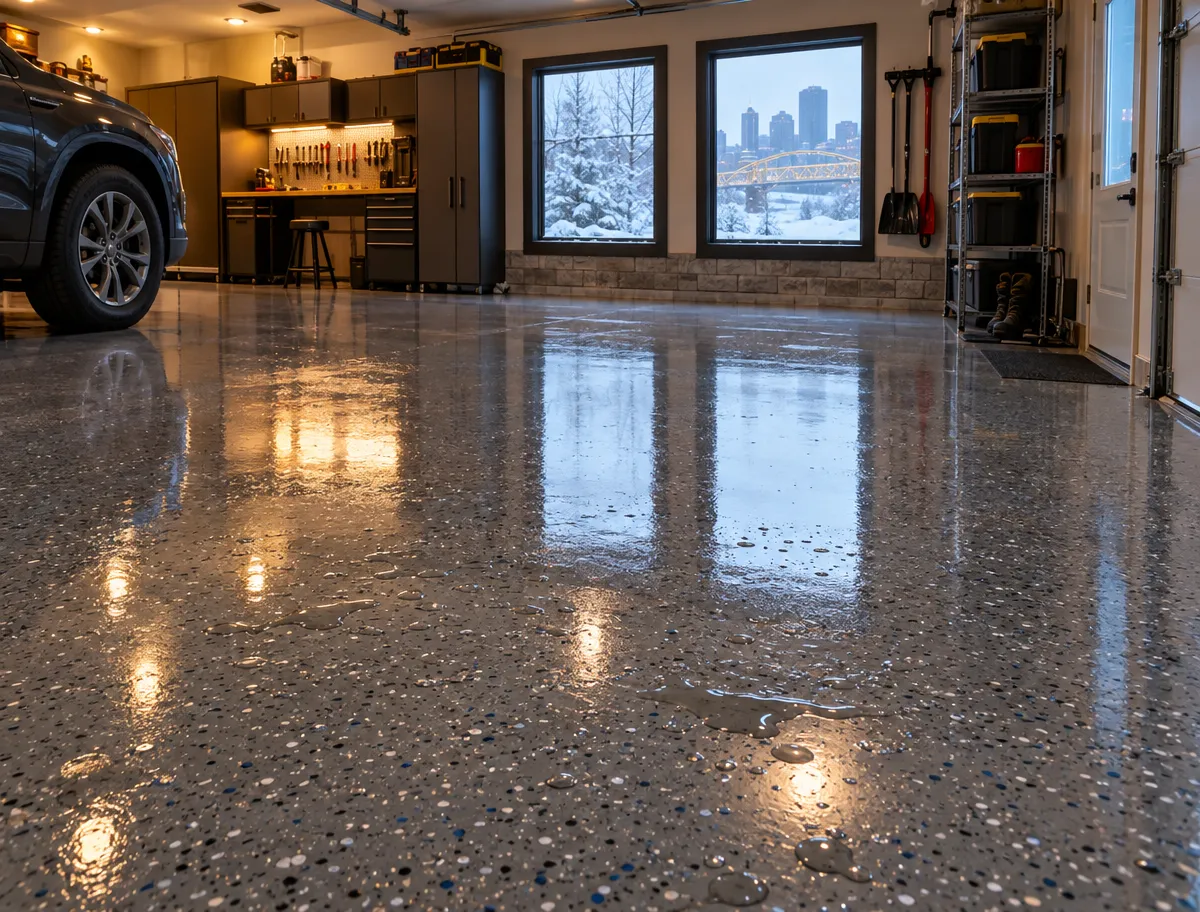
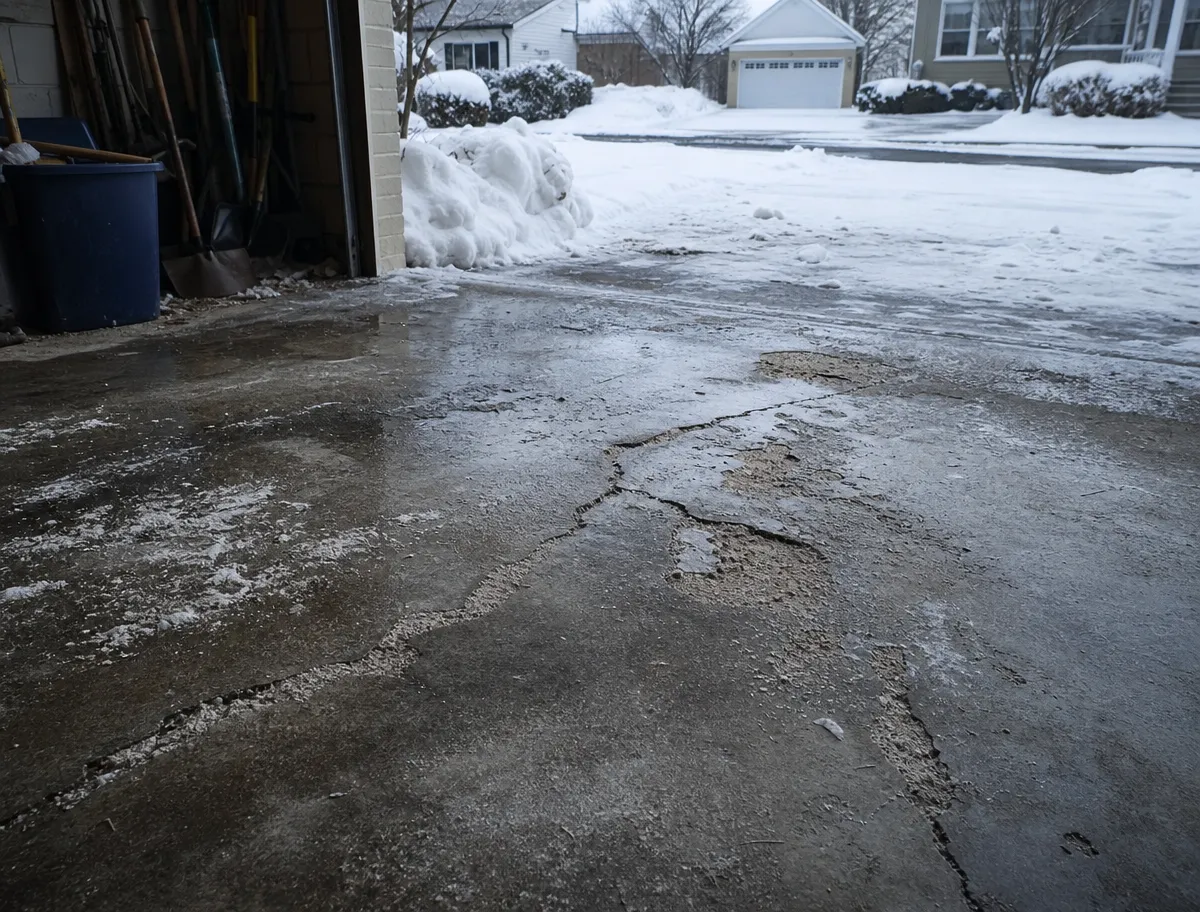
Quick Answer: Winter salt damage garage floor PA problems appear when road salt and freeze-thaw cycles pit, flake, and crack bare Pittsburgh concrete each season. Specialty Concrete Coatings LLC repairs damaged slabs with concrete menders and diamond grinding, then seals them with a polyurea basecoat and a UV-stable polyaspartic topcoat far stronger than standard epoxy paint. Most installations finish in a single day, with driving-ready surfaces in as little as 48 hours.
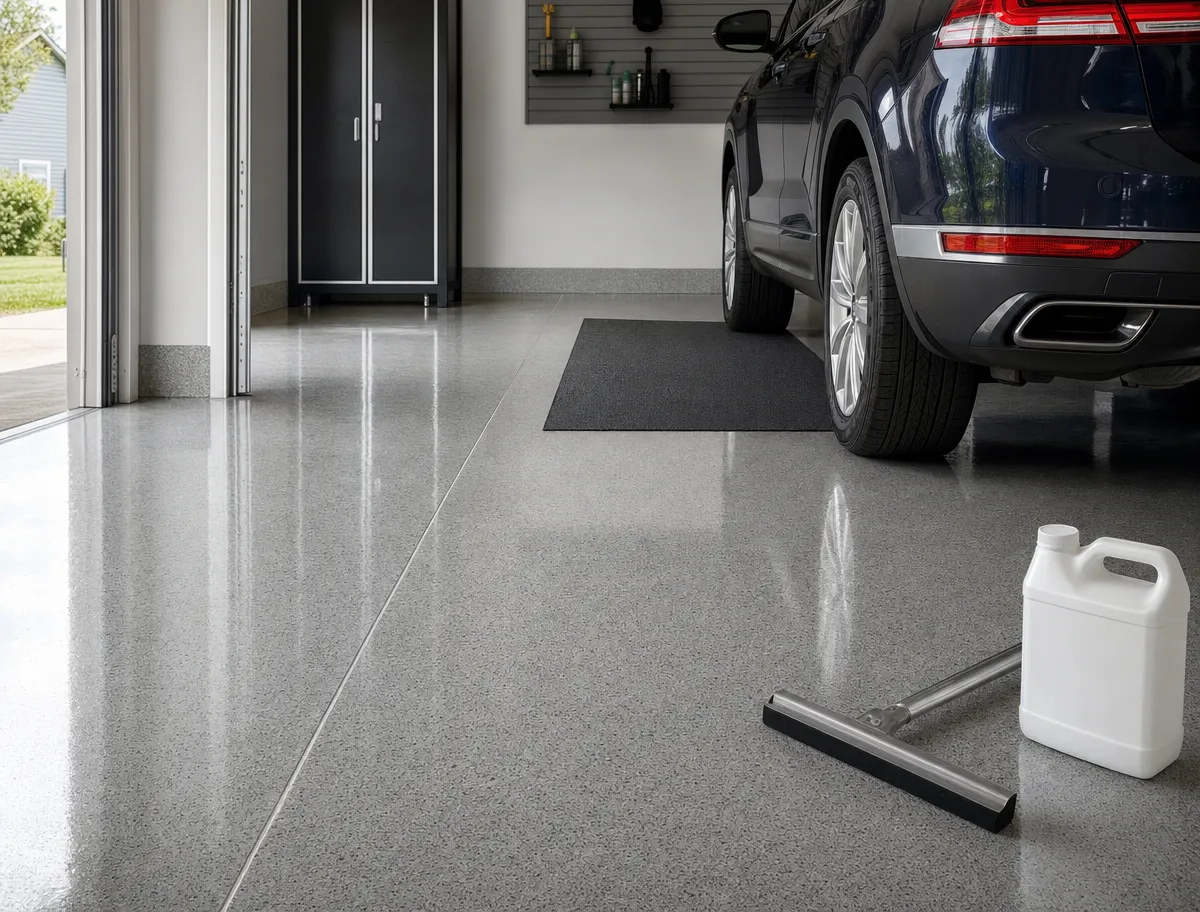
Why Is Pittsburgh Winter So Hard On Concrete?
Freeze-thaw cycles and heavy road-salt use combine to make Pittsburgh one of the toughest climates in the region for unprotected garage floors. Snow piles up fast, melts on warm tires, then refreezes overnight inside the concrete itself. That repeated freeze-thaw punishment, season after season, is what turns a small crack into a structural problem.
An average Pittsburgh winter drops roughly 44 inches of snow on the region. Every one of those snowfalls gets treated with municipal road salt, and that salt doesn’t stay on the street. It rides home on tires as a chloride-rich slush, drips onto the garage slab, and refreezes overnight — a cycle that cracks bare concrete and destroys cheap paint coatings within a season or two.
Two mechanisms drive most of the damage homeowners see:
- Freeze-thaw spalling — water soaks into microscopic pores in the concrete, freezes, expands, and pops chunks off the surface. For a deeper technical breakdown, see NRMCA’s CIP 2: Scaling Concrete Surfaces guide.
- Chloride attack — salt brine works its way into the concrete matrix and accelerates corrosion from the inside out.
Why Does Salt Damage Concrete Faster Than Plain Water?
Salt lowers the freezing point of water. Brine stays liquid longer and penetrates deeper into concrete pores before it finally freezes. That deeper penetration means a bigger expansion event once ice does form, causing more surface pitting and flaking than plain snowmelt alone.
Federal Highway Administration research confirms that deicing salts intensify freeze-thaw damage through osmotic pressure and increased saturation of the concrete matrix, findings detailed in its durability and frost-resistance research on segmental concrete products. Untreated slabs across Western Pennsylvania show this pattern every spring: white salt rings, gray dust, and hairline cracks that widen year over year. Left unaddressed, this is exactly how
winter salt damage garage floor PA conditions produce spalled, pitted concrete rather than a clean, durable surface.
What Are The Warning Signs Of Salt Damage?
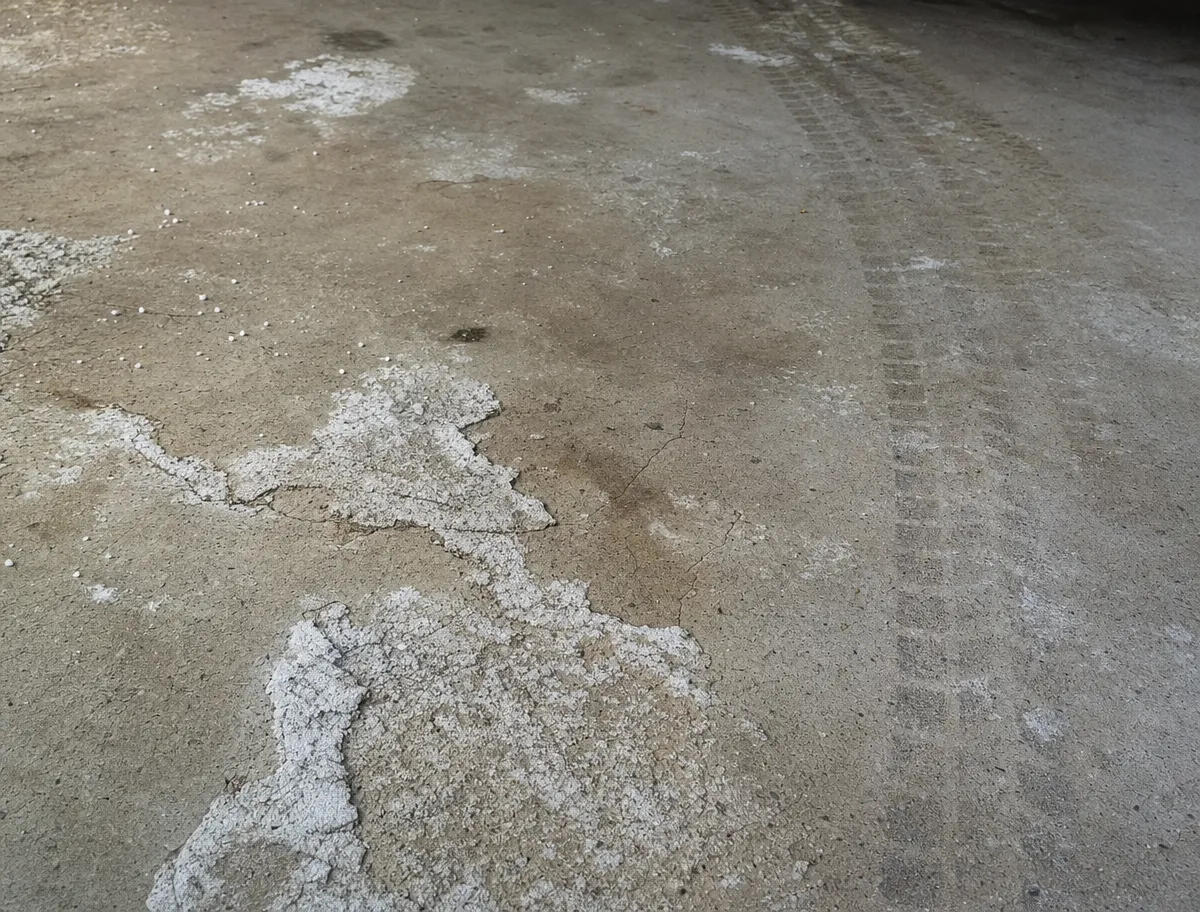
Discoloration, pitting, and dusty residue mark the earliest stages of concrete deterioration in Pittsburgh garages. Road salt, the de-icing agent PennDOT trucks spread across highways and residential streets each winter, ranks among the most corrosive substances a concrete slab encounters. Homeowners who track that salt inside on tires and boots give it a direct path into their garage floor.
Melting snow and slush carry the salty water straight into the pores of bare concrete. That moisture doesn’t stay on the surface. It works downward, and each freeze-thaw cycle common to Western Pennsylvania winters pushes the damage further into the slab.
How Does Salt Damage Progress If Left Untreated?
Left alone, minor pitting turns into spalling — chunks of concrete breaking away from the surface. Surface dusting follows, along with deeper structural deterioration that spreads across the entire garage floor. Recognizing this progression early gives property owners a real chance to stop it before repair costs climb.
What Visible Signs Should Pittsburgh Homeowners Check For?
A few recurring symptoms show up across garages throughout Greater Pittsburgh:
- Flaking or scaling near the garage door where salt and slush collect
- White, chalky rings left behind after snowmelt evaporates
- Small pits or craters scattered across tire tracks
- Fine concrete dust accumulating on the floor surface
- Hairline cracks that widen with each passing winter
Road salt runoff is a growing concern beyond the garage, too — U.S. Geological Survey research shows chloride levels in urban waterways have climbed sharply since the 1970s as more salt washes off pavement each winter. Untreated salt exposure on a garage slab doesn’t reverse itself. Concrete that cracks, flakes, and pits during one season typically shows worse damage the next. Specialty Concrete Coatings LLC serves homeowners across Pittsburgh and Western Pennsylvania, helping them catch
winter salt damage garage floor PA conditions early with coating systems built to withstand road salt exposure season after season.
Can A Damaged Garage Floor Be Repaired?
Yes, a cracked, pitted, or flaking Pittsburgh garage floor can be repaired and restored with a professional coating system. Concrete that looks beyond saving usually just needs proper surface preparation before a durable finish goes down. Skipping that step, though, costs homeowners twice: once on a coating that fails, and again on the repair that follows.
Cost depends on a few variables. In Pittsburgh, repair and coating pricing shifts based on the type of coating chosen, the size of the garage, and how much surface prep the concrete demands before anything gets applied — homeowners can review the factors that drive pricing in our concrete coating price guide. A slab with heavy pitting or deep salt stains naturally needs more grinding and crack repair than one with light surface wear.
Treating garage floor coating as a real investment — not a cosmetic afterthought — makes the difference. A properly installed coating enhances both the durability and the appearance of concrete, protecting the slab underneath long after repairs are complete.
Why Do Protective Coatings Matter For A Repaired Floor?
Protective coatings do more than hide old damage. They significantly cut future maintenance needs by shielding concrete against environmental and mechanical stress that caused the problem in the first place. For Pittsburgh garages, that means less chipping, less staining, and fewer repeat repairs. NRMCA’s Concrete In Practice technical series outlines similar surface-protection principles used across the concrete industry.
Why Do So Many DIY Garage Floor Coatings Fail?
Many DIY coatings fail specifically because Pittsburgh’s climate punishes shortcuts. Thin, store-bought products rarely bond properly to concrete without the right prep, and they crack or peel within a season or two.
What separates a lasting repair from a temporary patch:
- Full diamond grinding to expose sound concrete
- Crack and spall repair with concrete menders
- A high-adhesion basecoat matched to the slab’s condition
- A sealed topcoat built for freeze-thaw cycles
Ready to Stop Salt Damage Before It Spreads? Specialty Concrete Coatings LLC installs polyurea and polyaspartic garage floor systems built for Pittsburgh winters. Get a free quote today and protect your investment before the next freeze-thaw cycle.
Which Coating Stops Salt Damage For Good?
A sealed, moisture-resistant surface stops winter salt damage garage floor PA conditions from reaching bare concrete in the first place. Two approaches dominate homeowner research: penetrating sealers that soak into the slab, and topical systems that form a continuous barrier on top, such as those compared in this guide to choosing between epoxy and polyurea coatings. Only one delivers lasting protection against Pittsburgh’s brutal freeze-thaw cycles and heavy road-salt use.
Do Penetrating Sealers Protect Against Road Salt As Well As Epoxy?
Some Pittsburgh homeowners lean toward penetrating sealers because the product absorbs into the concrete rather than sitting on the surface. That approach sounds appealing for do-it-yourself projects, but it leaves the slab’s surface exposed to hot tires, abrasion, and repeated freeze-thaw cycling. A high-performance epoxy or polyurea coating instead builds a sealed, moisture-resistant layer across the entire floor, blocking salt intrusion before it ever reaches the concrete pores and making daily cleanup far simpler.
Given how much road salt Pittsburgh crews spread each winter — the EPA estimates hundreds of thousands of tons of road salt go down across affected states each season — protection against salt and deicers ranks as the top concern for most homeowners evaluating a floor treatment. A topical coating system answers that concern directly, since nothing bonds to the surface unless it first breaks through the coating itself.
| Approach | How It Works | Best For |
|---|---|---|
| Penetrating sealer | Absorbs into concrete pores | Light-use, low-traffic slabs |
| Epoxy/polyurea coating | Forms a sealed surface barrier | Daily-driven garages facing salt and freeze-thaw |
What Does A Coated Garage Floor Cost In Pittsburgh?
Professionally installed metallic epoxy floors across Pittsburgh and Western Pennsylvania carry a cost that varies primarily by garage size, slab condition, and color complexity. Pricing reflects more than protection, too — every finished floor turns out unique, since no two epoxy concrete coatings for your garage look exactly alike.
How Do You Protect Your New Floor?
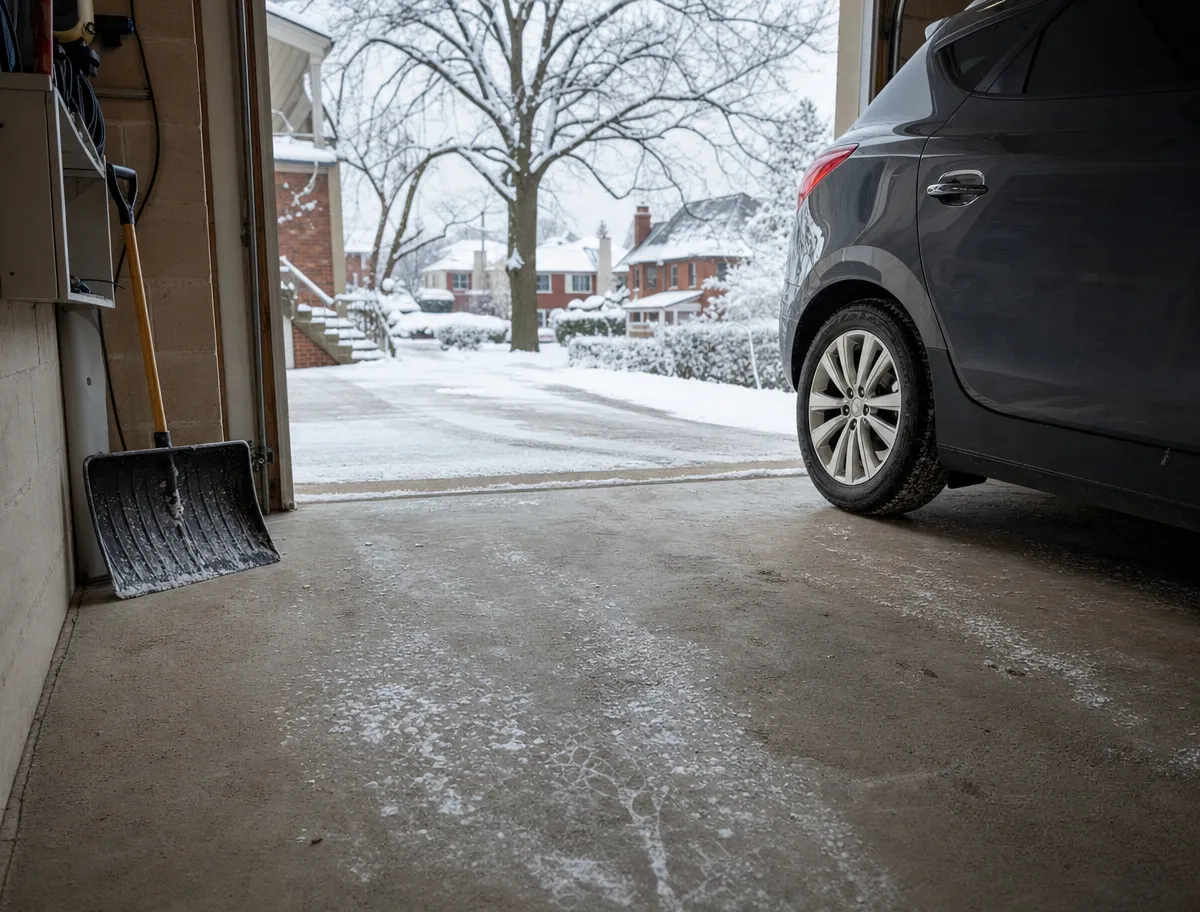
Protection starts with material choice, not maintenance habits. A properly cured polyaspartic coating-and-polyurea system resists chloride penetration far better than bare concrete or a painted-on sealer, which keeps winter salt damage garage floor PA conditions from ever reaching the slab. Specialty Concrete Coatings LLC, based in Sandy Lake, PA, installs these systems for garages throughout Greater Pittsburgh, where road brine and freeze-thaw cycles punish unprotected concrete every winter.
Many Pittsburgh homeowners first learn about coated floors secondhand. A neighbor’s freshly finished garage catches their eye, and the questions start almost immediately: what is that surface, and how does it hold up to salt?
Is A DIY Sealer Enough To Stop Salt Damage?
A penetrating sealer applied by hand seems appealing because it’s fast and inexpensive. But ease of application shouldn’t outweigh long-term performance. Homeowners comparing a do-it-yourself product against a professionally installed coating need to weigh years of durability, not just an afternoon of convenience.
Once installed, a professional system needs little upkeep. A short care routine keeps the floor performing at its best:
- Sweep or rinse off salt residue and slush after storms
- Avoid harsh solvents that can dull the clear coat
- Use floor mats near tire tracks during heavy salt months
- Schedule an inspection if chipping or dulling appears
| Approach | Salt Resistance | Long-Term Value |
|---|---|---|
| DIY penetrating sealer | Limited | Requires reapplication |
| Professional polyurea/polyaspartic system | High | Built for Pittsburgh winters |
A floor built for Pittsburgh’s climate stays protected season after season, sparing homeowners the cracking and flaking that untreated concrete eventually suffers.
Frequently Asked Questions
How does road salt damage a Pittsburgh garage floor?
Salt lowers water’s freezing point, letting brine penetrate deeper into concrete pores before freezing and expanding. This causes surface pitting, flaking, and cracks that worsen with each freeze-thaw cycle.
What repair process does Specialty Concrete Coatings LLC use?
Specialty Concrete Coatings LLC repairs damaged slabs using concrete menders and diamond grinding, then applies a polyurea basecoat sealed with a UV-stable polyaspartic clear coat.
How long does the coating installation take?
Installations finish in one day, and driving surfaces become ready for use within 48 hours after application.
Will sealing my garage floor stop salt stains for good?
A penetrating sealer reduces staining temporarily, but only a fully cured polyurea or polyaspartic coating creates a continuous, chloride-resistant barrier that stops salt penetration long term. Sealers need reapplication and offer less protection against Pittsburgh’s freeze-thaw cycles.
How much does it cost to repair a salt-damaged garage floor in Pittsburgh?
Cost depends on the extent of pitting and cracking, garage size, and how much surface prep the concrete needs before coating. A free on-site quote from Specialty Concrete Coatings LLC gives homeowners an accurate, project-specific price.
TL;DR — Winter Salt Damage Garage Floor PA at a Glance
- Pittsburgh receives 44 inches of snow annually, with PennDOT applying roughly 600,000 tons of road salt yearly.
- Road salt tracked into garages penetrates concrete pores, causing cracks, flaking, pitting, and deterioration over time.
- Freeze-thaw cycles force salty moisture deep into concrete, breaking down the slab and destroying standard paint coatings.
- Specialty concrete coatings stop winter salt damage by sealing pores and protecting garage floors year-round.
- Ready to protect your garage floor? Get a free quote from Specialty Concrete Coatings LLC today.
Related Resources
- Garage Concrete Coating Services
- Pittsburgh, PA Concrete Coating Company
- Understanding Concrete Coating Weather Resistance
- DIY Garage Floor Coating Cost Study
- Polyaspartic Floor Coating Cost Guide
- What To Do If Your Concrete Cracks After Installation
Get a Free Pittsburgh Garage Floor Coating Quote
Protecting your Pittsburgh garage floor from winter salt and freeze-thaw damage requires a proactive approach that combines proper maintenance with a durable, professional coating system. A high-quality polyurea and polyaspartic finish addresses both the aesthetic concerns and structural vulnerabilities that seasonal weather creates, delivering a surface engineered to withstand harsh conditions while remaining easy to maintain year-round.
By investing in a proven concrete coating solution now, you safeguard your garage investment and restore its appearance for years to come. Request your free, no-obligation quote from Specialty Concrete Coatings LLC today.
About Specialty Concrete Coatings LLC: Based in Sandy Lake, PA, Specialty Concrete Coatings LLC installs polyurea, polyaspartic, and epoxy floor coating systems for homeowners and businesses throughout Greater Pittsburgh and Western Pennsylvania. The team specializes in repairing freeze-thaw and salt-damaged concrete, delivering durable, one-day installations backed by a workmanship warranty. Learn more on our About Us page.