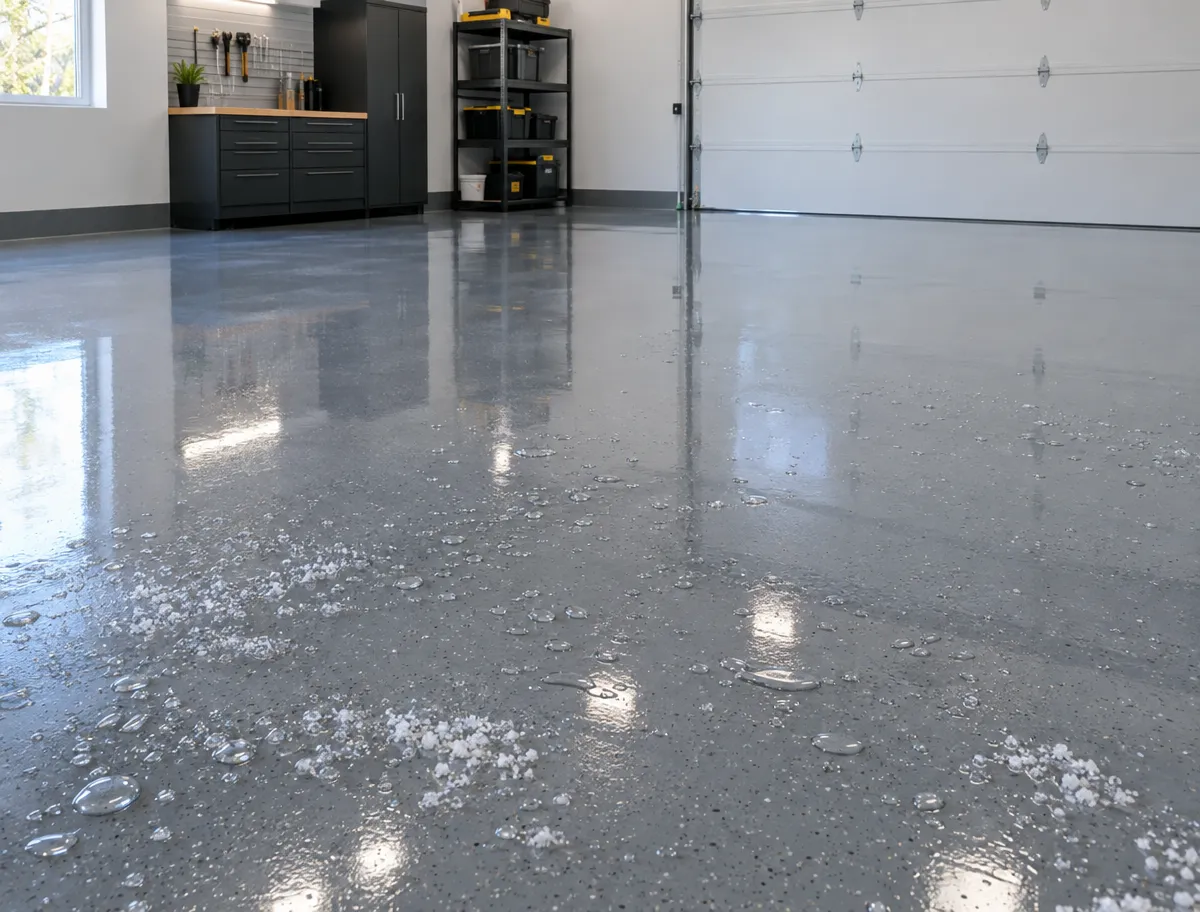
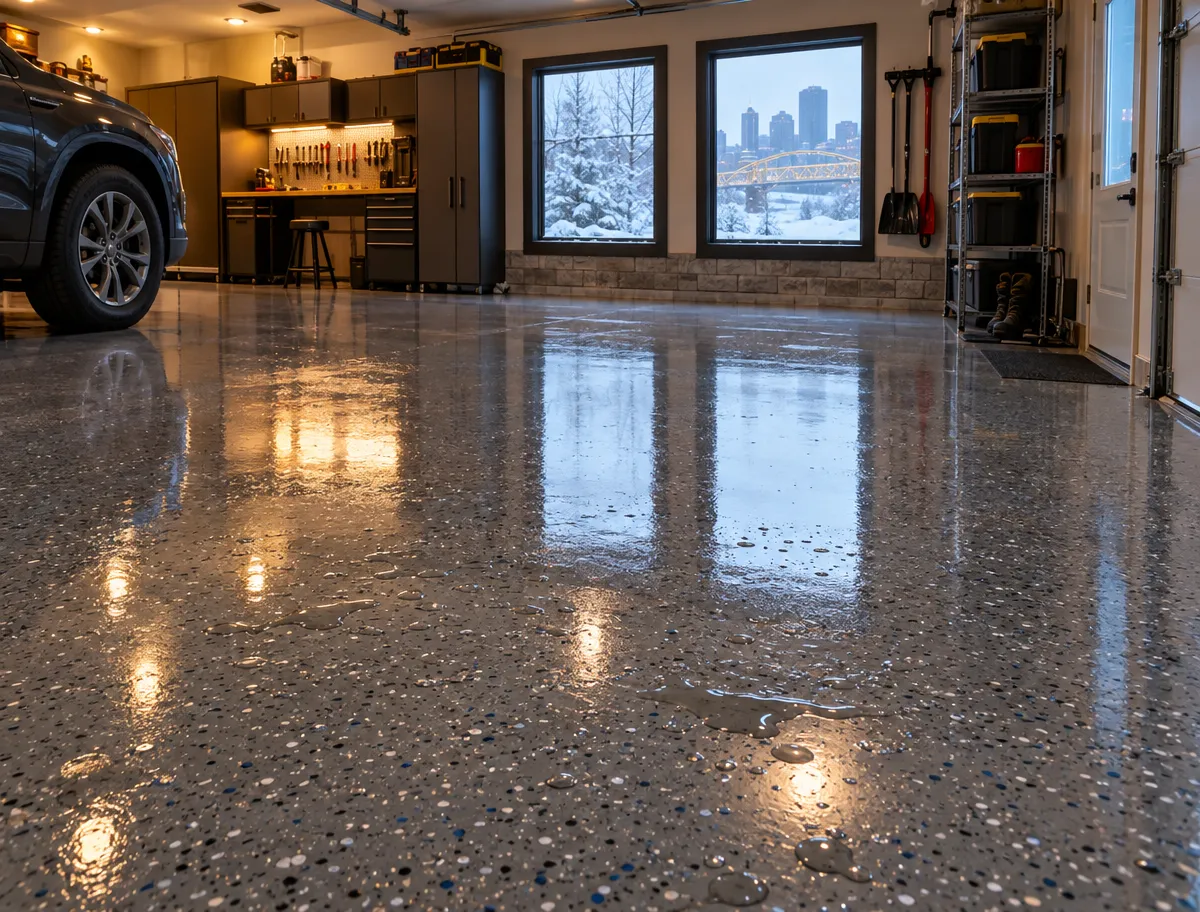
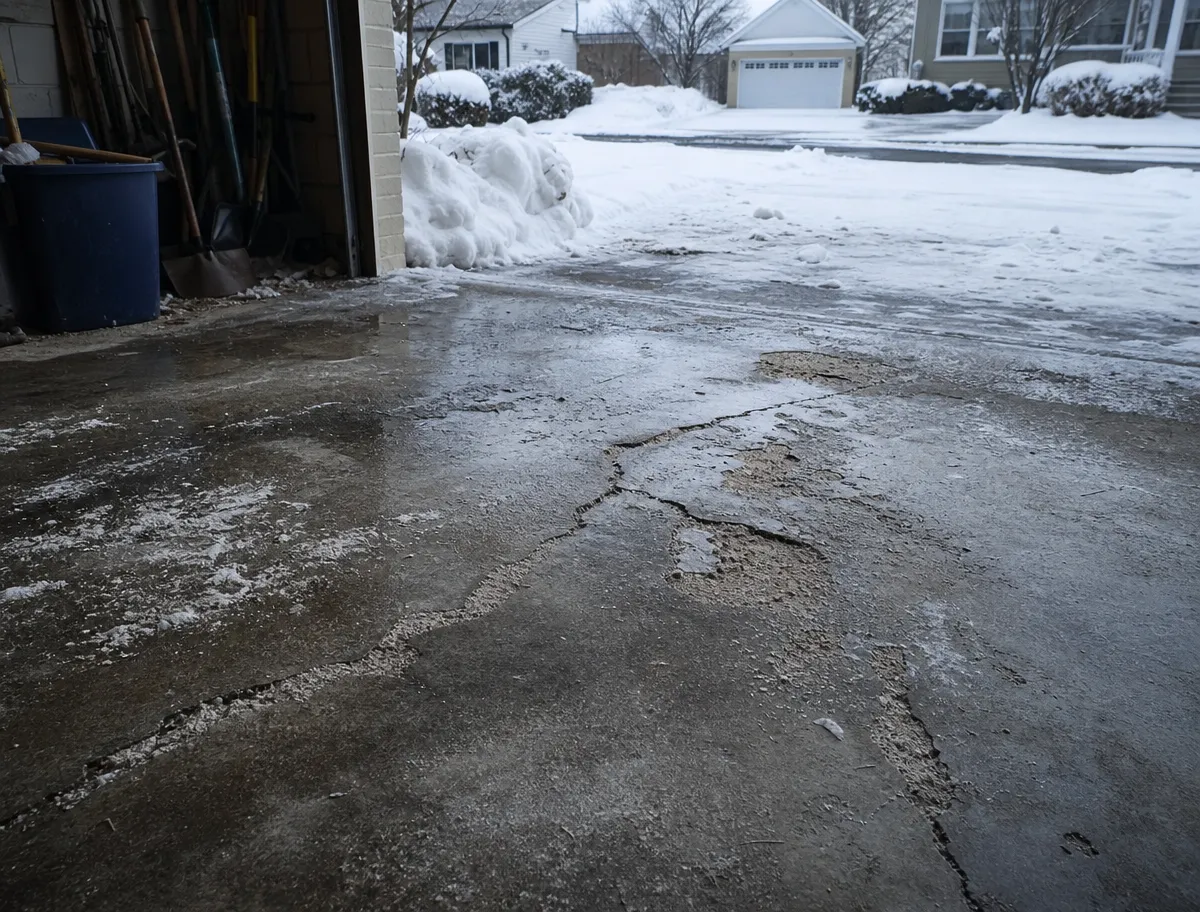
Quick answer: A professionally installed 100% solids epoxy floor lasts 10–20+ years. A DIY water-based kit lasts 2–5 years. The difference comes down to two things: the product and the prep. Diamond-ground concrete + the right high-solids coating = a floor you install once. Acid-etched slab + a thin DIY kit = a floor you redo in a few years.
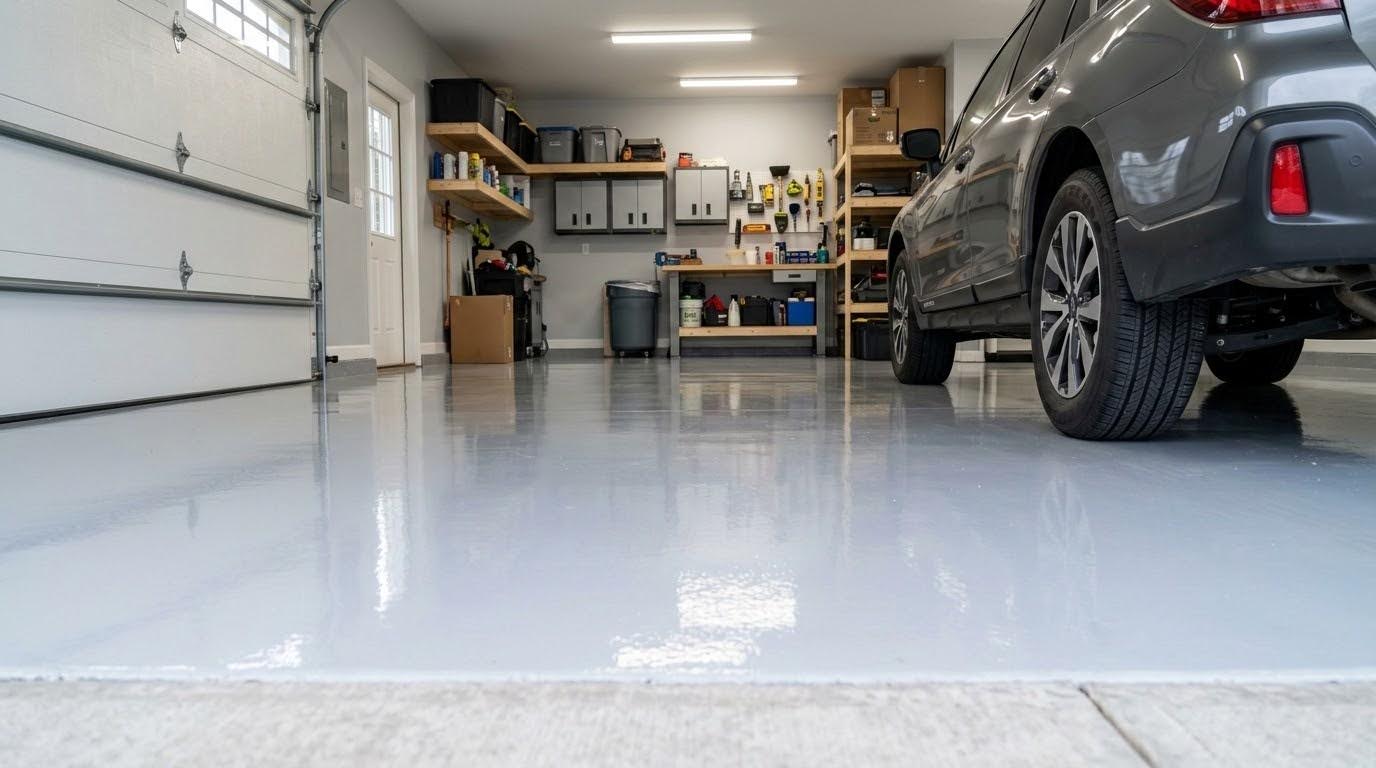
If you’ve searched ‘how long does epoxy floor last,’ you’ve seen every answer from 2 years to forever. Both are technically true — it depends on which type of epoxy was installed, how the concrete was prepared, and what the floor deals with every day. This guide gives you honest, no-fluff lifespan data by product type, explains the factors that shorten (or extend) any epoxy floor coating, and shows you exactly what to do to get the most out of yours.
Key Takeaways
- Professional 100% solids epoxy lasts 10–20+ years; DIY water-based kits last 2–5 years.
- Surface preparation — diamond grinding vs. acid etching — is the single biggest lifespan factor.
- Hot tires, UV exposure, slab moisture, and heavy traffic are the top lifespan killers.
- A polyaspartic or polyurea topcoat over epoxy pushes system lifespan to 15–25+ years.
- Regular cleaning and prompt spill cleanup add meaningful years to any epoxy floor.
Epoxy Floor Lifespan by Product Type
Not all epoxy is the same product, and the lifespan gap between types is enormous. Here’s an honest breakdown — assuming proper surface prep and typical residential garage floor coating use:
| Epoxy Type | Typical Lifespan | Best For | Key Weakness |
|---|---|---|---|
| 100% Solids Epoxy (Professional) | 10–20+ years | Garages, commercial, heavy traffic | Requires professional install |
| Water-Based Epoxy (DIY kit) | 2–5 years | Light traffic, workshops, basements | Thin film, hot-tire pickup |
| Solvent-Based Epoxy | 5–10 years | Commercial, industrial floors | High VOCs, strong odor |
| Epoxy + Polyaspartic/Polyurea Topcoat | 15–25+ years | All garages, UV-exposed areas | Higher upfront cost |
| Standard Floor Paint | 1–3 years | Very light use only | No chemical bond to concrete |
Important: All ranges above assume the concrete was properly prepared before coating. Skimp on prep and you can cut years off any of these numbers. See our full guide on DIY vs. professional garage floor coating to understand how much prep method affects the outcome.
What Actually Determines How Long an Epoxy Floor Lasts
Lifespan isn’t a product spec alone — it’s the result of several overlapping factors. Here’s what matters most, ranked by impact:
1. Surface Preparation — The Biggest Factor by Far
Epoxy bonds to concrete mechanically. The rougher and cleaner the surface, the stronger the bond. Diamond grinding opens the concrete’s pores and creates a mechanical profile that epoxy locks into — this is the professional standard. Acid etching, the DIY method included in most kits, cleans the surface but doesn’t open it nearly as effectively. A diamond-ground floor routinely outlasts an acid-etched one by 5–10 years. This is the single most impactful decision in the entire process.
2. Product Solids Content
Solids content is how much of the product stays behind as finished coating after curing. 100% solids epoxy cures into a thick, high-build film. Water-based epoxy — which is often 40–60% solids — leaves a much thinner layer once the water carrier evaporates. Thicker films resist abrasion, chemicals, and hot tires far better and simply take longer to wear through. Learn more in our comparison of polyaspartic vs. epoxy garage floor systems.
3. Traffic and Use
A garage floor coating under two vehicles, a motorcycle, and regular tool use ages faster than one in a basement storage room. More weight, more heat cycles, more chemical exposure — faster wear. Heavy-use floors should always start with the thickest, most durable system available. For commercial environments, see our commercial concrete coatings page for systems built for even heavier demands.
4. Hot-Tire Pickup
Hot tires fresh off the road can reach 150°F or higher. When a hot tire sits on a thin or poorly bonded epoxy floor and cools, it contracts and grips the coating — sometimes pulling it right off the slab. This is one of the most common reasons garage floors fail early. We cover the full mechanics in our dedicated hot tire pickup guide. Thick, properly bonded 100% solids systems handle it well. Thin DIY coatings are especially vulnerable.
5. UV Exposure
Standard epoxy yellows and chalks under UV light. If your garage gets direct sun through windows or an open door, an unprotected epoxy surface will fade and degrade faster than one in a shaded space. A UV-stable polyaspartic coating or polyurea topcoat solves this completely and is worth the cost on any sun-exposed floor. See our comparison of polyaspartic vs. epoxy for a full breakdown.
6. Moisture in the Concrete Slab
Concrete naturally holds and transmits moisture. If moisture vapor pushes up through the slab after an epoxy coating is applied, it can cause delamination — bubbling and peeling that starts from underneath. A professional installer will test for moisture vapor transmission and, if needed, apply a vapor barrier primer before any coating goes down. Skipping this step is one of the most overlooked causes of early floor failure. Our guide on epoxy floor coating problems covers this in detail.
7. Maintenance Habits
Epoxy floors are low-maintenance — not zero-maintenance. Oil, gasoline, and harsh chemicals sitting on the surface for extended periods accelerate wear. Sand and grit act like sandpaper underfoot with every step. Regular sweeping, monthly mopping, and prompt spill cleanup extend the life of any floor significantly. See our key maintenance guide for concrete surfaces for a full routine.
Factors at a Glance: What Shortens vs. Extends Lifespan
| Factor | Shortens Lifespan | Extends Lifespan |
|---|---|---|
| Surface Prep | Acid etch only, or no prep at all | Diamond grinding to full mechanical profile |
| Product Type | Water-based / thin-film DIY kit | 100% solids epoxy or polyaspartic system |
| Traffic & Use | Heavy vehicles, frequent chemical spills | Light foot traffic, controlled environment |
| Slab Moisture | Unaddressed moisture vapor transmission | Moisture test done; vapor barrier primer applied |
| UV Exposure | Standard epoxy in sun-exposed garage | UV-stable polyaspartic or polyurea topcoat |
| Maintenance | Ignored spills, no cleaning routine | Regular sweeping, mopping, prompt spill cleanup |
| Topcoat | Single epoxy coat, no sealer | Polyaspartic or polyurea topcoat applied over base |
Why DIY Epoxy Floors Don’t Last as Long
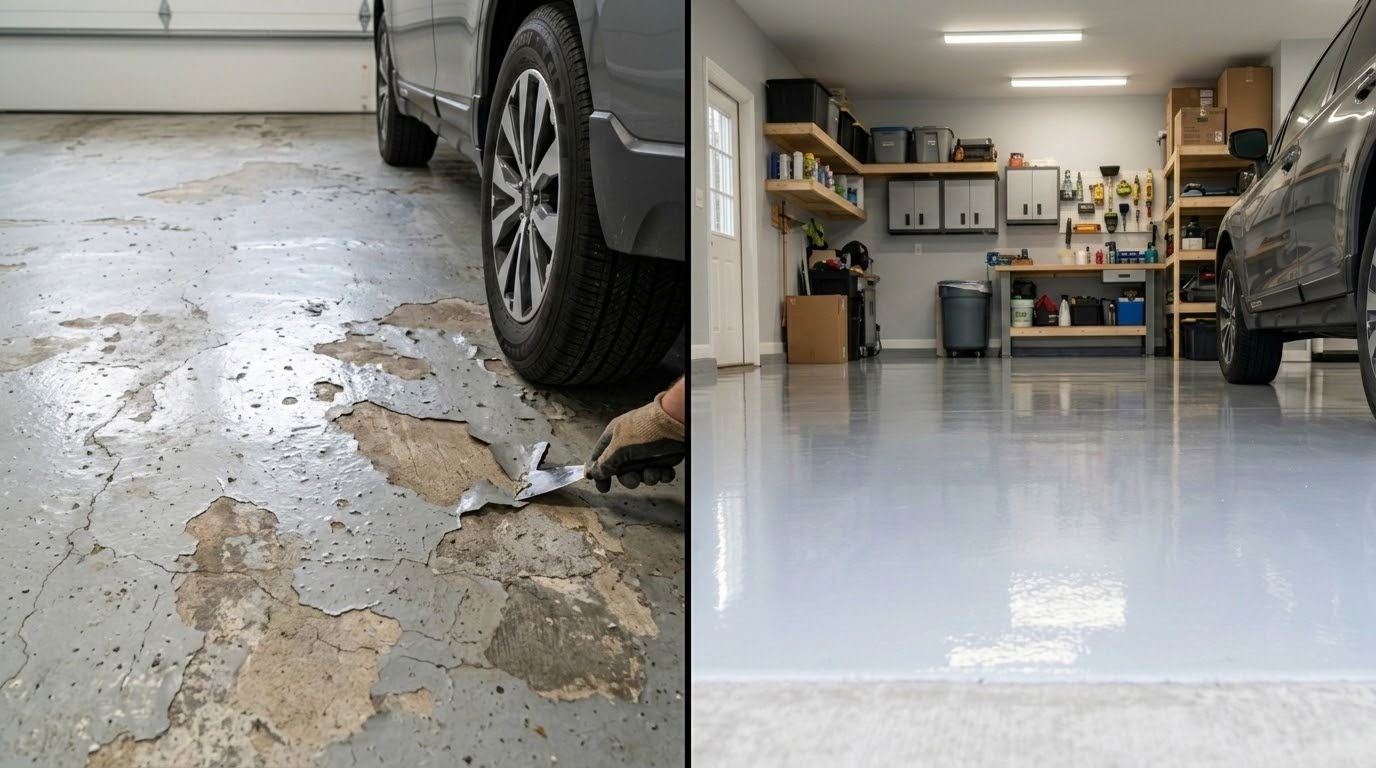
Most big-box epoxy kits underperform expectations for two reasons that have nothing to do with brand or price. Our detailed DIY garage floor coating cost study breaks this down with real numbers, but the core issues are:
- Thin film: water-based and low-solids products leave a thin coating that simply doesn’t have enough material to absorb years of wear.
- Incomplete prep: homeowners typically use the acid etch included in the kit, which cleans the concrete but doesn’t open it the way diamond grinding does. Without a proper mechanical profile, the bond is weaker from day one.
This isn’t a knock on DIY effort — it’s physics. A thinner coating on a smoother surface has less to give, and in a working garage that bond is tested every single day. For a full rundown of what goes wrong, see our guide to common DIY garage floor coating problems.
How to Get 15–20+ Years from Your Epoxy Floor
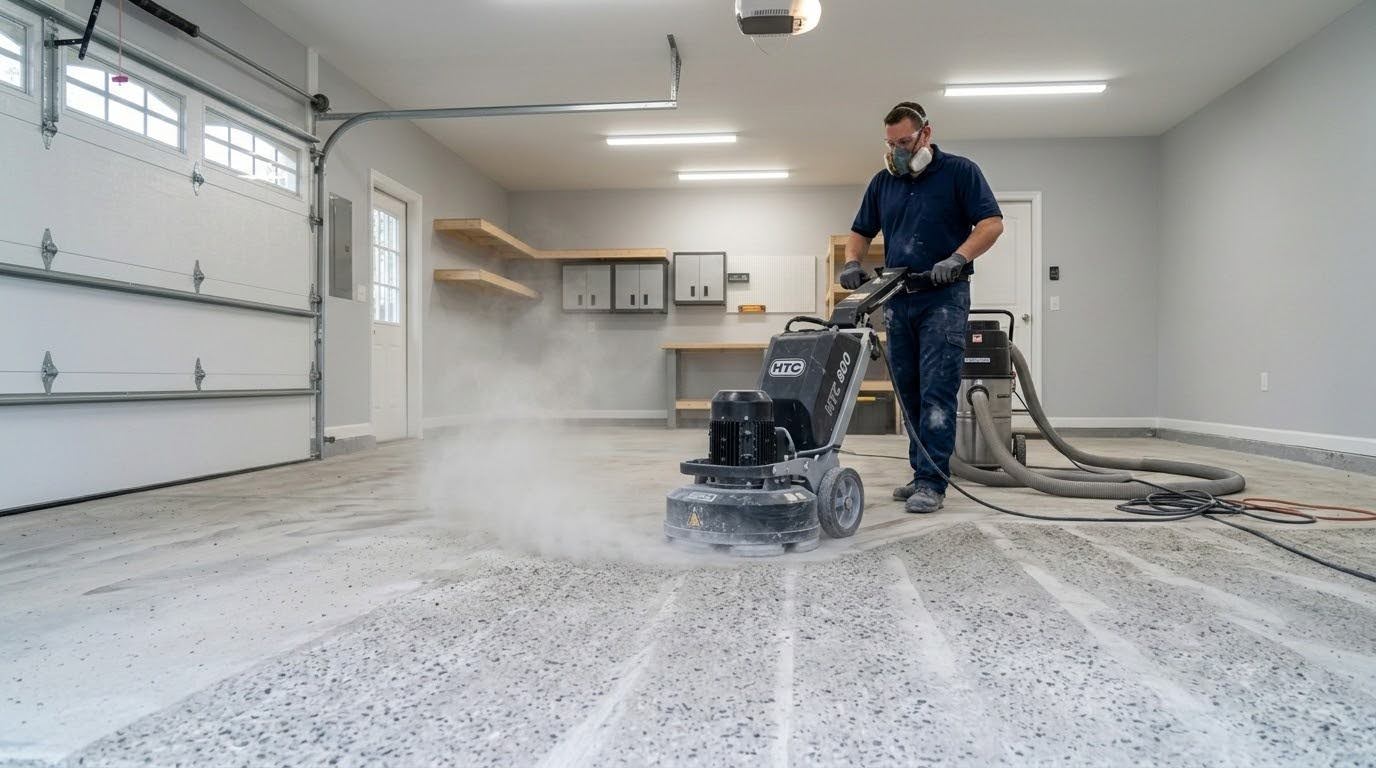
The path to a long-lasting floor is straightforward — and it starts before the coating is even mixed:
- Diamond grind the concrete. Non-negotiable for any floor you want to last. A proper mechanical profile is the foundation of adhesion. No amount of product quality compensates for skipped prep.
- Choose the right product. For a working garage, 100% solids epoxy — or an epoxy base with a polyaspartic topcoat — is the only system worth installing. Check our best garage floor coating for 2026 guide for current recommendations.
- Test and address slab moisture. Before any coating goes down, test the concrete. If moisture vapor is present, a vapor barrier primer is required. Skipping this step is the most overlooked cause of premature failure.
- Add a UV-stable topcoat. A polyaspartic or polyurea topcoat protects the epoxy from yellowing, adds a hard abrasion layer, and pushes total system life to 20–25+ years. Learn whether the cost is justified in our polyaspartic worth-it breakdown.
- Maintain it. Sweep weekly, mop monthly, and address spills immediately. Five minutes of routine care now is worth years of floor life later. Our how to extend the life of your concrete surfaces guide has a full checklist.
Signs Your Epoxy Floor Is Reaching End of Life
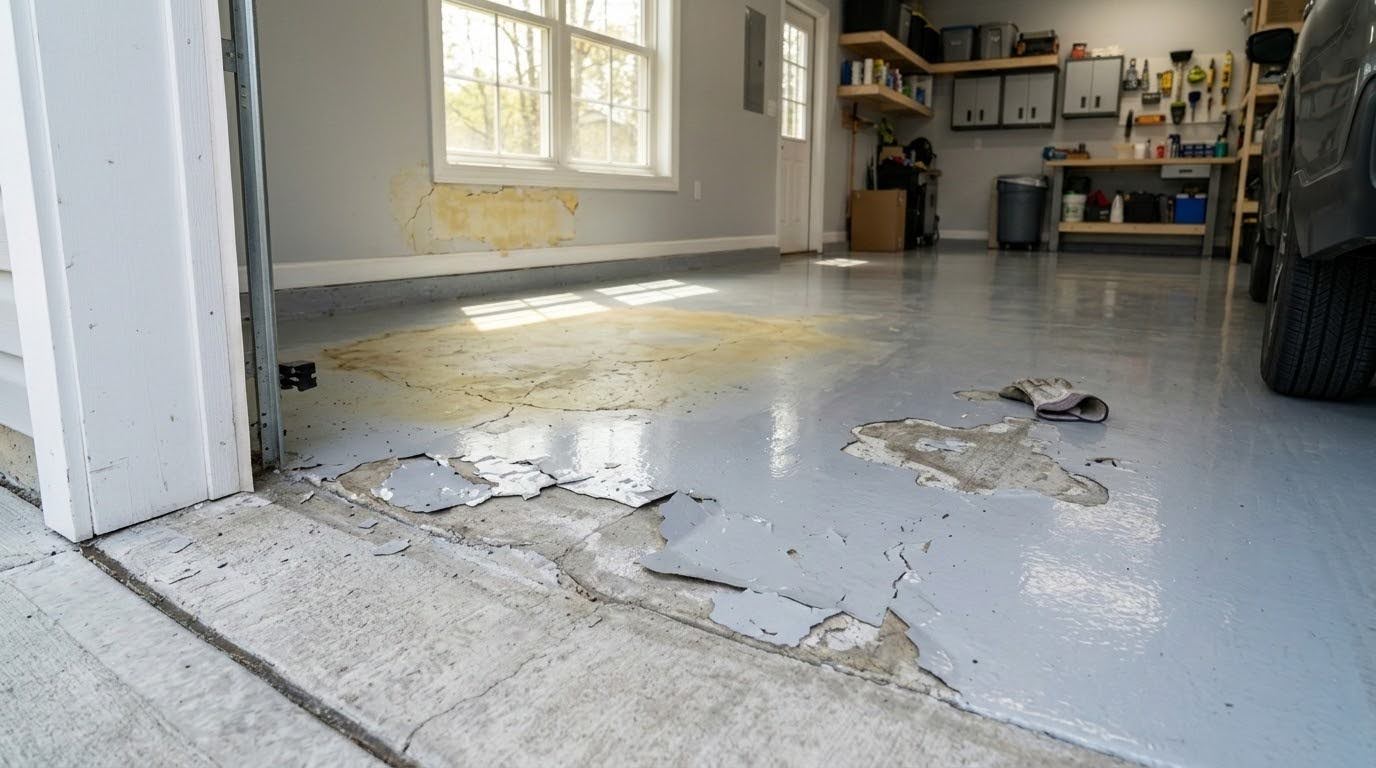
Even the best floors eventually need attention. Watch for these signs that it’s time to call a professional for evaluation or recoating. Catching problems early often means a prep-and-recoat is enough — waiting until full failure usually means more work and higher cost. See our guide on fixing a peeling epoxy garage floor for your options:
- Peeling or delamination — lifting sections, especially near entry points where tires park and cool
- Widespread cracking or crazing — a network of fine cracks spreading across the surface
- Significant yellowing or color fading, especially near windows or the garage door
- Worn-through spots where bare concrete is visible underneath
- Persistent staining that regular cleaning can no longer remove
Epoxy Floor Lifespan, at a Glance
- Professional 100% solids epoxy: 10–20+ years with proper diamond-ground prep and maintenance.
- DIY water-based kits: 2–5 years — thinner film, less prep, shorter life.
- Polyaspartic/polyurea systems: 15–25+ years — the longest-lasting option available for garage floors.
- Surface preparation is the #1 factor in lifespan — diamond grinding always outperforms acid etching.
- Want a floor that lasts? Call Specialty Concrete Coatings at (724) 815-1977 or get a free quote online.
Frequently Asked Questions
How long does an epoxy floor coating last?
A professionally installed 100% solids epoxy floor typically lasts 10–20 years or more with proper prep and maintenance. DIY water-based kits last 2–5 years. The biggest variable is surface preparation — a diamond-ground slab bonds far longer than one that was only acid-etched.
Why is my epoxy floor peeling so soon?
Early peeling almost always traces to inadequate surface prep or a thin, low-solids product that can’t handle vehicle heat and weight. Hot tires grip a poorly bonded coating and pull it off as they cool. See our full guide on epoxy garage floor peeling causes and fixes.
Does epoxy flooring last longer than regular concrete paint?
Yes, significantly. Standard floor paint lasts 1–3 years in a garage before chipping and peeling. A quality 100% solids epoxy system delivers 10–20+ years of durability because it chemically and mechanically bonds to the concrete rather than sitting on top of it.
How do I make my epoxy floor last longer?
Diamond grind before coating, choose a high-solids product matched to your traffic, add a UV-stable polyaspartic topcoat for sun-exposed floors, clean up spills right away, and sweep regularly. These steps combined can push a floor well past 20 years. Our how to extend the life of your concrete surfaces guide has the full routine.
Is polyaspartic better than epoxy for longevity?
A polyaspartic topcoat over an epoxy base is the longest-lasting system available for garage floors — typically 15–25+ years. Pure epoxy alone yellows and chalks under UV. For floors that get direct sunlight, the polyaspartic topcoat is worth the extra cost. See our polyaspartic vs. epoxy comparison for a full side-by-side.
Related Guides
- DIY vs. Professional Garage Floor Coating: Which Lasts Longer?
- Hot Tire Pickup: Why It Happens and How to Prevent It
- Epoxy Garage Floor Peeling: Causes and How to Fix It
- Polyaspartic vs. Epoxy Garage Floor: Full Comparison
- Is Polyaspartic Worth the Extra Cost?
- How Long Does a Polyaspartic Floor Last?
- Best Garage Floor Coating for 2026
- Garage Floor Coatings — Service Page
- Garage Concrete Coating Options
- Commercial Concrete Coatings
The Bottom Line
Epoxy floors don’t fail because epoxy is a bad product — they fail because the wrong product went on an improperly prepared slab. Get the prep right, choose a system matched to your traffic and environment, and a professionally installed floor will easily outlast a decade of hard garage use. For most garages, 100% solids epoxy is the smart baseline — and adding a polyaspartic topcoat is what gets you to 20+ years.
The team at Specialty Concrete Coatings has been coating floors across Pittsburgh and NW Pennsylvania for 15+ years. If you want a straight answer about what your specific floor needs, call us at (724) 815-1977 or get a free quote online.
About Specialty Concrete Coatings: Specialty Concrete Coatings is a full-service epoxy and concrete coating contractor based in New Castle, PA, serving Pittsburgh and Northwest Pennsylvania for 15+ years. Our 5-star rated, fully insured team installs durable garage, basement, and commercial floor coatings — from solid-color and metallic epoxy to polyaspartic and quartz finishes. Call (724) 815-1977 or get a free quote and let us help you choose the right floor for your space.