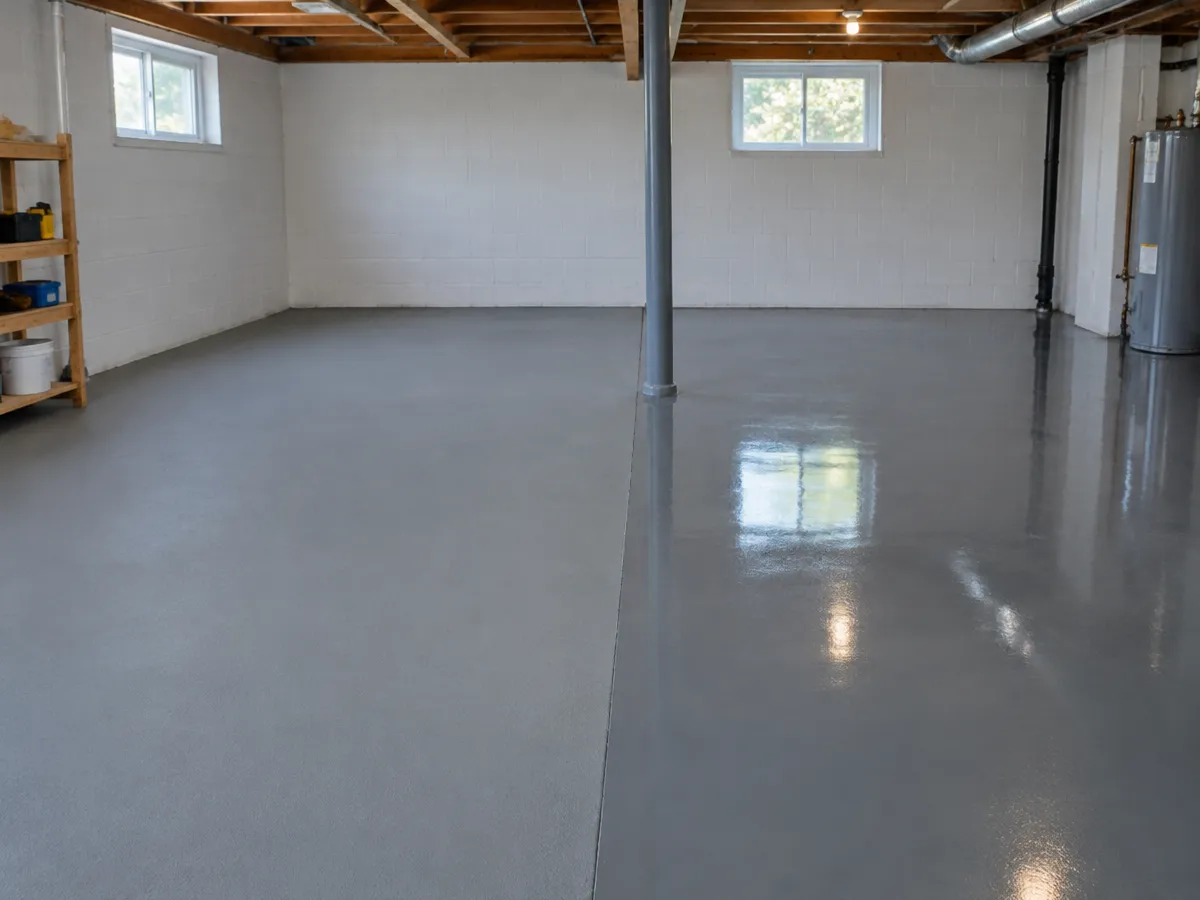
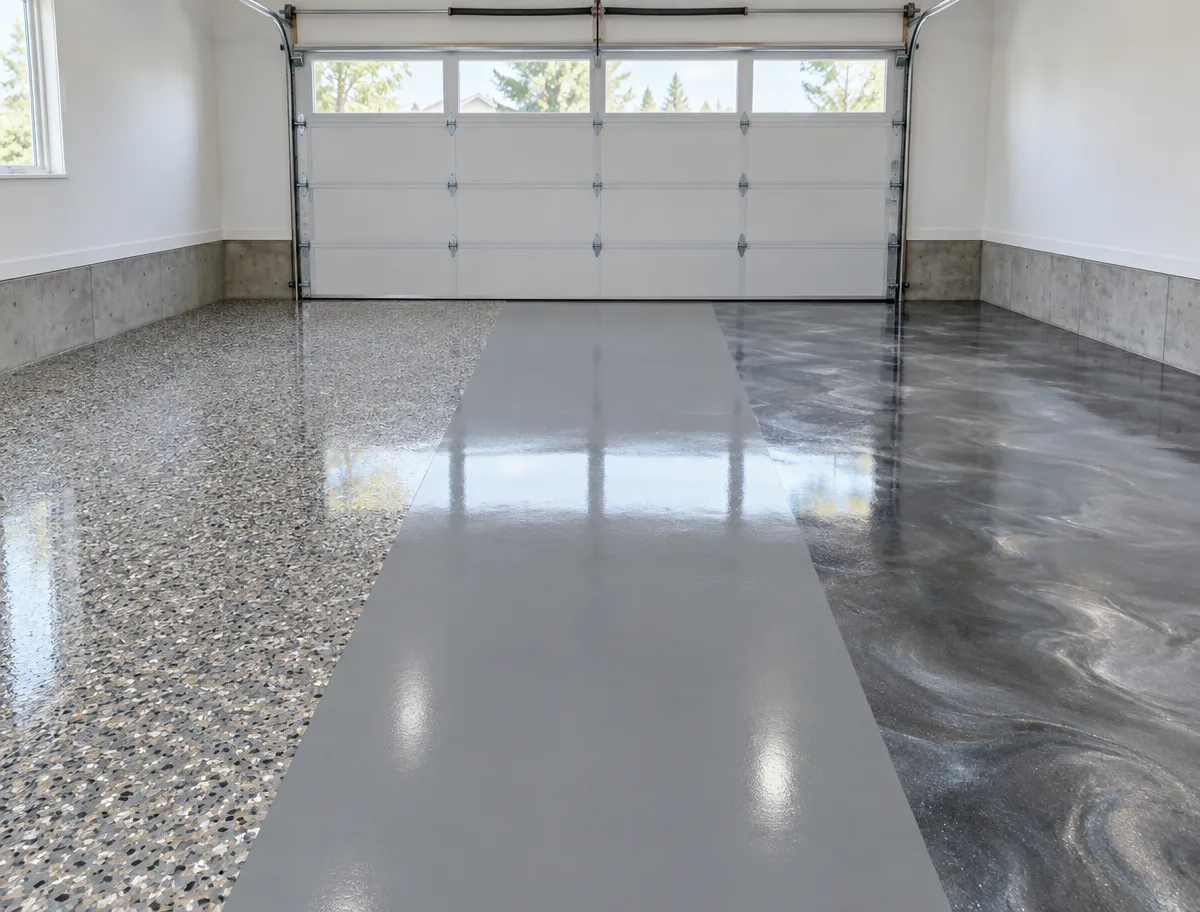
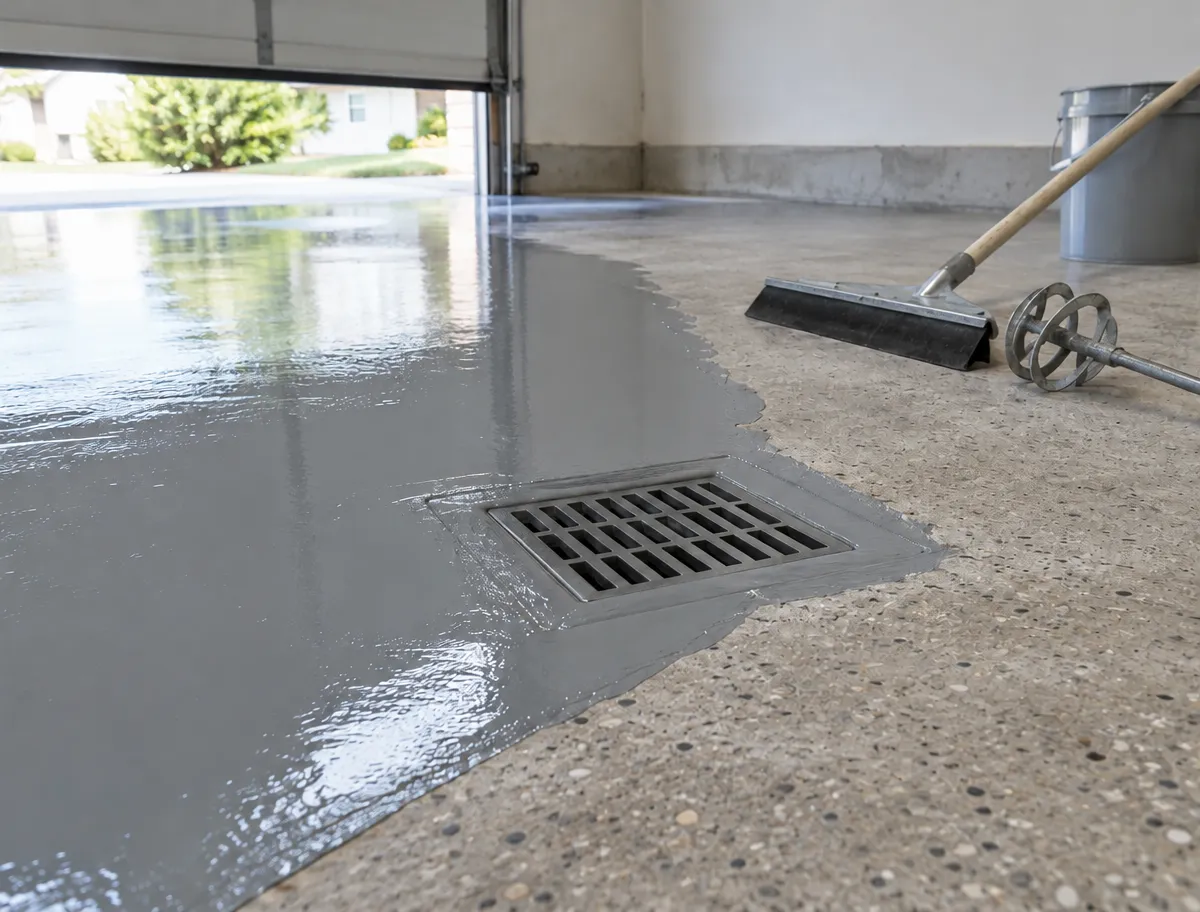
Quick Answer: Garage floor tiles are the faster, DIY-friendly option: they snap together over the existing slab, hide cracks and stains, and individual pieces can be replaced. The tradeoff in Western Pennsylvania is that slush, road salt, and dirt can work through the seams and sit on the concrete underneath. Epoxy and polyurea or polyaspartic coatings bond directly to ground concrete, leaving a seamless surface that wipes clean and keeps spills on top, but they need professional surface preparation. For a winter daily driver or workshop, a bonded coating is usually the lower-maintenance choice; tiles can make sense for renters or quick cosmetic upgrades.
Garage floor tiles appeal to homeowners who want an instant, DIY-friendly installation and easy panel replacement. Epoxy coatings deliver a seamless, chemical-resistant surface but require professional preparation and, for most epoxy products, warmer slab temperatures. Specialty Concrete Coatings LLC installs polyurea and polyaspartic systems that can be applied in colder conditions than standard epoxy, giving Greater Pittsburgh homeowners a seamless floor without tile seams or shifting panels.
How Do Tiles, Mats, Epoxy, and Polyaspartic Compare at a Glance?
Here is a quick side-by-side look at the four most common garage floor options for Western Pennsylvania homes:
| Factor | Interlocking Tiles | Roll-Out Mats | Epoxy Coating | Polyurea/Polyaspartic Coating |
|---|---|---|---|---|
| Relative cost | Moderate to high (varies by tile type and garage size) | Lowest | Moderate | Moderate to higher |
| Lifespan | Long-lasting tiles; individual pieces replaceable | Shorter; can curl, stain, or tear | Long-lasting with proper prep; can yellow in sunlight | Long-lasting with proper prep; UV-stable topcoat |
| Cleaning | Surface plus periodic lifting to clean the slab | Lift and wash; water can collect underneath | Sweep and damp mop | Sweep and damp mop |
| Wet-weather performance | Slush and salt can pass through seams and sit underneath | Can trap water and salt film under the mat | Seamless; keeps spills on top | Seamless; keeps spills on top |
| DIY-ability | High | High | DIY kits exist, but prep is critical | Professional install |
Pricing note: The cost comparisons in this article are for general guidance only. Actual costs vary based on garage size, slab condition, needed repairs, and the tile or coating system chosen, and pricing can change at any time. Contact Specialty Concrete Coatings for a current, accurate quote.
What Are Your Garage Flooring Options?
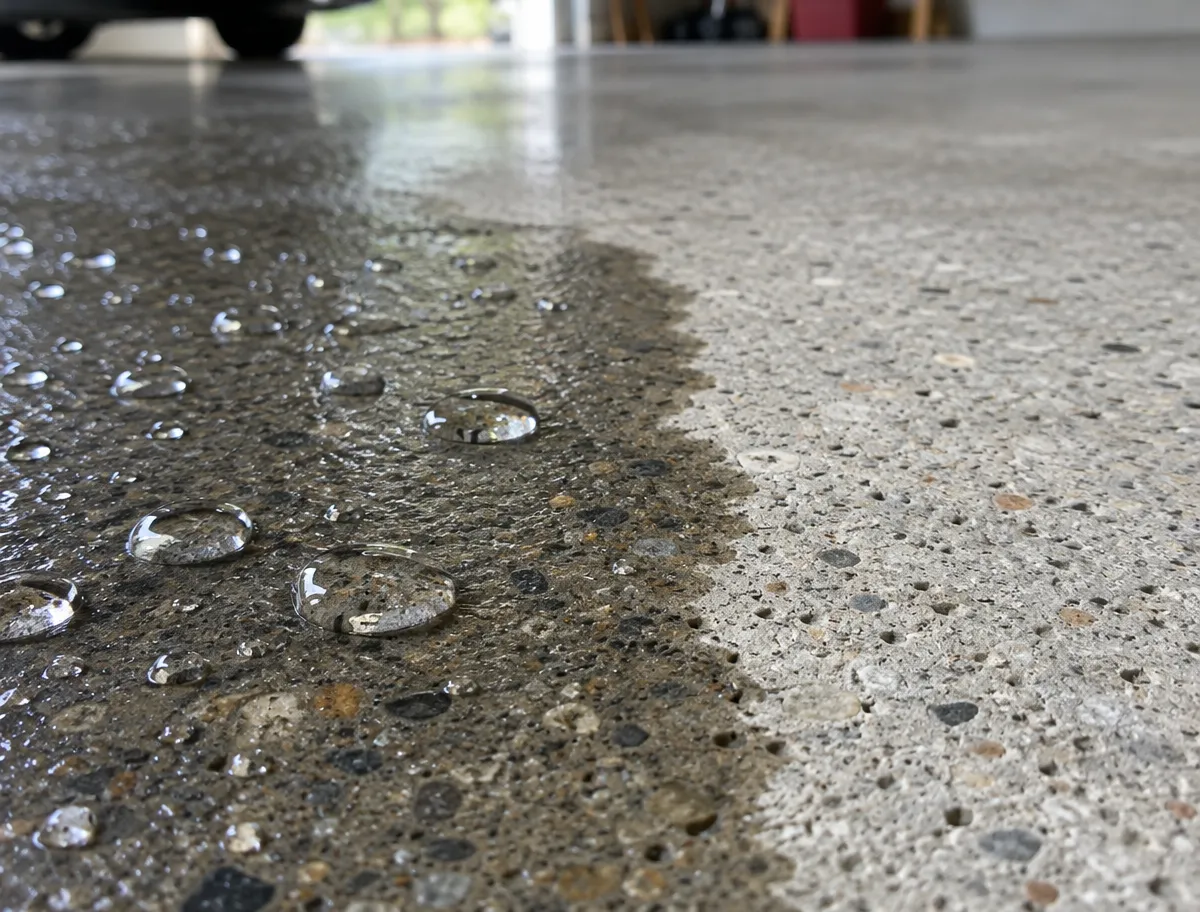
Homeowners evaluating garage floor tiles vs epoxy face a decision shaped by durability demands, installation complexity, and long-term maintenance. Garage floors endure hot tires, dropped tools, oil and brake fluid, corrosive road salts, and heavy point loads from jacks and stands. Unsealed concrete and basic paint often struggle against these conditions over time. The right flooring system serves as protection that can help prevent costly concrete deterioration later.
Which Option Handles Heavy Use Better?
A professionally installed coating bonds directly to the slab, creating a seamless surface that resists chemical spills and impact damage. Interlocking tiles sit above the concrete, absorbing point loads differently and allowing liquids to seep through seams in open-grid designs. For homeowners who wrench on vehicles or park daily drivers dripping road salt, that distinction matters.
Specialty Concrete Coatings LLC offers a third path beyond tiles and standard epoxy. The company installs polyurea and polyaspartic garage floor coatings designed to resist yellowing, abrasion, and chemical attack, forming a durable, non-porous surface.
What Does Professional Installation Involve?
| Factor | Professional Coating (Specialty Concrete Coatings LLC) | DIY Garage Tiles |
|---|---|---|
| Surface preparation | Diamond grinding, crack repair, high-adhesion basecoat | Sweep and lay tiles over existing slab |
| Installation time | Typically one day; walkable in about 12 hours | Hours to days depending on garage size |
| Durability | Bonded to the slab; designed to resist hot tires and impacts | Modular; individual tiles replaceable |
| Moisture management | Seamless, non-porous surface | Open-grid designs can trap debris and water underneath |
Specialty Concrete Coatings LLC operates from Sandy Lake, PA, serving Greater Pittsburgh and Northwest Pennsylvania. With more than 15 years of experience, the company coats residential and commercial concrete surfaces using a multi-step process. Every installation begins with mechanical diamond grinding, followed by crack repair, a high-adhesion basecoat, hand-broadcast color chips, and a UV-stable clear topcoat. AMPP’s guidance on concrete surface preparation and coating selection explains why: a coating only bonds as designed when the surface is properly prepared.
Is One Option Truly Lower Maintenance?
Coatings wipe clean with a mop. Tiles require periodic lifting to clear trapped dirt, salt, and fluids that migrate below the surface. For property owners who prioritize fast cleanup and a showroom finish, a seamless coating removes much of that hidden maintenance.
What Are the Pros and Cons of Interlocking Garage Floor Tiles?
Interlocking polypropylene or PVC tiles are popular because almost anyone can install them. They have real strengths, along with some drawbacks that show up quickly in a Western Pennsylvania winter.
- Pro: Fast DIY installation. Tiles snap together over the existing slab, and many homeowners finish a two-car garage in an afternoon.
- Pro: Hides imperfections. Cracks, stains, and old paint are covered rather than repaired.
- Pro: Replaceable and portable. Damaged pieces can be swapped, and renters can take tiles with them.
- Con: Water and salt get underneath. Slush melting off a car can run through seams and open-grid drains, leaving salty water on the concrete below where it dries slowly.
- Con: Hidden grime and mildew. Dirt, salt film, and damp debris can build up under the tiles and cause odors or mildew if they are not cleaned out.
- Con: Movement under load. Tiles can shift, flex, or lift under jacks, stands, and hot tires.
None of these are deal-breakers for every garage, but they matter most in garages that see daily winter driving. Our guide to winter salt damage on garage floors in PA explains what salt can do to concrete that stays wet.
📞 Tired of Lifting Tiles to Clean Out Salt? Specialty Concrete Coatings serves Greater Pittsburgh and NW Pennsylvania. Request a free garage floor coating quote and see what a seamless floor would look like in your garage.
How Do Tiles and Coatings Compare on Durability?
Specialty Concrete Coatings LLC builds durability into every layer of its flooring systems. The company’s polyurea basecoat is designed for strong adhesion to properly prepared concrete, giving clients a foundation built for daily use. A UV-stable polyaspartic clear coat seals the surface and is designed to resist yellowing, abrasion, and chemical exposure.
Interlocking plastic tiles take a different approach. Thick garage floor tiles sit on top of the slab rather than bonding to it. Heavy-duty tiles are often rated for substantial rolling loads, but that strength depends on the tiles staying in place under load.
A professionally installed coating bonds directly to prepared concrete. Specialty Concrete Coatings mechanically prepares surfaces by diamond grinding, repairs cracks and spalls with concrete menders, and applies a high-adhesion basecoat. The result is a continuous protective layer built to resist wear in demanding conditions.
Which Option Handles Heavy Point Loads Better?
Coatings are bonded to the concrete, so the slab itself carries the load. Tiles transfer load through individual interlocking pieces, and a loose or flexing tile under a jack stand can become a weak point.
What Happens When Moisture Gets Underneath?
Tiles can trap moisture and debris in the gaps between pieces. Coatings leave no seams for spills to pass through. That difference matters in garages where snow melt and road salt accumulate.
| Durability Factor | Specialty Concrete Coatings | Interlocking Tiles |
|---|---|---|
| Bond to slab | Bonded to ground concrete | Sits on surface |
| Seam integrity | Continuous, seamless | Gaps between tiles |
| Chemical resistance | Polyaspartic clear coat designed to resist chemicals | Varies by tile material |
| Load distribution | Carried by the slab | Concentrated on individual tiles |
The polyaspartic topcoat adds UV stability that standard epoxy alone does not offer. Homeowners who park heavy vehicles or work with chemicals gain a surface built to stay intact season after season.
Which Option Handles Moisture and Dirt Better?
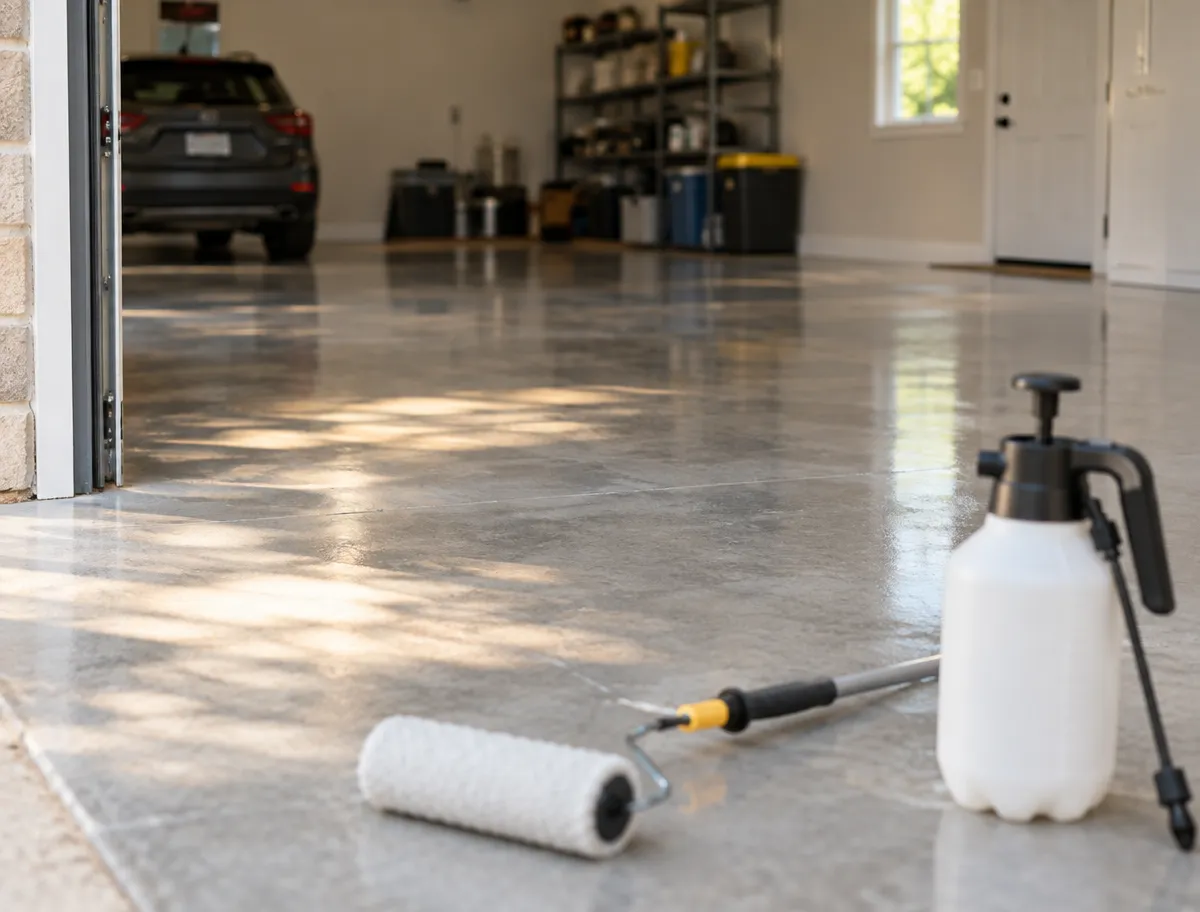
For everyday moisture and dirt, a seamless polyurea and polyaspartic coating system generally performs better than garage floor tiles. The sealed surface keeps spills and slush on top, where they can be wiped up, and removes the gaps where debris collects.
Pittsburgh’s climate creates persistent moisture challenges. Wet springs, humid summers, and freeze-thaw winters push water into garage slabs. A floor covering that holds moisture against the concrete can contribute to long-term damage. Specialty Concrete Coatings LLC finishes each system with a clear coat that seals the surface, leaving no seams for spills to pass through.
Garage floor tiles vs epoxy and polyurea coatings also differ in how they handle everyday grime. Open or free-flow tiles allow dirt and small items like screws to fall through to the slab below. Cleaning becomes a two-layer job: the tile surface needs attention, and the hidden concrete underneath needs periodic scrubbing. A coated floor simplifies maintenance to a single wipe-down.
How Do Garage Tiles Trap Moisture Underneath?
Tile systems sit on top of the concrete rather than bonding to it. Water can seep through seams and open joints and pool on the slab, where it evaporates slowly. Over multiple seasons, that trapped moisture can contribute to mildew, odors, and surface wear on the concrete.
Can a Coated Floor Handle Pittsburgh’s Freeze-Thaw Cycles?
Polyurea and polyaspartic coatings are generally more flexible than standard epoxy, which helps them move with the slab through temperature swings. A bonded, non-porous surface also keeps salty slush from soaking into the top of the slab. A topical coating does not stop moisture that comes up from the ground, though. FHWA guidance on preventive treatments for concrete notes that sealing the top surface does not keep moisture from entering through the bottom and sides of a slab, which is why the slab’s moisture conditions are evaluated before coating.
| Feature | Polyurea/Polyaspartic Coating | Garage Floor Tiles |
|---|---|---|
| Surface | Seamless, non-porous | Gaps and seams allow seepage |
| Dirt collection | Stays on top for easy cleaning | Falls through to slab below |
| Moisture from above | Keeps spills and slush on the surface | Water can pool underneath |
| Winter installation | Rated to cure in cold conditions | Temperature-independent, but leaves slab exposed |
Specialty Concrete Coatings LLC bonds the coating directly to the concrete. That bond leaves no gap for spills to collect in and no hidden layer for dirt to slip into.
When Do Roll-Out Garage Mats Make Sense?
Roll-out mats are the lowest-commitment option. They can be a good fit in a few situations:
- Parking-pad protection: A containment mat under each car can catch winter slush and keep most of it off the floor.
- Renters: Mats protect the floor without any permanent change.
- Short-term fixes: If you plan to coat the floor later, a mat can buy time.
The same drawback as tiles applies: water and salt that get under a mat can sit on the concrete. Mats can also curl, shift, and stain over time, so they work best as a supplement rather than a full-floor solution.
How Do Epoxy and Polyurea or Polyaspartic Coatings Differ?
Both are bonded coatings, but they behave differently in a Pittsburgh garage:
- Epoxy: Builds a thick, hard film with good chemical resistance. Many epoxy products need slab temperatures of roughly 50°F or warmer and longer cure times, and some can yellow with UV exposure.
- Polyurea and polyaspartic: Cure faster, are generally more flexible, and use UV-stable topcoats designed to resist yellowing. Specialty Concrete Coatings reports that the system it installs is rated to cure in temperatures as low as -20°F, which allows installation through much of the year.
For a deeper comparison, see our breakdown of polyaspartic vs epoxy garage floors and our roundup of the best garage floor coatings for 2026. If you are considering a DIY epoxy kit, the EPA’s architectural coatings VOC standards are a reminder that coating products are regulated for their VOC content, so read the label and ventilate well.
What About Installation Time and Maintenance?
Installation speed and long-term upkeep are where garage floor tiles vs epoxy coatings differ most. Specialty Concrete Coatings typically completes a full polyurea and polyaspartic system in one day. Homeowners can usually walk on the surface within about 12 hours, move heavier items after about 24 hours, and drive vehicles onto it by about the 48-hour mark. Actual cure times vary with temperature, humidity, and the products used.
How Fast Can Each Flooring Type Be Installed?
Tile systems offer the fastest physical install. Homeowners or contractors snap rigid or flexible tiles together over the existing slab, often finishing a standard two-car garage in a single afternoon, and the surface is usable right away. Coatings demand more preparation. Specialty Concrete Coatings diamond-grinds the concrete, repairs cracks and spalls, applies a high-adhesion basecoat, hand-broadcasts vinyl color chips for texture and appearance, then seals everything with a clear topcoat. In many cases the entire sequence still finishes within one day, as described in our guide to one-day garage floor coatings.
Which Option Demands More Ongoing Maintenance?
Tiles require periodic cleaning between and beneath the surface. Dirt, road salt, and moisture can migrate through seams and joints, trapping debris that may eventually cause odors or mildew. Lifting and resetting sections becomes a recurring chore. A seamless polyurea and polyaspartic coating leaves no gaps for contaminants to collect in. Routine maintenance involves sweeping and occasional damp mopping. The UV-stable clear coat is designed to resist yellowing and chemical damage without waxing.
| Factor | Specialty Concrete Coatings (Polyurea/Polyaspartic) | Garage Floor Tiles |
|---|---|---|
| Total install time | Typically 1 day | 1 day or less |
| Walk-on time | About 12 hours | Immediate |
| Drive-on time | About 48 hours | Immediate |
| Subfloor prep required | Diamond grinding, crack repair | None; covers imperfections |
| Maintenance burden | Low; seamless surface, no trapped debris | Moderate; cleaning between and beneath tiles |
| Seasonal limits | Few; rated for cold-weather cure | None |
Does Weather Affect Installation Scheduling?
Many epoxy coatings have seasonal limits because slab temperatures generally need to stay around 50°F or warmer, which tends to restrict work to the warmer months. Our guide to the best time to coat a garage floor in Pittsburgh covers the timing in detail. Polyurea and polyaspartic systems can be installed in much colder conditions, so Specialty Concrete Coatings schedules installations year-round across Greater Pittsburgh and Northwest Pennsylvania when conditions allow. Tile installations face no temperature constraints either, though cold slabs make the work uncomfortable for DIY installers.
Which Flooring Gives You the Best Value?
🖼️ Image: https://drive.google.com/file/d/1ck8wrKXmSEyQlJOHhL7PPPw0lzExFzc5/view?usp=drive_link
For many homeowners in Greater Pittsburgh and Northwest Pennsylvania, a bonded polyurea and polyaspartic coating system offers strong long-term value. Garage floor tiles vs epoxy comparisons often overlook the total cost of ownership, which includes slab condition and maintenance over the years, not just the upfront price.
How Does a Bonded Coating Protect the Concrete Itself?
Tiles sit on the surface and can trap moisture, salts, and debris underneath, and that hidden buildup can wear on the slab over time. A professionally installed polyurea and polyaspartic coating bonds directly to the concrete, creating a seamless surface designed to resist wear, chemicals, and yellowing. The result is a low-maintenance surface that protects the slab rather than covering it up.
What Hidden Costs Come With Tile Flooring?
Tile systems can require periodic lifting, cleaning, and re-leveling. Spills can seep through seams and joints. Damaged tiles need individual replacement, and discontinued styles can make matching difficult. Specialty Concrete Coatings provides free quotes, guides clients through material and color selection, and manages the project from consultation through installation and cleanup. Financing options (subject to credit approval; terms vary) and the company’s warranty program can help homeowners plan a garage upgrade.
Which Garage Floor Should You Choose for How You Use It?
- Winter daily driver: A seamless polyurea and polyaspartic coating keeps slush and salt on top where you can squeegee it out, with no seams for it to run into.
- Workshop: A bonded coating handles dropped tools, jack stands, and chemical spills better than tiles that can shift or let fluids through.
- Show garage: Coatings and premium tiles can both look sharp; a coating with a chip blend gives a seamless showroom finish, while tiles offer patterns and easy changes.
- Rental or short-term home: Tiles or mats make sense because they are removable and require no permanent change to the slab.
Frequently Asked Questions
How long does a professional garage floor coating take to install?
Specialty Concrete Coatings LLC typically installs its polyurea system in one day, and the floor is usually walkable within about 12 hours. That includes diamond grinding, crack repair, basecoat, color chips, and a clear topcoat. Cure times vary with temperature and humidity.
Do garage floor tiles require more maintenance than epoxy coatings?
Generally yes. Tiles need periodic lifting to clear dirt, salt, and fluids that migrate below the surface. Coatings wipe clean with a mop and leave no seams for spills to pass through.
Can garage floor coatings be installed in cold weather?
Polyurea and polyaspartic systems can generally be installed in much colder conditions than standard epoxy, which usually needs a slab around 50°F or warmer. Specialty Concrete Coatings schedules installations year-round when conditions allow.
Do garage floor tiles trap water and salt underneath?
They can. Slush and salty water can run through seams and open-grid drains and sit on the concrete under the tiles, where it dries slowly. Lifting the tiles and cleaning the slab periodically helps prevent odors, mildew, and salt buildup.
Are roll-out garage mats a good alternative to tiles or epoxy?
Mats are a low-cost, removable option that works well for renters or as parking-pad protection under a car. They can trap water underneath and may curl or stain over time, so they are usually a supplement rather than a full-floor solution.
TL;DR — Garage Floor Tiles vs Epoxy at a Glance
- Tiles install fast, hide imperfections, and can be replaced piece by piece, which suits DIYers and renters.
- In Western PA winters, slush and salt can pass through tile seams and sit on the concrete underneath.
- Epoxy and polyurea or polyaspartic coatings bond to the slab, creating a seamless surface that wipes clean.
- Polyurea and polyaspartic systems cure faster and can be installed in colder weather than standard epoxy.
- Pick by use: coatings for daily drivers and workshops, tiles or mats for rentals and quick fixes.
- Next step: Request a free garage floor coating quote from Specialty Concrete Coatings.
Related Resources
- Garage Epoxy Floor Coatings
- Pittsburgh, PA Concrete Coating Company
- DIY Epoxy vs Professional Garage Floor Coating
- How to Protect Your Garage Floor From Road Salt
- Polyaspartic Coating Pros and Cons
- How Much Does Garage Floor Coating Cost?
Get a Free Garage Floor Coating Quote
For Pittsburgh-area homeowners weighing garage floor tiles vs epoxy, the decision comes down to what happens beneath the surface. Tiles offer quick installation but can hide the moisture, salt, and debris that build up on the slab. A bonded polyurea and polyaspartic coating delivers a seamless surface that helps protect the concrete and simplifies maintenance for years. Contact Specialty Concrete Coatings today for a free, no-obligation quote.
About Specialty Concrete Coatings: Specialty Concrete Coatings is a concrete coating contractor serving Greater Pittsburgh and Northwest Pennsylvania, specializing in garage, basement, patio, and commercial floor coatings. The team provides free estimates and helps homeowners choose a system matched to how they use their floors. Contact us today for a free, no-obligation quote.