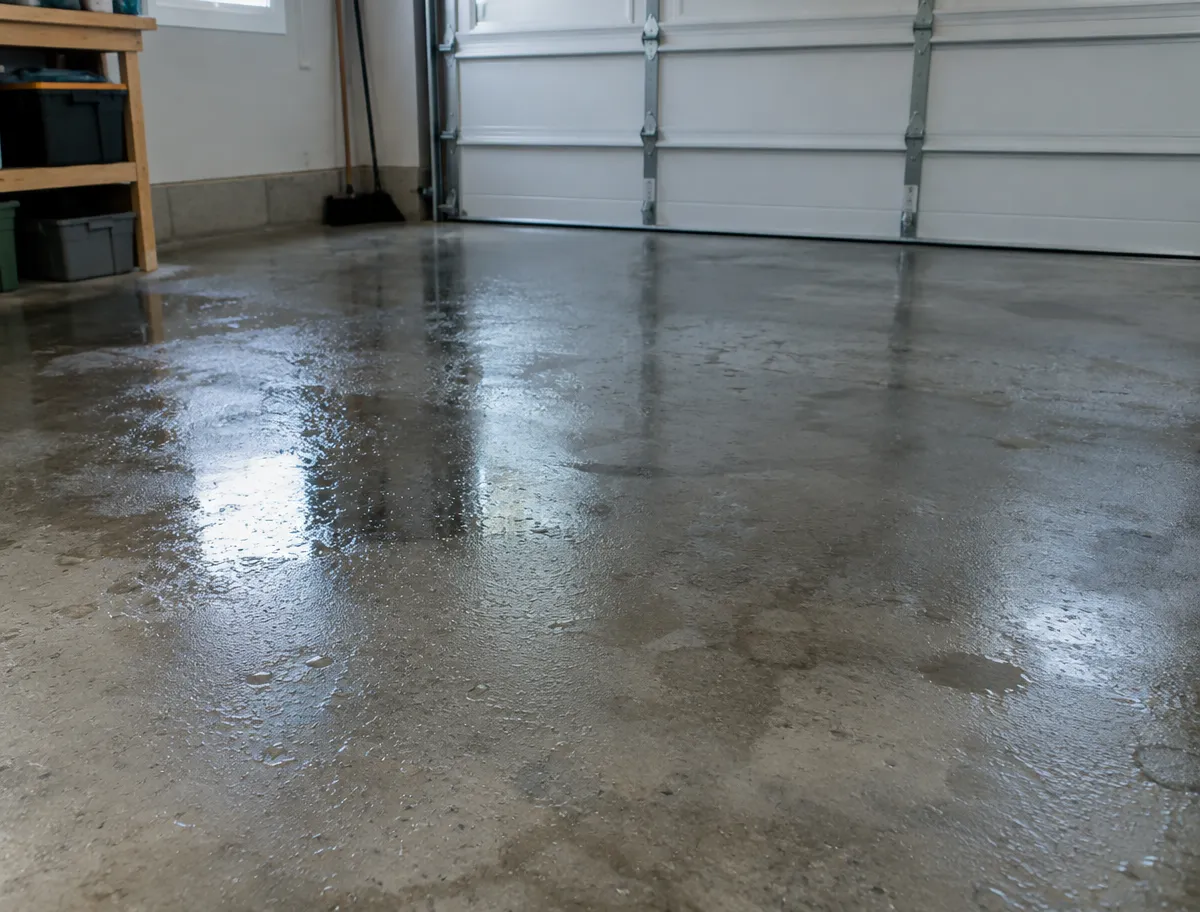
Quick Answer: Yes, a concrete coating cold weather install is possible throughout a Western and Central Pennsylvania winter when the crew uses cold-weather-rated polyaspartic or polyurea basecoats instead of standard epoxy. These systems cure reliably even when air and slab temperatures drop below the 55°F mark that slows standard epoxy chemistry. Specialty Concrete Coatings LLC completes winter garage floor installations with a 12-hour walk-on time, 24 hours before heavy items return, and 48 hours before vehicles drive on the surface — the same turnaround homeowners get in warmer months.
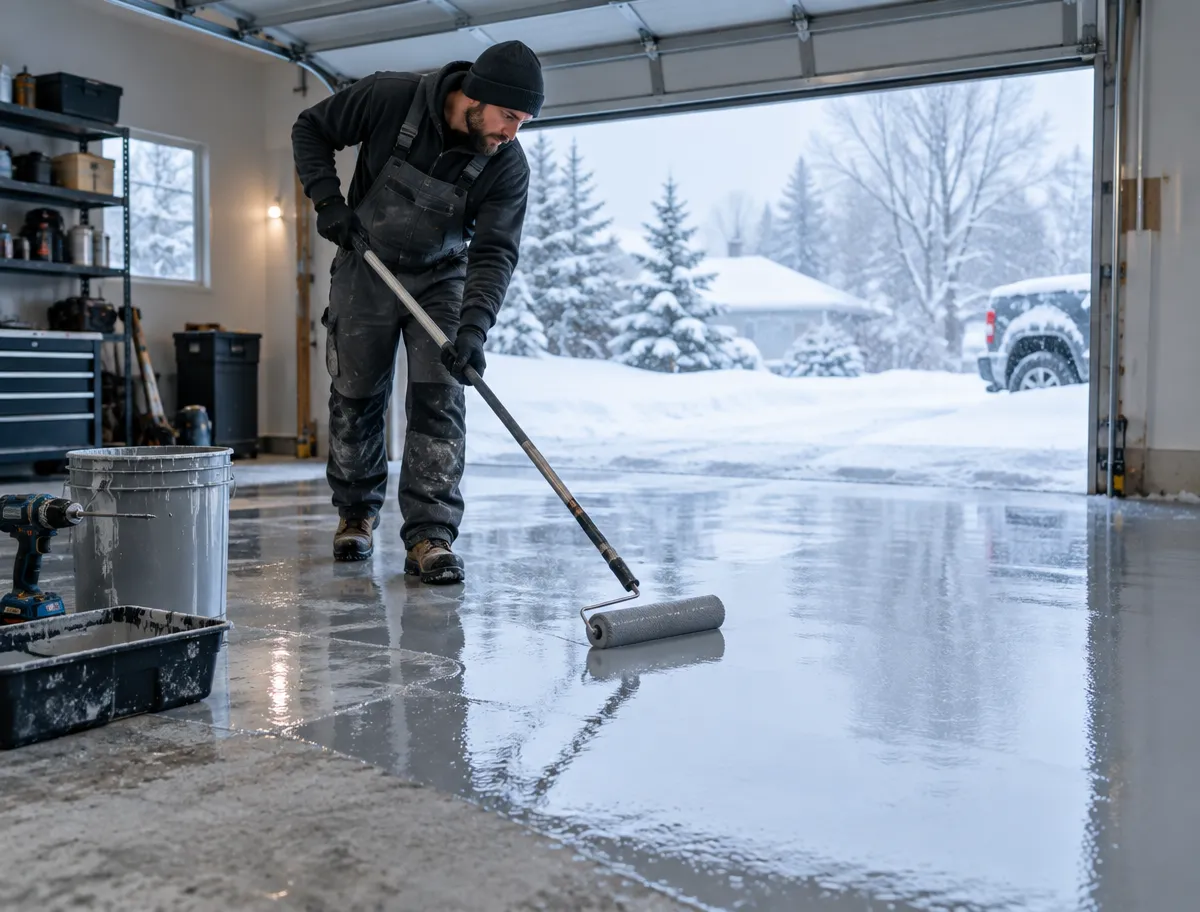
Concrete floor coating installation proceeds successfully in winter using polyurea and polyaspartic basecoats engineered for cold-weather application. Specialty Concrete Coatings LLC, serving Western and Central Pennsylvania from its Sandy Lake, PA base, completes installations with a 12-hour walk-on time, 24 hours for heavy items, and 48 hours before vehicles return to garage floors — the same schedule homeowners get any time of year.
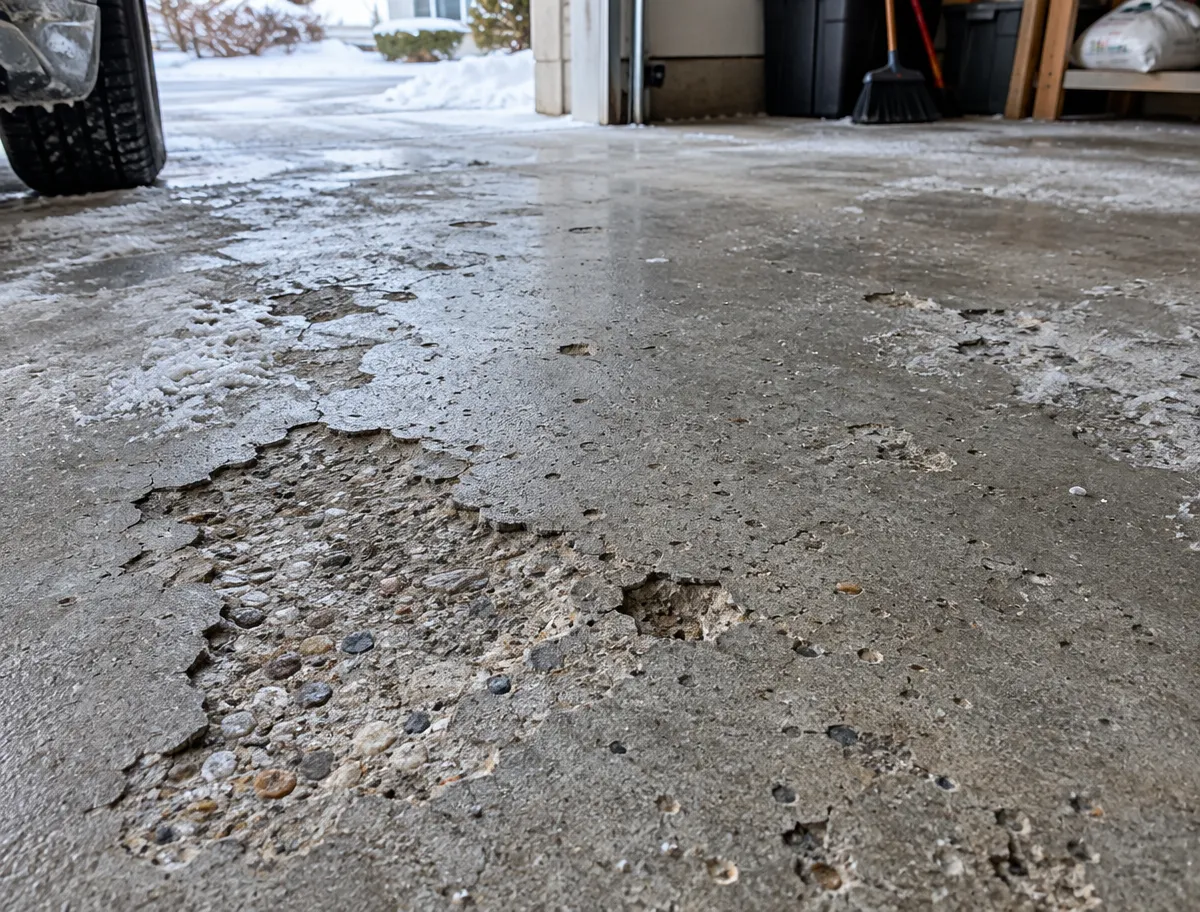
Temperature drops across the region require specialized formulations for proper application and curing, and Specialty Concrete Coatings serves winter clients throughout Pittsburgh, Erie, Butler, DuBois, and the surrounding communities year-round with winter-appropriate coating solutions. Cold weather coating projects transform stained, cracked garage floors into showroom-quality surfaces during the off-season months, without the wait until spring.
Is Winter Too Cold for Concrete Floor Coating?
Cold temperatures do not stop a quality garage floor project in winter. Freezing months bring a widespread myth that Western Pennsylvania homeowners must wait for spring before upgrading a concrete floor. That assumption can cost months of living with a stained, cracked, or slippery garage.
Property owners across Pittsburgh and the surrounding region often delay flooring upgrades simply because they believe installers can’t work once frost sets in. That belief is outdated. Industry experience confirms that installing an epoxy garage floor coating or polyurea system in colder weather is entirely possible, provided the crew adjusts preparation and timing to match the season. Waiting until spring only prolongs the risk of a failing, inferior floor causing bigger headaches — and bigger repair bills — later.
Concrete coating cold weather install work depends heavily on material choice. Polyaspartic-based systems, in particular, give winter homeowners and business owners far more scheduling flexibility than traditional epoxy alone. That flexibility means garages, showrooms, and shop floors don’t have to sit unfinished through the coldest months of the year.
Does Cold Weather Ruin a Garage Floor Coating?
Cold weather alone does not ruin a properly installed coating. Problems arise only when a crew skips proper surface prep or uses materials not suited for lower temperatures, so choosing the right system matters more than the season itself.
Should Winter Homeowners Wait Until Spring to Coat Their Garage?
Waiting isn’t necessary, and it isn’t always wise. A damaged or peeling floor left through freezing months can worsen, since moisture and temperature swings stress existing cracks further. Reasons a winter install often outperforms waiting:
- Faster scheduling, since fewer homeowners book during colder months
- Reduced risk of prolonged exposure to a failing floor
- Continued protection through salt, snow-melt, and moisture season
How Does Cold Weather Affect Epoxy Installs?
Temperature drives the chemical reaction that hardens epoxy resin, and that reaction changes character once winter cold settles in. Epoxy resin cures through an exothermic reaction — a process that releases heat as it hardens — and that reaction kicks into gear around 55°F. Below that mark, the chemistry slows down and the floor pays the price, a pattern confirmed by ACI’s cold-weather concreting guidelines.
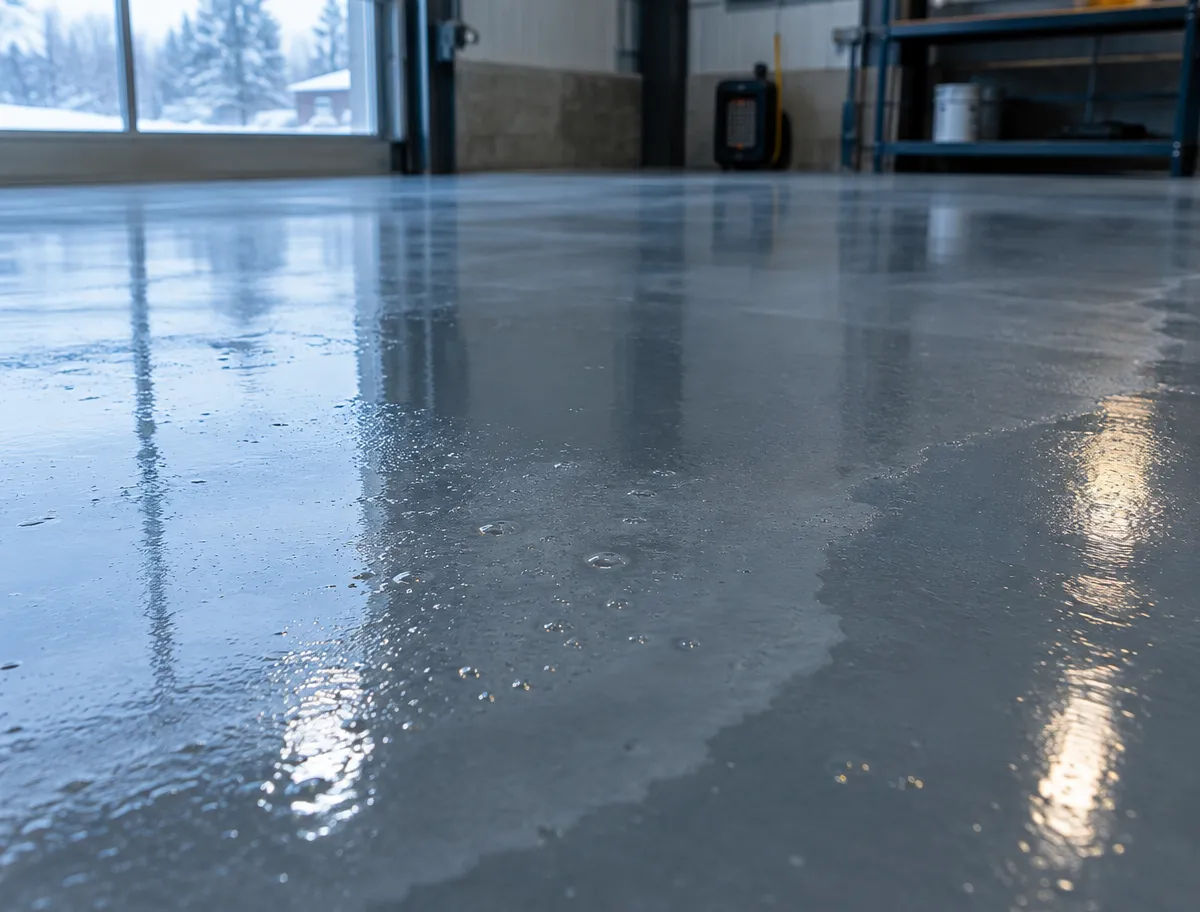
A garage or basement rarely holds a steady 55°F in a Pennsylvania winter, especially overnight. When the surrounding air drops below that threshold, epoxy coatings take noticeably longer to cure. Bonding weakens, adhesion suffers, and the finished floor can end up with reduced strength and durability compared to a warm-season install. That’s the risk homeowners across Western and Central Pennsylvania face when a contractor skips proper temperature management during a concrete coating cold weather install.
Does Cold Weather Ruin an Epoxy Floor?
Cold weather does not have to ruin a floor coating, but it does raise the stakes. A rushed job in freezing conditions can leave a garage floor soft, tacky, or prone to peeling within months.
What Does a Winter Installation Require That Summer Doesn’t?
Winter installs demand extra preparation and planning that warmer months simply don’t call for. Crews account for:
- Monitoring ambient and slab temperature before application begins
- Adjusting cure-time expectations around winter’s colder air
- Timing each coating layer to avoid trapping cold moisture beneath the surface
Waiting until spring isn’t always practical, either. A cracked, stained, or failing garage floor left untreated through a Pennsylvania winter only invites more damage. Freeze-thaw cycles, salt exposure, and moisture intrusion don’t pause for the calendar — a point echoed in industry guidance on coating concrete in cold weather.
Why Choose Polyaspartic Coatings for Winter Jobs?
Polyaspartic topcoats give winter garage owners a real advantage: year-round application, even when temperatures drop. Unlike standard epoxy, which grows finicky in cold, damp conditions, a polyaspartic-based concrete coating cold weather install cures reliably through the winter months, following established polyurea and polyaspartic application practices. That difference matters for homes across Pittsburgh, Erie, Butler, and DuBois where a cracked, stained garage floor sits through months of road salt, slush, and freeze-thaw cycles before spring ever arrives.
Property owners don’t have to wait for warmer weather to see results. A polyaspartic system bonds and hardens on its own schedule, not the thermostat’s. That means a driveway or garage floor project scheduled in January delivers the same finish quality as one scheduled in June.
How Fast Can a Winter Garage Get Back in Use After Coating?
Return-to-service timelines stay short, even during winter installs. Specialty Concrete Coatings’ process is built around a predictable sequence:
- 12 hours — floor is ready to walk on
- 24 hours — heavier items can move back in
- 48 hours — vehicles can drive on the surface
That schedule holds steady regardless of the season, which matters most when winter roads track in salt and grit daily.
Does Cold Weather Affect Coating Durability?
Polyaspartic clear coats resist the yellowing, abrasion, and chemical exposure that winter garages face from de-icing agents and moisture. Homeowners avoid the common mistake of postponing floor upgrades until spring, only to keep tracking damage across bare concrete for another season. A cold-weather-capable system protects the surface now, not eventually.
📞 Ready to Get Started? Winter is one of the fastest times of year to schedule a concrete coating cold weather install, since fewer homeowners book during the colder months. Get a free quote and lock in a crew before spring’s rush fills the schedule.
When Is the Best Time to Coat Floors?
Winter ranks among the most practical seasons for a garage or concrete floor upgrade, provided the right coating system gets selected. Cold Pennsylvania temperatures do not disqualify a property from a fresh, durable floor. Specialty Concrete Coatings LLC treats cold weather concrete coating projects as standard practice for homeowners and commercial property owners across Western and Central Pennsylvania.
Timing hinges first on which coating gets chosen, not on the calendar. Epoxy and polyaspartic systems share a similar function but cure differently, and that difference shapes when installation makes sense. A knowledgeable contractor walks clients through material selection before locking in a schedule, matching the coating to seasonal conditions rather than forcing a one-size-fits-all timeline.
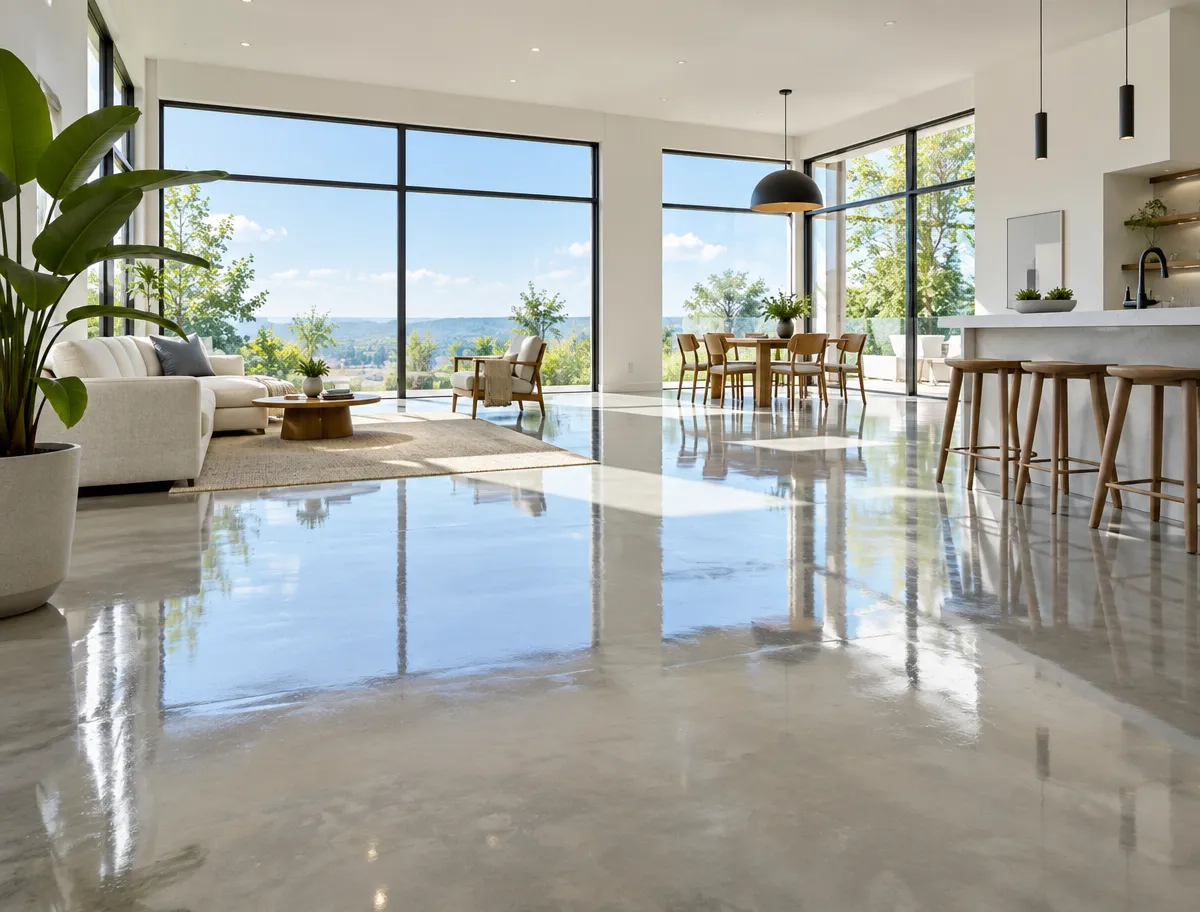
Does a Winter Installation Perform as Well as a Spring Installation?
Yes. A properly installed floor coating performs year-round, no matter what season it went down in. Cure quality and long-term durability depend on preparation and product, not on the month printed on the invoice. Winter garages and basement floor coatings end up just as protected as ones installed in warmer weather.
What Happens if a Garage Floor Fails During Winter?
A cracked or deteriorating floor does not improve by waiting. If an inferior surface fails during winter’s ice, salt, and moisture cycle, postponing repairs until spring only extends the damage and the inconvenience. Addressing the problem promptly protects the slab underneath and keeps the space usable through the coldest months.
Property owners weighing their options can rely on a consistent process:
- Free consultation and coating recommendation
- Material selection suited to winter’s temperature swings
- Scheduling built around cure-time requirements
Specialty Concrete Coatings applies this same process consistently across every service area, and every winter inquiry starts the same way: a request for a free quote.
What Should Winter Homeowners Do Next?
Homeowners across Western and Central Pennsylvania — from Pittsburgh to Erie, Butler, and DuBois — should schedule a consultation before ice season sets in. Road salt causes further damage to garage and basement floors the longer bare concrete stays exposed. Specialty Concrete Coatings LLC, serving the region with a concrete coating cold weather install process built for the season’s demands, helps homeowners avoid the wider cracks and deeper moisture intrusion that come from delaying repairs through the coldest months.
Property owners gain access to a crew that has refined its coating techniques over more than 15 years, transforming worn, stained concrete into durable, attractive flooring. That track record matters most when temperatures drop and surface preparation requires extra attention. Homeowners searching for a contractor familiar with seasonal installation challenges find a team practiced at delivering consistent results regardless of the calendar.
Does Garage Size Affect Scheduling During Winter?
No structure is too large or too small for a proper winter installation. Whether a homeowner needs a two-car garage refinished or a commercial property owner manages a sprawling shop floor, the installation team stands ready to complete the job to a high standard.
What Should Property Owners Do Before Contacting a Contractor?
A little preparation speeds up the quote and scheduling process:
- Note cracks, spalling, or stains that need repair before coating begins
- Measure garage or floor square footage to speed up quote requests
- Decide on a project timeline, factoring in return-to-service needs
- Prepare questions about durability, maintenance, and warranty coverage
Homeowners ready to move forward should reach out for pricing and scheduling details. An experienced team then guides material and color selection from initial consultation through professional installation and cleanup.
Frequently Asked Questions
Can concrete coatings be installed in cold weather?
Yes. Polyurea and polyaspartic basecoats are formulated for cold-weather application, and Specialty Concrete Coatings LLC completes winter installations with a 12-hour walk-on time, 24 hours before heavy items return, and 48 hours before vehicle use.
Does cold weather damage a garage floor coating?
Cold weather alone does not damage a properly installed coating. Problems only occur when a crew skips proper surface prep or uses materials not rated for lower temperatures.
Why does temperature matter for epoxy installation?
Standard epoxy resin cures through an exothermic reaction that kicks in around 55°F. Below that threshold, curing slows, bonding weakens, and adhesion suffers, which reduces the finished floor’s strength and durability.
How long should I wait to use my garage after a winter coating installation?
The timeline stays the same regardless of season: 12 hours before walking on the floor, 24 hours before moving heavy items back in, and 48 hours before parking vehicles on the surface.
Is polyaspartic or epoxy better for a winter concrete coating install in Pittsburgh?
Polyaspartic and polyurea systems generally perform better in winter because they cure on a set chemical schedule rather than depending on ambient temperature the way standard epoxy does. A contractor familiar with Pittsburgh winters can recommend the right system based on slab temperature and timeline.
TL;DR — Concrete Coating Cold Weather Install at a Glance
- Winter is not a reason to delay: polyaspartic and polyurea coatings cure reliably even when temperatures drop.
- Standard epoxy needs temperatures above about 55°F to cure properly; below that, adhesion and strength suffer.
- Specialty Concrete Coatings returns garages to use fast — 12 hours to walk, 24 hours for heavy items, 48 hours for vehicles — even in winter.
- Waiting until spring lets cracks, salt damage, and moisture intrusion get worse.
- The company has installed winter-ready coatings across Western and Central Pennsylvania — including Pittsburgh, Erie, Butler, and DuBois — for more than 15 years.
- Next step: Request a free, no-obligation winter installation quote from Specialty Concrete Coatings.
Related Resources
- Garage Concrete Coating Services
- Erie, PA Concrete Coating Company
- Choosing Between Epoxy and Polyurea for Your Garage Floor
- Is Your Driveway Ready for a Concrete Makeover?
- Best Concrete Coating Options for Your Basement Floor
- How to Extend the Life of Your Concrete Surfaces
Get a Free Concrete Coating Quote
A concrete coating cold weather install doesn’t have to wait for spring. Specialty Concrete Coatings schedules winter garage, basement, patio, and commercial floor coating projects throughout Pittsburgh, Erie, Butler, DuBois, and the rest of Western and Central Pennsylvania, with cure times built around the season. Contact Specialty Concrete Coatings today for a free, no-obligation quote.
About Specialty Concrete Coatings: Specialty Concrete Coatings LLC serves Western and Central Pennsylvania, including Pittsburgh, Erie, Butler, and DuBois, with residential and commercial concrete floor coating installation. The company installs epoxy and polyurea coatings for garages, basements, patios, and commercial spaces.