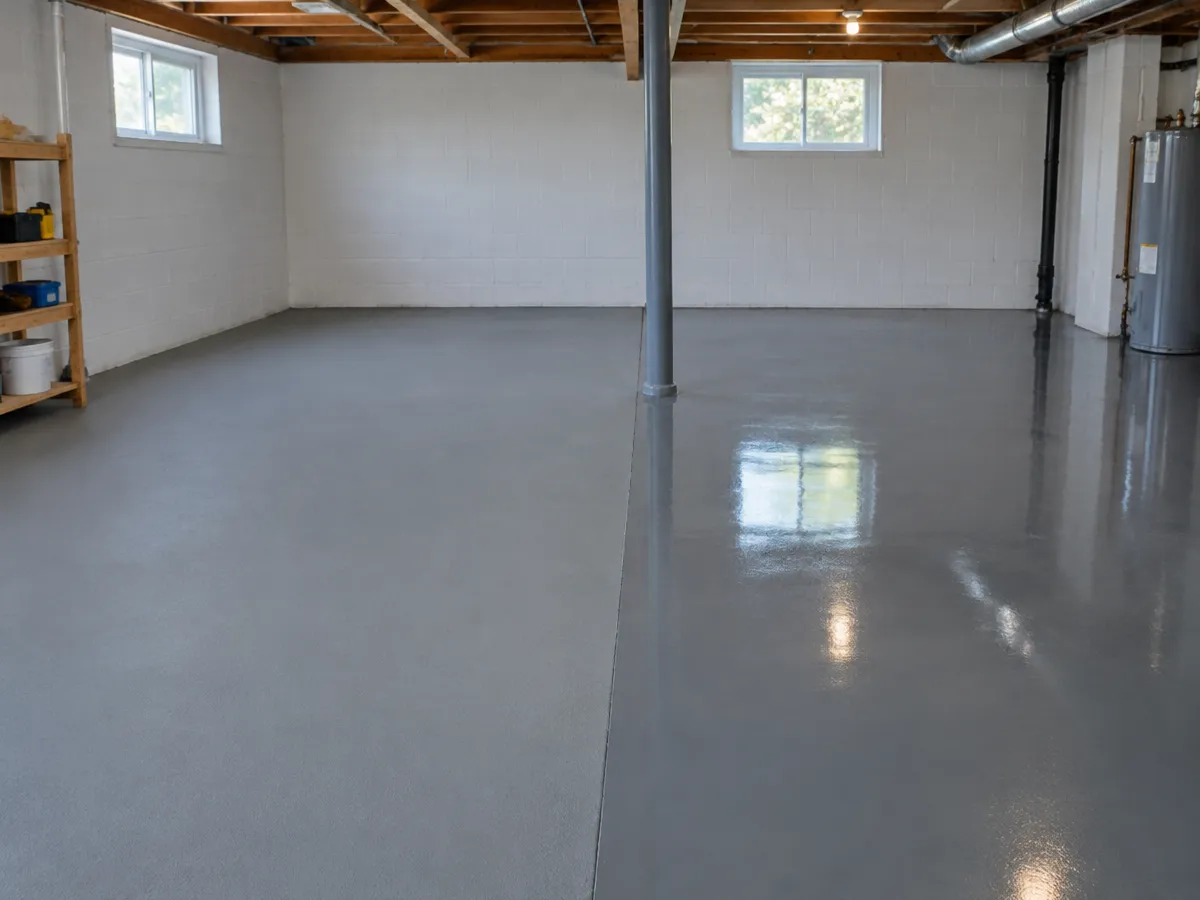
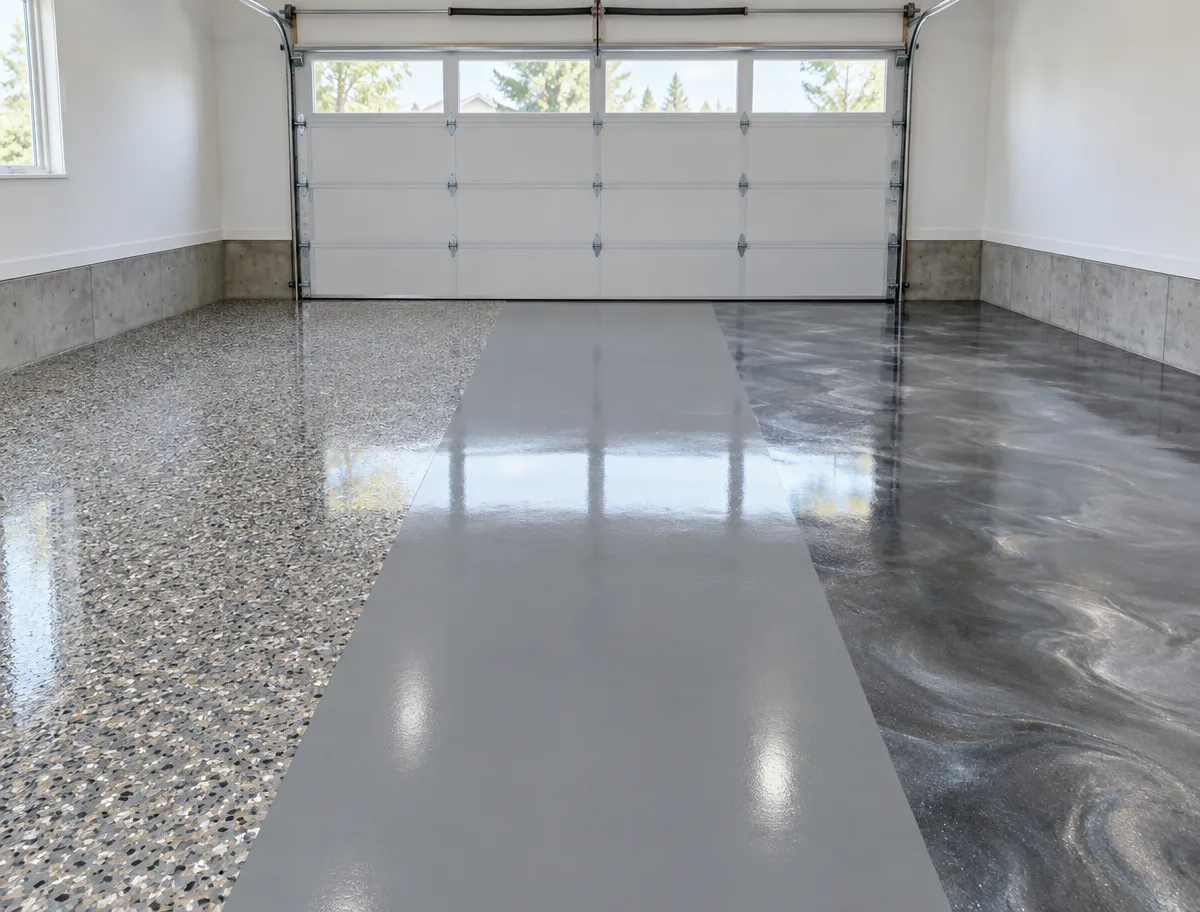
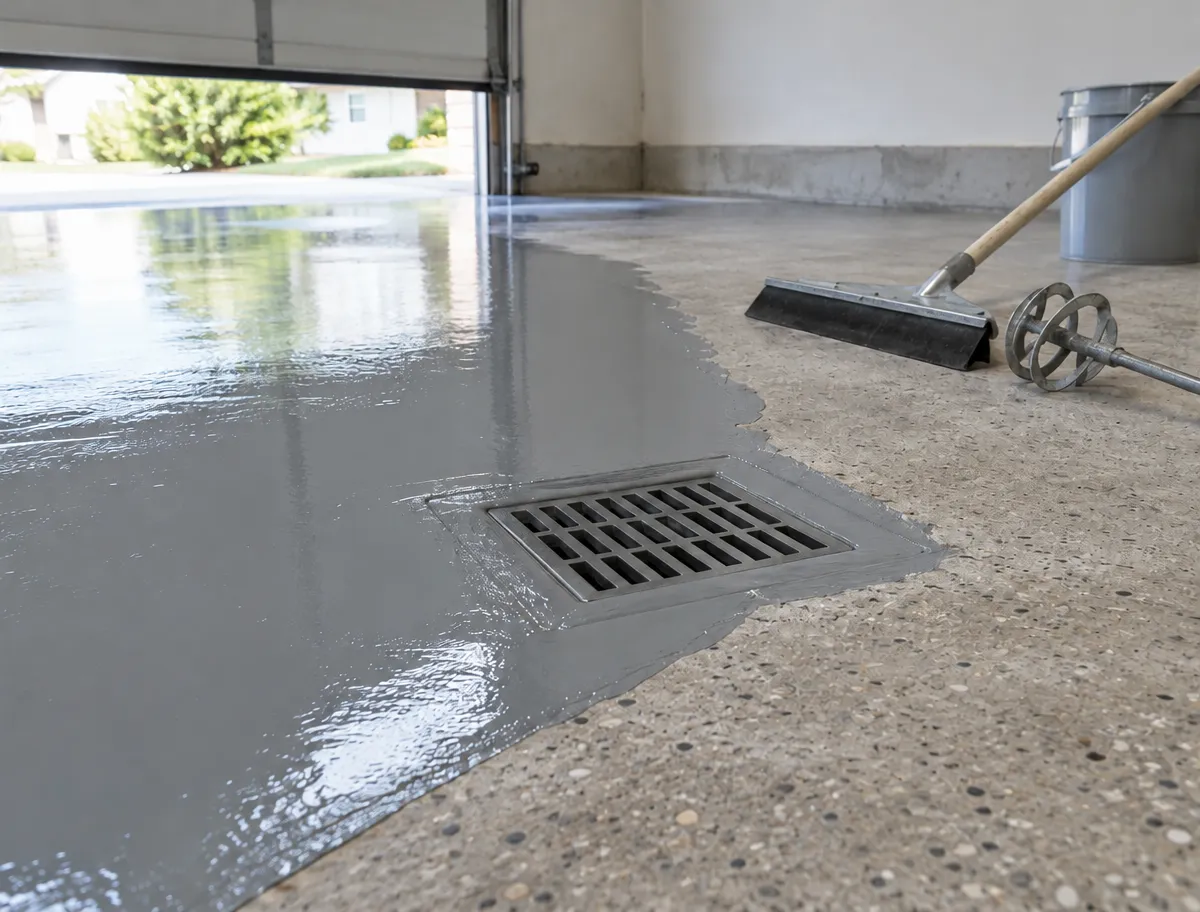
Quick Answer: Epoxy floor bubbles usually come from outgassing: air or moisture vapor escaping from the pores of the concrete while the coating is still wet. As the slab warms, that gas expands and pushes up through the epoxy, leaving bubbles, pinholes, or small craters. Mixing too fast, pouring too thick, and coating over a dirty or damp slab make it worse. Professionals reduce the risk by testing for moisture, diamond grinding the surface, sealing it with a primer or basecoat, coating when the slab temperature is steady or falling, and using careful mixing and rolling techniques.
Epoxy bubbles form from outgassing, where trapped air or moisture escapes the concrete substrate during application. Proper surface preparation helps prevent this: diamond grinding removes contaminants, moisture testing checks that the slab is dry enough, and primers seal porous slabs. Specialty Concrete Coatings uses these methods on projects across Greater Pittsburgh and Northwest Pennsylvania to help each floor cure smooth and stay bonded.
Why Do Epoxy Floor Bubbles Appear?
Epoxy floor bubbles appear primarily because of air or moisture movement within the concrete slab. This condition, known as outgassing, forces trapped gas upward through the curing coating. Left unaddressed, these imperfections can compromise both the floor’s appearance and its long-term performance.
Outgassing is a site condition that allows air or gas from the concrete substrate to escape in excess. The escaping gas creates blisters, craters, bubbles, or pinholes in the freshly applied surface. Temperature shifts cause the air in the concrete to expand, pushing it toward the coating. Without proper mitigation, the bond between the coating and the slab weakens. Bubbles in epoxy floors affect both appearance and performance, weakening adhesion and potentially leading to premature coating failure if the underlying cause is not addressed.
What Does Outgassing Look Like in an Epoxy Floor?
Outgassing usually shows up as a near-perfect circle. A ridge forms around the edge of the circle, or a distinct bubble rises in the coating. A pinhole may or may not be visible at the bottom of the defect. These circular imperfections differ from other common epoxy floor coating problems like peeling or discoloration. Homeowners tend to describe three versions of the same family of defects:
| Defect | What it looks like | Most common cause |
|---|---|---|
| Bubbles or blisters | Raised domes in the cured coating, sometimes soft when pressed | Air or moisture vapor rising from the slab while the coating is wet |
| Pinholes | Tiny open holes, often in clusters, that go down toward the concrete | Bubbles that burst and could not flow back together before the coating set |
| Craters or “fish eyes” | Shallow round dimples where the coating pulled away from a spot | Surface contamination such as oil, silicone, or dust that repels the coating |
How Do Bubbles Affect Epoxy Floor Performance?
Bubbles create weak points where the coating can separate from the concrete. Moisture and debris collect in these voids, accelerating wear. The compromised surface loses some of its ability to resist impacts and chemical spills. Over time, the coating can delaminate, requiring costly removal and replacement. Specialty Concrete Coatings addresses these risks through diamond grinding and moisture testing before any material touches the slab.
What Causes Outgassing in Concrete Slabs?
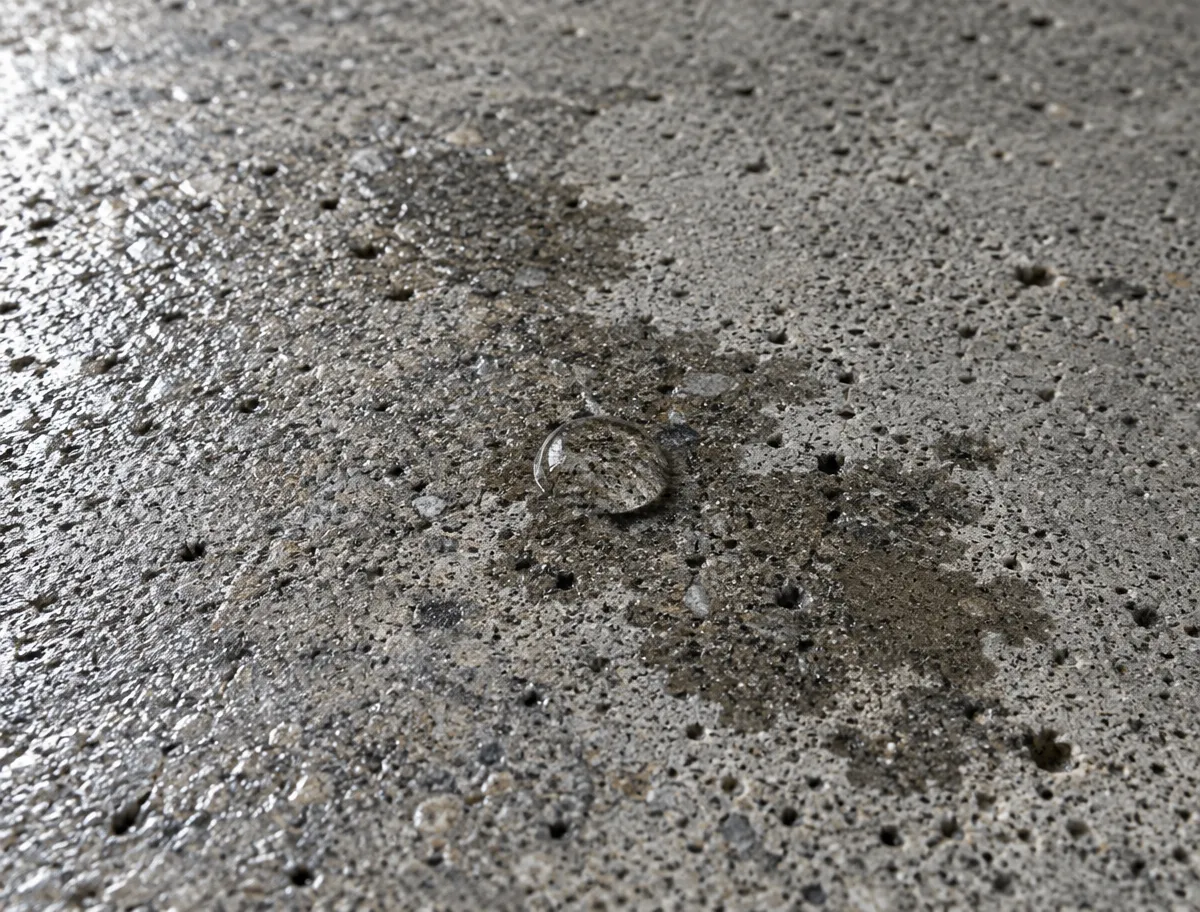
Outgassing creates epoxy floor bubbles when trapped air or moisture vapor escapes through a curing coating. Concrete slabs are porous by nature. Temperature shifts, moisture content, and surface contaminants all drive this process.
Why Does Moisture Vapor Cause Bubbles in Epoxy?
Moisture vapor from the concrete slab is a primary driver of outgassing. The problem intensifies in areas with high relative humidity in the concrete or where the concrete is relatively new. As the slab warms during application, vapor pressure builds beneath the low-permeability epoxy layer. That pressure forces gas upward, forming blisters and pinholes that can ruin the finish. Whether a slab has a vapor retarder beneath it, such as the plastic membranes covered by ASTM E1745 for vapor retarders under concrete slabs, affects how much ground moisture can reach the surface.
Can Surface Contamination Trigger Outgassing?
Surface contamination on the concrete causes bubbles and craters by blocking proper adhesion. Oils, dust, curing compounds, and old sealers trap air at the bond line. Thorough preparation with a grinder or shotblaster removes these contaminants before coating begins. Skipping this step leaves debris that can outgas during curing.
Several factors combine to produce bubbles in an epoxy floor:
- Moisture vapor pressure rising from within the slab, especially in newer concrete or high-humidity environments
- Surface contaminants like grease, dust, or old sealers that prevent adhesion and trap air
- Temperature and humidity swings in the application area that accelerate gas expansion
- Air introduced during mixing when epoxy components are blended too aggressively
- Overly thick pours that hold air in the film longer than the coating can release it before it sets
Extreme temperature or humidity fluctuations in the application area can trigger outgassing and other coating defects. A slab that heats rapidly after a cool night releases trapped gases at the worst possible moment. Incorrect mixing techniques introduce air that later rises to the surface as bubbles during curing. Mixing epoxy slowly and thoroughly helps avoid this problem.
How Does Concrete Age Affect Outgassing Risk?
Newer concrete generally carries more residual moisture than slabs that have dried for years. The American Concrete Institute’s guide for concrete slabs that receive moisture-sensitive flooring covers how concrete moisture behaves and dries over time. Homeowners considering basement coatings should verify moisture levels before any application. A damp basement floor requires testing to confirm readings fall within the coating manufacturer’s limits. Without proper moisture mitigation, vapor can migrate upward and compromise the coating system.
Why Do Spring and Fall Temperature Swings in Western PA Make Bubbling Worse?
Western Pennsylvania’s spring and fall weather often brings cool nights followed by mild or sunny afternoons. A garage or basement slab chills overnight, then warms through the day. As the concrete warms, the air and moisture in its pores expand and look for a way out, and a freshly applied coating is directly in the path. That is why a floor coated on a cool morning that turns warm is a classic setup for outgassing.
Pros work around this by watching slab temperature, not just air temperature, and by planning the coating window so the slab is steady or cooling while the material sets. Humidity and dew point matter too, since condensation on a cool slab can interfere with the bond. Our guide to the best time to coat a garage floor in Pittsburgh explains how seasons affect scheduling, and our article on cold-weather concrete coating installation covers what changes when temperatures drop.
📞 Seeing Bubbles or Pinholes in Your Floor? Specialty Concrete Coatings tests moisture, grinds, and seals every slab before coating across Greater Pittsburgh and NW Pennsylvania. Request a free floor coating quote and get an honest assessment of your concrete.
How Do Professionals Prepare the Surface?
Professional surface preparation addresses the root causes of epoxy floor bubbles before any coating touches the concrete. Specialty Concrete Coatings follows a multi-step process on every installation, beginning with mechanical preparation. Diamond grinding strips away contaminants and creates the proper profile for adhesion. Without this step, coatings are far more likely to fail. The International Concrete Repair Institute’s guideline for selecting concrete surface preparation for coatings is the industry reference for matching surface profile to the coating system.
What Happens If Moisture Is Trapped in the Concrete?
Moisture testing helps determine whether the slab is dry enough for coating application. Vapor pressure pushes through the slab and can form blisters in uncured material. Common methods include meter readings and the calcium chloride test described in ASTM F1869 for measuring moisture vapor emission rate. Moisture barriers or moisture-mitigating primers are used when needed to keep vapor from creating bubbles. Skipping this test invites coating failure.
How Are Cracks and Damage Repaired Before Coating?
Cracks and spalls receive repair with concrete menders before any coating is applied. A sound substrate helps prevent air pockets from forming under the new surface. Damaged concrete traps moisture and can release gas during curing. The repair step addresses imperfections that could become a bubble source.
The preparation sequence follows a strict order:
- Diamond grind the entire surface to remove old sealers, dirt, and weak concrete paste.
- Test moisture levels across multiple slab locations.
- Apply moisture barriers when readings exceed the limits for the chosen coating system.
- Fill cracks and spalls with high-strength concrete menders, then allow them to cure.
- Vacuum and clean the profiled surface to eliminate dust that interferes with bond strength.
Each step builds on the previous one. A single shortcut in this sequence can create conditions where bubbles form hours after the crew leaves. Specialty Concrete Coatings completes every phase before mixing the first batch of coating material. Skipping these steps is one of the biggest DIY garage floor coating problems homeowners run into.
What Application Steps Prevent Bubbles?
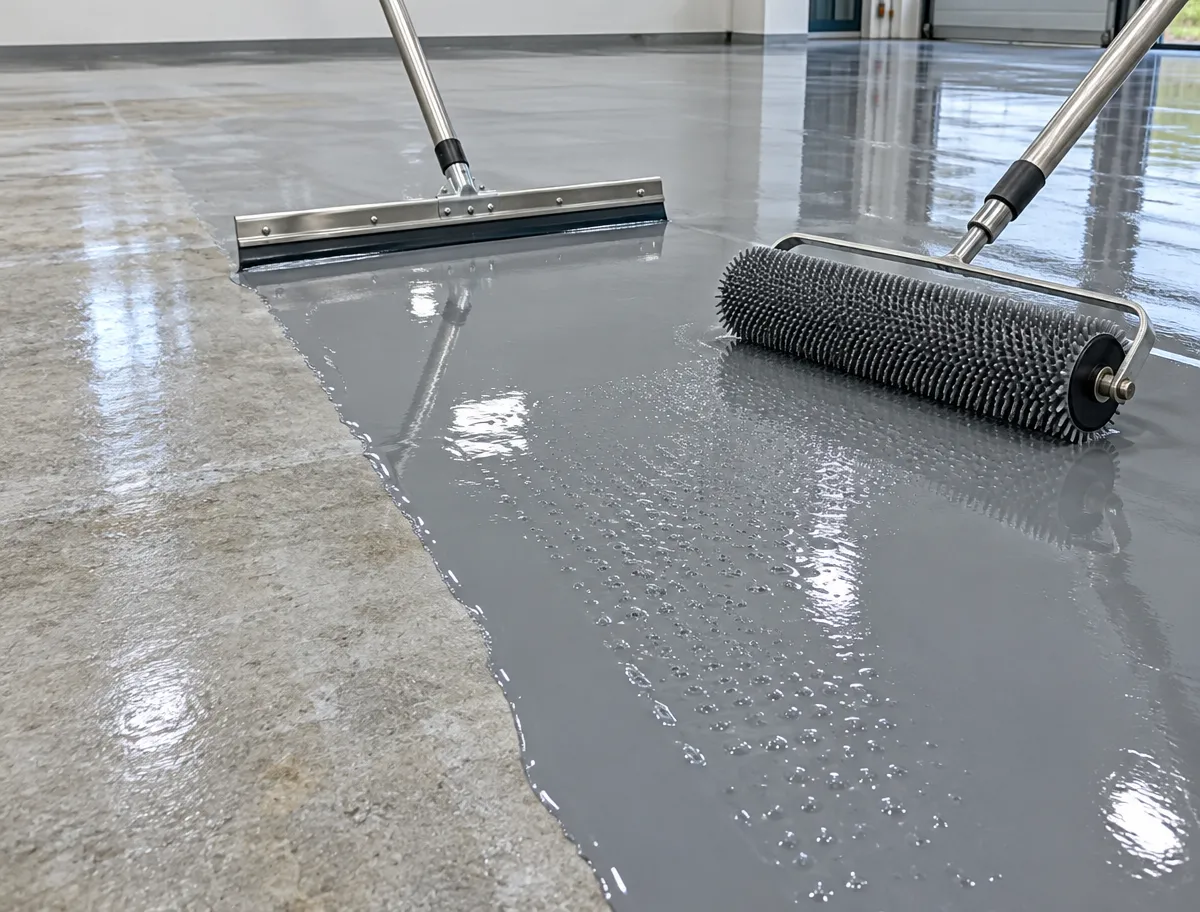
Preventing epoxy floor bubbles requires a disciplined, multi-step application process. Specialty Concrete Coatings follows a proven sequence that seals the concrete, controls the environment, and keeps contaminants out before they cause defects.
Why Does Surface Preparation Matter for Bubble Prevention?
Surface preparation addresses the root causes of outgassing. The company mechanically grinds every concrete slab to open the pores and remove contaminants that trap air. Cracks and spalls receive concrete menders before any coating touches the floor. This preparation helps stop gas from pushing through the wet coating later. AMPP’s overview of concrete surface preparation and coating selection explains why inspection and preparation come before choosing a coating.
Which Mixing and Rolling Techniques Reduce Bubbles?
Technique on installation day matters as much as prep. Experienced installers typically:
- Prime or seal the slab first so a thin first coat fills surface pores and lets air escape before the main coat goes down.
- Coat while the slab temperature is steady or falling, often later in the day, instead of on a cold slab that is about to warm up.
- Mix slowly with a low-speed drill and the right paddle, scraping the sides of the bucket without whipping air into the material.
- Apply the recommended thickness rather than one heavy pour, so air can release before the coating sets.
- Use a spike roller where the product calls for it to help release entrapped air from thicker coats.
Specialty Concrete Coatings then builds its floor system in four stages:
- Apply a high-adhesion basecoat. A polyurea basecoat seals the prepared concrete and helps minimize outgassing. This layer bonds directly to the prepared surface and helps limit air migration from below. Our article on polyurea concrete coating explains how this material works.
- Broadcast vinyl color chips by hand. Installers scatter chips across the wet basecoat to create customized aesthetics and slip resistance. Excess chips are scraped away to produce a uniform texture without trapping air pockets.
- Seal the system with a final clear coat. A UV-stable polyaspartic topcoat locks the chips in place and provides a protective layer that resists abrasion and chemicals. This seal helps keep moisture from working into the system from above.
- Control the environment throughout installation. Maintaining a consistent temperature and humidity level in the application area helps prevent outgassing and other issues. Fluctuations during curing can force gas expansion and bubble formation.
How Does the Clear Coat Help Prevent Future Bubbling?
The clear coat creates a low-permeability barrier on top of the system. It helps keep moisture and chemicals from reaching the base layers from above. With that protection in place, a properly installed coating is far more likely to stay bonded and smooth for years.
Can You Fix Bubbles After They Form?
Fixing epoxy floor bubbles after they form is possible, but the method depends on the root cause. A pinhole visible at the bottom of a bubble marks where gas escaped from the slab. If no pinhole is present, the coating has sealed over the outgassing site. Bubbles weaken adhesion and can lead to premature coating failure if the underlying cause remains unaddressed.
What Does a Pinhole at the Bubble Base Indicate?
A visible pinhole usually points to outgassing from the slab. The repair should stop the gas at its source rather than simply patching the surface. Grinding down the affected area, applying a moisture-mitigating primer, and recoating is a common approach. Surface-only fixes tend to fail when vapor pressure rebuilds beneath the patch.
What Happens When No Pinhole Is Visible?
Bubbles without pinholes suggest that the coating sealed over the outgassing site. The trapped gas created a blister, but the epoxy skin remains intact. These bubbles often result from surface contamination or application errors. Sanding the blister flat and recoating the spot often resolves the issue. The slab may not need moisture treatment in this scenario, though testing is the only way to know.
When Is a Full Redo Better Than Sanding and Recoating?
Spot repairs make sense for a handful of isolated bubbles. When bubbling covers large areas, the coating sounds hollow, or it is lifting at the edges, removing the system and starting over with proper prep is often the more reliable fix. Professionals can check bond strength with a pull-off test such as ASTM D7234 for coating adhesion on concrete before deciding. Our guide on how to fix a peeling epoxy garage floor walks through what a full removal involves.
For property owners facing widespread bubbling, professional evaluation helps prevent recurring damage. Specialty Concrete Coatings brings more than 15 years of experience diagnosing and repairing failed floor systems across Western Pennsylvania. The company’s approach supports one-day installation in many cases, with typical timelines of approximately 12 hours to walk on and 48 hours to drive on in garage applications. Actual cure times vary with temperature, humidity, and the products used. A proper repair restores both appearance and long-term adhesion.
Frequently Asked Questions
Why do epoxy floors bubble?
Epoxy floors bubble mostly from outgassing, where trapped air or moisture escapes the concrete substrate during application. Temperature shifts and moisture vapor pressure drive this process, creating circular bubbles that can weaken adhesion.
How do you prevent epoxy floor bubbles?
Diamond grinding removes contaminants and creates the proper surface profile. Moisture testing across multiple slab locations checks dryness, primers seal porous slabs, and coating while the slab temperature is steady or falling reduces outgassing.
What does outgassing look like on an epoxy floor?
Outgassing usually appears as a near-perfect circle with a ridge around the edge or a distinct bubble. A pinhole may be visible at the bottom of the defect.
Can bubbles in an epoxy floor be fixed?
Often, yes. Isolated bubbles can usually be sanded flat and recoated, while bubbles with pinholes may need grinding and a moisture-mitigating primer first. Widespread bubbling or lifting coating usually calls for a full removal and recoat.
Does temperature affect epoxy floor bubbles?
Yes. When a cool slab warms up during application, the air and moisture in the concrete expand and push into the wet coating. That is why spring and fall temperature swings in Western Pennsylvania can make bubbling more likely, and why pros watch slab temperature closely.
TL;DR — Epoxy Floor Bubbles at a Glance
- Outgassing pushes trapped air or moisture through curing epoxy, creating bubbles, pinholes, and craters that can weaken adhesion.
- Moisture vapor from newer or damp slabs, surface contamination, fast mixing, and overly thick pours all raise the risk.
- Coating a cold slab that is about to warm up, common in Western PA spring and fall, is a classic cause of bubbling.
- Diamond grinding, moisture testing, crack repair, and a primer or basecoat address most root causes before coating.
- Isolated bubbles can often be sanded and recoated; widespread bubbling usually needs a full redo.
- Next step: Request a free floor coating quote from Specialty Concrete Coatings.
Related Resources
- Garage Epoxy Floor Coatings
- Pittsburgh, PA Concrete Coating Company
- Why Epoxy Garage Floors Peel and How to Fix It
- DIY Epoxy vs Professional Garage Floor Coating
- Does Epoxy Crack in Cold Weather?
- How Long Does an Epoxy Floor Last?
Get a Free Epoxy Floor Coating Quote
Bubbles signal a breakdown in the preparation or application sequence, and the most reliable fix is to address the root cause rather than the symptom. Property owners who skip moisture testing, surface grinding, or crack repair invite recurring defects that can shorten the life of the floor. A disciplined process that seals the concrete, controls the environment, and keeps contaminants out gives you the best chance at a smooth finish that stays bonded for years. Contact Specialty Concrete Coatings today for a free, no-obligation quote.
About Specialty Concrete Coatings: Specialty Concrete Coatings is a concrete coating contractor serving Greater Pittsburgh and Northwest Pennsylvania, specializing in garage, basement, patio, and commercial floor coatings. The team provides free moisture assessments and estimates so every floor gets a coating system matched to its conditions. Contact us today for a free, no-obligation quote.