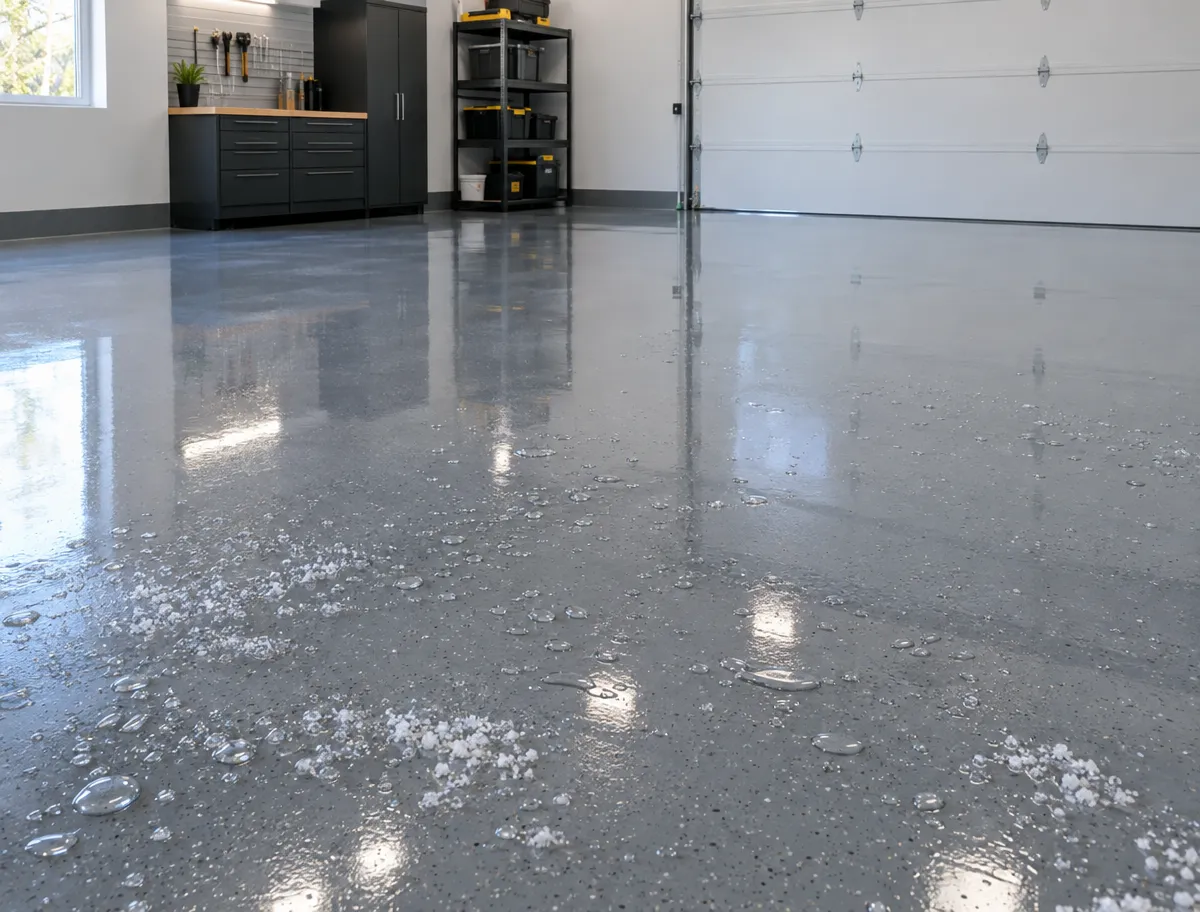
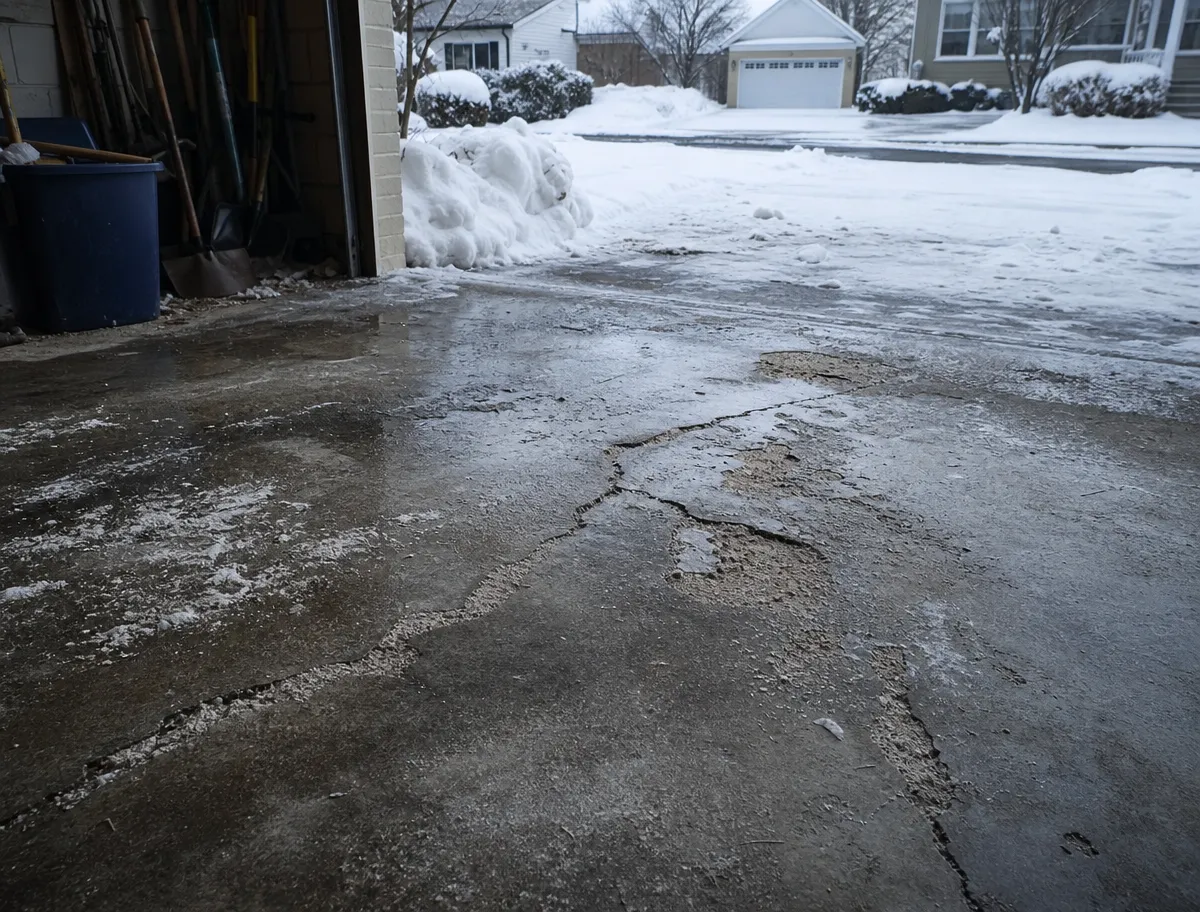
Quick Answer: No — properly installed epoxy coatings do not crack from Pittsburgh’s cold winters or freeze-thaw cycles. The concrete slab underneath can crack from moisture, settling, and repeated freezing and thawing, and that movement telegraphs through to the coating above it. Specialty Concrete Coatings prevents this by repairing cracks and spalls, grinding the surface for proper bonding, and installing high-adhesion basecoats and topcoats engineered for Western Pennsylvania’s seasonal swings. Choosing quality materials and installation, not avoiding coatings altogether, is what keeps a Pittsburgh floor crack-free through winter.
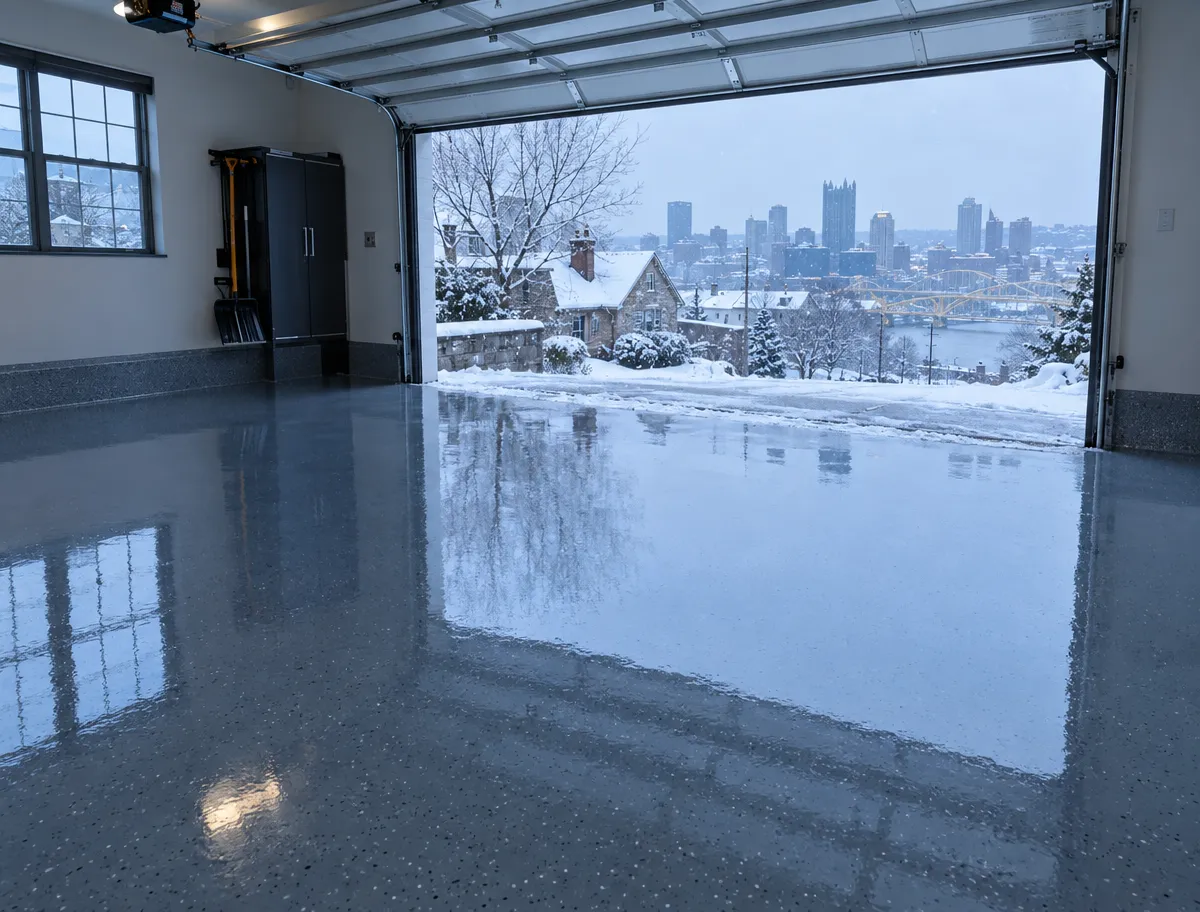
What Should Pittsburgh Homeowners Know at a Glance?
- Epoxy coatings themselves resist cracking through Pittsburgh’s below-freezing winters and 90-degree summers.
- Concrete substrates — not the epoxy coating — bear the stress of Pennsylvania’s extreme seasonal swings.
- Proper surface preparation and crack repair before installation prevent cold-weather problems from showing up later.
- Specialty Concrete Coatings builds every floor system to withstand Pittsburgh’s harsh year-round climate.
Does Epoxy Crack in Cold Weather in Pittsburgh?
Epoxy coatings do not crack in cold weather; the concrete underneath sometimes does. Pittsburgh homeowners raise this question for good reason. The region cycles through many below-freezing days each winter, then swings to garage temperatures topping 90 degrees with heavy humidity by midsummer. That kind of thermal seesaw puts real stress on concrete slabs, though not on a properly installed epoxy system itself.
Concrete expands and contracts as temperatures shift. Settling, dry shrinkage, and freeze-thaw pressure all create hairline cracks in the slab over time. Does epoxy crack in cold weather the way bare concrete does? No — but a coating bonded to a cracked slab telegraphs that movement to the surface above it, which is why federal guidelines for partial-depth concrete repairs call for addressing crack repair before any coating goes down.
Pennsylvania’s swing from cold winters to warm summers is exactly why this question comes up so often before a coating project begins.
Will My Garage Floor Crack After Coating?
A well-prepared slab, free of active structural cracks, holds up under a coating through repeated freeze-thaw seasons. Problems trace back almost always to pre-existing concrete damage, not the coating material itself.
Here’s what actually withstands Pittsburgh’s temperature swings versus what doesn’t:
- Concrete slabs: prone to cracking from settling, shrinkage, and freeze-thaw cycling.
- Properly bonded epoxy or polyurea coatings: resist cracking directly from heat or cold exposure.
- Coatings applied over unrepaired cracks: inherit and display the movement happening below.
That distinction matters for anyone weighing a garage, basement, or patio upgrade. Fear of cracking shouldn’t rule out a coating — targeted concrete repair before installation solves the real problem.
Why Does Concrete—Not Epoxy—Crack in Winter?
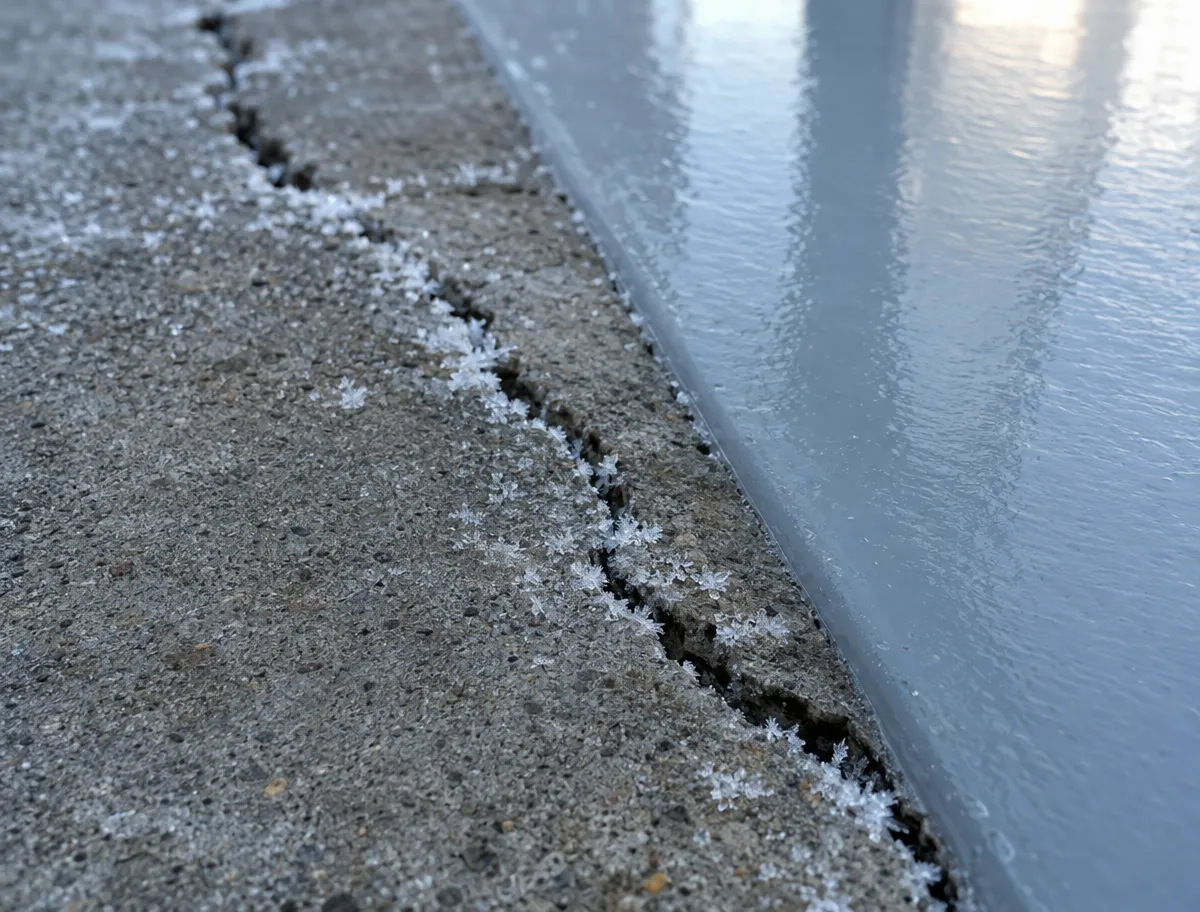
Concrete cracks in winter, not the epoxy layer sitting on top of it. Pittsburgh’s freeze-thaw cycles put stress on the slab itself. That underlying movement, not the coating material, causes the damage homeowners see each spring.
Many Pittsburgh homeowners ask whether epoxy cracks in cold weather after noticing hairline fractures in a garage or basement floor. The honest answer starts with the concrete, not the coating. When temperatures swing from a mild afternoon into a hard freeze, the slab expands and contracts. That repeated motion, combined with settling or dry shrinkage that concrete experiences over time, creates stress the material was never built to absorb without moving. Industry-recognized standards for concrete bonding materials underscore why bonding quality between the slab and the coating matters so much in a climate like Pittsburgh’s.
Epoxy simply cannot withstand that kind of movement underneath it. The coating bonds tightly to the surface below. It has no way to flex independently once a crack forms in the slab. Whatever happens beneath the surface shows up on top.
Does a Cracked Slab Ruin an Epoxy Floor?
Not automatically, but it compromises the section directly above the crack. Once concrete splits, the coating bonded to it telegraphs that same line, and the flaw becomes visible on the finished surface.
A few conditions make this risk worse for Pittsburgh properties:
- Older slabs with existing settling or shrinkage cracks
- Garages exposed to sharp daily temperature swings through an uninsulated door
- Basements built on soil prone to seasonal shifting
Extreme seasonal conditions genuinely test an unprepared floor. That reality doesn’t rule out coating a Pittsburgh home’s concrete — it simply means the slab deserves attention before any coating goes down.
❄️ Worried About Cracking Before Winter Hits?
Get a free, no-obligation inspection and quote from Specialty Concrete Coatings before the next freeze-thaw cycle puts your concrete at risk. Request your free quote.
How Does Cold Affect Epoxy Curing and Installation?
Cold temperatures slow the chemical reaction that turns liquid epoxy into a hardened floor coating. For Pittsburgh homeowners scheduling a garage or basement project during winter months, timing and prep work matter more than ever. Contractors watch pot life — the working window before the material starts to set — as the top concern when installing coatings in cold conditions.
Whether epoxy develops cracks in cold weather is a different question from how cold affects the installation itself. The cured coating resists cracking from temperature swings, but the application process changes significantly once temperatures drop. Colder air slows the reaction time, which stretches pot life and gives installers more time to spread material evenly.
That extra working window sounds like an advantage, but it comes with a trade-off.
Does Cold Weather Slow Down a Garage Floor Project?
Yes. Very cold conditions extend recoat windows, meaning each layer needs more time before the next one goes on. That delay pushes back overall project completion, which matters for homeowners hoping to use their garage again quickly after a Pittsburgh cold snap.
What Should Pittsburgh Homeowners Expect From a Winter Installation?
A qualified installer adjusts scheduling and technique rather than rushing the process. Key considerations include:
- Longer pot life during cold snaps, requiring careful timing between coats
- Extended recoat windows, which can add time to the overall project
- Slower cure rates, affecting when the floor is ready for foot or vehicle traffic
Extreme heat and extreme cold both affect the installation process, even though neither one cracks the finished coating. Specialty Concrete Coatings accounts for how concrete coatings hold up against weather when scheduling every garage, basement, and patio project across the Pittsburgh area.
Can Cracked Concrete Still Be Coated With Epoxy?
Yes — a cracked concrete slab does not disqualify a Pittsburgh garage, basement, or patio from receiving an epoxy concrete floor coating. Proper prep and repair work restores the surface first, then the coating goes on top. Crews at Specialty Concrete Coatings routinely assess Pittsburgh floors that have weathered years of freeze-thaw cycling, and cracked concrete rarely means starting over.
Homeowners across Pittsburgh often ask whether epoxy cracks in cold weather before committing to a project. The coating itself resists cracking; concrete underneath is what moves during temperature swings. Fear of future cracking shouldn’t stall the decision, since repair steps before installation address the underlying issue directly.
What Does Crack Repair Actually Involve?
Repair work typically means filling voids, patching spalled sections, and grinding the surface so the new coating bonds evenly. Skipping this step risks telegraphing existing damage straight through the finished floor. Pennsylvania’s approved concrete repair material standards reflect how seriously bonding and repair quality are treated before any coating is applied. A thorough repair phase gives the epoxy a stable base to adhere to, regardless of Pittsburgh’s swing between summer humidity and winter freezes.
Does a Coated Floor Stay Crack-Free Long Term?
Staying proactive with preparation and installation best practices helps prevent new cracks from forming. Protective coatings also enhance a slab’s durability and cut down on everyday wear from foot traffic, vehicles, and seasonal temperature swings.
Pittsburgh homeowners weighing a garage or basement upgrade can expect a process built around these steps:
- Diamond grinding to expose sound concrete
- Crack and spall repair with concrete menders
- High-adhesion basecoat application
- A durable topcoat for long-term protection
Specialty Concrete Coatings serves Pittsburgh from its Sandy Lake, PA base, bringing repair-first installation practices to every job. Explore the garage floor coating options for Pittsburgh homes and request a free quote today.
What Protects Your Pittsburgh Floor From Freeze-Thaw Damage?
A properly engineered coating system protects Pittsburgh garage, basement, and patio floors from winter’s freeze-thaw cycles by sealing the concrete surface and absorbing daily wear. Specialty Concrete Coatings, headquartered in Sandy Lake, PA, extends its concrete coating expertise to homeowners across the Pittsburgh area who face these harsh seasonal swings year after year. Pittsburgh’s freeze-thaw pattern is relentless: water seeps into unprotected concrete, freezes, expands, and gradually breaks the surface down from within.
Coated floors don’t escape this cycle entirely. No coated floor remains perfect forever, and homeowners may eventually notice small chips, minor scratches, or hairline surface cracks. That’s not a failure of the coating — it’s a reminder that seasonal attention matters, even after a quality installation.
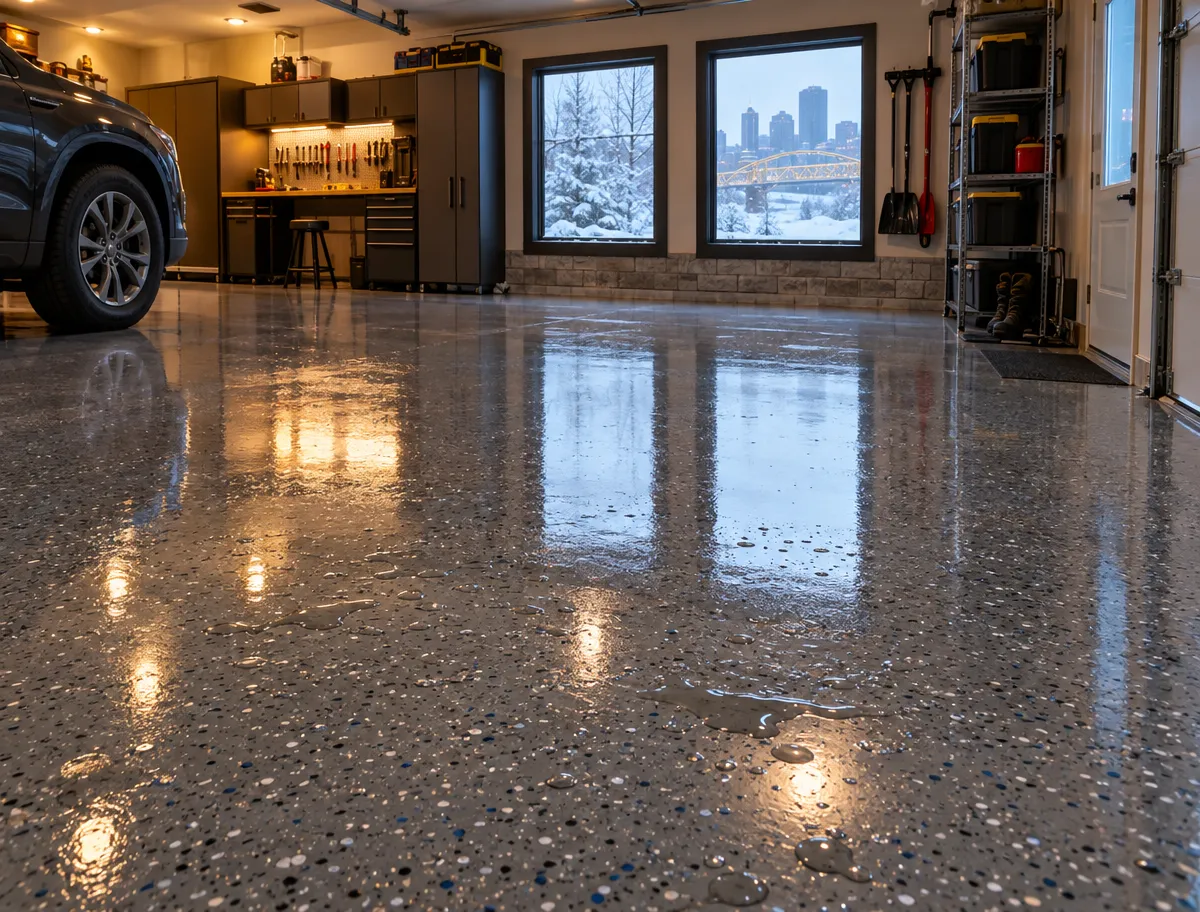
Does Epoxy Crack in Cold Weather in Pittsburgh Homes?
Properly installed garage epoxy flooring resists the daily punishment of spills, chemicals, and everyday scuffs across every season, including Pittsburgh’s coldest months. Extreme temperature swings still create challenges if a floor isn’t installed and maintained with winter conditions in mind. The coating itself holds up well; the risk comes from underlying concrete stress and moisture infiltration if the system wasn’t applied correctly from the start.
Homeowners get the best protection by working with an installer who understands local conditions:
- Confirms the project fits the homeowner’s preferred price point before work begins
- Uses materials suited to Pittsburgh’s freeze-thaw exposure
- Plans installation timing around seasonal temperature swings
- Recommends realistic maintenance expectations for year-round durability
Specialty Concrete Coatings’ staff work to fully understand each homeowner’s goals, then deliver a finished floor built for Pittsburgh’s climate without sacrificing budget or long-term performance.
Frequently Asked Questions
Does epoxy crack in Pittsburgh’s cold winters?
Epoxy coatings resist cracking in Pittsburgh’s below-freezing winters and in summer heat above 90 degrees. The concrete underneath, not the epoxy, suffers stress from freeze-thaw cycles.
What actually causes cracks in a coated garage floor?
Concrete slabs crack from settling, dry shrinkage, and freeze-thaw pressure, and that movement telegraphs through the coating above. Properly bonded coatings applied over repaired concrete resist this cracking.
How does Specialty Concrete Coatings prevent cracking?
Specialty Concrete Coatings repairs cracks and spalls with concrete menders before installing a high-adhesion basecoat, a process engineered to hold up through Pittsburgh’s harsh seasonal swings.
Can epoxy flooring be installed during a Pittsburgh winter?
Yes, but cold temperatures slow epoxy’s curing chemistry and extend recoat windows. A qualified installer adjusts scheduling and technique so each coat sets properly before the next goes on.
Is polyurea a better choice than epoxy for Pittsburgh’s climate?
Polyurea offers more flexibility than traditional epoxy, which can help it handle Pittsburgh’s temperature swings. Specialty Concrete Coatings often pairs a polyurea basecoat with a durable topcoat for added resilience, an approach discussed further in choosing between epoxy and polyurea for your garage floor.
TL;DR — Epoxy and Cold Weather at a Glance
- Epoxy itself does not crack from Pittsburgh’s cold winters; freeze-thaw stress hits the concrete slab underneath.
- Cracks that show up in a coated floor almost always trace back to unrepaired concrete, not the coating material.
- Diamond grinding, crack repair, and a high-adhesion basecoat prevent movement from telegraphing through the surface.
- Cold weather slows epoxy’s cure time and extends recoat windows, so winter installations need extra scheduling care.
- Polyurea basecoats add flexibility for homes facing Pittsburgh’s harshest seasonal swings.
- Ready to protect your floor before the next freeze-thaw cycle? Request a free quote from Specialty Concrete Coatings today.
Related Resources
- Epoxy Concrete Floor Coating
- Pittsburgh, PA Concrete Coating Company
- How Concrete Coatings Hold Up Against Weather
- Winter-Proofing Your Concrete
- What to Do If Your Specialty Concrete Cracks After Installation
- Choosing Between Epoxy and Polyurea for Your Garage Floor
Get a Free Epoxy Coating Quote in Pittsburgh
Epoxy itself holds up through Pittsburgh’s coldest winters and hottest summers — it’s the concrete underneath that needs attention before a coating goes down. Specialty Concrete Coatings pairs thorough crack repair and surface preparation with high-adhesion basecoats and topcoats, including flexible polyurea options, engineered for Western Pennsylvania’s demanding seasonal swings. The right prep and materials, not avoiding a coating altogether, are what keep your investment crack-free for years to come. Request your free, no-obligation quote today and find out what a properly installed floor can do for your Pittsburgh home or business.
About Specialty Concrete Coatings
Specialty Concrete Coatings is a Pennsylvania-based concrete coating company headquartered in Sandy Lake, PA, serving homeowners and businesses throughout the greater Pittsburgh area and Western Pennsylvania. The team specializes in epoxy and polyurea floor coatings for garages, basements, and patios, with a repair-first approach built to withstand the region’s harsh freeze-thaw winters and humid summers.