Quick Answer: Spalling concrete garage floor repair starts with judging how deep the damage goes. Light scaling and shallow pitting can usually be ground smooth, filled with a concrete repair material, and then coated. Deeper spalls and exposed aggregate need all loose concrete removed and the voids filled and leveled before coating. Some badly deteriorated slabs need more extensive repair or replacement first, so a professional evaluation is the best way to know which category your Western PA garage floor falls into.
Pitting and spalling on Western Pennsylvania garage floors usually trace back to road salt and freeze-thaw cycles. The fix is a repair-first process: diamond grinding to remove deteriorated concrete, filling pits and spalls, and then a polyurea and polyaspartic coating system. Specialty Concrete Coatings handles this kind of restoration across Greater Pittsburgh and NW Pennsylvania, including cold-season projects.
What Should You Know Before Repairing a Spalled Garage Floor?
- Damage ranges from surface scaling to pitting, deep spalls, and exposed aggregate, and the severity decides the repair.
- Road salt and repeated freeze-thaw cycles are the main drivers of this damage in Western PA garages.
- Repair comes before coating: grind, remove loose concrete, fill and level, then coat.
- Not every slab can be saved with a patch and coating; severely deteriorated concrete may need more extensive repair or replacement.
How Bad Is the Damage on My Garage Floor?
Use this severity scale to get a rough read on your floor before talking to a contractor:
| Stage | What It Looks Like | Typical Approach Before Coating |
|---|---|---|
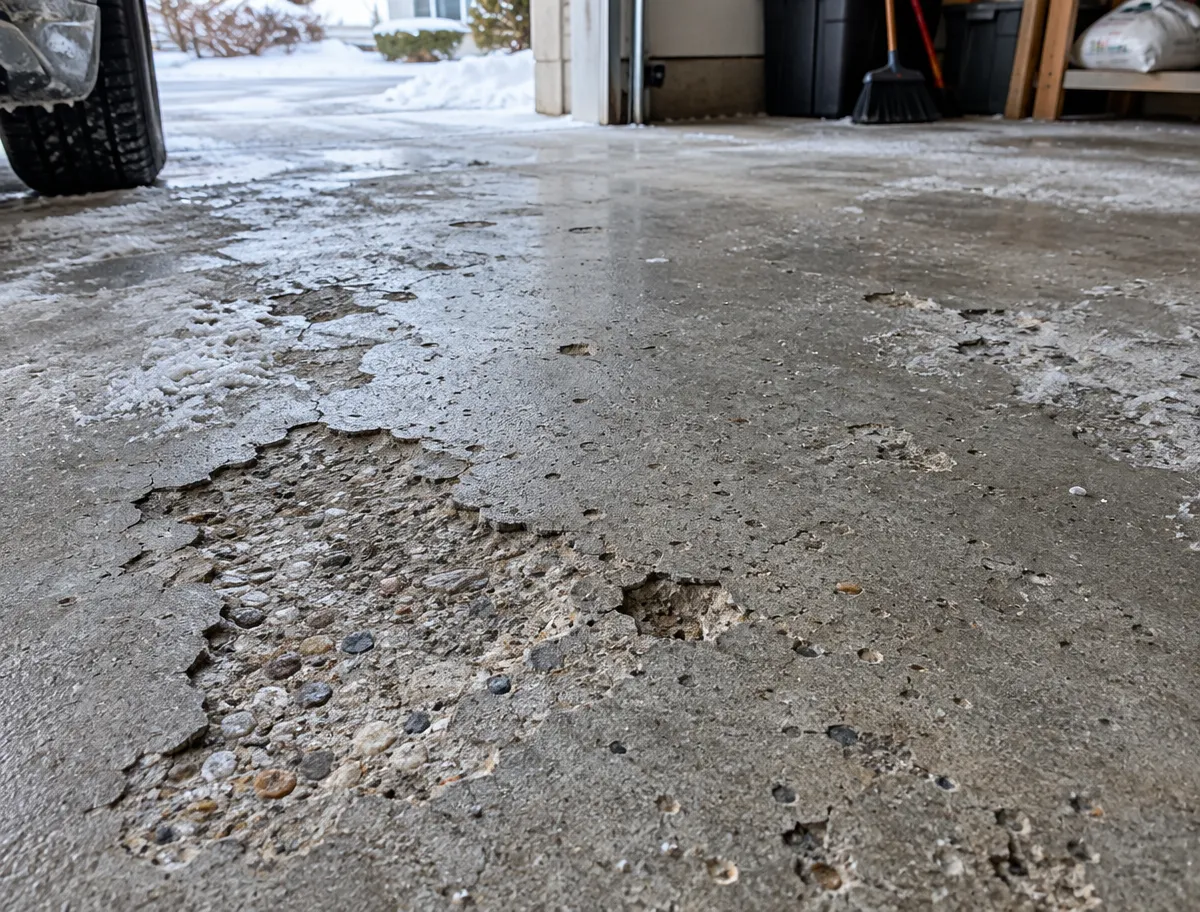
| 1. Surface scaling | Thin flakes of the top surface peeling off; rough, shallow patches | Diamond grinding usually removes it, then the floor is coated |
| 2. Pitting | Small, scattered pits and pockmarks across the slab | Grind, fill pits with a repair material, level, then coat |
| 3. Deep spalls | Larger chunks broken out, leaving depressions with loose edges | Remove loose concrete to a sound base, fill and level with repair mortar, then coat |
| 4. Exposed aggregate | Stone exposed over wide areas; crumbling or hollow-sounding concrete | Professional evaluation; may need resurfacing or partial replacement before coating |
The National Ready Mixed Concrete Association’s guide to scaling concrete surfaces describes scaling as flaking of the finished surface, usually from repeated freeze-thaw cycles and made worse by deicing salts. Minor scaling is mostly cosmetic, while deeper damage needs unsound material removed before any resurfacing or coating.
Why Does Salt Damage Garage Floors in Western PA?
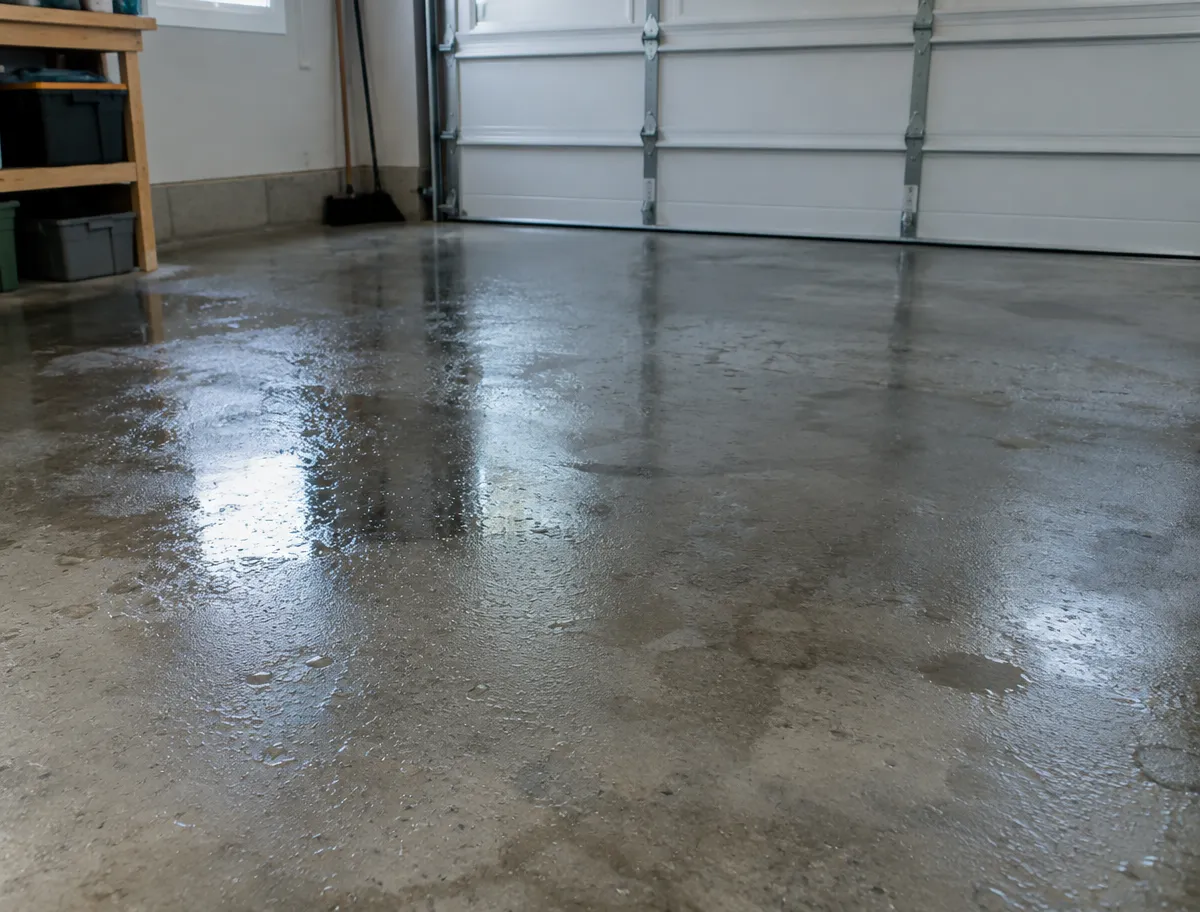
The damage begins when melting snow carries salty slush into the garage, where it soaks into the porous concrete. Without intervention, this process gradually turns a smooth floor into a pitted, flaking one. For the full background, see our guide to winter salt damage on Pennsylvania garage floors.
How Does the Freeze-Thaw Cycle Worsen Salt Damage?
Concrete absorbs the salty meltwater, which then freezes and expands inside the slab’s pores. Each freeze event adds stress near the surface, and repeated cycles over a winter break the top layer apart. Federal Highway Administration research on concrete durability mechanisms such as freeze-thaw and deicer attack explains why saturated concrete exposed to deicers is especially vulnerable. The result is a surface that needs repair rather than a cosmetic touch-up.
Why Do Unheated Garages Suffer the Worst Deterioration?
Unheated garages can hold salt-laden slush for weeks. The slab stays cold enough to prevent drying, so the salty water keeps soaking in and cycling through freezes and thaws. By the time spring arrives and the floor is finally hosed out, the surface may already show pitting and flaking, and the damage tends to grow if it is left alone.
Specialty Concrete Coatings addresses this with coating systems that keep salt and meltwater off the bare concrete. The polyurea basecoat seals the surface, and the UV-stable topcoat resists the abrasion of daily use. Homeowners can learn more about how to protect a garage floor from road salt with professional-grade coatings built for Western Pennsylvania winters.
Can a Spalled Garage Floor Be Coated?
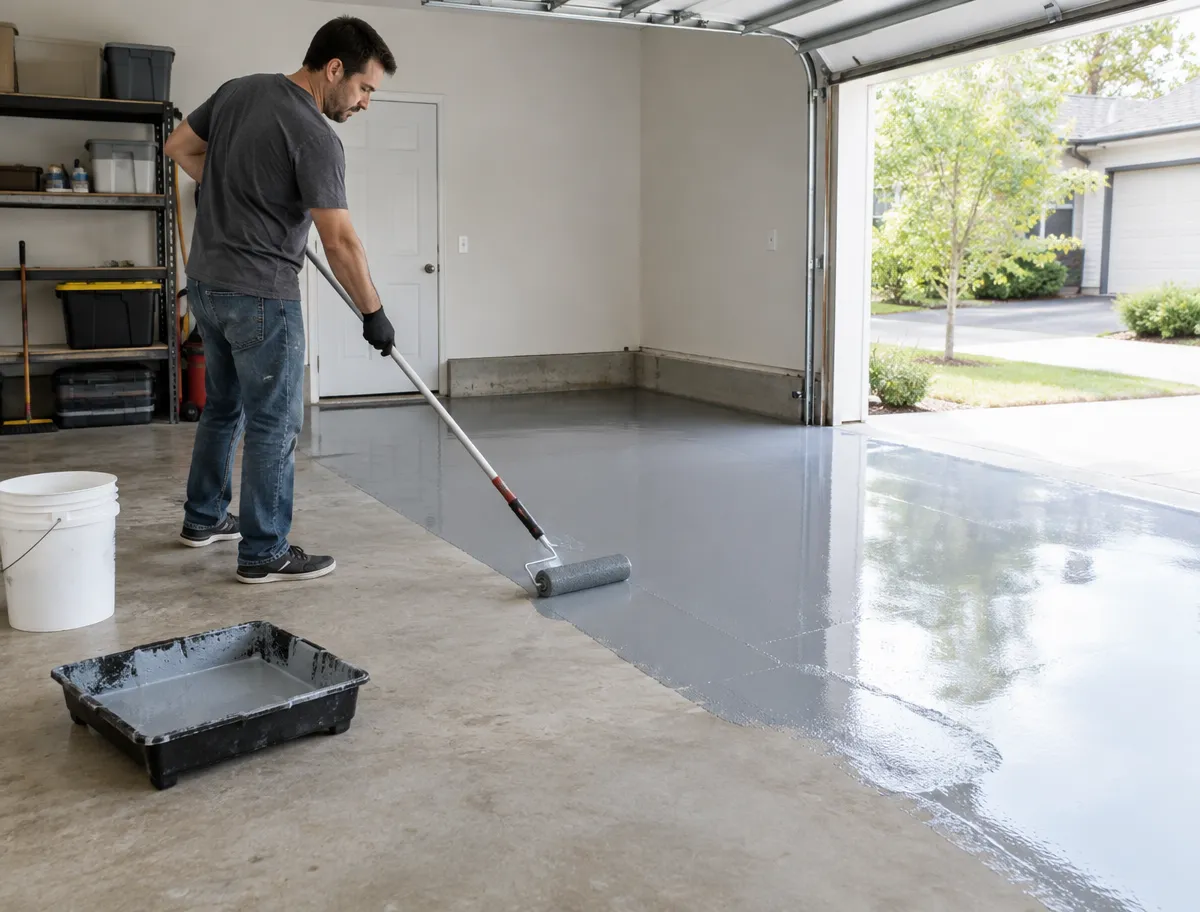
Usually yes, once the damage is repaired. The decision depends on severity:
- Scaling and light pitting: generally a good candidate. Grinding and filling create a sound surface for coating.
- Deep spalls: often coatable after loose concrete is removed and the voids are rebuilt with a compatible repair material.
- Widespread deterioration, hollow-sounding areas, or slabs that move or heave: need a professional evaluation first. A coating is a protective surface, not a structural repair, and some floors need resurfacing or replacement before coating makes sense.
See how an older, cracked Pennsylvania garage floor was restored before coating for a real example of a repair-first project.
📞 Wondering If Your Floor Can Be Saved? Specialty Concrete Coatings will look at your pitted or spalled garage floor, explain what repair it needs, and give you an honest answer on whether coating makes sense. Request a free garage floor quote to schedule an assessment.
What Tools and Materials Do I Need for Repair?
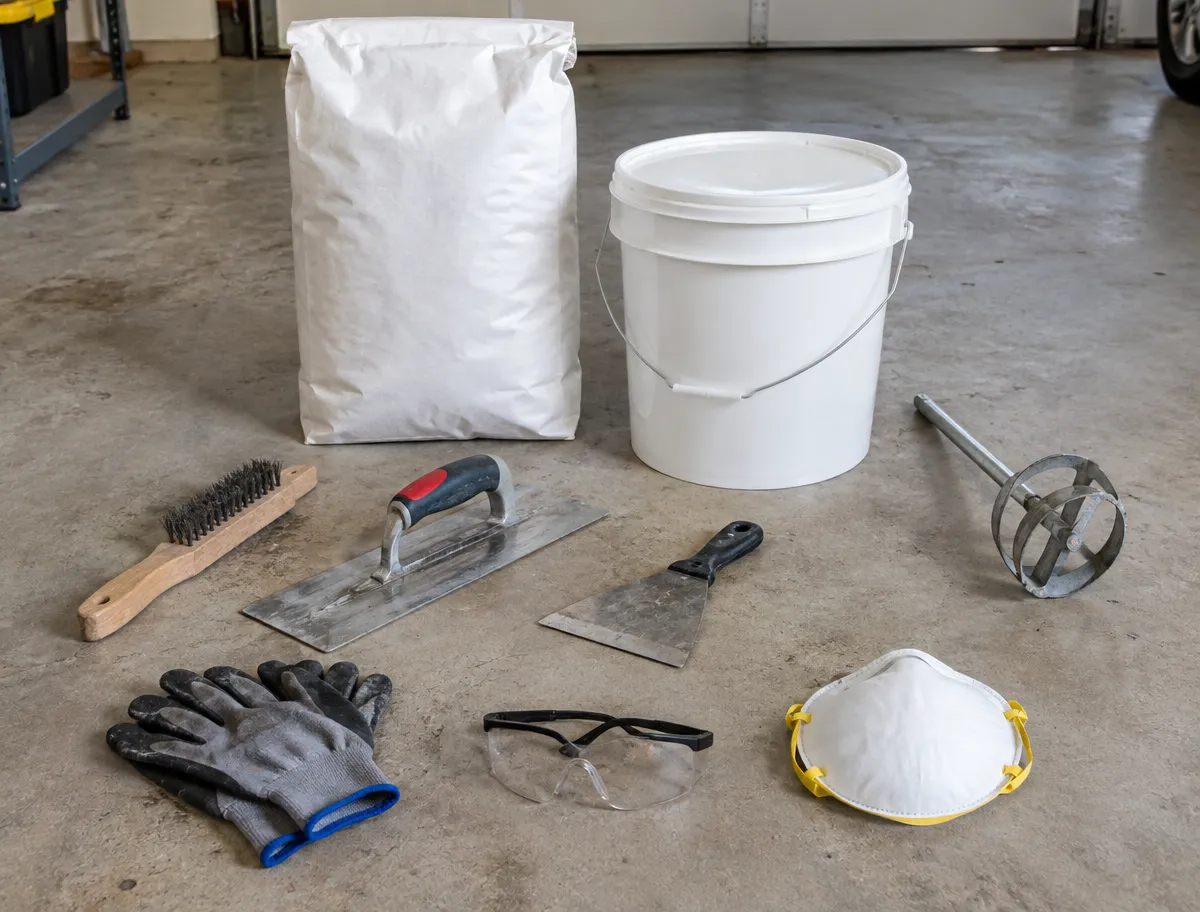
Repairing a spalling concrete garage floor requires specific tools and materials to address salt damage and surface deterioration. A proper spalling concrete garage floor repair starts with mechanical cleaning, moves through surface preparation, and finishes with durable patching compounds. Skipping a step leaves the slab vulnerable to another winter of freeze-thaw cycles and road salt.
What Cleaning Tools Work Best for Salt-Damaged Concrete?
A wire brush attached to a mini grinder removes corroded material from pitted and flaking areas. This mechanical approach strips away loose concrete that hand scraping misses. After grinding, an oil and grease remover designed for concrete eliminates contaminants that block adhesion.
How Are Deep Pits and Spalls Filled?
Deep pits and spalls are filled with a concrete patching or repair mortar after loose material is chipped out and the area is cleaned. On a garage floor, the patch should be finished flush or ground flat so it does not show through the coating. Self-leveling repair material can fill wider low spots once the surface is clean and dry. The American Concrete Institute’s field guide to concrete spall repair procedures outlines the same core principles professionals follow: remove unsound concrete, prepare a clean and sound surface, and use a compatible repair material.
Homeowners dealing with widespread peeling from previous coatings should also review guidance on fixing a peeling epoxy garage floor before starting repairs. The underlying cause must be resolved or the new surface can fail the same way.
How Do I Prepare the Concrete Surface for Coating?
Proper surface preparation determines whether a garage floor coating bonds well or fails within months. Spalling concrete garage floor repair begins with mechanical grinding, not chemical etching, to open the concrete’s pore structure for adhesion. In Pennsylvania, winter road salt and repeated freeze-thaw cycles make thorough preparation the most important step before any coating application.
What Is the First Step in Cleaning a Salt-Damaged Garage Floor?
The initial cleaning removes loose debris and surface contaminants that interfere with coating adhesion. A wire brush on a mini grinder scrubs corroded areas to eliminate flaking concrete and salt residue. After mechanical scrubbing, an oil and grease remover formulated for concrete strips away automotive fluids and deicer residue. Skipping degreasing leaves invisible films that keep the coating from gripping the slab.
How Are Cracks and Spalls Repaired Before Coating?
After cleaning, the surface is diamond ground to level the slab and create a uniform profile. Specialty Concrete Coatings mechanically prepares every garage floor this way, removing the weak top layer and exposing sound concrete beneath. Cracks and spalls are repaired with concrete menders that restore a continuous surface. Once repairs cure, a high-adhesion basecoat is applied directly to the profiled concrete. This sequence forms the foundation of the company’s 1-day garage floor coating process.
Why Does Diamond Grinding Outperform Acid Etching?
Diamond grinding produces a consistent mechanical profile without introducing water or chemical residue into the slab. Acid etching leaves a variable surface texture and requires extra drying time. Grinding also removes minor surface irregularities that etching cannot address. For garages exposed to seasonal salt, the more uniform profile from grinding supports a stronger bond.
Should I Patch Spalling Myself or Hire a Professional?
| Situation | DIY Patch | Professional Repair |
|---|---|---|
| A few small, shallow pits | Reasonable for a cosmetic fix if you are not coating soon | Handled as part of grinding and prep |
| Widespread pitting or deep spalls | Hard to get flat, well-bonded results by hand | Recommended; grinding and repair mortar create a uniform surface |
| Planning to coat the floor | Store-bought patches may not be compatible with the coating | Repair materials matched to the coating system |
| Damage keeps coming back | Patches alone don’t stop salt exposure | Repair plus a protective coating system |
For a closer look at the trade-offs, see our comparison of DIY epoxy vs. professional garage floor coating.
What Are the Steps to Apply a Durable Coating System?
A durable coating system restores a repaired spalling garage floor through a disciplined, multi-step process. Skipping any phase invites premature failure, especially in Pennsylvania garages exposed to winter road salt and freeze-thaw cycles. The sequence prioritizes adhesion, strength, and chemical resistance.
How Is the Concrete Surface Prepared Before Coating?
The floor is diamond ground to open the concrete pores and remove the weak surface layer damaged by salt and wear. Cracks and spalls are repaired with concrete menders, creating a uniform substrate free of contaminants that block adhesion.
What Materials Create the Strongest Coating System?
Specialty Concrete Coatings’ garage floor coating systems follow a specific layering strategy. A polyurea basecoat goes down first; the company rates it as stronger than traditional epoxy, and it delivers the impact and chemical resistance garage floors need. Vinyl color chips are hand-broadcast into the wet basecoat for custom looks and added slip resistance. A UV-stable polyaspartic clear coat seals the system on top to resist yellowing, abrasion, and chemicals.
The system cures quickly, so homeowners are back on the floor much sooner than with many epoxy systems; Specialty Concrete Coatings confirms the walk-on and drive-on schedule for each project. For a breakdown of material differences, the polyurea vs. epoxy cost comparison explains why polyurea systems can deliver more long-term value.
How Does the Chip Application Affect Durability?
Excess chips are scraped after broadcasting to create a uniform texture. This prevents high spots that wear unevenly under vehicle traffic. The embedded chips add slip resistance, which matters when melting snow tracks into the garage, and the final clear coat locks them in place.
How Can I Prevent Future Salt Damage After Repair?
Preventing future salt damage starts with a protective barrier on the concrete surface. A professionally coated garage floor keeps road salt and deicers off the bare slab. Without that barrier, salt residue keeps attacking the concrete each winter. A few habits help too:
- Squeegee or rinse salty slush out of the garage during thaws instead of letting it sit.
- Use containment mats under vehicles in winter.
- Avoid spreading deicing salt directly on the garage slab.
- Inspect the floor each spring and address small chips before they grow.
Penn State Extension’s article on road salt pollution and moving from monitoring to action notes that road salt use in the United States has roughly doubled since the 1970s, and every car that drives on treated roads brings some of that salt home to the garage.
What Type of Coating Works Best for Pennsylvania Winters?
Polyurea and polyaspartic systems can generally be installed in colder conditions than traditional epoxy, so projects can often move forward in colder months. The coated surface resists staining, simplifies cleanup, and holds its finish through repeated freeze-thaw cycles common across Western Pennsylvania.
When Is the Best Time to Schedule Coating Installation?
Fall is an ideal installation window for Pennsylvania homeowners, because the floor is protected before road salt season begins. Homeowners who miss the fall window can often still schedule a polyurea and polyaspartic system in winter. The guide on the best time to coat a garage floor in Pittsburgh breaks down the seasonal trade-offs.
Frequently Asked Questions
Can you coat over a spalled or pitted garage floor?
Usually yes, after the damage is repaired. Loose concrete is removed, pits and spalls are filled and leveled, and the slab is ground before coating. Severely deteriorated slabs may need resurfacing or replacement first.
How does diamond grinding help repair a spalled garage floor?
Diamond grinding removes deteriorated surface concrete and opens the pore structure for coating adhesion. It prepares the slab for crack and spall repair and then a polyurea and polyaspartic coating system.
Why do unheated garages in Western PA suffer the worst salt damage?
Unheated garages hold salt-laden slush for weeks, keeping the slab cold and wet. That gives salty water more time to soak in and more freeze-thaw cycles to break the surface apart.
Can I patch spalling concrete myself?
A few small, shallow pits can be patched for a cosmetic fix. If you plan to coat the floor, or the damage is widespread or deep, professional preparation helps ensure the repair material and coating are compatible and the surface is flat.
How do I keep my garage floor from spalling again?
A protective coating keeps road salt and meltwater off the bare concrete. Rinsing or squeegeeing slush out during thaws, using containment mats, and fixing small chips early also help.
TL;DR — Spalling Garage Floor Repair at a Glance
- Spalling and pitting on Western PA garage floors are mostly caused by road salt and freeze-thaw cycles.
- Severity matters: scaling and pitting are usually repairable; deep spalls need loose concrete removed; widespread deterioration needs an evaluation.
- The repair sequence is grind, remove loose concrete, fill and level, then coat.
- A polyurea and polyaspartic coating keeps salt off the repaired slab, and simple winter habits help it last.
- Next step: request a free quote from Specialty Concrete Coatings to have your floor assessed.
Related Resources
- Garage Floor Coatings
- Pittsburgh, PA Concrete Coating Company
- Winter Salt Damage on PA Garage Floors
- How to Protect Your Garage Floor From Road Salt
- Does Epoxy Crack in Cold Weather?
- Polyaspartic vs. Epoxy Garage Floors
Get a Free Garage Floor Repair and Coating Quote
A pitted, spalled garage floor is often repairable. Grinding, careful spall repair, and a polyurea and polyaspartic coating system restore the slab and help protect it from future salt damage. Contact Specialty Concrete Coatings today for a free, no-obligation quote.
About Specialty Concrete Coatings: Specialty Concrete Coatings is a concrete floor coating contractor based in Sandy Lake, PA, serving Greater Pittsburgh and NW Pennsylvania with over 15 years of experience. The team installs polyurea and polyaspartic coating systems for garages, basements, patios, pool decks, and commercial spaces. Call (724) 670-3655 or request a free quote online.