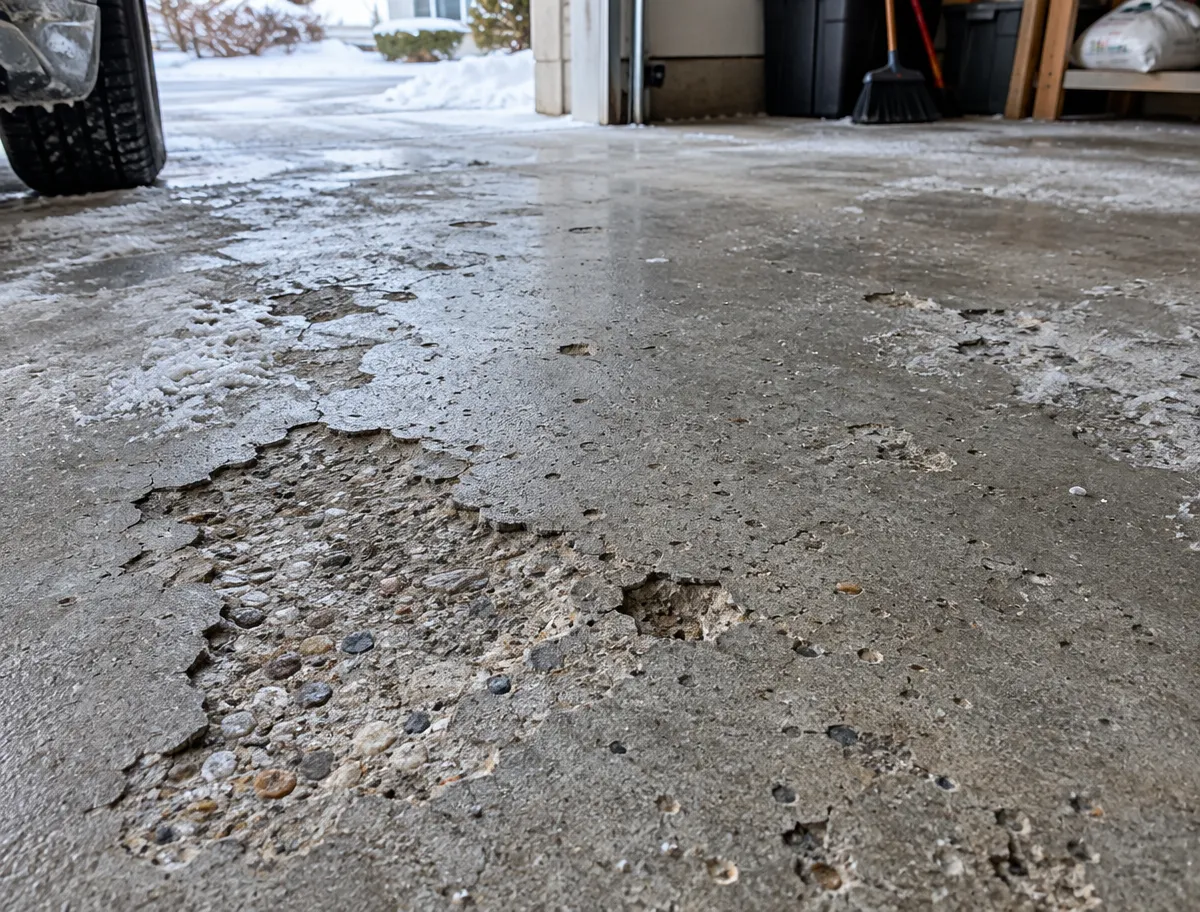
Quick Answer: Garage floor sweating happens when warm, humid air meets a concrete slab that is colder than the air’s dew point, so moisture condenses on the surface. In Pittsburgh it shows up most on muggy spring and summer days after cool nights. A simple plastic-sheet test tells you whether the water is condensation from the air or moisture rising through the slab. The real fixes control the air: ventilation, a dehumidifier, better door habits, and insulation. A coating will not change the dew point, but it makes a damp floor easier to wipe up and can add traction.
Garage floor sweating, sometimes called sweating slab syndrome, occurs when warm, moist air meets a cooler concrete slab and condenses on it. It is a common issue in Western Pennsylvania’s climate, and it leaves a slick, hazardous surface. Specialty Concrete Coatings has worked on garage floors across Greater Pittsburgh and NW Pennsylvania for over 15 years, and this is one of the most common questions homeowners ask once the weather turns warm and humid.
What Should You Know About Garage Floor Sweating First?
- Garage floor sweating occurs when warm, moist air contacts a concrete slab that is colder than the air’s dew point.
- A plastic-sheet test distinguishes condensation from vapor moving up through the slab by checking where moisture collects after 24 hours.
- Ventilation, a dehumidifier, door habits, and insulation are the fixes that address condensation itself.
- A coating does not stop condensation, but it makes the floor easier to clean up and can add slip resistance.
Why Is My Garage Floor Sweating?
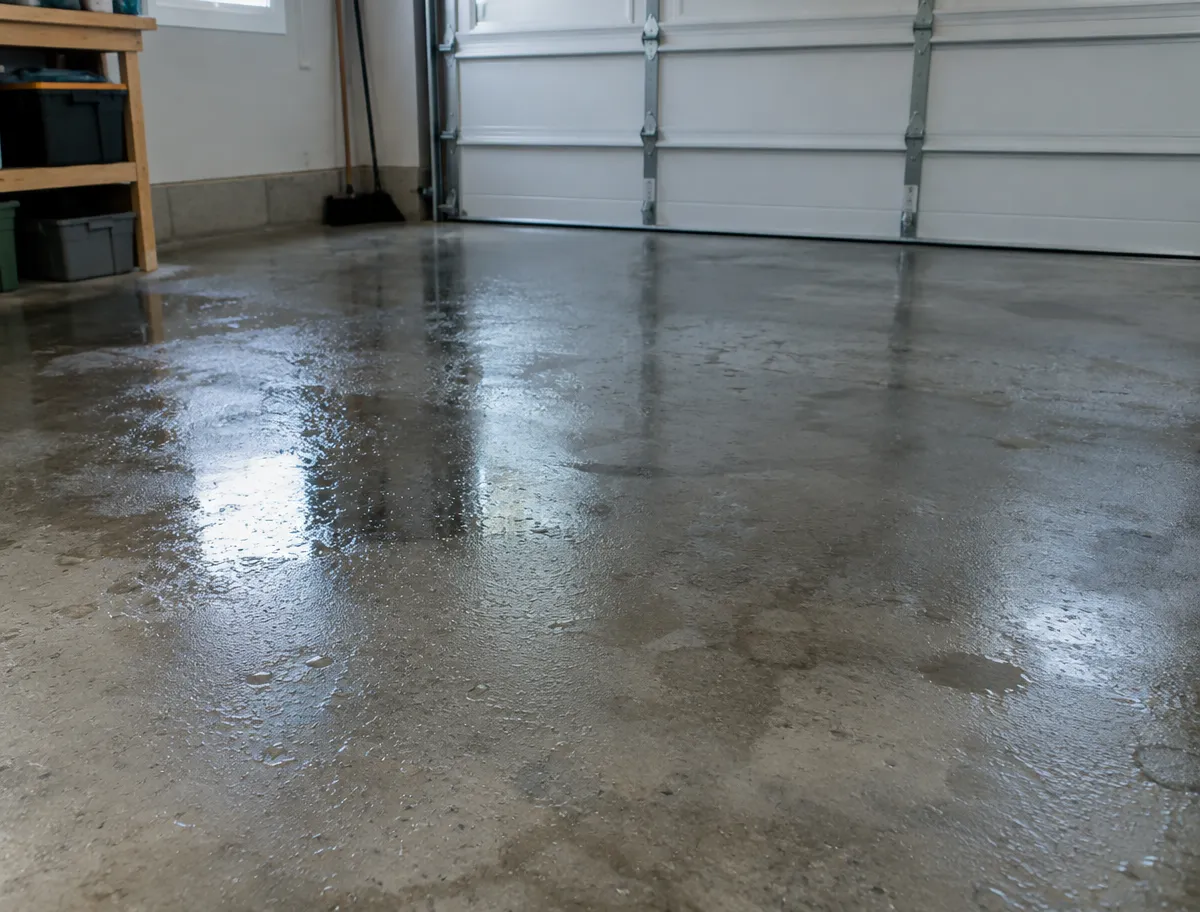
Garage floor sweating is most commonly caused by condensation. The problem develops when warm, moisture-laden air contacts a cooler concrete slab surface. That temperature difference forces water vapor out of the air and onto the floor, creating a slick film. In Western Pennsylvania, the region’s wet springs and humid summers make this a persistent seasonal headache for homeowners.
What Does Dew Point Mean in Plain English?
Dew point is the temperature air has to cool to before it can no longer hold all of its moisture. The National Weather Service explains why dew point is a better gauge of muggy air than relative humidity. When the slab surface is colder than the dew point of the air above it, water comes out of the air and beads on the concrete, the same way a glass of iced tea sweats on a summer porch. The higher the dew point, the more likely your floor is to get wet.
What Exactly Causes Condensation on a Garage Slab?
Concrete stays cooler than the surrounding air for much of the day. When a warm front rolls through after a cool night, the slab cannot warm up fast enough. Moisture in the air hits that cold surface and condenses. The result is a wet floor that looks like a plumbing leak but is actually an atmospheric problem. Moisture rising from below the slab can mimic the same symptoms, which is why accurate diagnosis matters before any coating is applied.
How Can I Test for Condensation vs. Vapor?
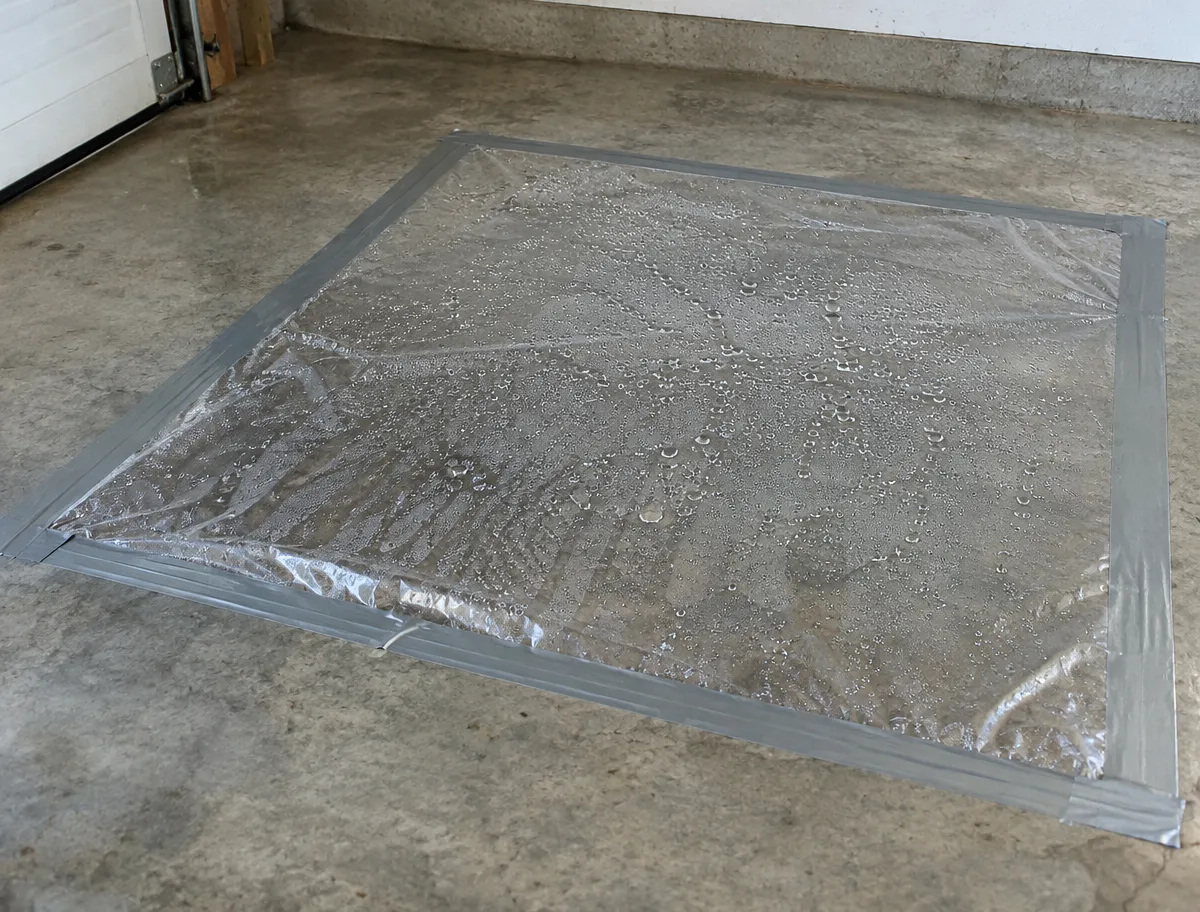
A simple plastic sheet test distinguishes condensation from vapor transmission on a garage floor. Homeowners tape a clear plastic sheet to the slab and inspect it after 24 hours. The location of the moisture reveals the source. Misdiagnosing the problem can lead to failed coatings and wasted money.
What Does the Plastic Sheet Test Reveal?
The test requires only a clear plastic sheet and waterproof tape. Follow these steps for accurate results:
- Cut a clear plastic sheet about 2 feet by 2 feet.
- Tape all four edges tightly to the garage floor, creating an airtight seal.
- Wait 24 hours without disturbing the plastic.
- Inspect both sides of the plastic sheet.
Moisture on the top surface of the plastic points to condensation. This occurs when warm, humid air contacts the cooler concrete slab. Moisture trapped underneath the plastic indicates vapor transmission, meaning ground moisture is migrating upward through the porous concrete. If the result is unclear, repeat the test on both a muggy day and a dry day; condensation comes and goes with the weather, while moisture from below tends to be more constant.
Why Does Identifying the Source Matter?
Correct diagnosis is critical before selecting a solution. Condensation calls for controlling air temperature and humidity. Vapor transmission calls for a slab assessment before any coating goes down, the same question covered in our guide on whether you can epoxy a damp basement floor. Specialty Concrete Coatings assesses these conditions before recommending a system, and the company’s guide on the best basement floor coating for moisture explains why different moisture sources need different solutions. Applying a coating over an incorrectly diagnosed floor can lead to peeling and bubbling.
📞 Not Sure What’s Making Your Floor Wet? Specialty Concrete Coatings can look at your slab, talk through what your plastic-sheet test showed, and explain which options make sense before any coating goes down. Request a free garage floor quote to get started.
What Immediate Steps Can I Take to Stop Sweating?
Homeowners can reduce garage floor sweating quickly by lowering the moisture in the air and keeping humid air away from the cool slab. A wet floor creates slip hazards and fosters musty odors that make the garage unpleasant to use. Left alone, ongoing dampness can rust tools, damage stored items, and encourage mold growth.
How Does Ventilation Reduce Garage Floor Sweating?
Opening the garage door or running fans moves damp air out and dries the floor faster. Ventilation works best when the outdoor air is drier than the air in the garage. On a muggy Pittsburgh afternoon, opening the door wide can actually bring in more moisture, so air the garage out during cooler, drier parts of the day, such as early morning or after a front passes.
Can a Dehumidifier Stop Concrete Sweating?
A dehumidifier pulls moisture directly from the air, which lowers the dew point near the slab. The EPA recommends keeping indoor humidity below 60 percent, ideally between 30 and 50 percent. Run the unit with the garage door closed during humid stretches and empty or drain it regularly. Keep in mind that a dehumidifier treats the air, not the source; University of Minnesota Extension notes that a dehumidifier can reduce humidity symptoms without solving an underlying moisture problem, so pair it with the plastic-sheet test.
Which Door Habits Help Keep the Slab Dry?
- Keep the overhead door closed on hot, humid afternoons when the dew point is high.
- Air the garage out in the morning or evening, when outdoor air is cooler and drier.
- Let a wet or snowy vehicle drip on a mat near the door instead of across the whole floor.
- Squeegee standing water toward the door or drain instead of letting it evaporate into the garage air.
Does Insulation Help With Garage Condensation?
Insulating the garage walls, ceiling, and overhead door keeps the space’s temperature more even and limits the warm, humid air that sneaks in around gaps. Weatherstripping the door bottom and sides helps for the same reason. HUD’s moisture-resistant homes best practice guide covers how insulation, air sealing, and moisture control work together in a house, and the same principles apply to an attached garage. The slab itself is hard to insulate after it is poured, so most of the gain comes from controlling the air around it.
Will a Coating Stop My Garage Floor From Sweating?
No. Condensation is an air problem: if the slab surface is colder than the dew point, moisture will form on top of whatever surface is there, bare concrete or coating. What a professional coating does change is how the floor behaves when it does sweat:
- Easier wipe-up: a non-porous coated surface does not soak up water, so a squeegee or towel clears it quickly.
- Better traction: broadcast vinyl chips add texture that can help footing on a damp floor.
- Concrete protection: the coating shields the slab from road salt, oil, and staining.
- What it doesn’t do: it does not change the dew point or keep condensation from forming.
How Is the Floor Prepared Before Coating?
The process begins with mechanical preparation. Technicians diamond-grind the entire slab to open the concrete’s pores and create a profile the coating can grip. Cracks and spalls are repaired with concrete menders before any coating is applied. Skipping this step leaves weak spots that can cause the coating to fail later.
What Makes Polyurea Different From Epoxy?
Specialty Concrete Coatings’ garage floor coating systems start with a polyurea basecoat that the company rates as stronger than traditional epoxy, bonded to the ground concrete. Next comes a UV-stable polyaspartic clear coat that resists yellowing, abrasion, and chemical damage and locks the system into a single, non-porous surface.
What If Moisture Is Coming Up Through the Slab?
If the plastic-sheet test points to vapor rising from below, that needs to be addressed before coating, because coating over an active moisture source can lead to bubbling and peeling. A contractor should assess the slab and explain whether a moisture-mitigating approach is appropriate or whether drainage and grading fixes come first. Store-bought kits are especially prone to DIY garage floor coating problems like poor adhesion and moisture bubbles. For basements facing similar moisture questions, see these basement floor coating options for Pittsburgh homes.
How Can I Keep a Sweating Garage Floor Safe to Walk On?
Until the air is under control, treat a sweating floor like any wet surface:
- Keep a floor squeegee handy and clear moisture before walking or parking.
- Put absorbent mats at the house entry door and where you step out of the car.
- Wear shoes with good grip in the garage on humid days.
- Keep the garage well lit so wet patches are easy to spot.
- Consider a textured coating finish if you are planning a coating anyway.
When Should I Schedule a Garage Floor Coating?
Timing a garage floor coating in Pittsburgh means matching the coating system to the season. Fall is a popular window, because homeowners who schedule before winter road salt and freeze-thaw cycles protect the slab from the start. For a sweating floor, a drier stretch of weather also makes surface preparation easier.
Can a Coating Be Installed in a Pittsburgh Winter?
Polyurea and polyaspartic systems are formulated for cold-weather concrete coating installation, so winter projects are possible in many cases. Specialty Concrete Coatings confirms the right timing for each floor based on slab conditions.
Why Does Epoxy Have a Narrower Installation Window?
Standard epoxy generally needs temperatures above roughly 55°F to cure properly. That limits installation to late spring through early fall in Western Pennsylvania. Specialty Concrete Coatings helps homeowners choose between polyurea and epoxy based on the installation timeline. For a deeper comparison of seasonal curing windows, see the guide on the best time to coat a garage floor in Pittsburgh.
Frequently Asked Questions
What causes a garage floor to sweat?
Warm, moist air contacts a concrete slab that is colder than the air’s dew point, so water vapor condenses on the surface. This creates a slick film that is common during Western Pennsylvania’s wet springs and humid summers.
How do I tell if my garage floor is sweating or has moisture coming up from below?
Tape a clear plastic sheet tightly to the concrete for 24 hours. Moisture on top of the plastic indicates condensation from the air; moisture underneath indicates vapor moving up through the slab.
Will an epoxy or polyurea coating stop garage floor sweating?
No. A coating does not change the dew point, so condensation can still form on a coated floor. A coating does make the floor easier to wipe dry and can add traction, while ventilation, a dehumidifier, and insulation address the condensation itself.
What humidity level should I keep my garage at?
The EPA recommends keeping indoor humidity below 60 percent, ideally between 30 and 50 percent. A dehumidifier run with the garage door closed is the most direct way to get there during humid weather.
Is a sweating garage floor dangerous?
It can be. A wet slab is a slip hazard, and ongoing dampness can lead to musty odors, mold, and rusted tools. Squeegee the floor, use absorbent mats, and consider a textured coated surface for better footing.
TL;DR — Garage Floor Sweating at a Glance
- Garage floor sweating is condensation that forms when the slab is colder than the air’s dew point, most often on muggy Pittsburgh spring and summer days.
- A 24-hour plastic-sheet test shows the source: moisture on top means condensation, moisture underneath means vapor through the slab.
- Ventilate when outdoor air is drier, run a dehumidifier, keep the door closed on humid afternoons, and insulate the garage.
- A coating does not stop condensation, but it makes wipe-up easier and can add traction.
- Next step: request a free quote from Specialty Concrete Coatings to have your garage floor assessed.
Related Resources
- Garage Floor Coatings
- Pittsburgh, PA Concrete Coating Company
- Can You Epoxy a Damp Basement Floor?
- Best Basement Floor Coating for Moisture
- Epoxy Garage Floor Peeling: Causes and Fixes
- Polyaspartic vs. Epoxy Garage Floors
Get a Free Garage Floor Coating Quote
A sweating garage floor is a weather problem first, and ventilation, dehumidification, and insulation are what keep condensation in check. A professionally installed coating then makes the floor easier to keep dry, safer underfoot, and better protected from Pittsburgh winters. Contact Specialty Concrete Coatings today for a free, no-obligation quote.
About Specialty Concrete Coatings: Specialty Concrete Coatings is a concrete floor coating contractor based in Sandy Lake, PA, serving Greater Pittsburgh and NW Pennsylvania with over 15 years of experience. The team installs polyurea and polyaspartic coating systems for garages, basements, patios, pool decks, and commercial spaces. Call (724) 670-3655 or request a free quote online.