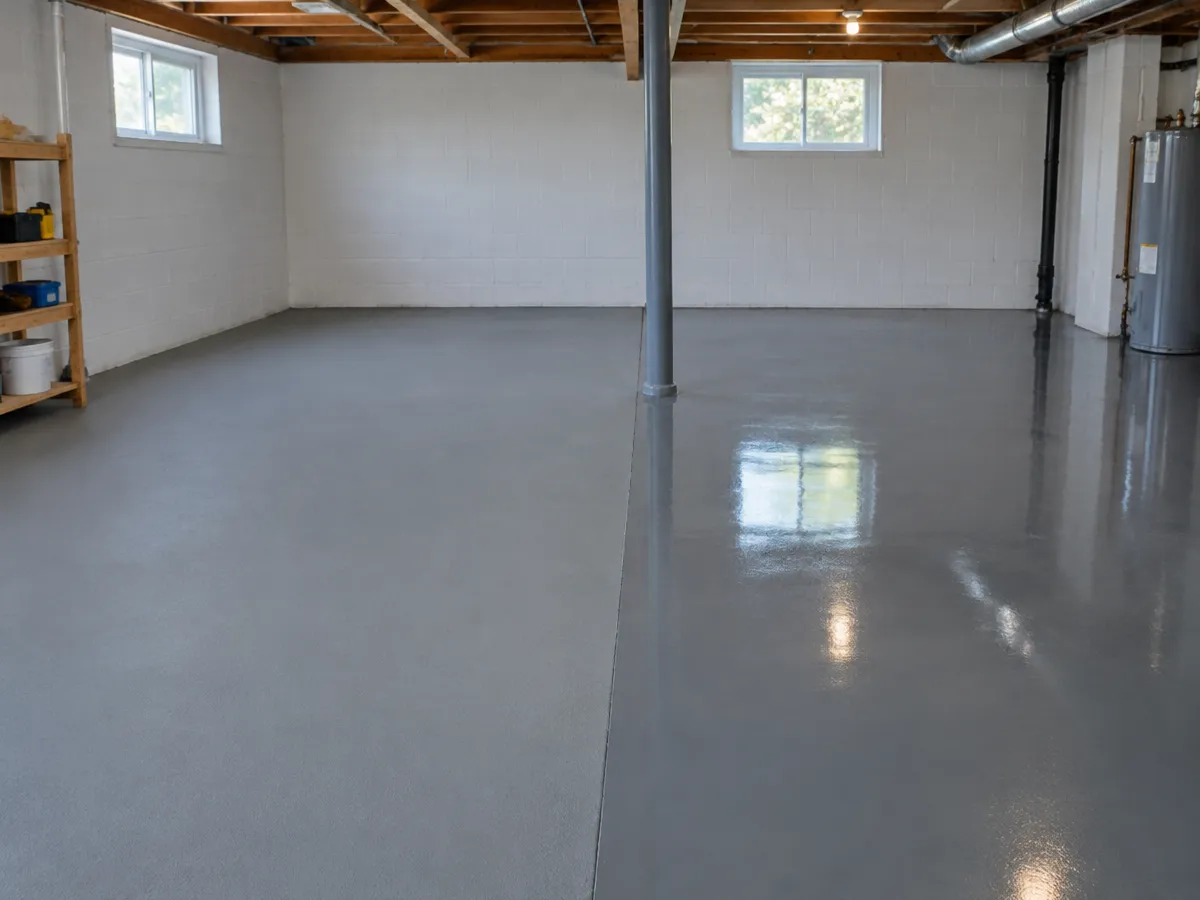
Quick Answer: For most homeowners, the best garage gym flooring is a coated concrete slab with rubber added only where you lift. A polyurea-polyaspartic coating seals the whole floor against sweat, road salt, oil, and concrete dust, cleans up easily, and can still handle a parked car. Rubber mats or a lifting platform in the strength zone absorb dropped weights and protect both the coating and the slab. Full-coverage rubber can trap moisture and salt underneath, and interlocking tiles can collect grime in their seams, so many garage gyms use this hybrid setup instead.
Turning a garage into a home gym raises a flooring question that a spare bedroom never does: the space gets cold in winter, it may still hold a car, and road salt and snowmelt come in on the tires. This guide compares a coated slab, rubber mats and rolls, and interlocking tiles for garages in Greater Pittsburgh and Northwest Pennsylvania, then shows how to lay out a floor that works for both training and parking.
Why Does Garage Gym Flooring Matter?
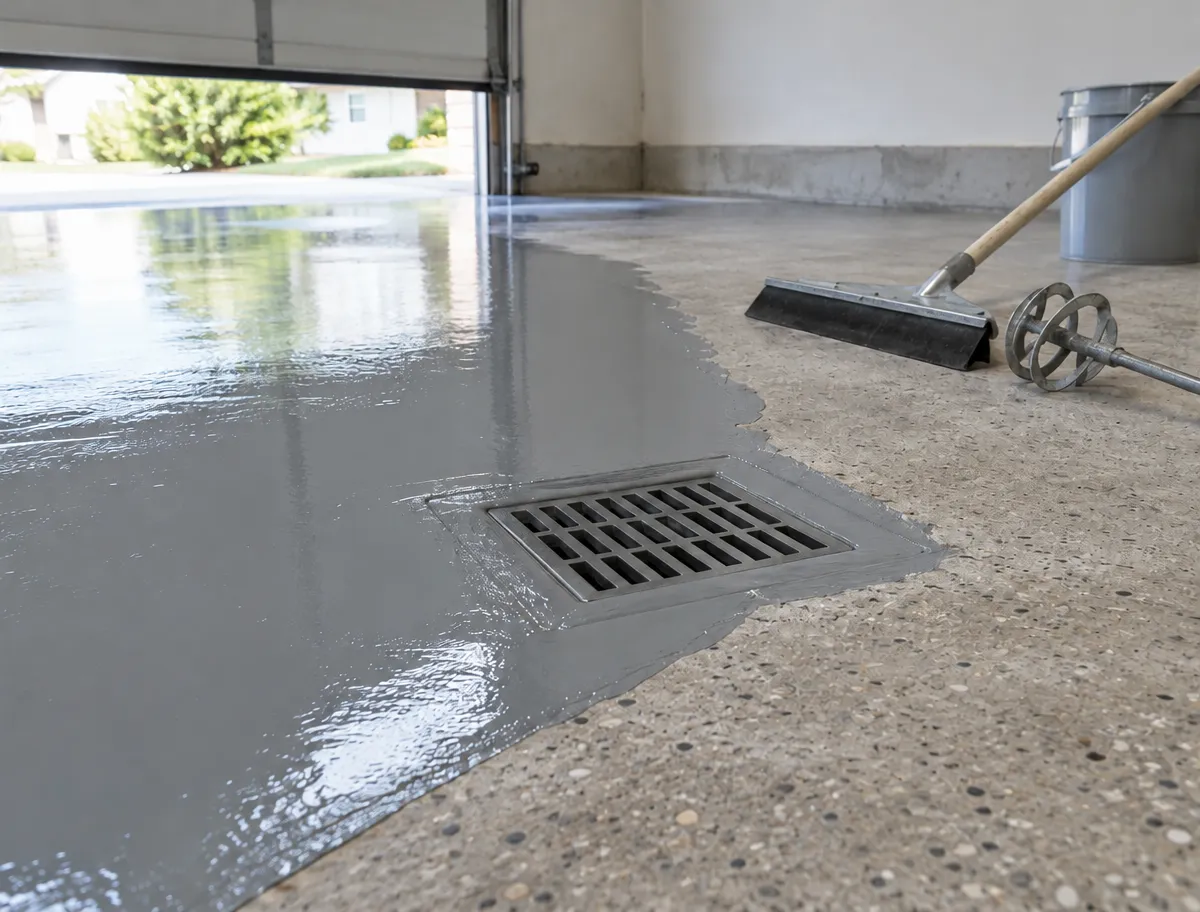
Garage gym flooring determines whether a workout space stays safe, clean, and functional or turns into a dusty, high-maintenance area. Raw concrete can chip, shed fine white dust, and soak up water, sweat, and automotive fluids, which makes a training area harder to keep clean.
The right surface protects more than the slab beneath it. Flooring choice affects comfort, traction, noise, and long-term durability. A poor choice can lead to stained or worn concrete, slippery spots, and constant cleanup, while a well-planned floor keeps maintenance low.
Specialty Concrete Coatings turns tired, dusty concrete into durable, attractive surfaces. The company has served Pittsburgh and Western PA for over 15 years, converting dull garage floors into glossy, easy-to-clean finishes. Its concrete floor coatings for home and commercial gyms are built around the same idea: seal the slab first, then add cushioning where it is needed.
What Happens If Raw Concrete Is Left Uncoated in a Gym?
Uncoated concrete absorbs spilled water, sweat, and automotive fluids. Over time the slab can stain, and the surface can wear and dust. That fine white dust settles on equipment, mats, and anything stored in the garage, and it gets tracked into the house.
How Does Flooring Affect Workout Safety and Performance?
Slippery or uneven surfaces raise the risk of a slip during lifts and dynamic movements. Bare concrete also offers no cushioning, so dropped weights are loud and hard on both the equipment and the slab. A coated floor gives stable, easy-to-clean footing across the room, and rubber in the lifting area absorbs impact and dampens noise. For traction, OSHA’s letter of interpretation on slip resistance for walking-working surfaces explains that there is no single required friction number, so it makes sense to ask your installer about textured or chip-broadcast finishes for areas that get wet or sweaty.
What Does a Garage Gym Floor Need?
Five criteria separate a durable garage gym surface from one that struggles under daily use. Garage gym flooring must balance impact absorption with toughness, while home gym flooring in a garage also has to deal with cold, cars, and road salt:
- Impact protection: Something has to absorb dropped dumbbells, kettlebells, and barbells so the slab and the floor finish are not damaged.
- Traction when wet or sweaty: The surface should stay grippy when sweat, water, or melted snow is on it.
- Easy cleaning: Chalk, sweat, and tracked-in grime should wipe or mop up quickly.
- Cold-weather performance: Unheated Pennsylvania garages get cold in winter, and the floor has to tolerate it.
- Cars and road salt: If a vehicle still parks in the garage, the floor must handle tire traffic, salt brine, and drips.
How Does Each Flooring Option Handle Impact and Weight Loads?
Polyurea and epoxy coatings bond directly to the slab, creating a seamless surface that seals the concrete and stops dusting. That hard surface spreads weight across the slab without compressing, so racks and benches do not sink into it. Rubber flooring absorbs shock by compressing, which protects the slab from dropped weights, but it can wear or dent under static loads such as power racks and heavy storage. New rubber also tends to have a noticeable odor at first, and rolls are sometimes glued down; EPA’s guide to volatile organic compounds and indoor air quality recommends increasing ventilation when using products such as adhesives that give off VOCs, so open the garage door while new flooring airs out. Impact absorption in sport surfaces is measured with lab methods such as ASTM F355 for impact attenuation of playing surfaces, which is why rubber, not a hard coating, belongs under the heaviest drops.
Which Coating Installs Reliably Across All Seasons?
The polyurea-polyaspartic system Specialty Concrete Coatings uses can cure in temperatures as low as -20°F, which makes year-round installation possible, even during Pittsburgh winters. Many epoxy systems need warmer slab temperatures, often around 50°F or higher, which narrows their installation window. Our guide to concrete coating installation in cold weather explains what to expect for a winter project.
| Feature | Polyurea Polyaspartic | Epoxy | Rubber Flooring |
|---|---|---|---|
| Surface bond | Bonds to and seals the prepared slab | Bonds to the slab surface | Loose-laid or adhered on top of the slab |
| Dust prevention | Stops concrete dusting | Stops concrete dusting | Covers dust but does not seal the slab |
| Impact resistance | Hard, rigid surface | Hard, rigid surface | Shock-absorbing |
| Seasonal installation | Year-round (rated down to -20°F) | Generally warmer months | Year-round |
| Design flexibility | Multiple colors and chip blends | Mostly solid colors | Tiles and rolls in varied patterns |
Details on the chemical differences between these coatings appear in the company’s epoxy vs polyaspartic comparison guide. Specialty Concrete Coatings offers a variety of finishes, colors, and textures, giving homeowners more visual control than rubber products typically offer.
🏋️ Planning a Garage Gym? Specialty Concrete Coatings installs garage floor coatings across Greater Pittsburgh and NW Pennsylvania. Request a free garage floor coating quote and get a floor that handles both workouts and parking.
How Does a Concrete Coating Compare to Rubber?
A concrete coating bonds directly to the slab, creating a seamless surface. Rubber flooring sits on top of the concrete as a removable layer that can shift under heavy loads or lateral movement.
The fundamental difference is adhesion versus placement. Specialty Concrete Coatings applies a polyurea basecoat designed for strong adhesion to properly prepared concrete. A UV-stable polyaspartic clear coat then seals the system, resisting yellowing, abrasion, and chemical spills. The installation process includes mechanical preparation by diamond grinding, crack repair, and a high-adhesion basecoat, so every layer is anchored to the slab below. Rubber tiles and rolls, by contrast, are cut to fit and laid over the concrete.
What Are the Pros and Cons of a Coated Concrete Floor?
- Pros: Seamless and easy to clean, seals out sweat, salt, and oil, stops concrete dusting, handles vehicle traffic, and allows custom colors and chip blends.
- Cons: Hard underfoot, offers no cushioning for dropped weights, and needs professional surface preparation for the best bond.
What Are the Pros and Cons of Rubber Mats and Rolls?
- Pros: Absorbs impact from dropped weights, reduces noise, adds cushioning for floor work, and can be moved or replaced.
- Cons: Can trap moisture, road salt, and grime underneath; new rubber often has a strong odor; seams can collect debris; and mats can shift or dent under racks and tires.
Which Surface Handles Heavy Gym Equipment Better?
A coated concrete floor supports stationary racks, benches, and rolling equipment without denting, and equipment can be repositioned without tearing the surface. Rubber mats compress under point loads and can keep the impression of a squat rack or bench, and steel plates dragged across rubber can gouge it. For dropped weights, though, rubber is the better choice, which is why many owners use both.
How Does Moisture Resistance Differ Between the Two Options?
A coated floor forms a nonporous surface that helps keep spilled water, sweat, and salt brine out of the concrete. Rubber mats can trap moisture and road salt beneath them, which may lead to musty odors and stains on the slab underneath. In a Pittsburgh garage where snowmelt drips off a car all winter, that difference shows up quickly. Our guide to protecting a garage floor from road salt covers why salt brine is so hard on bare concrete.
| Criteria | Coated Concrete | Rubber Flooring |
|---|---|---|
| Adhesion | Bonds to the slab | Loose-laid, interlocked, or glued on top of the concrete |
| Equipment loads | Resists denting and gouging | Compresses under weight; tears possible |
| Moisture and salt | Nonporous surface seal | Can trap moisture and salt underneath |
| Installation speed | Often a one-day install; walk-on in about 12 hours, drive-on in about 48 hours | Tiles install quickly; rolls are heavy and may need adhesive |
| Maintenance | Single seamless surface; no seams to trap debris | Seams can collect dirt and liquids |
The company’s one-day installation timeline supports quick gym builds. Homeowners can typically walk on the floor within about 12 hours, move heavier items within about 24 hours, and park vehicles within about 48 hours; actual cure times vary with temperature, humidity, and the products used. Learn more about the 1-day garage floor coating process. The coated floor is a single, joint-free surface that simplifies cleanup after chalky deadlifts and sweaty conditioning sessions.
Are Interlocking Tiles a Good Option for a Garage Gym?
Interlocking tiles, whether rubber, foam, or rigid plastic, snap together over the bare slab. They are a popular DIY choice because they need no curing time and can be taken up later.
- Pros: Fast DIY installation, removable, available in many colors and patterns, and rubber versions add some cushioning.
- Cons: Seams can separate over time and collect debris, moisture, and salt; the slab underneath stays uncoated; foam tiles dent under racks; and some tiles can shift or curl under hot tires.
A continuous coating leaves no gaps for debris or moisture to collect. If you like the look of tiles but want an easier-to-clean floor, a coated slab with rubber only in the training zone usually gives you the best of both.
How Do Coating, Rubber, and Tiles Compare Side by Side?
Here is a quick comparison of the three most common garage gym flooring choices:
| Factor | Coated Concrete | Rubber Mats/Rolls | Interlocking Tiles |
|---|---|---|---|
| Impact protection | Low on its own; add rubber for lifting | High | Moderate to high (rubber); low (rigid plastic) |
| Relative cost | Higher upfront, professional install | Moderate; varies with thickness | Low to moderate; DIY install |
| Cleaning | Easiest; mop or squeegee | Harder; grime and salt collect underneath | Harder; seams trap debris |
| Winter performance | Seals out snowmelt and salt brine | Can trap salt and moisture against the slab | Can trap salt and moisture in seams |
| Car use | Designed for tire traffic | Not ideal under parked cars | Some rated for vehicles; may shift |
Pricing note: The cost comparisons in this article are for general guidance only. Actual costs vary based on garage size, slab condition, repairs needed, materials, and the products chosen, and pricing can change at any time. Contact Specialty Concrete Coatings for a current, accurate quote.
For a closer look at what drives coating prices, see our breakdown of how much a garage floor coating costs.
Can You Combine Coating and Rubber Zones?
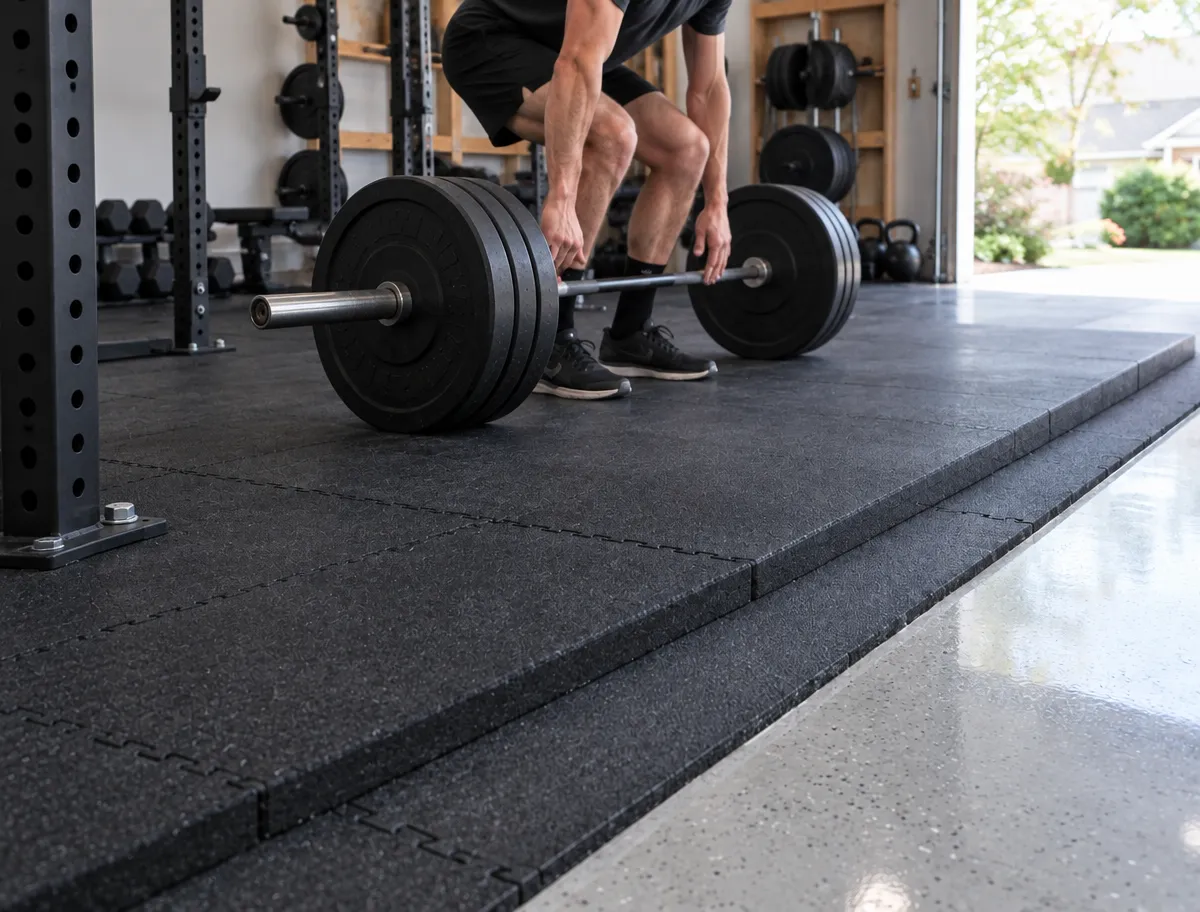
Combining a polyurea-polyaspartic coating with rubber matting creates a practical, high-performance garage gym floor. Specialty Concrete Coatings installs a seamless, chemical-resistant coating across the entire slab, and rubber mats then define specific workout zones without giving up the protection underneath.
How Does a Hybrid Floor Protect the Concrete Underneath?
A full-slab coating helps keep moisture, road salt, and oil out of the concrete. Rubber tiles or rolls placed on top add impact absorption for deadlifts and dropped kettlebells. The coated surface stays easy to clean if mats are moved or reconfigured later.
What Design Options Exist for a Two-Zone Floor?
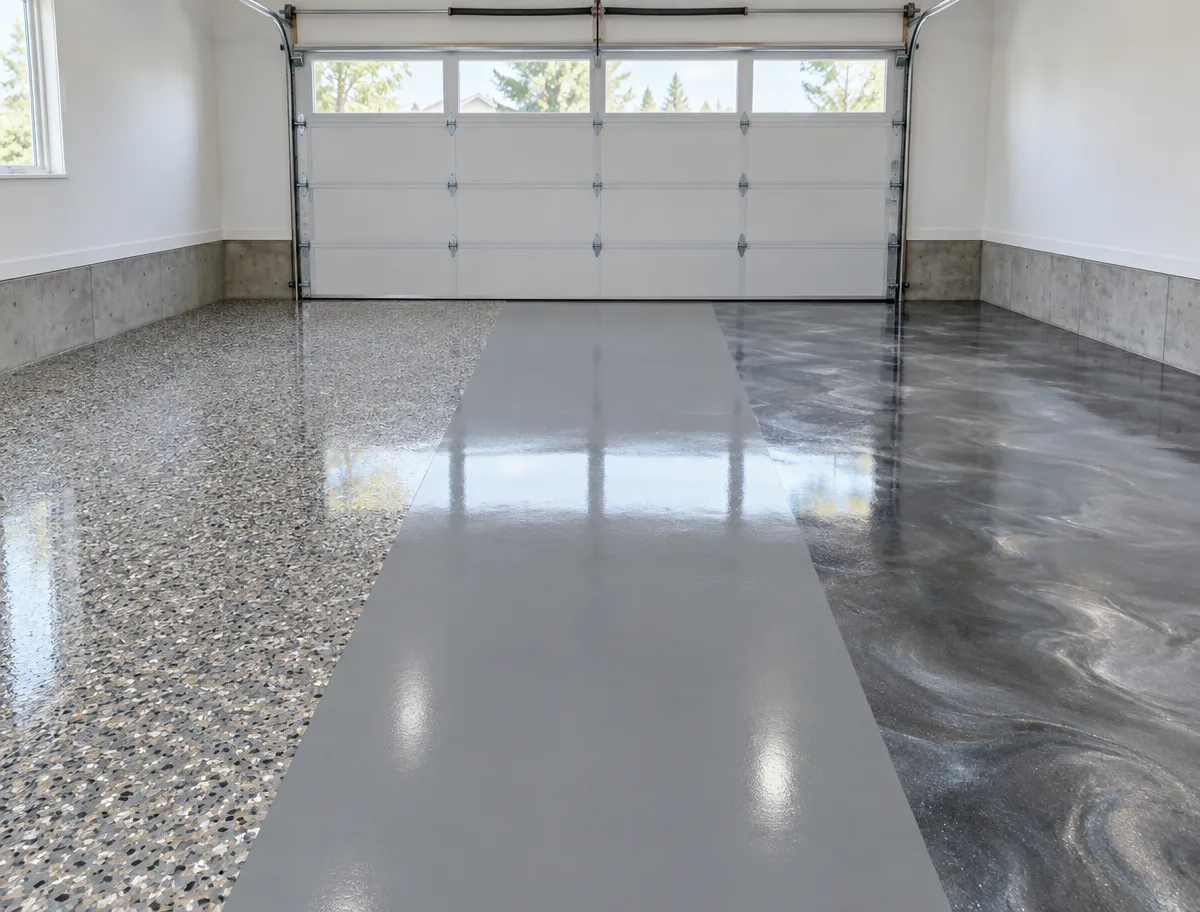
Specialty Concrete Coatings hand-broadcasts vinyl color chips into the basecoat for a custom look and added texture, and a final clear coat seals the system. Customers choose from a palette of chip color blends to complement the space, and rubber flooring can then add contrasting texture and color in dedicated training areas.
| Zone | Surface | Primary Benefit |
|---|---|---|
| Full slab | Polyurea-polyaspartic coating | Moisture and salt resistance, chemical resistance, seamless cleanup |
| Workout area | Rubber mats or rolls | Impact absorption, traction, equipment protection |
The company provides free estimates and manages the project from the first consultation through installation and cleanup. A hybrid layout balances long-term slab protection with the comfort rubber offers, so you do not have to choose only one material for a multi-use garage.
What Is the Best Setup for Your Garage Gym?
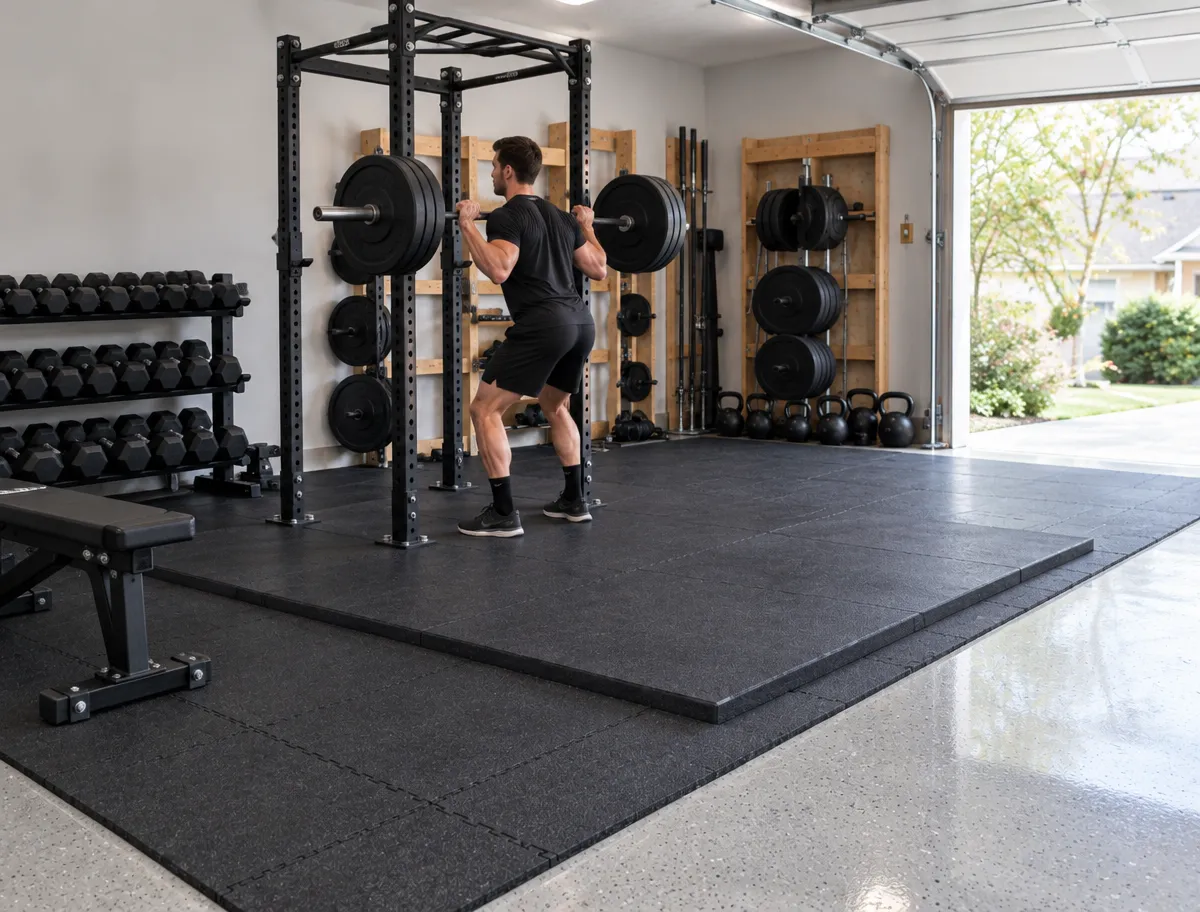
For most homeowners, a polyurea and polyaspartic coating across the whole slab, plus rubber where you lift, is the most practical garage gym flooring setup. The coating gives you a low-maintenance base that handles sweat, salt, and tire traffic, and the rubber handles the impact.
Homeowners balancing heavy equipment, vehicle parking, and daily training need a surface that performs across all three. The company’s multi-step process bonds a high-adhesion basecoat to mechanically prepared concrete, then seals it with a UV-stable clear layer that is built to handle rolling tool chests and tire traffic. Here are three layout ideas:
- Lifting platform: Place a rubber-topped platform or thick stall mats where you deadlift, squat, and drop weights. Keep it on the side of the garage away from the car door.
- Cardio corner: Treadmills, bikes, and rowers can sit directly on the coated floor, or on a thin equipment mat to reduce vibration and noise.
- Shared car space: Leave the parking side as bare coated floor so snowmelt and salt brine can be squeegeed out, and keep loose mats off the tire path.
How Does a Coated Floor Compare to Rubber Mats for a Garage Gym?
Rubber mats can shift under lateral movement and trap moisture against the slab. A seamless polyurea coating bonds to the concrete and has no edges to trip on, and it makes cleanup after chalk, sweat, or automotive drips simple.
Is a Concrete Coating Better Than Interlocking Tiles for Home Gym Flooring?
For a garage that also holds a car, usually yes. Interlocking tiles can separate at the seams over time, while a continuous coating leaves no gaps for debris or moisture to collect. Specialty Concrete Coatings serves Greater Pittsburgh and Northwest Pennsylvania from its base in Sandy Lake, PA. Financing options (subject to credit approval; terms vary) and a warranty program are available for homeowners planning a long-term upgrade.
Frequently Asked Questions
Is a coating or rubber better for garage gym flooring?
For most garage gyms, a coated concrete floor with rubber in the lifting zone works best. The coating seals the slab against moisture, salt, and dust and handles vehicle traffic, while rubber absorbs dropped weights. Full-coverage rubber can trap moisture and salt underneath.
Does a garage floor coating work in cold weather?
The polyurea-polyaspartic system Specialty Concrete Coatings uses can cure in temperatures as low as -20°F, which helps make year-round installation possible. Many epoxy systems need warmer slab temperatures, which limits when they can be installed.
How long does installation and curing take for the coating?
Many garage floors are completed in one day. Homeowners can typically walk on the floor in about 12 hours and drive on it in about 48 hours, although actual cure times vary with temperature, humidity, and the products used.
Do I still need rubber mats over a coated garage gym floor?
Yes, if you drop heavy weights. A coating is hard and does not cushion impact, so a rubber platform or stall mats in the lifting area protect both the floor and your equipment. Cardio machines and benches can usually sit directly on the coating.
Can I park a car on my garage gym floor?
Yes. A coated floor is designed for tire traffic, road salt, and drips, so a car can share the space. Keep loose rubber mats out of the tire path, since rubber and some tiles can shift or trap salt and moisture under a parked car.
TL;DR — Garage Gym Flooring at a Glance
- The most practical garage gym floor for most homes is a coated slab with rubber only in the lifting zone.
- Coated concrete is seamless, easy to clean, seals out salt and moisture, and handles parked cars.
- Rubber mats absorb impact but can trap moisture and salt underneath and dent under heavy racks.
- Interlocking tiles install fast but their seams can collect debris, moisture, and salt.
- Polyurea-polyaspartic coatings can be installed year-round, even in cold Pittsburgh winters.
- Next step: Request a free garage floor coating quote from Specialty Concrete Coatings.
Related Resources
- Garage Floor Coatings
- Pittsburgh, PA Concrete Coating Company
- Does Epoxy Crack in Cold Weather?
- Polyurea Concrete Coating Explained
- Best Garage Floor Coating Options
- Winter Salt Damage on Garage Floors
Get a Free Garage Floor Coating Quote
For most garage gym owners, the decision comes down to how the space will be used every day. A seamless polyurea-polyaspartic coating gives the whole slab moisture, salt, and chemical resistance and a surface that holds up to equipment and vehicles. Homeowners who want impact absorption for heavy lifts can add rubber mats over the coated slab without giving up the protection underneath. This hybrid approach creates a durable, low-maintenance floor that supports both parking and training. Contact Specialty Concrete Coatings today for a free, no-obligation quote.
About Specialty Concrete Coatings: Specialty Concrete Coatings is a concrete coating contractor serving Greater Pittsburgh and Northwest Pennsylvania, specializing in garage, basement, patio, and commercial floor coatings. The team installs polyurea-polyaspartic systems built for Western Pennsylvania winters and provides free estimates for every project. Contact us today for a free, no-obligation quote.