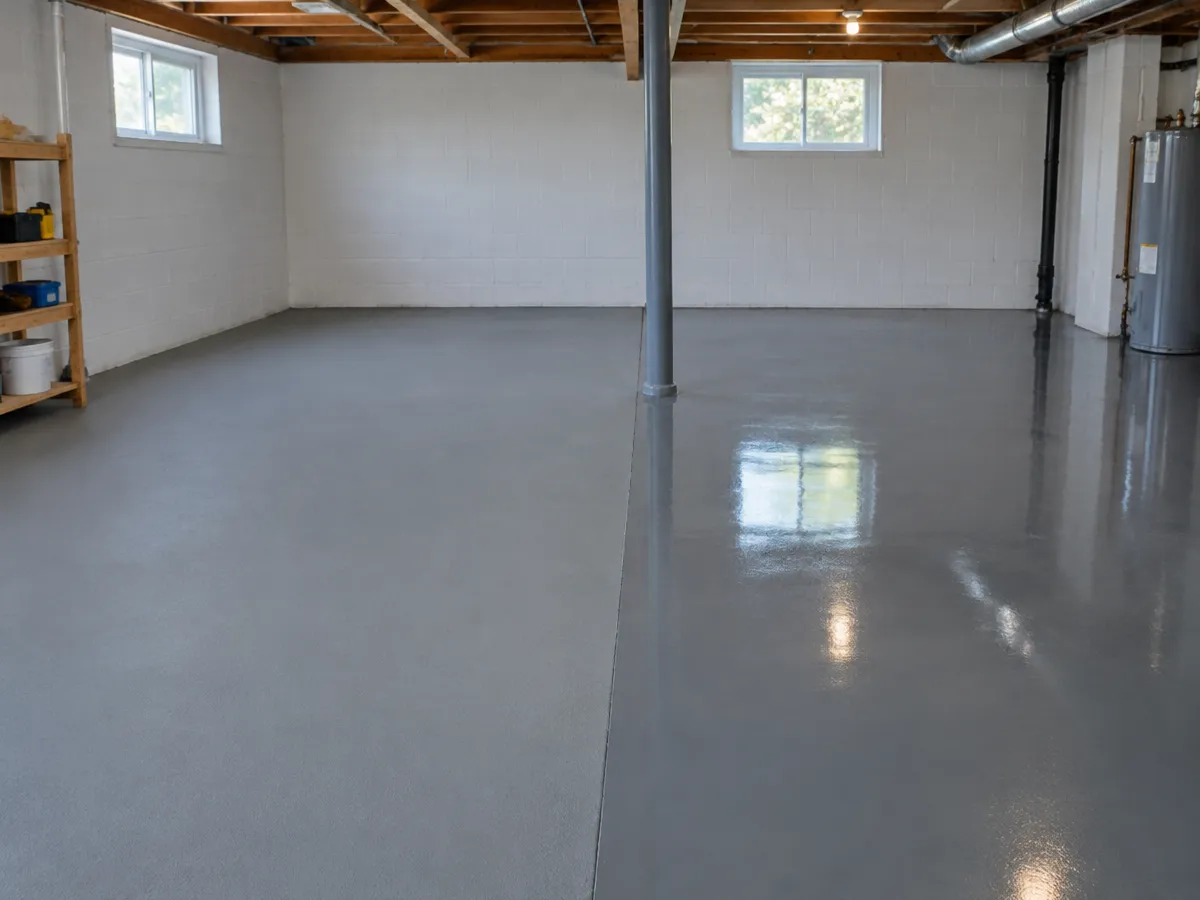
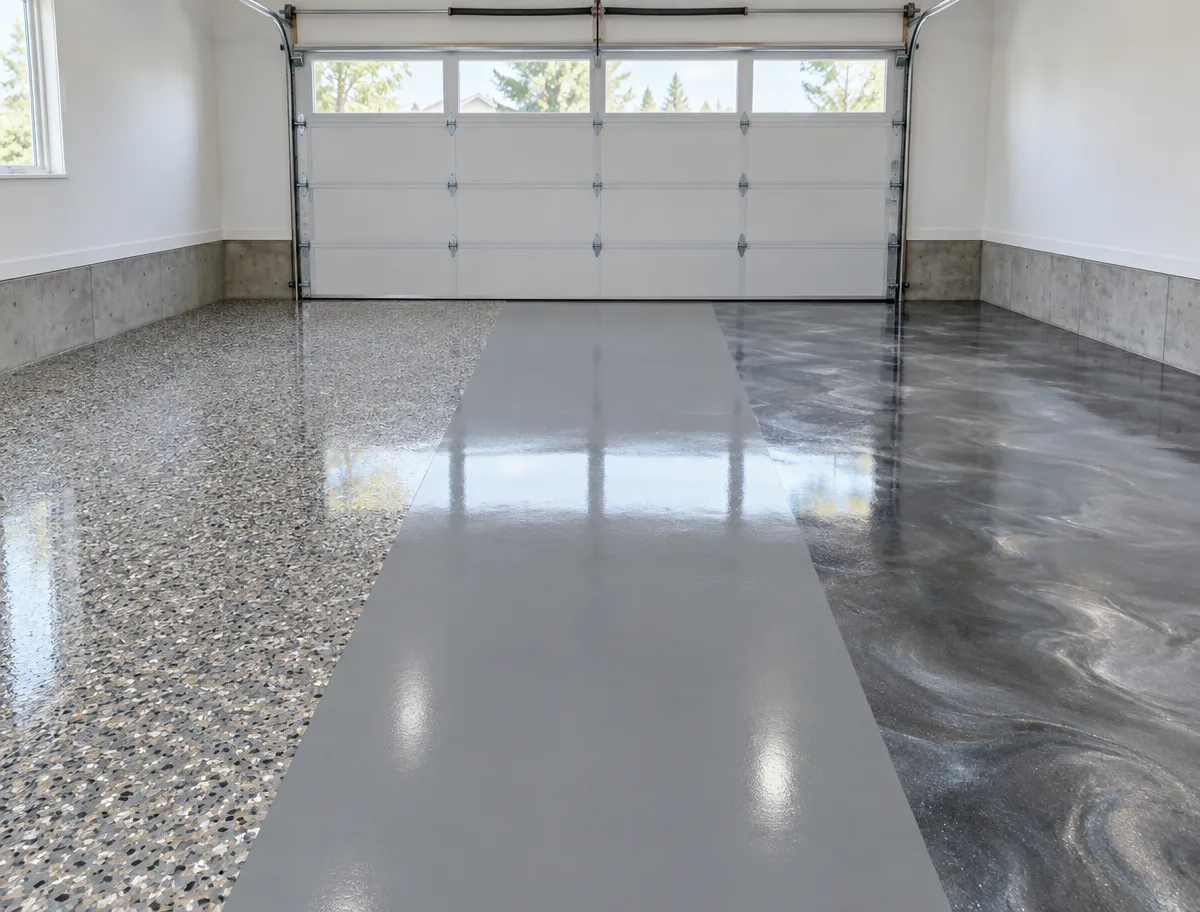
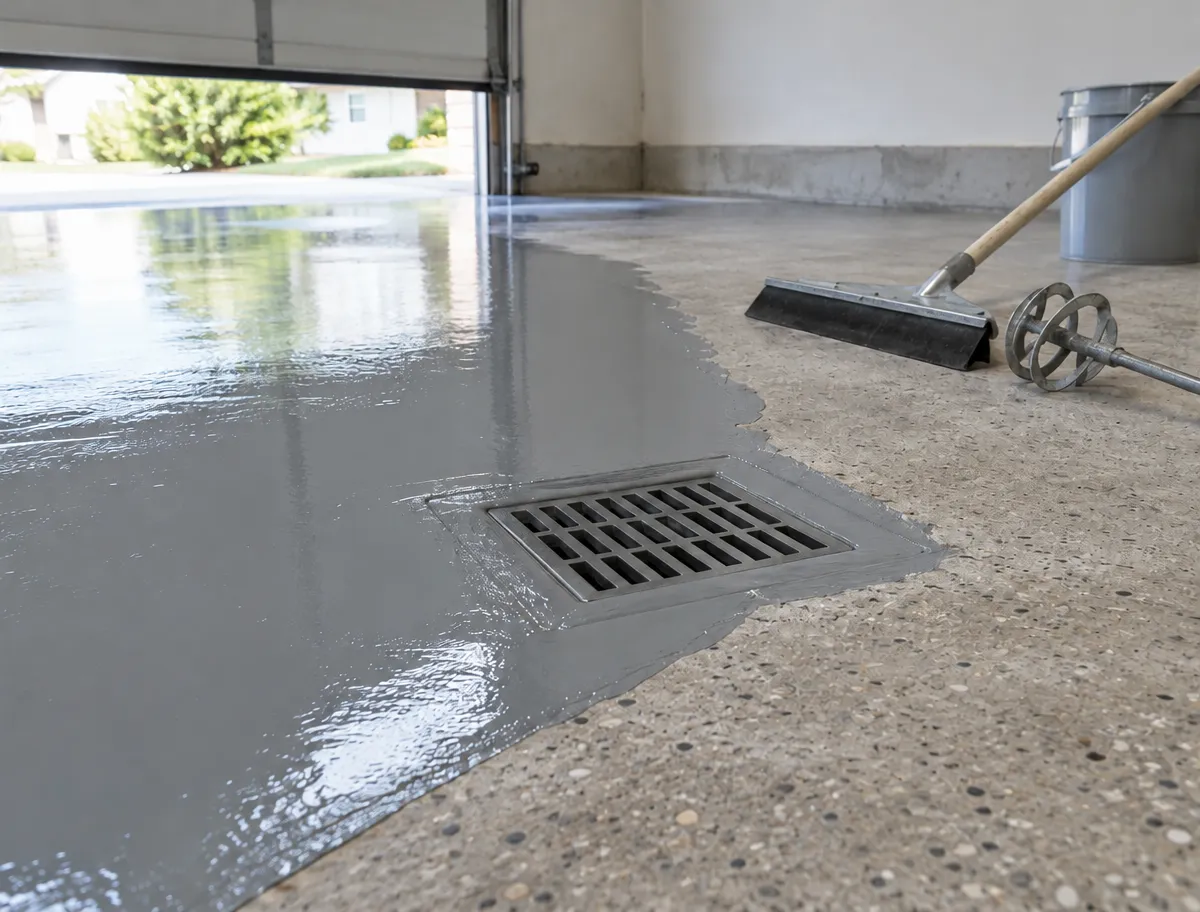
Quick Answer: Concrete efflorescence is the white, powdery salt deposit that forms when moisture moves through a basement slab, dissolves natural salts in the concrete, and leaves them behind as it evaporates at the surface. It is usually not harmful by itself, but it is a sign that water is moving through the floor. You can remove it with a stiff dry brush and a vacuum, yet it will keep coming back until the moisture source is addressed. Coating over active efflorescence often leads to bubbling and peeling, so the moisture should be evaluated before any floor coating goes down.
Efflorescence on basement floors comes from soluble salts carried to the surface by moisture migrating through the concrete slab. Removal means cleaning the white deposits, but lasting prevention depends on controlling the underlying moisture source. Western Pennsylvania’s wet climate makes a moisture assessment an important step before any coating application.
What Is Concrete Efflorescence on Basement Floors?
Concrete efflorescence is a white, chalky deposit that forms on the surface of concrete when moisture dissolves salts and carries them to the surface. The salts remain behind as the water evaporates. Homeowners in Greater Pittsburgh and Western Pennsylvania encounter this condition frequently on basement floors, where groundwater and humidity create good conditions for salt migration. University of Minnesota Extension’s guide to moisture in basements and its causes lists efflorescence among the common signs of a damp basement.
The deposit appears as a white or grayish powder with a crystalline texture. It typically has no strong odor, which helps separate efflorescence from mold or mildew growth. This matters because homeowners often mistake one for the other, yet the treatment approaches differ significantly.
How Does Efflorescence Form on a Basement Floor?
Water moves through concrete or masonry, dissolving natural salts along the way. As the water evaporates at the surface, it leaves the salts behind. The process repeats with every moisture cycle.
- Groundwater or interior humidity enters the concrete slab.
- Water dissolves soluble salts present within the concrete.
- Moisture migrates toward the drier surface.
- Evaporation deposits the salts as a visible white residue.
Is Efflorescence Just a Cosmetic Problem?
Although efflorescence may look like a minor cosmetic issue, it can point to a larger moisture problem. If left unaddressed, efflorescence tends to return. The recurring cycle signals ongoing water movement through the slab, which threatens any future floor coating or finish. Specialty Concrete Coatings LLC evaluates moisture conditions before recommending a basement floor coating system, because a coating applied over active efflorescence is likely to fail early.
Why Does My Basement Floor Have White Salt Deposits?
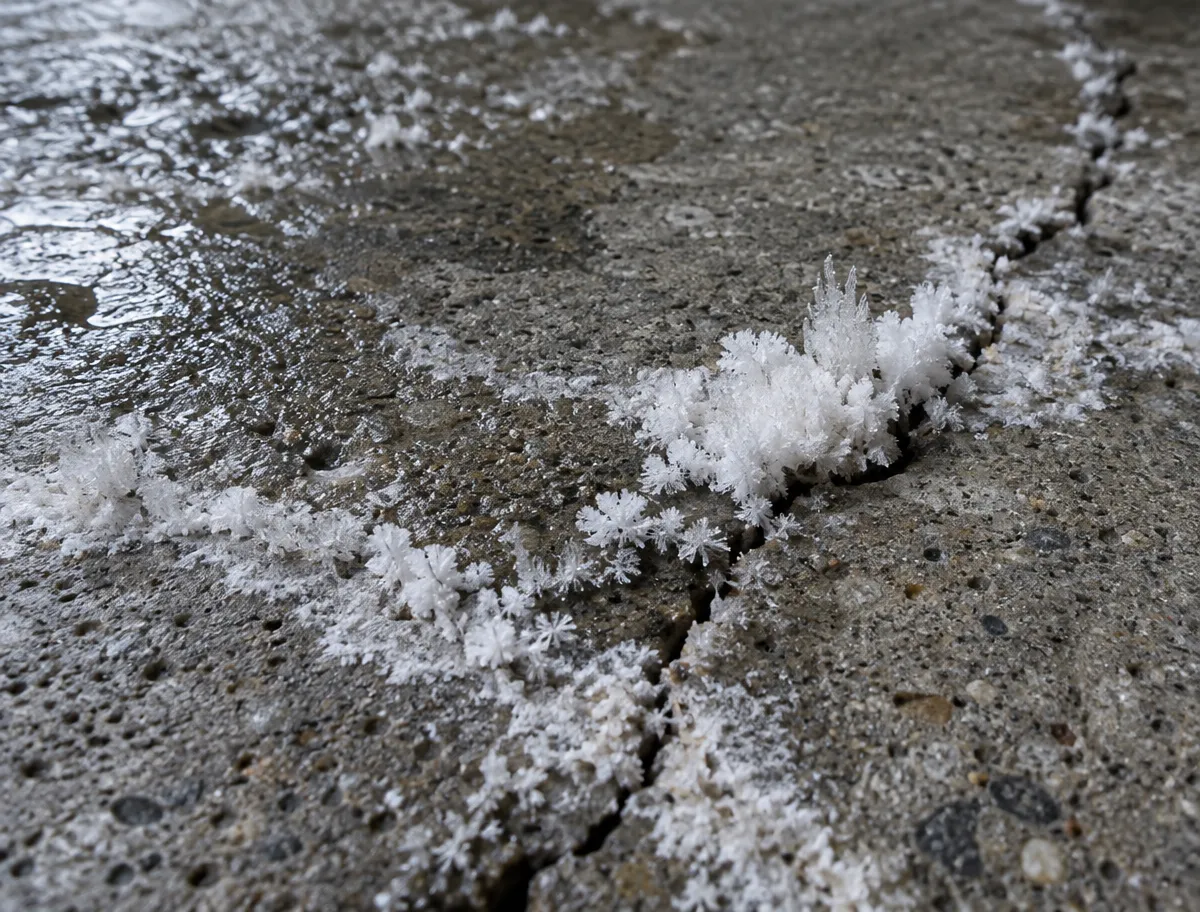
White salt deposits on a basement floor are usually concrete efflorescence, a mineral residue left behind when water evaporates from the slab surface. The white powder signals moisture moving through the concrete, not a surface stain that wipes away permanently. Homeowners who ignore the deposits can expect them to recur and risk eventual coating failure.
Efflorescence cannot form without soluble salts. These salts are naturally present in most cement-based materials, including concrete, mortar, and grout. Water dissolves the salts as it travels through the slab. When that water reaches the surface and evaporates, the salts crystallize into the white or grayish powder homeowners see.
What Causes Moisture to Move Through a Basement Floor?
Three conditions commonly drive the moisture that creates efflorescence in Western Pennsylvania basements:
- Capillary action pulls groundwater upward through the concrete from the soil below. This wicking effect delivers dissolved salts to the surface continuously.
- Poor exterior drainage around the foundation, including grading that slopes toward the house, clogged downspouts, or failing gutters, channels water against the slab.
- High indoor humidity condenses on cooler basement surfaces, adding moisture that dissolves salts near the top of the concrete.
Pittsburgh’s climate compounds each of these factors. Wet springs, humid summers, and freeze-thaw winters make moisture one of the biggest obstacles to a successful basement floor coating in Western Pennsylvania. The Building America Solution Center’s introduction to how moisture moves through buildings explains the different ways water travels through building materials. A coating applied over an active moisture source can bubble, peel, and fail early.
Is Efflorescence the Same as Mold?
No. Efflorescence produces a white or grayish powder with no strong odor. Mold usually appears darker and carries a musty smell. The distinction matters because efflorescence points to moisture management, not just surface cleaning. InterNACHI’s efflorescence guide for home inspectors is a useful reference if you want to learn more about how inspectors identify it. A few quick at-home checks can help:
| Quick check | Efflorescence | Mold |
|---|---|---|
| Color | White or grayish | Often green, black, or gray |
| Texture | Powdery or crystalline; crumbles when rubbed | Fuzzy, slimy, or smeared |
| Smell | Usually no strong odor | Musty or earthy |
| Where it shows up | Bare concrete and masonry surfaces | Often on organic materials such as wood, drywall, boxes, or dust |
If you are unsure, or if you see dark growth or smell mustiness, have the area evaluated. Homeowners dealing with road salt damage on garage floors face a related but separate chloride problem, as explained in our guidance on protecting garage floors from road salt.
📞 Seeing White Powder Come Back? Specialty Concrete Coatings offers free moisture assessments across Greater Pittsburgh and NW Pennsylvania. Request a free floor coating quote and find out what your slab needs before you coat it.
How Do I Test for Moisture Vapor Emission?
Testing for moisture vapor emission shows whether invisible water vapor is pushing upward through a basement slab. Moisture vapor emission (MVE) is a common type of basement moisture in Western Pennsylvania and one that is often misunderstood. Without testing, a homeowner risks selecting a coating that bubbles, peels, and fails early.
Before choosing a coating, a property owner needs to understand what type of moisture the basement floor has. Different moisture sources require different solutions, and MVE testing helps show whether the problem originates from within the slab itself.
What Is the Simplest DIY Test for Moisture Vapor?
A basic plastic sheet test provides a preliminary indication of vapor transmission. Follow these steps:
- Tape a clear plastic sheet tightly to the bare concrete floor, sealing all four edges completely.
- Wait 24 to 48 hours without disturbing the test area.
- Check for condensation on the underside of the plastic or darkening of the concrete beneath it.
Moisture trapped under the plastic suggests that vapor is migrating upward through the slab. This test offers a useful first look but lacks the precision of professional measurement. If the test shows dampness, our article on whether you can epoxy a damp basement floor explains what that means for your coating options.
When Should a Professional Moisture Assessment Be Considered?
A professional assessment provides more definitive data than a plastic sheet test. Specialty Concrete Coatings LLC has served Pittsburgh and Western PA for over 15 years and offers free moisture assessments that measure the actual vapor emission rate. A trained technician uses calibrated meters to measure how much moisture is escaping the slab over time.
Choosing the wrong coating system for the moisture conditions can lead to bubbling, peeling, and early failure. Professional testing removes that guesswork. For a deeper look at how different moisture types affect coating performance, our guide to the best basement floor coating for moisture explains the full range of solutions available.
How Do I Safely Remove Efflorescence?
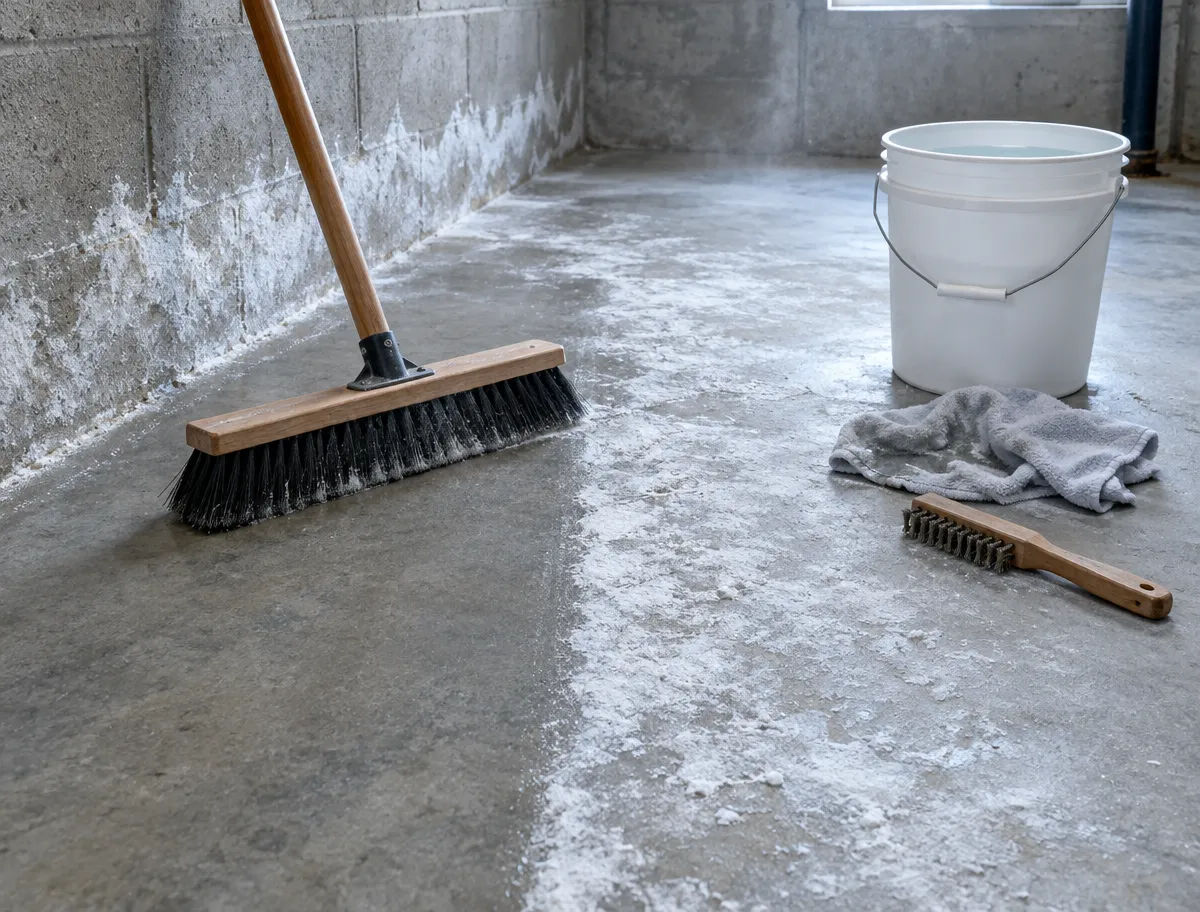
Safe removal of concrete efflorescence starts with dry mechanical methods. Water can redissolve the salts and carry them back into the slab. A stiff nylon brush or a dry vacuum removes loose surface powder without spreading it. For stubborn deposits, a cleaner formulated specifically for efflorescence on concrete can help break down the crystalline residue. Strong acids can etch the surface, so they are best avoided or left to a professional.
The Concrete Masonry & Hardscapes Association’s guide to the control and removal of efflorescence cautions that washing with water adds more moisture to the material and treats acid cleaning as a last resort that should be diluted and tested on a small area first. Cleaning visible deposits helps temporarily, but unless the underlying moisture is addressed, the white salts tend to come back every time moisture moves through the slab.
What Cleaning Method Works Best for Basement Floors?
Dry brushing with a stiff nylon bristle brush lifts loose powder effectively. A shop vacuum captures the dislodged particles before they resettle. For adhered deposits, apply a non-acidic efflorescence cleaner according to the manufacturer’s directions and dwell time. Rinse minimally and remove any remaining moisture right away.
Can I Just Seal Over the White Residue?
Sealing over active efflorescence is a common cause of coating failure. The salts can crystallize beneath the sealer and push it away from the concrete, which is one of the reasons behind the problems described in our article on why epoxy garage floors peel. Efflorescence on its own is generally not structural damage, but the ongoing moisture behind it can cause problems over time, so the moisture source should be addressed before any finish is applied.
Specialty Concrete Coatings LLC addresses this through mechanical preparation. Surfaces are diamond ground to open the concrete pores and remove surface contaminants. This step, combined with proper moisture mitigation, creates a bond-ready profile. To keep efflorescence from returning, the cycle has to be broken by limiting the moisture that dissolves salts and delivers them to the surface. A coating system installed over an unresolved moisture condition can delaminate, wasting the investment and leaving the slab unprotected.
What Moisture Fixes Help Stop Efflorescence From Coming Back?
Most efflorescence problems improve when less water reaches the slab. Common fixes include:
- Gutters and downspouts: Keep them clear and extend downspouts so roof water drains away from the foundation.
- Grading: Make sure soil around the house slopes away from the foundation rather than toward it.
- Sump pump: If your basement has one, confirm it runs properly before the wet season.
- Dehumidifier: Lower indoor humidity to reduce condensation on cool concrete.
- Moisture-tolerant primers: Ask your coating contractor whether a moisture-mitigating primer is appropriate for your slab.
If water is actively seeping through walls or the floor, talk to a basement waterproofing professional before you plan a coating. Canada Mortgage and Housing Corporation’s guide to fixing a damp basement offers more background on common causes of basement dampness.
How Do Professional Coatings Help Prevent Efflorescence?
Professional coatings help prevent concrete efflorescence from showing up on a finished floor by limiting the moisture pathway that carries soluble salts to the surface. Specialty Concrete Coatings LLC does this through a multi-layer system built for Western Pennsylvania’s moisture conditions, and you can see how it applies locally in our overview of basement floor coating in Pittsburgh, PA.
The process begins with mechanical preparation and repair. Cracks and spalls are filled before any coating is applied, which closes channels where water can travel through the slab. A high-adhesion basecoat then bonds directly to the prepared surface.
What Makes the Basecoat Effective Against Moisture?
The company applies a polyurea basecoat designed for strong adhesion to properly prepared concrete. When it is paired with the right moisture testing and mitigation, this foundation layer helps limit the vapor that would otherwise push salts upward and leave white deposits on the floor. Learn more about our basement epoxy floor coatings.
How Does the Topcoat Seal the System?
A UV-stable polyaspartic clear coat covers the basecoat to resist yellowing, abrasion, and chemicals, adding a protective top layer to the system. This approach supports one-day installation in many cases, with typical timelines of about 12 hours to walk on and 48 hours to drive on in garage applications. Actual cure times vary with temperature, humidity, and the products used.
Homeowners concerned about existing white residue can request a free moisture assessment. Specialty Concrete Coatings has served Pittsburgh and Western PA for over 15 years, providing estimates that identify the moisture source before recommending a coating solution.
Frequently Asked Questions
What is concrete efflorescence on a basement floor?
Concrete efflorescence is a white, chalky deposit that forms when moisture dissolves salts in the concrete and carries them to the surface, where they remain after the water evaporates. It has a crystalline texture and usually no strong odor, which helps distinguish it from mold.
How do I remove concrete efflorescence from my basement floor?
Dry-brush the surface salts with a stiff nylon brush, vacuum the debris, and treat persistent spots with a cleaner made for efflorescence. Avoid soaking the floor or using strong acids, and address the moisture source so the deposits do not return.
Why does efflorescence keep coming back on my basement floor?
Recurring efflorescence signals active water movement through the slab, often from groundwater, poor drainage, or indoor humidity. The deposits will keep forming with every moisture cycle until less water reaches the concrete.
Is efflorescence harmful?
Efflorescence itself is a mineral salt deposit and is generally not considered a health hazard the way mold can be. However, the dampness behind it can create conditions where mold grows, so it is worth finding and addressing the moisture source.
Can you put epoxy or another floor coating over efflorescence?
Not until the deposits are removed and the moisture source has been evaluated. Coating over active efflorescence can lead to bubbling and peeling, so a moisture assessment and proper surface preparation should come first.
TL;DR — Concrete Efflorescence at a Glance
- Efflorescence is white mineral salt left behind when moisture moves through concrete and evaporates at the surface.
- It is usually not mold: efflorescence is powdery, crystalline, and odorless, while mold is often darker and musty.
- Remove it dry with a stiff nylon brush and a vacuum; avoid soaking the floor or using strong acids.
- Recurring efflorescence means active moisture, and coating over it can lead to bubbling and peeling.
- Fix drainage and humidity first, then choose a coating system matched to the slab’s moisture conditions.
- Next step: Request a free moisture assessment and quote from Specialty Concrete Coatings.
Related Resources
- Concrete Floor Coatings
- Pittsburgh, PA Concrete Coating Company
- Basement Epoxy Floor Coating Guide
- Basement Concrete Floor Finish Options
- Best Concrete Coating Options for Your Basement Floor
- Common Epoxy Floor Coating Problems
Get a Free Basement Floor Coating Quote
Efflorescence signals a moisture problem that no coating can fix until the source is addressed. A professional moisture assessment helps identify the vapor emission rate before any finish is applied, removing the guesswork that leads to bubbling and peeling. The right approach starts with testing, then moves to a coating system designed for your slab’s conditions. Contact Specialty Concrete Coatings today for a free, no-obligation quote.
About Specialty Concrete Coatings: Specialty Concrete Coatings is a concrete coating contractor serving Greater Pittsburgh and Northwest Pennsylvania, specializing in garage, basement, patio, and commercial floor coatings. The team provides free moisture assessments and estimates so every floor gets a coating system matched to its conditions. Contact us today for a free, no-obligation quote.