Moisture is the single biggest obstacle to a successful basement floor coating in Western Pennsylvania. Pittsburgh’s climate — with its wet springs, humid summers, and freeze-thaw winters — creates persistent moisture challenges in basement slabs that don’t exist in drier parts of the country. Choose the wrong coating system for your moisture conditions and it will bubble, peel, and fail within months.
This guide explains the different types of moisture that affect Pittsburgh basement floors, which coating systems work in each situation, and how to choose the right system for your specific basement.
For a free moisture assessment and estimate, Specialty Concrete Coatings has served Pittsburgh and Western PA for over 15 years.
Understanding Basement Moisture in Western PA
Before choosing a coating, you need to understand what type of moisture your basement floor has — because different moisture sources require different solutions.
Type 1 — Moisture Vapor Emission (MVE)
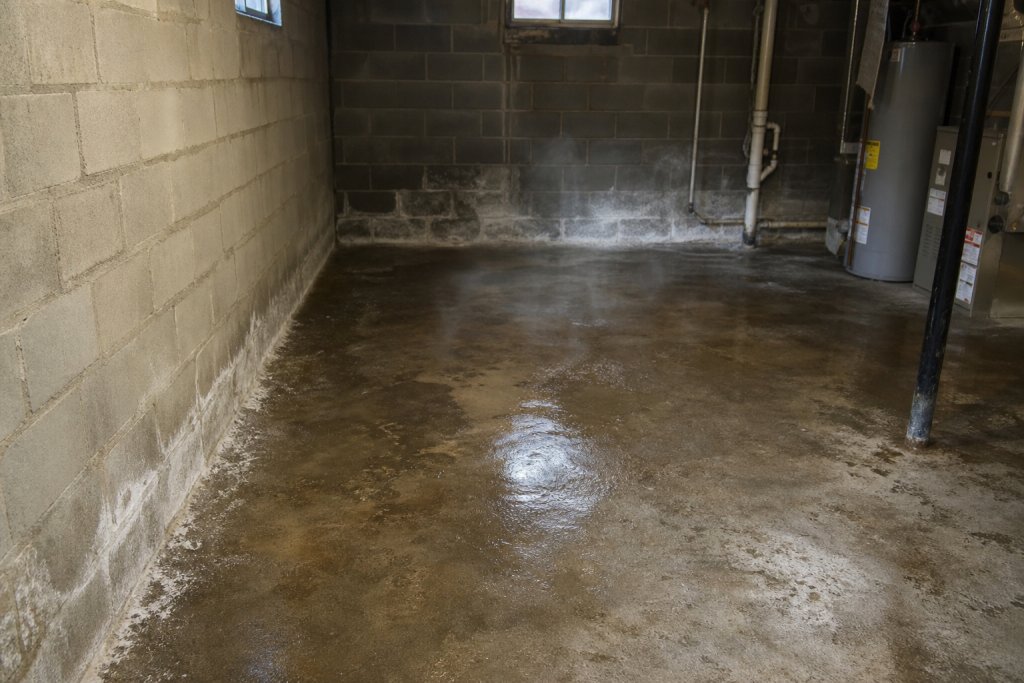
This is the most common type of basement moisture in Western PA and the one most often misunderstood. Concrete is porous, and water vapor naturally migrates up through the slab from the soil below — even in basements that appear completely dry. You can’t see it with the naked eye, but it’s measurable.
Moisture vapor emission is measured as a Moisture Vapor Emission Rate (MVER) in pounds per 1,000 square feet per 24 hours. Most standard epoxy coatings can tolerate up to 3 lbs MVER. Above that threshold, the moisture pressure underneath the coating causes it to blister and delaminate over time.
Simple DIY test: Tape a 2-foot square of plastic sheeting to your basement floor using duct tape on all four sides. Leave it for 24–48 hours. If water droplets form under the plastic, your floor has elevated moisture vapor — and coating selection matters.
Type 2 — Condensation
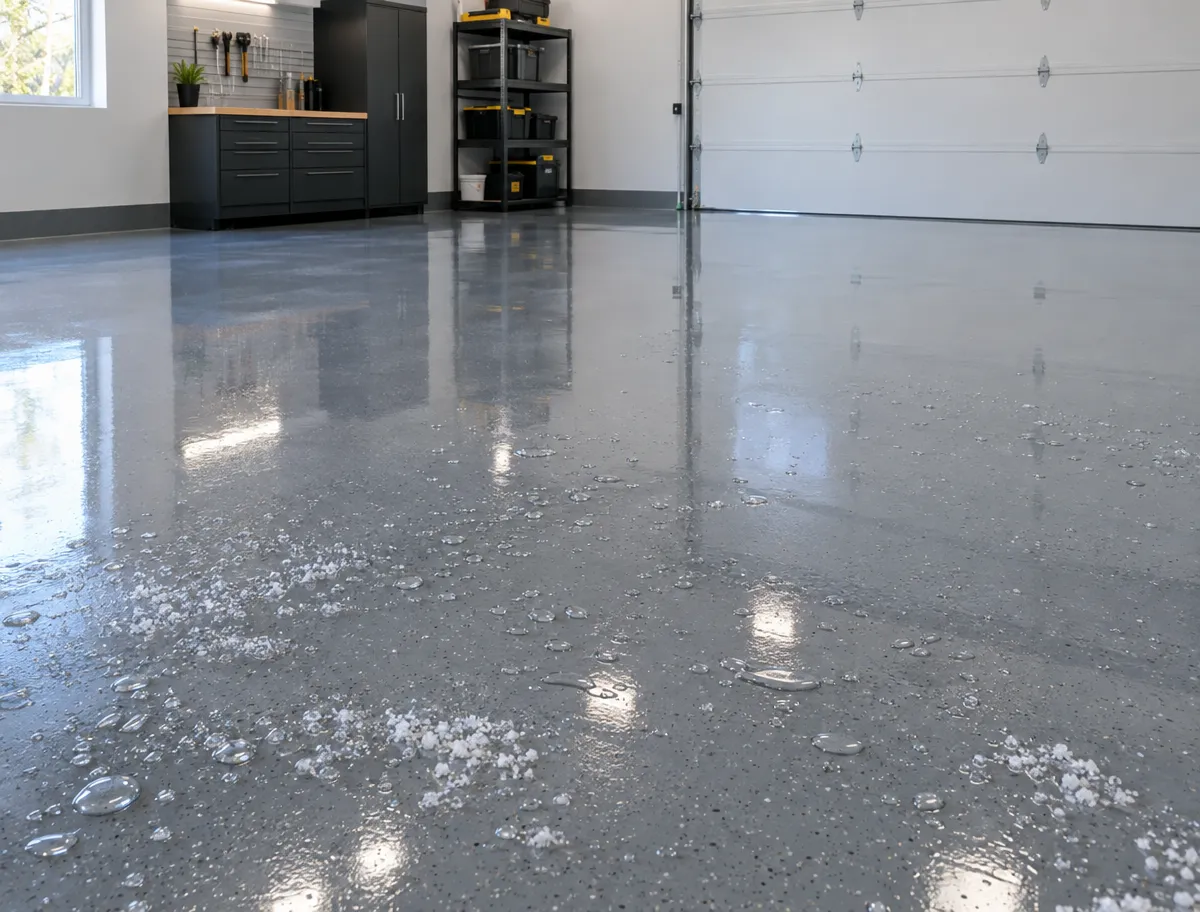
In humid Pittsburgh summers, warm humid air entering a cool basement condenses on the cold concrete floor surface — similar to a cold drink sweating on a warm day. This appears as surface wetness but is not coming from the slab itself.
Condensation is the easiest moisture problem to address — improving basement ventilation or running a dehumidifier resolves it — and most coating systems perform fine once condensation is controlled.
Type 3 — Active Water Intrusion
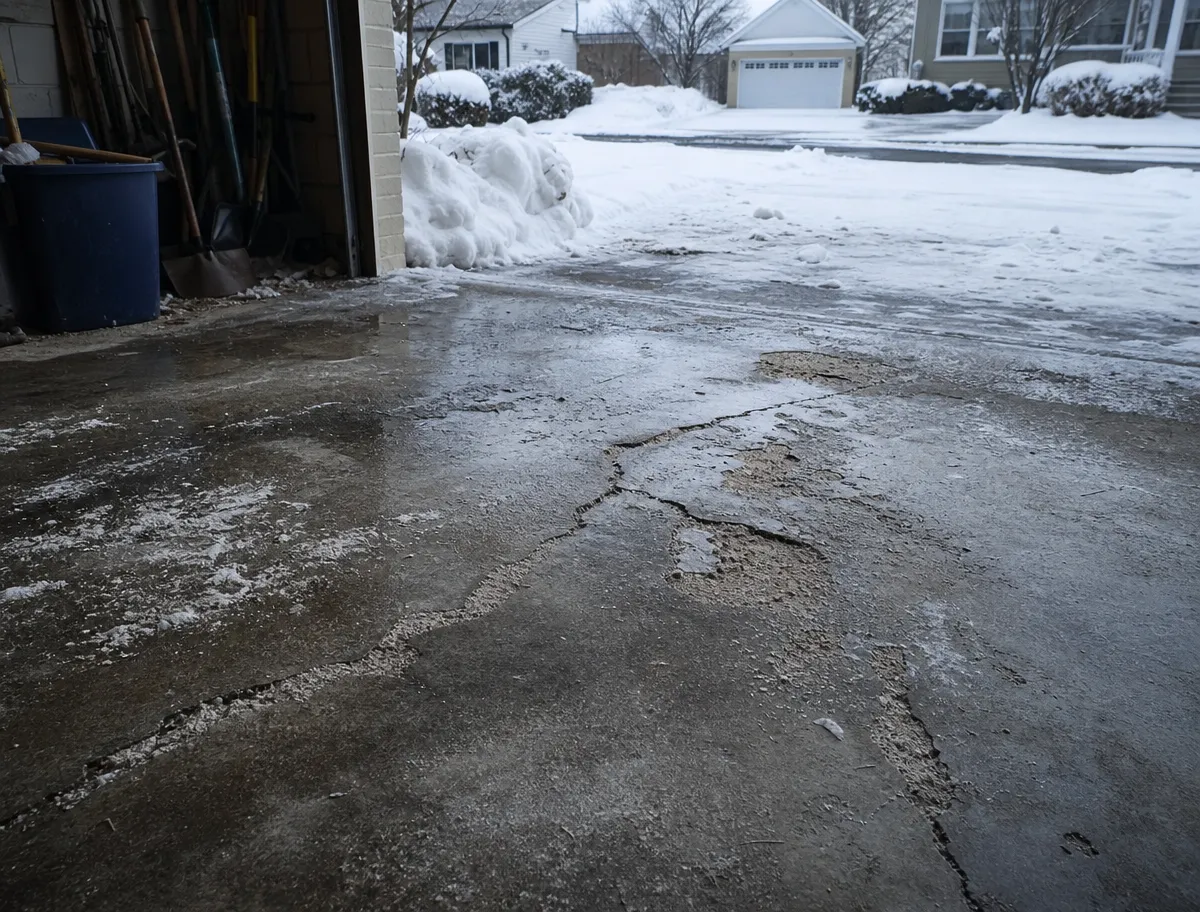
This is water physically entering the basement through cracks in the floor slab, through the wall/floor joint, or seeping through porous walls. It’s visible as puddles, wet streaks, or running water after rain events or snowmelt.
No coating system will stop active water intrusion. This is a waterproofing problem that must be solved before any floor coating is applied. Attempting to coat over active water intrusion will always result in coating failure. According to the Basement Health Association, active water intrusion requires drainage correction, crack injection, or interior/exterior waterproofing before any floor treatment can be applied.
Which Basement Floor Coating is Best for Moisture?
Here’s how the most common coating systems perform against different moisture conditions:
Option 1 — Standard Epoxy (Not Recommended for High Moisture)
Standard two-part epoxy is the most widely used basement floor coating — but it has the lowest moisture tolerance of any professional coating system. It requires:
- Concrete moisture content below 4% by weight
- MVER below 3 lbs per 1,000 sq ft per 24 hours
- Completely dry surface at time of application
In Pittsburgh basements with even moderate moisture vapor emission, standard epoxy is a poor choice. It may look perfect immediately after installation but will begin blistering and delaminating within 6–18 months as moisture pressure builds underneath.
Best for: Dry basements with confirmed low MVER readings.
Option 2 — Moisture-Tolerant Epoxy Primer + Epoxy Top Coat
A moisture-tolerant (or moisture-mitigating) epoxy primer is specifically formulated to bond to concrete with elevated moisture vapor emission — typically up to 8–10 lbs MVER. When used as a primer coat under a standard epoxy top coat system, it dramatically extends the performance range of an epoxy system in damp conditions.
This system costs more than standard epoxy but is appropriate for Pittsburgh basements with moderate moisture vapor emission where active intrusion has been ruled out.
Best for: Basements with moderate MVER (3–8 lbs) and no active water intrusion.
Option 3 — Polyurea (Best for Most Western PA Basements)
Polyurea is the highest-performing coating option for damp basement conditions in Western PA. Key advantages over epoxy in moisture-affected basements:
- Higher moisture tolerance — polyurea bonds effectively at higher humidity levels and is less sensitive to moisture vapor in the slab
- Faster cure — polyurea cures within hours, reducing the window during which moisture can disrupt adhesion
- Greater flexibility — polyurea flexes with the concrete as it expands and contracts seasonally, making it far less likely to crack or delaminate over time
- UV resistance — polyurea won’t yellow or fade even with sunlight exposure through basement windows
According to the International Concrete Repair Institute, polyurea systems are increasingly preferred over epoxy for below-grade applications precisely because of their superior moisture tolerance and flexibility.
Specialty Concrete Coatings installs polyurea systems for Pittsburgh and Western PA basements with moisture challenges. Learn more about our coating options here.
Best for: Most Western PA basements with moderate to elevated moisture vapor, high humidity, or seasonal dampness.
Option 4 — Waterproof Coating Systems (For Severe Moisture)
For basements with chronic high moisture vapor emission (above 10 lbs MVER) where full waterproofing isn’t yet possible, specialized waterproof coating systems exist that are designed to hold back significant moisture pressure from below. These are significantly more expensive than standard coating systems and require professional installation and assessment.
Best for: High-MVER basements as a temporary measure while full waterproofing is planned.
Moisture Tolerance Comparison Table
| Coating System | Max MVER Tolerance | Cure Time | Best For | Relative Cost |
| Standard Epoxy | Up to 3 lbs | 24–72 hrs | Dry basements | $ |
| Moisture-Tolerant Epoxy | Up to 8–10 lbs | 24–72 hrs | Moderate moisture | $$ |
| Polyurea | Up to 12+ lbs | 2–6 hrs | Most WPA basements | $$ |
| Waterproof Coating | High MVER | Varies | Severe moisture | $$$ |
| No Coating | N/A | N/A | Active intrusion — fix first | — |
How Specialty Concrete Coatings Handles Moisture in Pittsburgh Basements
Every basement coating project we take on in Western PA starts with a moisture assessment — not a sales pitch. Here’s our process:
Step 1 — Visual inspection. We look for efflorescence (white mineral deposits), staining patterns, crack locations, and signs of previous coating failure — all of which tell us about the moisture history of the slab.
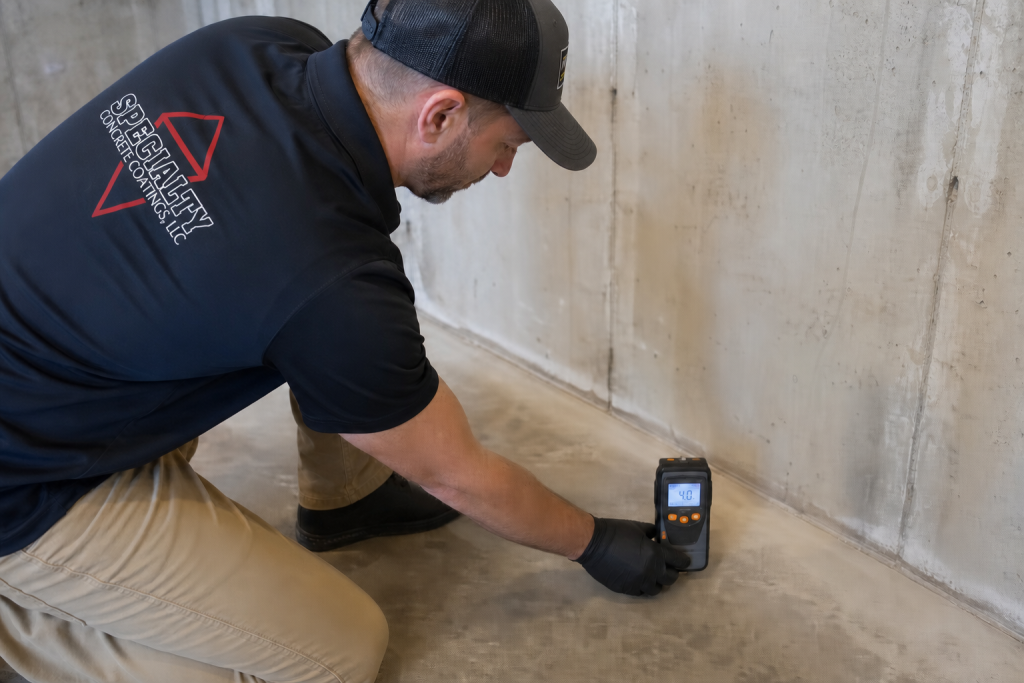
Step 2 — Plastic sheet test or relative humidity probe. We test for moisture vapor emission before recommending any coating system. If moisture levels are too high for coating, we’ll tell you honestly rather than install a system that will fail.
Step 3 — Coating system recommendation. Based on the moisture readings and your budget, we recommend the appropriate system — whether that’s a moisture-tolerant epoxy primer, a polyurea system, or a recommendation to address waterproofing first.
Step 4 — Professional surface preparation. We use diamond grinding equipment to prepare the concrete surface — not acid etching. Proper mechanical preparation is essential for adhesion in any moisture condition.
Step 5 — Installation and quality check. We install the coating system, apply decorative chips or color if requested, seal with a clear top coat, and inspect the finished surface before we leave.
When to Call a Waterproofing Contractor First
If your basement has any of the following conditions, contact a waterproofing contractor before calling a coating company — including us:
- Water visibly entering through floor cracks or the wall/floor joint after rain
- Puddles forming on the floor during or after heavy rain or snowmelt
- Mold or mildew growth on the floor or lower walls
- A sump pump that runs constantly or can’t keep up during storms
- Previous coating that failed with visible bubbling or delamination
In these situations, a floor coating is not the right first step. Waterproofing must come first. Once the water source is controlled and the floor is confirmed dry, we can install a coating system that will last.
Get a Free Moisture Assessment for Your Pittsburgh Basement
If you’re not sure whether your basement is a good candidate for floor coating, the best next step is a free assessment from a local professional who understands Western PA’s specific moisture challenges.
Specialty Concrete Coatings has been helping Pittsburgh and NW Pennsylvania homeowners solve basement floor problems for over 15 years. We’ll give you an honest answer about what your basement needs — whether that’s a coating from us, a waterproofing referral, or both.
Specialty Concrete Coatings — Pittsburgh & NW Pennsylvania
📞 Call or text: (724) 815-1977 📍 Serving Pittsburgh, New Castle, and all of Western PA
Request Your Free Basement Assessment →
Related reading: Basement Epoxy Floor Coating: Is It the Right Choice for Your Pittsburgh Home?
Specialty Concrete Coatings is a locally owned concrete coating contractor serving Pittsburgh and NW Pennsylvania since 2010. We specialize in residential and commercial epoxy floor coatings, polyurea systems, decorative chip floors, and garage floor coatings. Fully insured, 5-star rated, and committed to quality on every project.