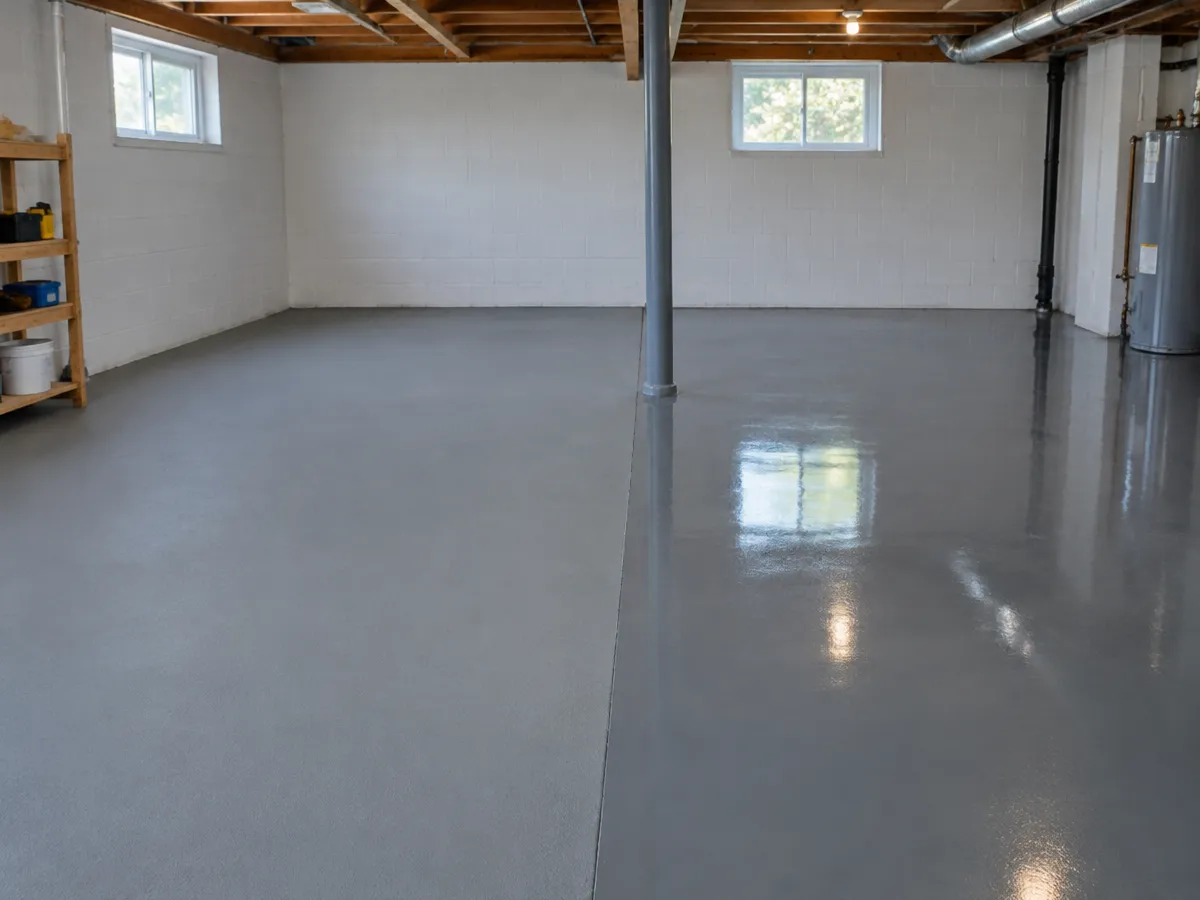
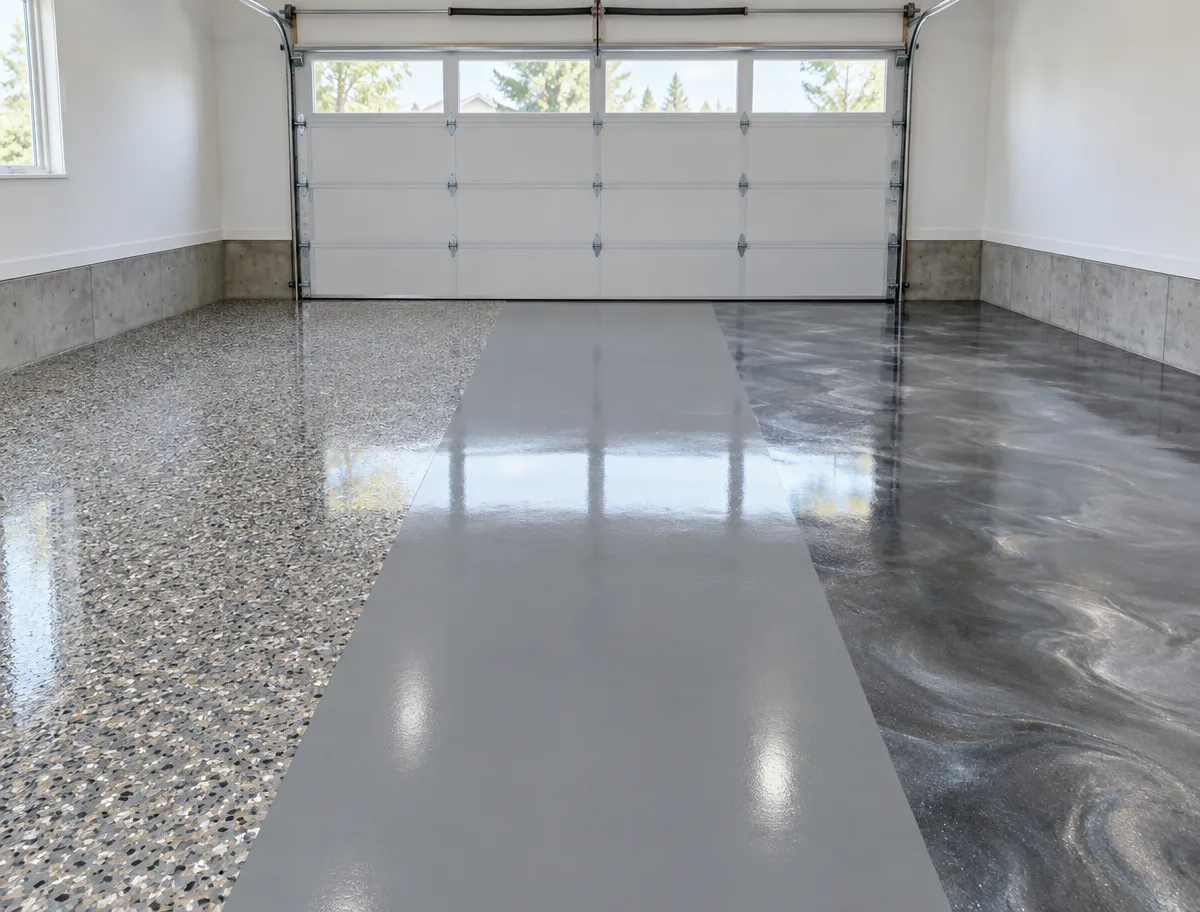
Quick Answer: Garage floor coating in Erie, PA has to stand up to lake-effect snow, salty meltwater, and repeated freeze-thaw cycles. A professionally installed system typically starts with diamond grinding and crack repair, then adds a flexible polyurea basecoat, vinyl color chips for texture and slip resistance, and a UV-stable polyaspartic topcoat that resists road salt and chemicals. This type of system is less likely to crack and lift than a single-part hardware-store epoxy, and many polyurea and polyaspartic products can be installed in colder weather than standard epoxy. Surface preparation and a moisture check matter as much as the coating itself.
Erie, Pennsylvania’s lake-effect winters call for garage floor coatings built for salt, meltwater, and freeze-thaw cycles. A polyurea polyaspartic system from a professional installer like Specialty Concrete Coatings LLC pairs a flexible base with a polyaspartic topcoat, helping resist the cracking and lifting that often show up in hardware-store epoxies. Homeowners across Erie County, from Millcreek and Harborcreek to Fairview, deal with the same winter conditions, so the same principles apply throughout the area.
Why Does Lake-Effect Snow Damage Garage Floors in Erie?
Lake-effect snow subjects Erie garage floors to a long cycle of moisture, salt, and temperature swings. The National Weather Service’s Erie climate normals put the city’s average annual snowfall at roughly 104 inches, with the heaviest totals in December and January. That volume of snow translates into months of meltwater, repeated freeze-thaw stress, and road salt carried into the garage by vehicles coming off I-90 and local roads. Without a durable garage floor coating Erie PA homeowners can rely on, the slab beneath the snowmelt absorbs the damage season after season.
The NWS explanation of how lake-effect snow forms describes how cold air crossing the open waters of the Great Lakes picks up moisture and drops it as heavy snowbands, which is why communities along Lake Erie’s shoreline see so much more snow than many inland areas.
How Do Freeze-Thaw Cycles Damage Concrete?
Water seeps into the porous surface of an uncoated garage slab. When temperatures drop, that trapped water freezes and expands. The expansion creates internal pressure that can widen micro-cracks and pit the surface. Erie winters often swing above and below freezing, and each cycle can compound the damage. What begins as a hairline fissure can turn into a flaking, spalled area by spring. The National Ready Mixed Concrete Association’s guide to scaling concrete surfaces identifies freeze-thaw cycling in saturated concrete as the core cause of scaling.
Why Does Road Salt Accelerate Garage Floor Deterioration?
Road salt mixed with melting snow forms a salty slurry that sits on the slab and soaks into unprotected concrete. Deicing chemicals can make scaling worse by keeping the surface wetter, and the Federal Highway Administration’s tech brief on chemical deicers and concrete pavement notes concern about chloride deicers such as magnesium chloride and calcium chloride attacking the cement paste. Our guide to protecting a garage floor from road salt covers the chemistry in more detail. In Erie, heavy salt use means garage floors face that exposure from roughly November through April. A single-part epoxy from a hardware store can turn brittle under these conditions, lift at the edges where salty water sneaks underneath, and crack by spring.
Professional installers address these Erie-specific threats with polyurea systems designed to flex with the slab during temperature swings. A polyaspartic topcoat resists road salt and chemicals without yellowing, an important advantage for garages that hold meltwater for months. Homeowners who delay protection risk surface damage that tends to grow costlier to repair over time. The winter salt damage that builds up over a single season can be difficult to reverse without professional help.
What Makes Polyurea Better Than Epoxy for Erie?
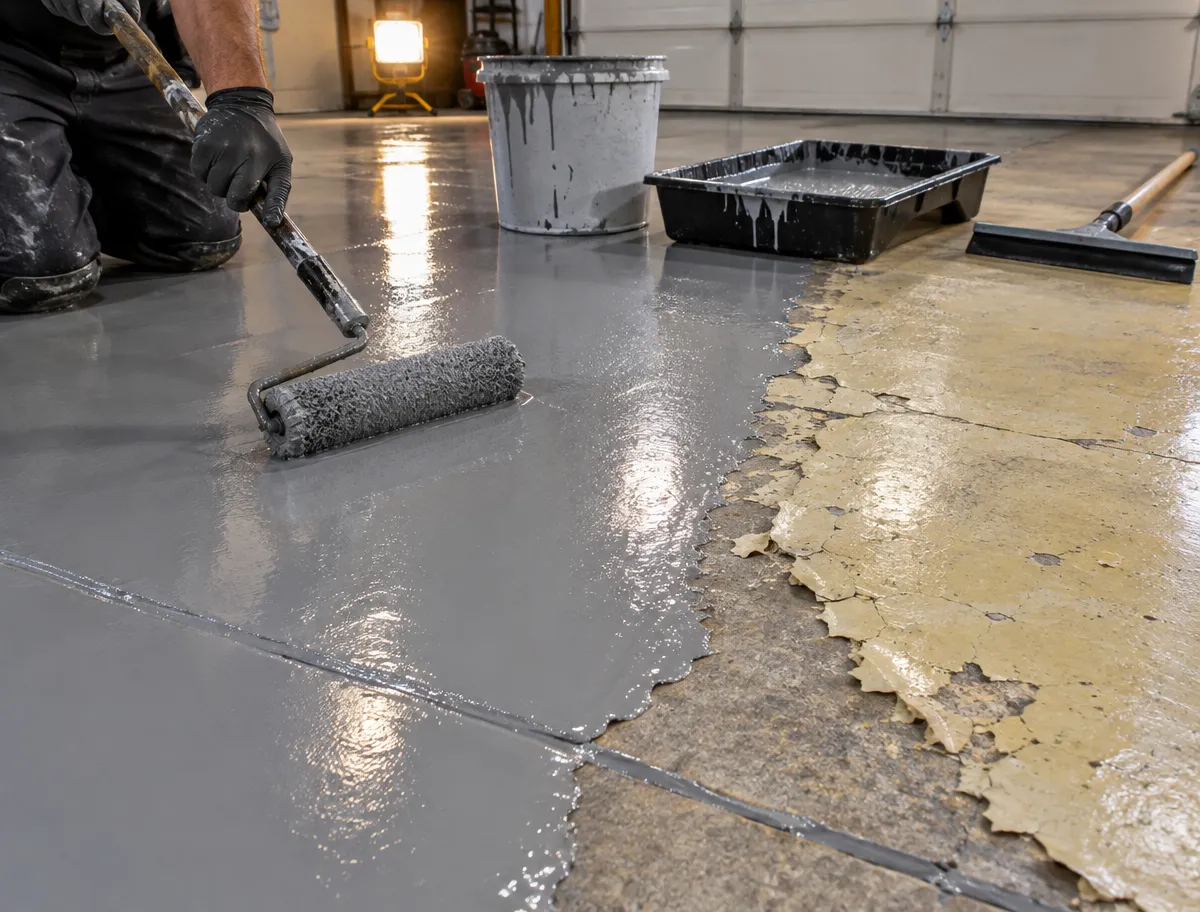
Polyurea floor coatings offer several advantages over traditional epoxy that matter for Erie homeowners. A garage floor coating Erie PA installation faces roughly 104 inches of average annual snowfall, frequent freeze-thaw cycles, and months of road salt exposure. Polyurea systems are generally more flexible and more resistant to this kind of wear than standard epoxy floors, and the difference often shows during the first Erie winter.
How Fast Does Polyurea Cure Compared to Epoxy?
Polyurea coatings typically cure much faster than epoxy. Many epoxy systems need days of curing within a narrow temperature window, while polyurea formulations are designed to harden quickly, including in cooler conditions. That speed helps with the scheduling challenges Erie’s unpredictable weather creates. In many cases, homeowners can return to normal use of the garage much sooner than with a traditional epoxy, although cure times vary with temperature, humidity, and the products used.
Why Does Flexibility Matter for Erie Garage Floors?
Concrete slabs in Erie expand and contract through freeze-thaw seasons. A polyurea base is designed to flex with the slab as temperatures swing from cold winter nights to summer heat. Standard epoxy is more rigid, and a rigid film can crack when the concrete moves beneath it. Once cracks form, moisture can get under the coating and delamination may follow. Polyurea’s flexibility helps reduce this failure mode.
The polyaspartic topcoat adds another layer of protection. It resists road salt and chemicals and is UV-stable, so it resists yellowing. Erie vehicles track in calcium chloride, magnesium chloride, and brine solutions all winter long. Many epoxy topcoats can degrade under these chemical exposures and may yellow over time, while a polyaspartic clear coat is designed to keep its clarity and protective properties. For a deeper comparison of these systems in demanding environments, see our analysis of polyurea for auto shop floors and why it holds up well in high-traffic settings.
Which Coating Features Matter Most in an Erie Garage?
- Non-porous surface: Keeps meltwater and salt brine on top of the floor, where they can be cleaned up, instead of soaking into the concrete.
- Flexible basecoat: Moves with the slab through temperature swings so the coating is less likely to crack or lift.
- Textured slip resistance: Broadcast color chips add grip on a floor that is often wet from snowmelt.
- Salt-resistant, UV-stable topcoat: Helps protect against chloride deicers and resists yellowing over time.
📞 Planning Ahead for Erie’s Next Winter? Specialty Concrete Coatings installs professional garage floor coatings built for lake-effect conditions across Erie County. Request a free garage floor coating quote and find out what your slab needs before the snow flies.
How Do You Prepare an Erie Garage Slab?
Preparing an Erie garage slab calls for mechanical grinding, not acid etching or simple cleaning. A garage floor coating Erie PA installation that skips this step can fail within a single winter. Erie’s heavy snowfall and repeated freeze-thaw cycles push moisture into the concrete, and without a proper profile, coatings tend to lift at the edges and crack by spring.
A professional multi-step process covers everything from preparing the floor to applying the multi-layer coating. Each step builds on the last to create a strong bond that holds up to road salt and temperature swings. AMPP’s overview of concrete surface preparation and coating selection explains why inspecting and preparing concrete properly comes before any coating choice.
What Is the First Step in Preparing the Concrete?
Diamond grinding creates the foundation for everything that follows. The installer mechanically grinds the entire slab surface using diamond tooling. This opens the concrete’s pores and removes existing sealers, paints, or weak surface laitance. The resulting profile gives the coating system a mechanical grip that chemical etching generally cannot match.
How Are Cracks and Damage Repaired Before Coating?
Cracks and spalls receive targeted repair with high-strength concrete menders. Technicians fill fissures, chips, and divots before any coating material touches the slab. Skipping this step allows water to get beneath the coating later. The menders are designed to cure hard, creating a uniform substrate.
After repairs cure, the crew thoroughly vacuums and cleans the entire surface, because dust and debris left behind compromise adhesion. A final inspection confirms the slab is profiled, repaired, and clean. Only then does the multi-layer coating application begin.
Why Does Erie’s Climate Make Grinding Essential?
With roughly 104 inches of average annual snowfall, Erie garages see a lot of meltwater, and that meltwater carries dissolved road salt into unsealed concrete pores. A ground surface lets the polyurea basecoat penetrate and bond with the concrete, helping seal those pores. Coatings applied over unground slabs sit on top of contaminants rather than bonding to the concrete itself, which can make the difference between a floor that lasts one winter and one that lasts for many years.
What Steps Go Into a Winter-Ready Coating System?
A winter-ready garage floor coating Erie PA installation follows a strict sequence. Each step builds on the previous one to create a surface designed to withstand Erie’s lake-effect snow, road salt, and freeze-thaw cycles.
What Preparation Happens Before the Coating Goes Down?
Surface preparation and crack repair come first. The concrete slab must be clean, sound, and free of defects before any coating material touches it. A high-adhesion basecoat is applied only after this preparation work is complete. Skipping this step leaves weak spots where moisture and salt can get in.
How Does the Coating System Get Built Up?
The application process moves through four distinct stages:
- Apply the basecoat. A high-adhesion basecoat bonds directly to the prepared concrete surface.
- Broadcast vinyl color chips. Installers hand-broadcast vinyl color chips across the wet basecoat for customized looks and slip resistance.
- Scrape excess chips. Excess chips are scraped away to create a uniform texture across the entire floor.
- Seal with a clear coat. A final clear coat seals the system and locks in the color chips.
How Long Does the Full Installation Take?
In many cases, the complete system can be installed in as little as 24 hours for Erie homeowners, depending on the size and condition of the slab. This fast turnaround matters when winter weather narrows the window for garage projects. A concrete coating cold weather installation requires materials that cure quickly and reliably when temperatures drop, and a polyurea-based system is designed to deliver that speed without sacrificing durability.
What Mistakes Shorten a Coated Floor’s Life?
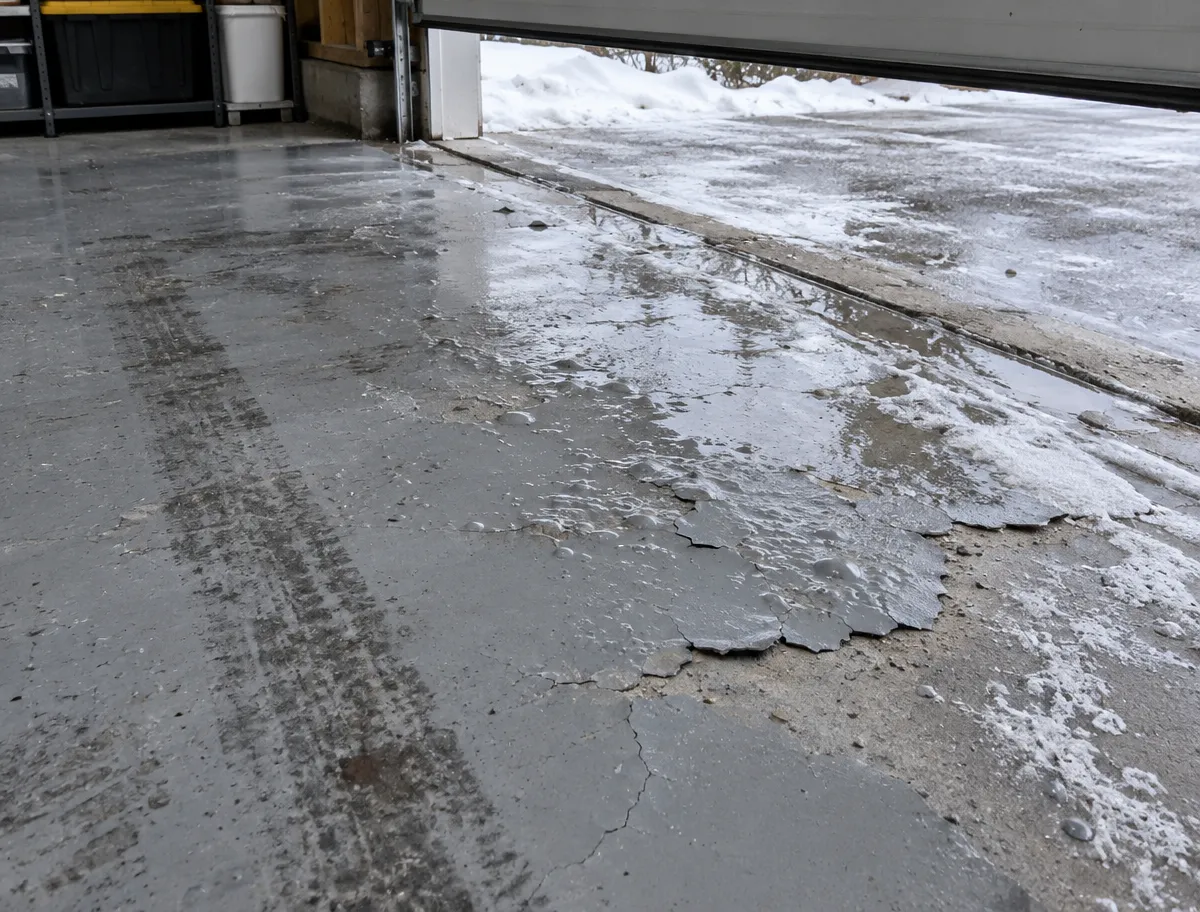
A coated garage floor can fail early when homeowners skip professional surface preparation or choose the wrong material for Erie’s climate. The most damaging mistakes usually trace back to shortcuts taken before the first coat goes down.
Why Does a Hardware-Store Epoxy Fail So Quickly in Erie?
A single-part epoxy from a hardware store can turn brittle under Erie’s freeze-thaw cycles. The coating lifts at the edges where meltwater sneaks underneath, then cracks by spring. Erie’s lake-effect snow and road salt can speed up this failure within a single winter season.
What Happens When Surface Preparation Gets Skipped?
Skipping professional diamond grinding leaves the slab too smooth for proper adhesion. Water finds its way under the coating at the edges, and the coating can peel away in sheets, exposing bare concrete to salt and moisture damage.
The correct sequence for a long-lasting garage floor coating Erie PA installation follows four steps:
- Grind the concrete mechanically to open the surface pores for adhesion.
- Repair cracks and spalls with concrete menders before any coating goes down.
- Apply a flexible polyurea basecoat that moves with the slab through Erie’s freeze-thaw cycles.
- Seal with a UV-stable polyaspartic topcoat that resists road salt and chemicals without yellowing.
Choosing a coating without a UV-stable topcoat can lead to yellowing over time. A polyaspartic clear coat helps prevent this discoloration while protecting the floor from salt.
Homeowners who hire installers unfamiliar with Erie’s climate risk getting coatings built for milder regions. Local crews understand the freeze-thaw demands and build each layer around them. Many common epoxy floor coating problems stem from these same preparation and material errors.
How Should You Manage Meltwater on a Coated Garage Floor?
Even the best coating works better when meltwater doesn’t sit on it for weeks. A coated floor is non-porous, so slush and brine stay on the surface where they can be removed. A few simple habits help an Erie garage floor last longer:
- Squeegee regularly: Push snowmelt and slush out of the garage after storms instead of letting salty water pool and dry on the floor.
- Check the slope: Most garage slabs are pitched toward the door or a drain; note low spots where water collects and mention them during your estimate.
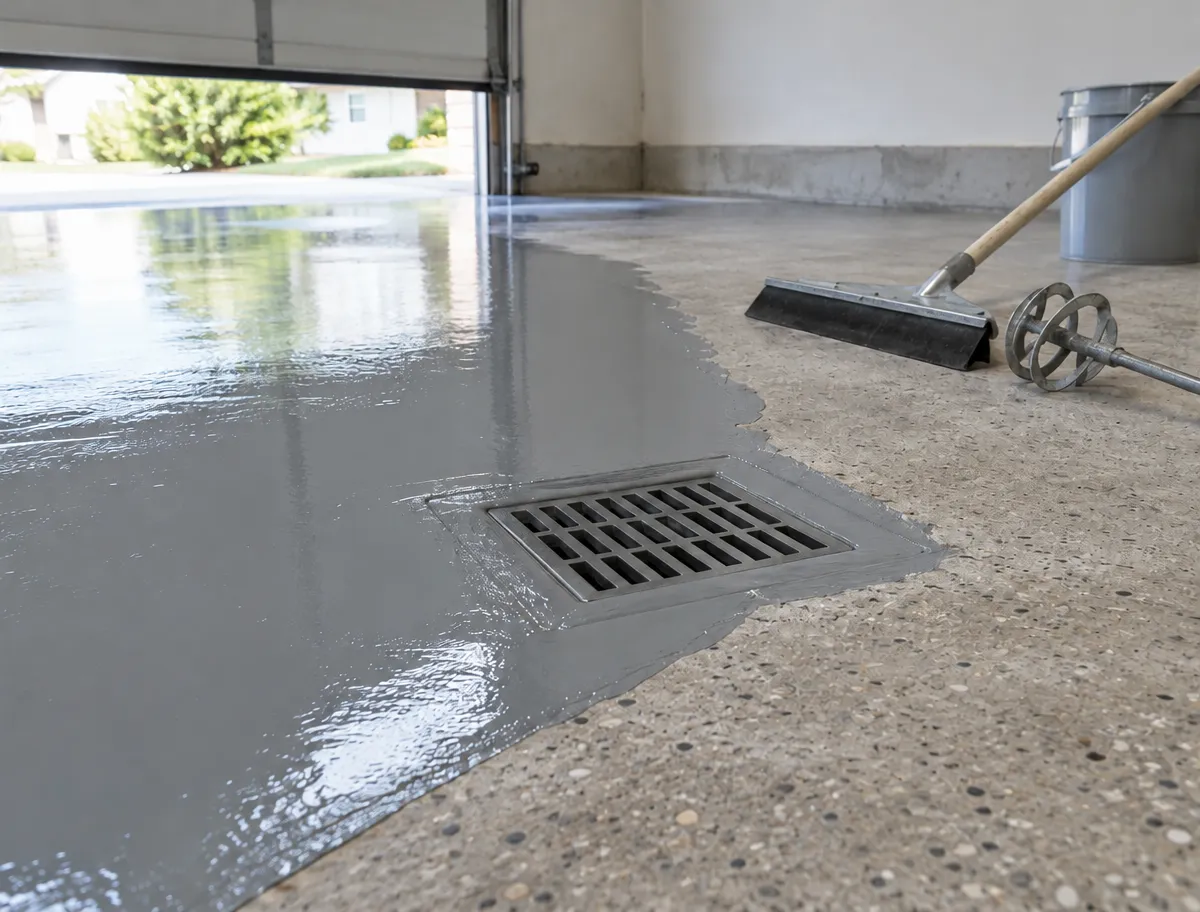
- Keep drains clear: If your garage has a floor or trench drain, clear salt residue and debris so water can leave the space.
- Rinse salt residue: Occasionally rinse and squeegee the floor during winter to remove dried salt film.
When Is the Best Time to Coat a Garage Floor in Erie?
Many Erie homeowners schedule a coating in late summer or early fall so the floor is protected before the first lake-effect storms arrive. Because polyurea and polyaspartic systems cure quickly, colder-season installs are often possible too, as long as the slab and conditions are suitable. Our guide to the best time to coat a garage floor walks through seasonal timing in Western Pennsylvania in more detail.
Which Erie-Area Communities Does Specialty Concrete Coatings Serve?
Specialty Concrete Coatings serves homeowners throughout Erie, Pennsylvania and Erie County, including Millcreek, Harborcreek, and Fairview. Every community along the Lake Erie shoreline deals with the same heavy snow, road salt, and freeze-thaw stress, so each garage floor gets a system matched to its slab and conditions. Learn more about our concrete coating services in Erie, PA.
Frequently Asked Questions
Why does lake-effect snow damage garage floors?
Lake-effect snow brings months of meltwater, repeated freeze-thaw stress, and road salt that vehicles track into the garage. Erie averages roughly 104 inches of snow a year, so an uncoated slab is exposed to that moisture and salt for much of the winter.
How do freeze-thaw cycles damage concrete?
Water seeps into porous concrete, freezes, and expands, which can widen micro-cracks and pit the surface with each temperature swing. Over a winter, small cracks can grow into flaking or spalled areas.
What makes polyurea better than epoxy for Erie?
Polyurea coatings are generally better suited to Erie’s climate because they stay flexible through freeze-thaw cycles, cure quickly even in cooler temperatures, and resist road salt. A polyaspartic topcoat also resists UV yellowing, helping the floor keep its appearance.
Can a garage floor be coated in cold weather in Erie?
Often, yes. Many polyurea and polyaspartic products are designed to cure in colder conditions than standard epoxy, but slab temperature, moisture, and product limits still matter, so an installer should evaluate conditions before scheduling a winter install.
How long does a garage floor coating installation take?
In many cases, a professional polyurea and polyaspartic system can be installed in about one day, depending on the size and condition of the slab. Cure times vary with temperature, humidity, and the products used.
TL;DR — Garage Floor Coating in Erie, PA at a Glance
- Erie averages roughly 104 inches of snow a year, so garage floors face months of meltwater, road salt, and freeze-thaw stress.
- Road salt brine and freeze-thaw cycles can scale, pit, and crack uncoated concrete.
- A single-part hardware-store epoxy can turn brittle, lift at the edges, and crack under these conditions.
- Diamond grinding, crack repair, a flexible polyurea basecoat, and a UV-stable polyaspartic topcoat make a winter-ready system.
- Squeegeeing meltwater and keeping drains clear help a coated floor last longer.
- Next step: Request a free garage floor coating quote from Specialty Concrete Coatings.
Related Resources
- Garage Concrete Coating
- Erie, PA Concrete Coating Company
- Polyurea Concrete Coating Explained
- Does Epoxy Crack in Cold Weather?
- Polyaspartic vs. Epoxy Garage Floors
- Understanding Concrete Coating Weather Resistance
- 1-Day Garage Floor Coating
Get a Free Garage Floor Coating Quote in Erie
Erie homeowners who choose a professionally ground, polyurea-based system with a UV-stable topcoat get a floor built for lake-effect winters. Preparation and material choices largely determine whether the surface holds up for one season or for many years of salt and freeze-thaw stress. A properly installed system helps seal the concrete, resists chemical attack, and is designed to hold its color over time. The next step is scheduling an assessment of your garage. Contact Specialty Concrete Coatings today for a free, no-obligation quote.
About Specialty Concrete Coatings: Specialty Concrete Coatings is a concrete coating contractor serving Erie, Greater Pittsburgh, and Northwest Pennsylvania, specializing in garage, basement, patio, and commercial floor coatings. The team builds each polyurea and polyaspartic system around the slab’s condition and local climate. Contact us today for a free, no-obligation quote.