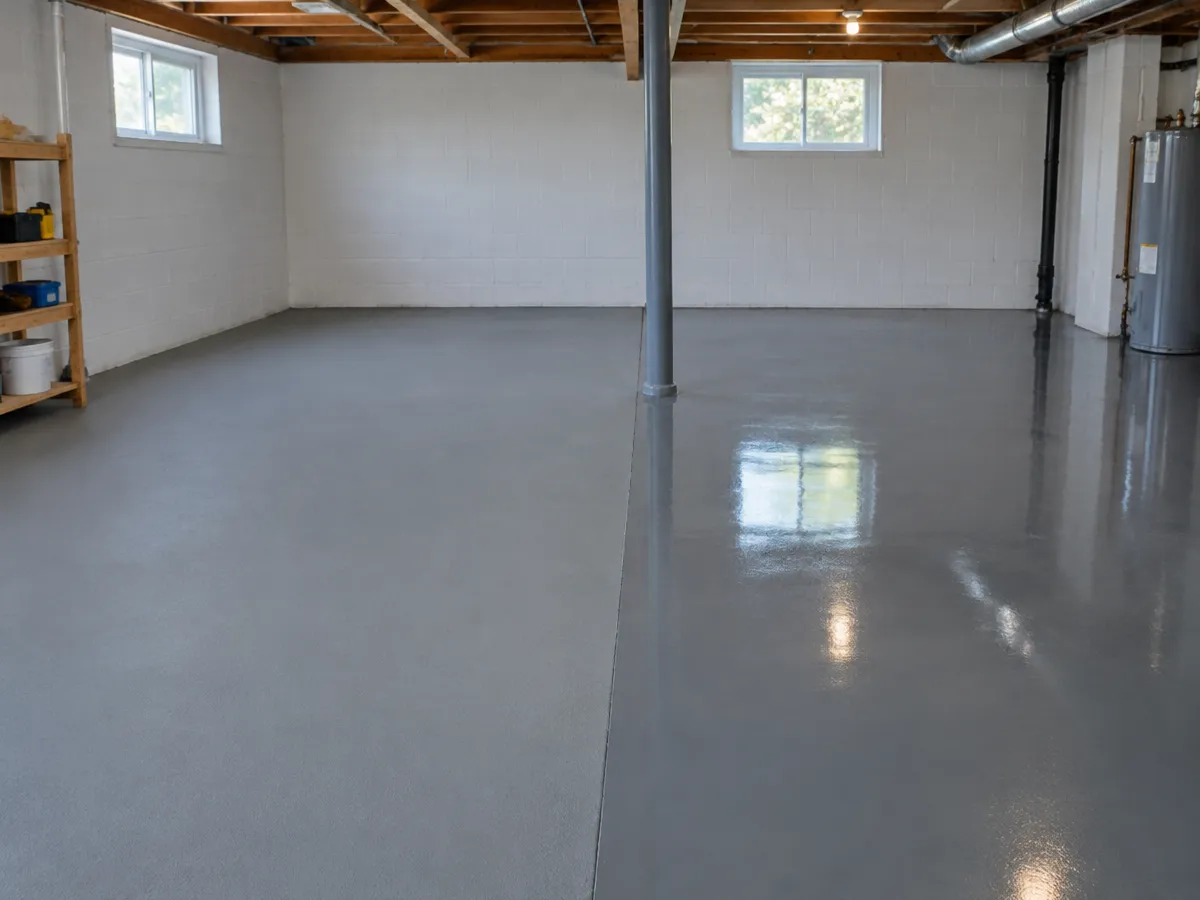
Quick Answer: Garage floor paint, including one-part “epoxy paint,” is a thin film that dries on top of the concrete, so hot tires, road salt, and moisture can make it peel, sometimes within the first year. A real coating is a two-part system, such as 100% solids epoxy or polyurea, that cures through a chemical reaction and bonds to a diamond-ground slab. Paint costs less upfront and can be fine for a low-traffic storage space, but for a garage you park in, especially through Western Pennsylvania winters, a professionally installed coating usually lasts much longer.
Garage floor paint is a thin, budget-friendly finish that can chip and peel under tires and hot weather. Epoxy and polyurea coatings cure chemically and bond to properly prepared concrete, resisting stains, chemicals, and abrasion for years. Specialty Concrete Coatings installs polyurea systems designed to cure in very cold temperatures, which allows installation across Pittsburgh in more months of the year than epoxy.
What Is Garage Floor Paint?
Garage floor paint is typically an acrylic or latex coating formulated to improve the appearance and surface durability of concrete floors. It often carries the label of a one-part garage floor coating because it arrives premixed and ready to apply straight from the can.
The appeal of garage floor paint rests on two practical advantages. First, its low cost makes it accessible for budget-conscious projects. Second, it supports a do-it-yourself workflow, letting owners apply it themselves and skip labor expenses.
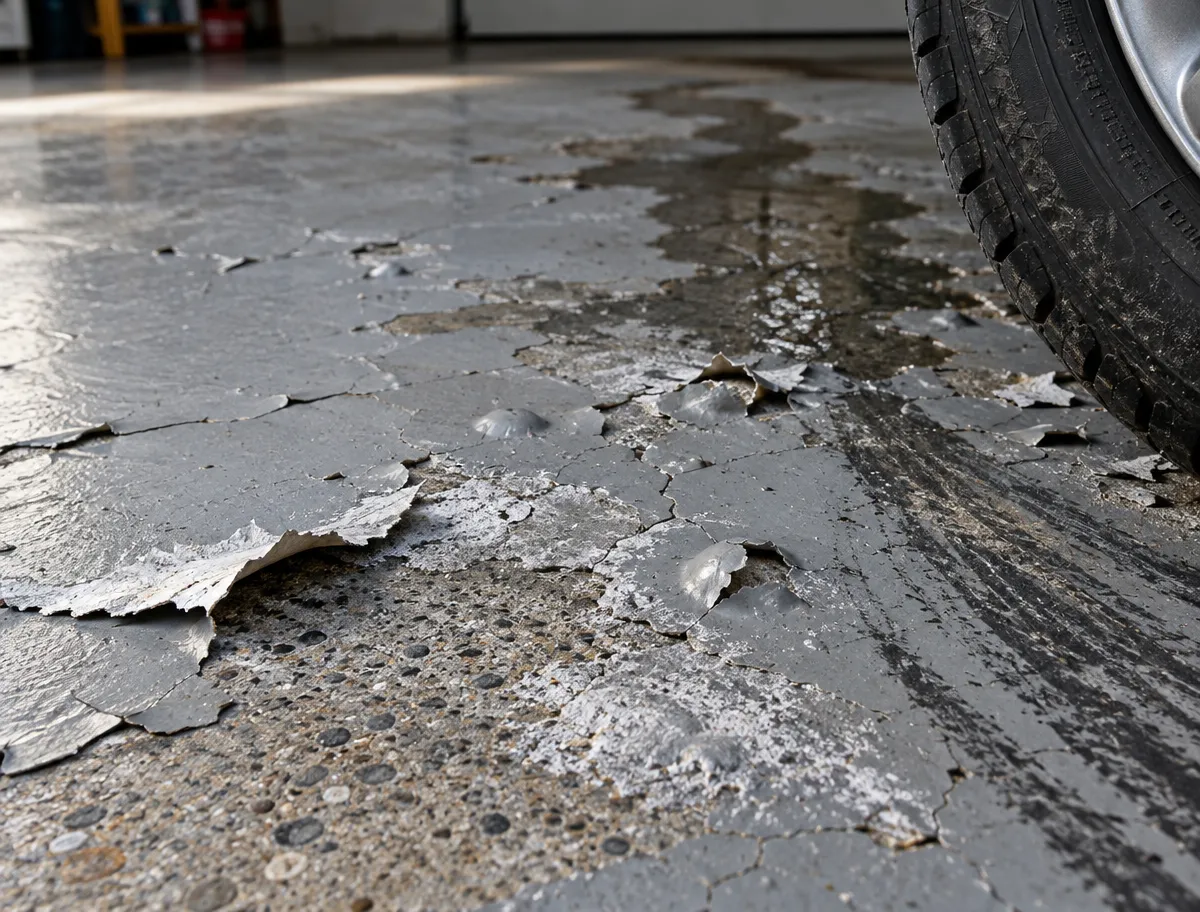
Limitations surface quickly under real-world conditions. Paint forms a thin film that dries on the concrete rather than bonding into it. In any epoxy vs paint garage floor comparison, this is where the two diverge: one-part epoxy paint suits light-duty spaces and was never designed for heavy use. A garage floor that sees vehicle traffic, road salt, or dropped tools can expose that shortcoming within months. Coatings that cure chemically create a hardened surface; paint that simply dries lacks that structural integrity.
Is “Epoxy Paint” the Same as an Epoxy Coating?
No. Most “epoxy paint” sold for garage floors is a one-part acrylic or latex paint with a small amount of epoxy added. It still dries by evaporation and leaves a thin film. A true epoxy coating comes in two parts, a resin and a hardener, that react chemically once mixed. The name on the can is the biggest source of confusion homeowners run into, and it is why so many “epoxy” floors peel within a year or two.
How Does Garage Floor Paint Differ From a Professional Coating?
Paint dries as a surface film. A professional polyurea or epoxy coating cures through a chemical reaction that bonds to the concrete. Specialty Concrete Coatings applies systems with a polyurea basecoat topped by a UV-stable polyaspartic clear coat. The result resists abrasion, chemicals, and impact far better than acrylic paint. Homeowners seeking inspiration for what a coated floor can achieve can explore our roundup of 20 incredible garage flooring ideas.
Can Garage Floor Paint Handle Pittsburgh’s Climate?
It struggles. Acrylic paint lacks the flexibility and bond strength needed for freeze-thaw cycles. Specialty Concrete Coatings’ polyurea and polyaspartic coatings are designed to cure in temperatures as low as -20°F and to hold up when road salt and moisture come into the garage. Paint tends to lift and peel under those same conditions. Pittsburgh homeowners who coat their floors with a professional system before winter can avoid much of the damage winter often does to a painted surface.
How Does Garage Floor Paint Compare to Epoxy Paint, Epoxy, and Polyurea?
The four products homeowners usually compare differ in film thickness, how they bond, and their chemistry:
| Product | Film thickness | Bond to concrete | Chemistry |
|---|---|---|---|
| Garage floor paint | Very thin film | Sits on the surface; relies on surface adhesion | One-part acrylic or latex; dries as water or solvent evaporates |
| Epoxy paint" (one-part) | Thin film, similar to paint | Surface adhesion; slightly tougher than plain paint | Acrylic or latex paint with some epoxy added; still dries by evaporation |
| 100% solids epoxy | Much thicker per coat | Strong bond to a diamond-ground slab | Two-part resin and hardener; cures by chemical reaction |
| Polyurea / polyaspartic system | Thick, multi-layer system | Strong bond to a diamond-ground slab | Two-part; cures by chemical reaction, fast and in a wider temperature range |
Film thickness and solids content are a big part of why paint wears through so quickly, as our article on 100% solids epoxy vs water-based epoxy explains. The American Concrete Institute’s guide to selecting protective treatments for concrete also compares resin-based treatments such as epoxy, polyurethane, and polyurea for different exposures.
How Does Epoxy Coating Differ?
Epoxy coatings differ from garage floor paint in chemistry, performance, and application method. A true epoxy coating forms a hardened surface through a chemical curing process, while paint simply dries on top of the concrete.
What Makes Epoxy Coatings Chemically Different?
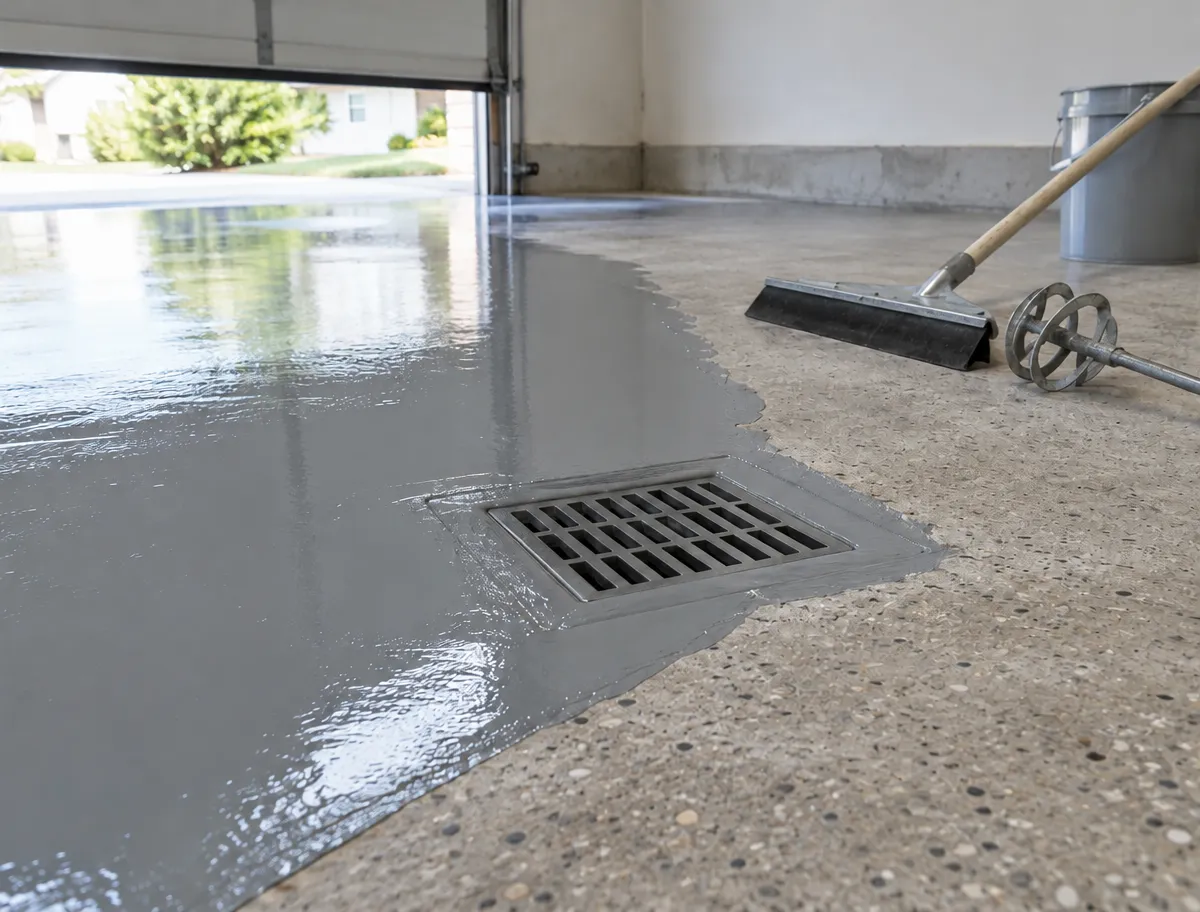
Epoxy coatings contain two component materials: a polyamine hardener and epoxy resin. A professional contractor mixes these two parts before application, triggering a chemical reaction that transforms the liquid into a rigid, durable surface. On a properly ground slab, the coating can work into the open concrete pores for a strong bond. Paint, by contrast, relies on evaporation and sits on the surface without forming that bond.
How Does Curing Affect Durability?
Curing produces a surface that is much tougher than dried paint. When 100 percent solids epoxy coatings are used, the surface becomes hard and durable. The cured material resists chemicals, abrasion, impact, oil and grease, and stains. A painted floor offers far less of this protection. Homeowners who park vehicles, store equipment, or work on projects in their garage need that resistance. Without it, hot tire pickup, road salt, and spilled fluids can degrade the floor quickly.
| Property | Epoxy Coating | Garage Floor Paint |
|---|---|---|
| Application | Two-part system mixed on site | Single-part, ready to use |
| Bonding | Chemical cure bonds to ground concrete | Surface-level drying |
| Chemical Resistance | High resistance to oil, grease, solvents | Limited resistance |
| Durability | Hard, impact-resistant finish | Prone to peeling and wear |
| Installation Window | Typically needs slab temperatures above about 50°F | Typically needs temperatures above about 50°F |
Specialty Concrete Coatings applies these systems with careful surface preparation. Diamond grinding opens the concrete pores so the mixed coating bonds well. That step is critical. Skipping it leaves even a quality coating vulnerable to failure.
Can Epoxy Be Installed Year-Round?
Most epoxy systems need slab temperatures above roughly 50°F, which in Western Pennsylvania generally limits installation to late spring through early fall. Our guide to the best time to coat a garage floor in Pittsburgh covers that seasonal window. Pittsburgh winters can rule out epoxy application for months at a time. The company offers polyurea and polyaspartic coatings designed to cure in temperatures as low as -20°F, providing a year-round alternative. Our article on cold-weather concrete coating installation explains how that works. Homeowners who miss the seasonal window for epoxy still have a high-performance option.
📞 Tired of Repainting Your Garage Floor? Specialty Concrete Coatings installs professional polyurea floor systems across Greater Pittsburgh and NW Pennsylvania. Request a free garage floor coating quote and see what a real coating would cost for your space.
Why Does Paint Fail on Garage Floors?
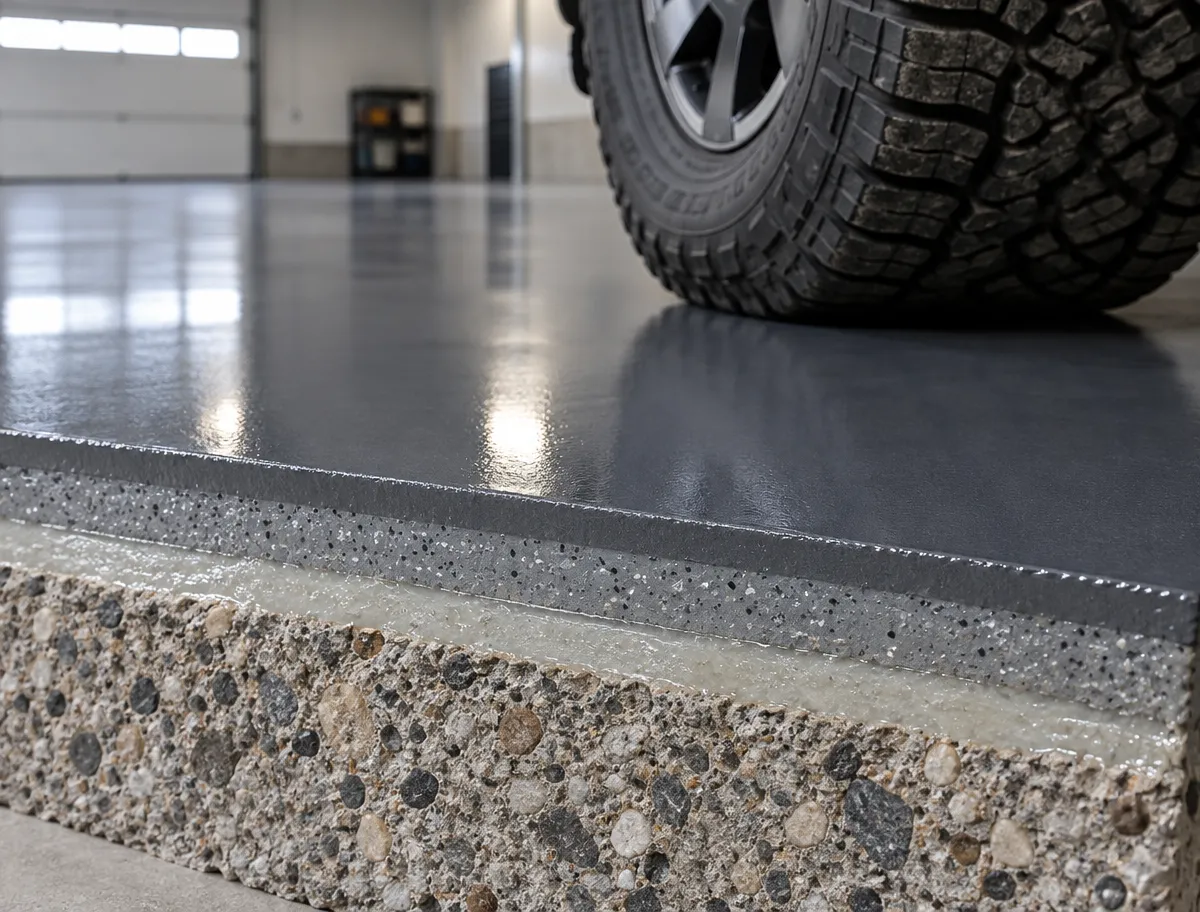
Garage floor paint fails because it forms a thin surface film rather than a cured structural layer. Paint dries on top of the slab. Epoxy and polyurea coatings cure chemically and bond to properly prepared concrete. That distinction often determines whether a garage floor resists damage or starts deteriorating within a single season.
How Do Pittsburgh Weather Conditions Damage Painted Floors?
Pittsburgh’s climate subjects garage slabs to constant moisture stress. Wet springs, humid summers, and freeze-thaw cycles can push water vapor up through the concrete from the soil below. University of Minnesota Extension’s guide to moisture in basements and concrete slabs explains where that moisture comes from. A painted surface can trap moisture underneath, and the film blisters, then peels away in sheets. Choosing the wrong coating system for these moisture conditions can lead to bubbling, peeling, and early failure. A moisture test such as the calcium chloride method in ASTM F1869 for moisture vapor emission helps show what a slab is dealing with before anything is applied.
Surface preparation adds another vulnerability. Paint needs only a clean, dry substrate to adhere. Professional coatings require diamond grinding that opens the concrete’s pores for a mechanical bond. Paint simply sits where it lands. Hot tires, road salt, and oil can soften and lift the acrylic film, which is the critical weak point in most epoxy vs paint garage floor comparisons. Garage floor paint hides minor imperfections for a while, then gives way to the wear of daily use.
| Factor | Garage Floor Paint | Professional Polyurea Coating |
|---|---|---|
| Bond Mechanism | Surface adhesion (dries on top) | Chemical cure bonded to a diamond-ground slab |
| Moisture Tolerance | Low; can trap vapor, causing peeling | Higher when paired with moisture testing and mitigation |
| Cure Window | Temperature-dependent; typically not applied below about 50°F | Designed to cure in temperatures as low as -20°F |
| Durability Under Traffic | Light-duty only; can soften under hot tires | Impact- and chemical-resistant |
Why Do DIY Paint Jobs Fail Faster Than Expected?
DIY application cuts labor costs but gives up the bond strength that comes from professional surface preparation. The garage floor paint kits sold in home improvement stores were not engineered for heavy-duty use; they serve light-duty spaces. A Pittsburgh homeowner parks vehicles dripping brine onto the surface. The paint softens. Tires lift it off the slab in strips. As our comparison of DIY epoxy vs professional garage floor coating explains, DIY installations usually lack the diamond-ground profile that anchors a coating, which can leave homeowners with a failed floor and a second, more expensive fix.
When Is Garage Floor Paint Good Enough?
Paint is not always the wrong choice. It can make sense when the floor will see little wear and you mainly want a cleaner look:
- Low-traffic storage spaces such as a shed, a garage bay used only for boxes, or a seldom-used workshop corner
- Short-term cosmetic refreshes, for example before listing a house, when you accept that it will need redoing
- Walls, curbs, and steps that do not see tire traffic
- Tight budgets where repainting every year or two is acceptable
If you park a car on the floor, track in winter slush, or use the garage as a workspace, paint will usually need frequent touch-ups, and a real coating is the better long-term fit.
What Makes Professional Coatings Last Longer?
Professional coatings outlast garage floor paint because of surface preparation, material chemistry, and a multi-layer system. Paint sits on top of the concrete. A professional coating bonds to it. The difference in longevity comes down to a few specific factors that separate a one-day professional installation from a weekend DIY project.
Why Does Surface Preparation Matter More Than the Coating Itself?
Mechanical preparation determines whether a coating bonds or fails. Specialty Concrete Coatings LLC uses diamond grinding to open the concrete’s pores. Cracks and spalls receive repair with concrete menders before any coating touches the slab. Paint applied over unground concrete adheres only to surface dust and laitance. That bond can break under vehicle traffic and seasonal movement. A mechanically profiled floor gives the basecoat a grip that paint does not achieve. Installers compare the ground surface to standardized ICRI concrete surface profile chips, and AMPP’s overview of concrete surface preparation and coating selection explains why preparation comes first.
How Does a Polyurea Basecoat Compare to Traditional Epoxy?
Specialty Concrete Coatings LLC uses a polyurea basecoat designed for strong adhesion to properly prepared concrete. Polyurea is generally more flexible than traditional epoxy, which helps it move with the concrete as it expands and contracts through Pittsburgh’s freeze-thaw cycles, while some epoxies can become brittle over time. A UV-stable polyaspartic clear coat then seals the system. This top layer resists yellowing, abrasion, and chemical spills that can dull or strip a painted surface within months.
| Factor | Professional Polyurea System | Garage Floor Paint |
|---|---|---|
| Surface Prep | Diamond grinding, crack repair | Basic cleaning |
| Basecoat | Polyurea | Acrylic or latex |
| Topcoat | UV-stable polyaspartic | None |
| Cure Range | Designed for temperatures as low as -20°F | Typically about 50°F minimum |
| Return to Service | About 12 hours to walk, 48 hours to drive (varies with conditions) | Often 24–72 hours, depending on the product |
Temperature tolerance extends the installation window. Polyurea and polyaspartic coatings designed for cold weather allow installation in more months of the year, while epoxy and paint need warmer conditions and can fail when applied outside their temperature range. The process supports one-day installation in many cases, with homeowners typically walking on the surface in about 12 hours and driving on it within 48 hours; actual cure times vary with temperature, humidity, and the products used. A polyurea vs epoxy cost comparison shows how the higher initial investment in a professional coating compares with materials that need replacing sooner.
How Do the Costs of Paint and a Real Coating Compare Over 10 Years?
Paint is cheaper on day one, but a 10-year view tells a different story. The real comparison is the upfront cost of each option plus everything you spend to keep it looking acceptable:
| Cost factor over 10 years | Garage floor paint | Professional coating |
|---|---|---|
| Upfront cost | Lowest | Higher |
| How often it is redone | Often every year or two in a parked-in garage | Generally far less often when properly installed |
| Prep each time | Cleaning, scraping peeling areas, and repainting | Routine cleaning; occasional topcoat refresh if needed |
| Your time and labor | Repeated weekends of DIY work | One professional installation |
| Risk of a bigger fix later | Peeling paint usually has to be ground off before a real coating can go down | Lower when prep and moisture testing are done right |
Pricing note: The cost comparisons in this article are for general guidance only. Actual costs vary based on garage size, slab condition, moisture, the coating system chosen, and how the space is used, and pricing can change at any time. Contact Specialty Concrete Coatings for a current, accurate quote.
Can You Put a Real Coating Over a Painted Garage Floor?
Not directly. A professional coating is only as strong as what it is bonded to, and old paint is a weak, loosely attached layer. To convert a painted floor, installers typically diamond grind the paint off completely, repair cracks and spalls, test moisture, and then install the new system on bare, profiled concrete. Where there is any doubt about the bond, a pull-off test such as ASTM D7234 for coating adhesion on concrete can measure how well a coating is attached. Our garage floor coating services always start with that full surface preparation.
Which Option Should You Choose?
The decision between garage floor paint and a professional coating system comes down to performance expectations and long-term value. Paint provides a temporary cosmetic refresh. A professionally installed polyurea or epoxy system provides protection that can last for many years. Choose the wrong coating system for your slab’s moisture conditions and it can bubble, peel, and fail early.
What Makes a Professional Coating Worth the Investment?
Specialty Concrete Coatings has served Pittsburgh and Western PA for over 15 years and has earned 5-star ratings from its customers, as you can see in our customer reviews. That track record reflects consistent results across thousands of residential and commercial projects. A professional application includes diamond grinding for mechanical adhesion, crack repair, and a UV-stable clear topcoat. Paint skips every one of those steps.
How Do the Options Compare Side by Side?
| Criteria | Specialty Concrete Coatings | Garage Floor Paint |
|---|---|---|
| Durability | Polyurea basecoat resists impact, chemicals, and abrasion | Surface-level acrylic wears quickly under vehicle traffic |
| Installation | Professional diamond grinding, repair, and multi-coat system | DIY roller application with minimal prep |
| Cure time | Walkable in about 12 hours; drive-on in about 48 hours | Dries in hours but remains vulnerable to hot-tire pickup |
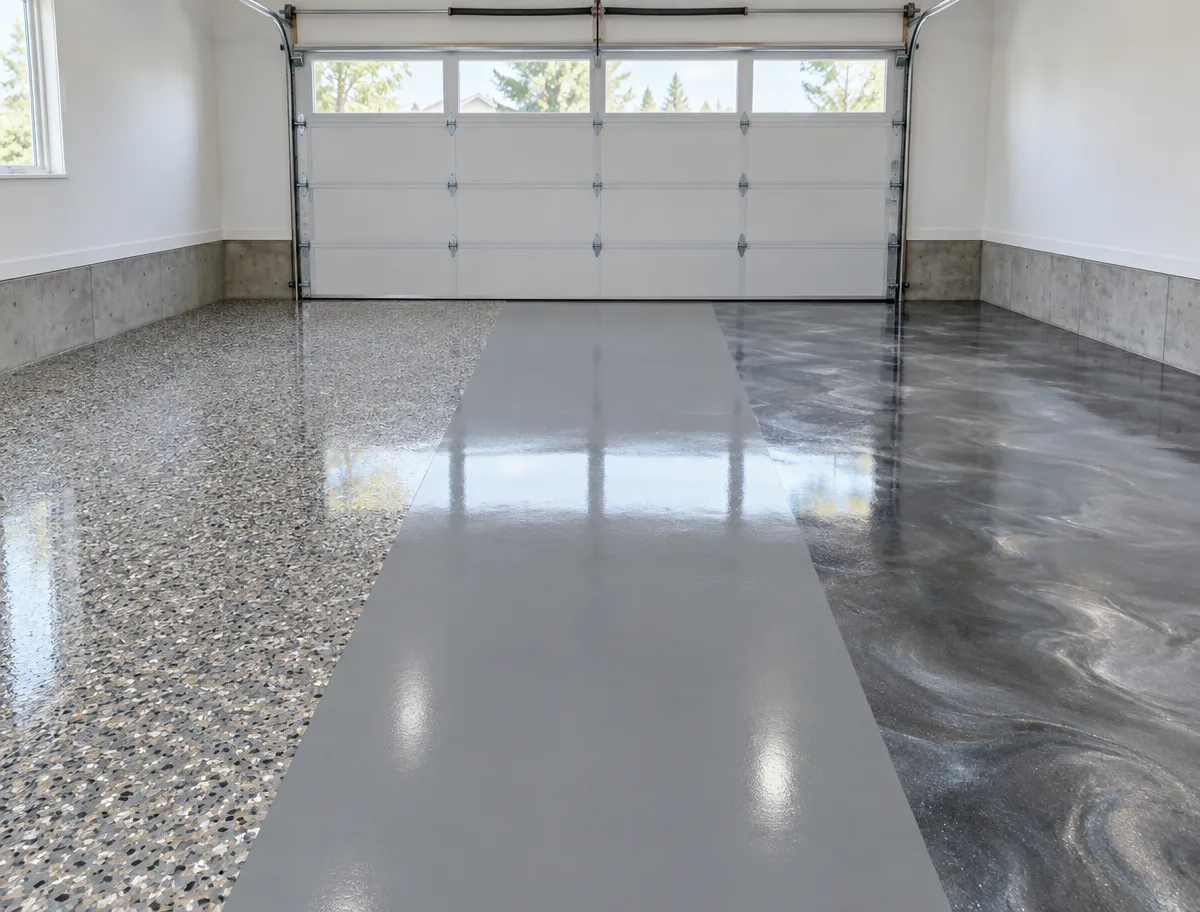
| Aesthetics | Curated palette of chip color blends for garages, basements, and patios | Limited solid color options |
| Lifespan | Years of performance, backed by a written warranty | Often months to a year or two before recoating is needed |
| Cost | Free, no-hassle estimate provided for every project | Lower upfront material cost |
Customers select from a curated palette of chip color blends to complement garages, basements, patios, or commercial interiors. That design flexibility pairs with a surface that resists salt, oil, and freeze-thaw damage. You can review the details of our floor coating warranty, and Specialty Concrete Coatings offers free, no-hassle estimates so property owners can weigh the investment against the recurring cost and labor of repainting every year or two.
Frequently Asked Questions
How long does garage floor paint last compared to epoxy coating?
In a garage you park in, garage floor paint often lasts only months to a year or two before it starts peeling, while a professionally installed epoxy or polyurea coating can last for many years. Traffic, moisture, and preparation all affect lifespan.
Why does garage floor paint peel in Pittsburgh’s climate?
Paint can trap moisture underneath and lacks the bond strength and flexibility for freeze-thaw cycles, so it tends to blister and peel. Hot tires and road salt soften the film further. Professional polyurea coatings are designed to hold up better against road salt and moisture.
What makes epoxy coating bond better than paint to concrete?
Epoxy cures through a chemical reaction and bonds to concrete that has been diamond ground to open its pores. Paint simply dries as a thin surface film without bonding into the concrete.
Is epoxy paint the same as an epoxy floor coating?
No. Most garage “epoxy paint” is a one-part acrylic or latex paint with some epoxy added. It dries by evaporation and leaves a thin film, while a true epoxy coating is a two-part resin and hardener that cures chemically into a much thicker layer.
Is garage floor paint ever a good choice?
Yes, for low-traffic spaces like storage areas, sheds, or a quick cosmetic refresh where you expect to repaint. For a garage where you park vehicles or track in winter slush, a professional coating is usually the better long-term value.
TL;DR — Garage Floor Paint vs a Real Coating at a Glance
- Garage floor paint, including one-part “epoxy paint,” is a thin film that dries on the surface rather than bonding to the concrete.
- Hot tires, road salt, and moisture vapor can make paint peel, often within months to a year or two in a parked-in garage.
- Real coatings such as 100% solids epoxy or polyurea are two-part systems that cure chemically and bond to a diamond-ground slab.
- Paint is fine for low-traffic storage spaces; over 10 years, repeated repainting narrows the cost gap with a professional coating.
- A painted floor has to be ground down to bare concrete before a real coating can go on.
- Next step: Request a free garage floor coating quote from Specialty Concrete Coatings.
Related Resources
- Garage Concrete Coating
- Pittsburgh, PA Concrete Coating Company
- How Much Does Garage Floor Coating Cost?
- Polyaspartic vs Epoxy Garage Floor
- Why Epoxy Garage Floors Peel and How to Fix It
- Best Garage Floor Coating for 2026
Get a Free Garage Floor Coating Quote
The choice between garage floor paint and a professional coating system ultimately comes down to how long you expect the floor to perform. Paint offers a quick cosmetic fix that often fails under vehicle traffic and freeze-thaw cycles. A professionally installed polyurea system bonds to diamond-ground concrete, flexes with seasonal movement, and resists the salt and chemicals that break down painted surfaces. Homeowners who want a floor built for Pittsburgh winters should start with a free estimate and a system engineered for the job. Contact Specialty Concrete Coatings today for a free, no-obligation quote.
About Specialty Concrete Coatings: Specialty Concrete Coatings is a concrete coating contractor serving Greater Pittsburgh and Northwest Pennsylvania, specializing in garage, basement, patio, and commercial floor coatings. The team provides free estimates and professional surface preparation so every floor gets a coating system matched to its conditions. Contact us today for a free, no-obligation quote.