Quick Answer: Diamond grinding a concrete floor before coating opens the surface so the coating can grip solid concrete. The grinder removes laitance, old sealers, paint, and contaminants and leaves a rough, consistent texture called a concrete surface profile. Without that profile, a coating often bonds only to weak surface material and is more likely to peel, bubble, or lift. Acid etching is a common shortcut, but it can leave residue, etch unevenly, and cannot remove existing sealers. That is why Specialty Concrete Coatings treats grinding as the step that decides whether a floor coating lasts.
Diamond grinding mechanically profiles concrete, creating the rough anchor surface coatings need for strong, long-lasting adhesion. Specialty Concrete Coatings LLC uses this preparation on its installations instead of acid etching, which can leave residue behind. Grinding removes contaminants, opens pores, and helps the polyurea basecoat bond properly, reducing the risk of peeling, delamination, and costly floor failures.
Why Does Diamond Grinding Matter Before Coating?
Professional concrete coatings depend on a surface preparation method that creates a strong bond. Diamond grinding concrete floor systems open the concrete’s pores mechanically, a result that acid etching and simple cleaning usually cannot match. Without this step, even premium coatings can peel and delaminate early, and the result is a damaged floor plus the cost of removal and reinstallation. ASTM’s standard practice for preparing concrete by abrasion describes abrasion as a way to roughen the surface and clear away contaminants and weak material so coatings adhere well.
What Happens When Concrete Grinding Is Skipped?
DIY kits often rely on broom cleaning or acid etching. These methods can leave behind a weak surface layer called laitance, so the coating bonds to that fragile layer instead of solid concrete. The floor may look fine for weeks. Then hot tires, moisture, and foot traffic break that bond and the coating can lift in sheets. Our article on DIY garage floor coating problems covers more of the shortcuts behind these failures. Professional installers work to avoid this outcome: concrete grinding removes the laitance and profiles the surface to a consistent texture.
How Does the Grinding Process Work?
Specialty Concrete Coatings follows a multi-step process on its installations. The sequence begins with mechanical preparation by diamond grinding:
- Inspect the slab for cracks, spalls, contaminants, and signs of moisture.
- Diamond grind the entire surface with professional equipment to expose clean, porous concrete.
- Repair defects with high-strength concrete menders.
- Remove all dust and debris before applying the basecoat.
This method creates a surface profile that the polyurea basecoat can grip. The result is a strong bond that helps the floor resist peeling and blistering.
Why Do Professionals Choose Grinding Over Acid Etching?
Acid etching introduces variables. Concrete age, mix design, and previous sealers all change how the acid reacts, and an inconsistent etch can leave weak spots. Etching also leaves residue that has to be rinsed away, adds water to the slab, and cannot remove existing sealers or paint. Diamond grinding delivers a more uniform result regardless of these factors. The company’s one-day garage floor coating process depends on this predictable, repeatable preparation step.
What Happens If You Skip Concrete Grinding?
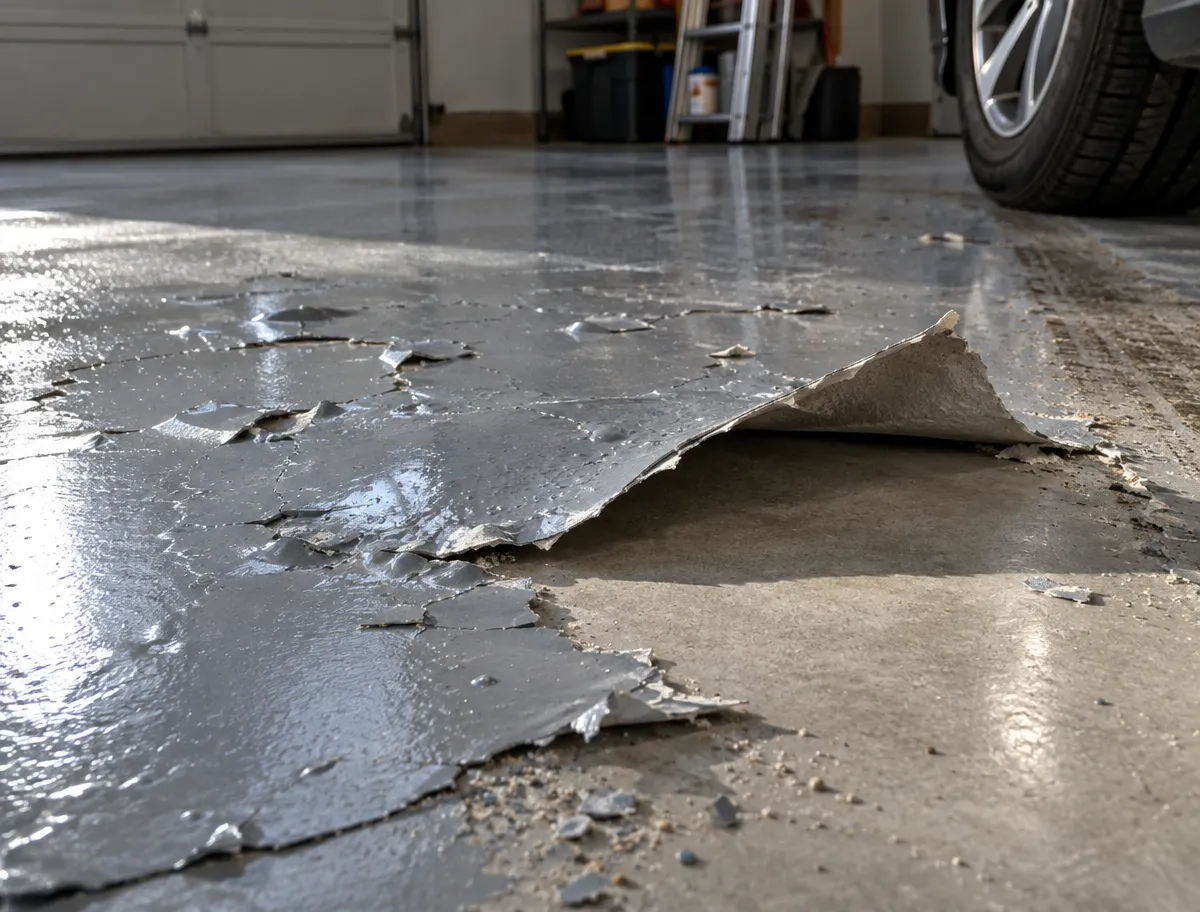
Skipping concrete grinding before applying a floor coating is a common cause of premature failure. The coating may never form a strong mechanical bond and can separate from the slab, sometimes within months of installation. Our guide to why epoxy garage floors peel walks through how poor prep shows up later.
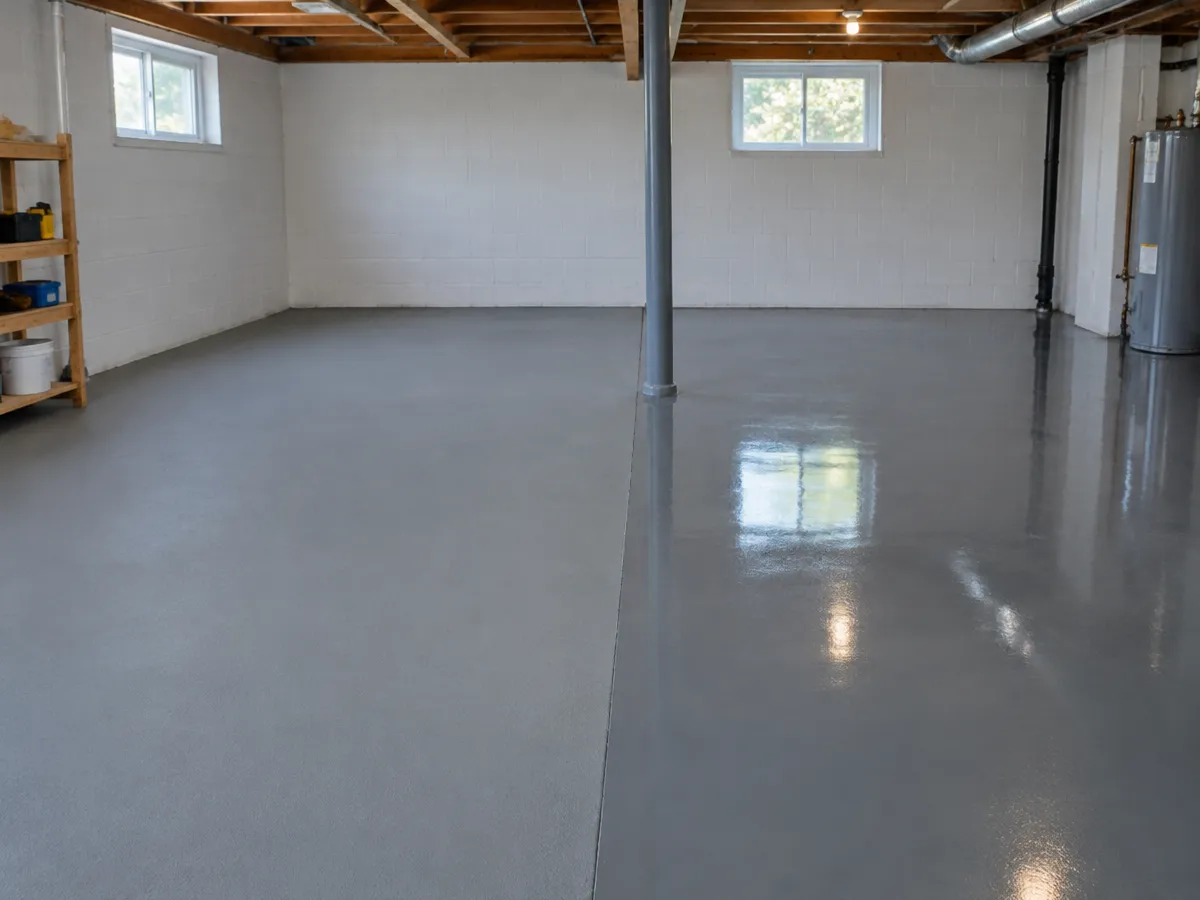
Moisture is one of the biggest obstacles to a successful basement or garage floor coating in Western Pennsylvania. Wet springs, humid summers, and freeze-thaw winters can drive water vapor up through the concrete, which is why moisture should be checked before coating. Our guide to the best basement floor coating for moisture explains how moisture conditions affect coating choice.
How Does Trapped Moisture Damage a Coating?
The damage often follows a predictable sequence. Moisture vapor pressure builds under a non-breathable coating layer. Bubbles form as the coating lifts away from the slab. Peeling begins at the edges and can spread across the floor. In severe cases, the coating delaminates, leaving the concrete exposed.
Choosing the wrong coating system for local moisture conditions can cause the same outcome. Diamond grinding concrete floor preparation opens the slab’s pores and allows a moisture-mitigating primer, when one is needed, to penetrate. In this region, that combination of grinding and moisture evaluation is an important part of the job.
Can a Coating Last Without Grinding in a Dry Climate?
Grinding still matters, even in drier regions. The mechanical profile created by diamond grinding gives the coating material something to grip, and acid etching or simple cleaning usually cannot produce the same consistent profile. Coatings applied to unground concrete tend to rely on a weaker bond that can fail under traffic, temperature swings, and everyday use. The failure may be slower in dry conditions, but the risk remains.
Specialty Concrete Coatings LLC addresses Western Pennsylvania’s moisture challenges through diamond grinding and moisture evaluation. Homeowners concerned about damp basement slabs can review our guidance on whether epoxy can be applied to a damp basement floor. The process starts with proper surface preparation, because skipping that step raises the risk of a costly redo.
📞 Want Prep Done Right the First Time? Specialty Concrete Coatings grinds, repairs, and coats floors across Greater Pittsburgh and NW Pennsylvania. Request a free floor coating quote and ask us how we prepare your slab before the first coat goes down.
How Does Diamond Grinding Concrete Floor Prep Work?
Diamond grinding concrete floor preparation mechanically abrades the surface to create a profile that coatings bond to. Many professional garage and commercial projects use this method instead of acid etching or simple cleaning, because skipping it leaves coatings vulnerable to peeling and premature failure. AMPP’s guide to concrete surface preparation and coating selection lists laitance among the surface defects to check for and names grinding among the more aggressive preparation methods.
The process uses heavy-duty diamond grinders. Electric grinders are generally preferred indoors, since gas-powered equipment can produce carbon monoxide in enclosed spaces like garages and basements.
What Is a Concrete Surface Profile (CSP)?
A concrete surface profile describes how rough the prepared surface is, from nearly smooth to heavily textured. The International Concrete Repair Institute’s Guideline 310.2R on selecting concrete surface preparation uses numbered CSP benchmark profiles so installers and specifiers can match the texture to the coating. Thin coatings generally need a lighter profile, while thicker systems and overlays need a rougher one. Grinding lets the installer produce the profile the coating system calls for instead of guessing.
What Does Grinding Remove?
- Laitance: The weak, chalky cement layer that forms on top of many slabs.
- Old sealers and paint: Existing films that a new coating cannot bond through.
- Contaminants: Ground-in dirt, oil residue, and other material that blocks adhesion.
- High spots and ridges: Minor surface irregularities that would show through a thin coating.
What Equipment Does Professional Concrete Grinding Require?
Professional concrete grinding relies on diamond grinders built for floor prep, not acid washes. The equipment removes laitance, contaminants, and weak surface layers that block adhesion. This mechanical approach creates the rough profile coatings need to grip.
What Is the Preparation Sequence?
On a typical install day, the prep work moves in this order:
- Check the slab’s condition and moisture before any work begins.
- Grind the entire concrete surface with a diamond grinder to expose clean, porous concrete.
- Repair cracks and spalls with concrete menders before any coating goes down.
- Vacuum and clean the surface, then apply a high-adhesion basecoat.
Specialty Concrete Coatings LLC pairs grinding with crack repair and a high-adhesion basecoat to build a strong bond. Floors that skip proper preparation often fall well short of how long an epoxy floor coating actually lasts when it is installed correctly. Grinding is the foundation that largely determines coating longevity.
What Will You Notice on Grinding Day?
Diamond grinding is the loudest part of a coating installation. Expect steady machine noise while the crew works across the slab, so plan to keep pets and children away from the garage or basement during that stage.
Dust control matters too. Grinding concrete can release fine crystalline silica dust, and NIOSH found that attaching a shroud and HEPA vacuum to concrete grinders cut dust exposure by at least 90 percent. Professional crews typically use vacuum-attached grinders for that reason, which also leaves a cleaner surface for coating. OSHA’s respirable crystalline silica standard for construction covers dust collection for grinders used on silica-containing materials.
Grinding and repair add time at the start of the day, but they are part of the same installation schedule rather than a separate visit in most cases.
What Questions Should You Ask Any Installer About Surface Prep?
- Do you diamond grind the entire floor, or do you acid etch or just clean it?
- How do you check the slab for moisture before coating?
- How do you control dust during grinding?
- How do you repair cracks, spalls, and pits before the basecoat goes down?
- What surface profile does your coating system need, and how do you confirm you reached it?
What Steps Follow the Concrete Grinding Process?
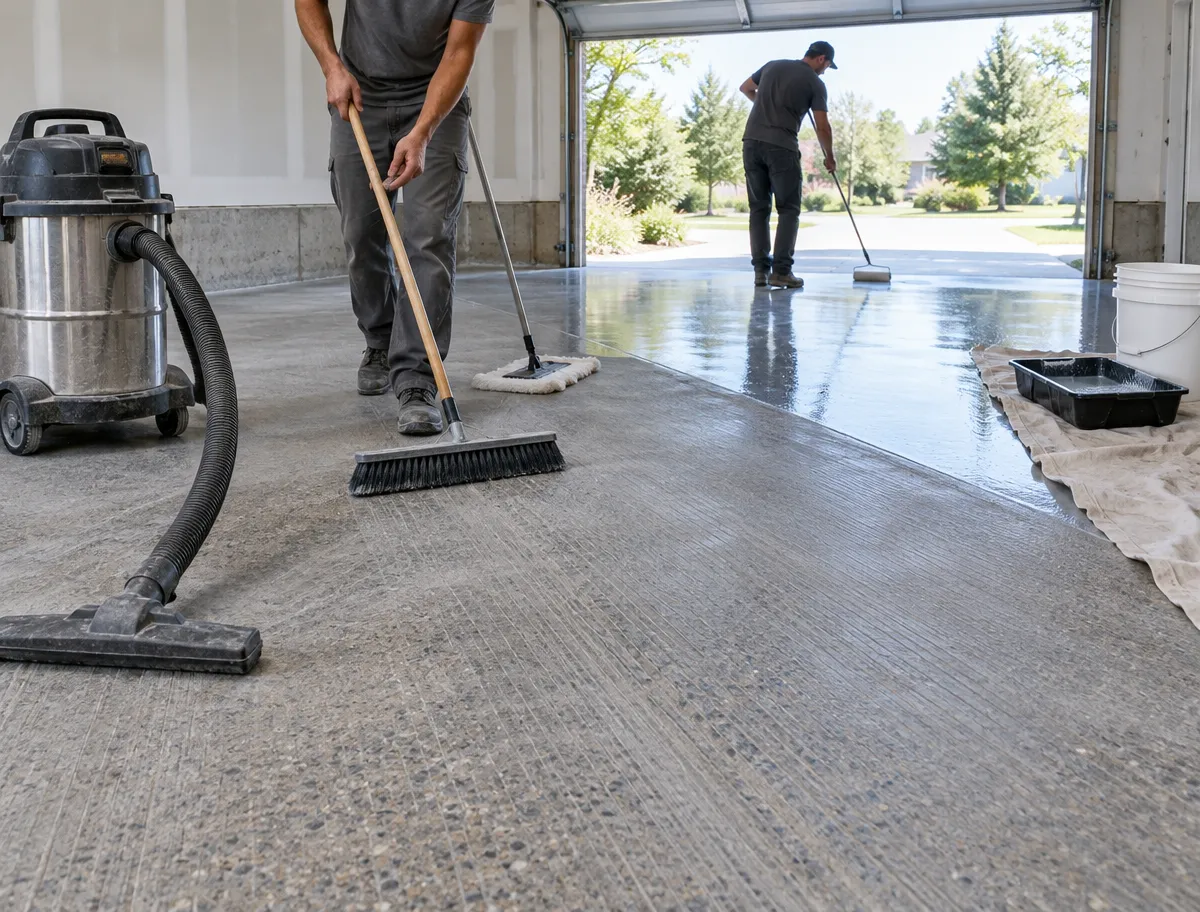
After diamond grinding concrete floor surfaces, Specialty Concrete Coatings applies a multi-layer coating system built for durability and a fast return to service. The concrete grinding step creates the profile needed for adhesion, but the steps that follow determine the final appearance and performance. Skipping or rushing them leaves the floor vulnerable to peeling, staining, and premature wear.
What Happens After the Basecoat Is Applied?
The application sequence follows a strict order, and each step builds on the previous one.
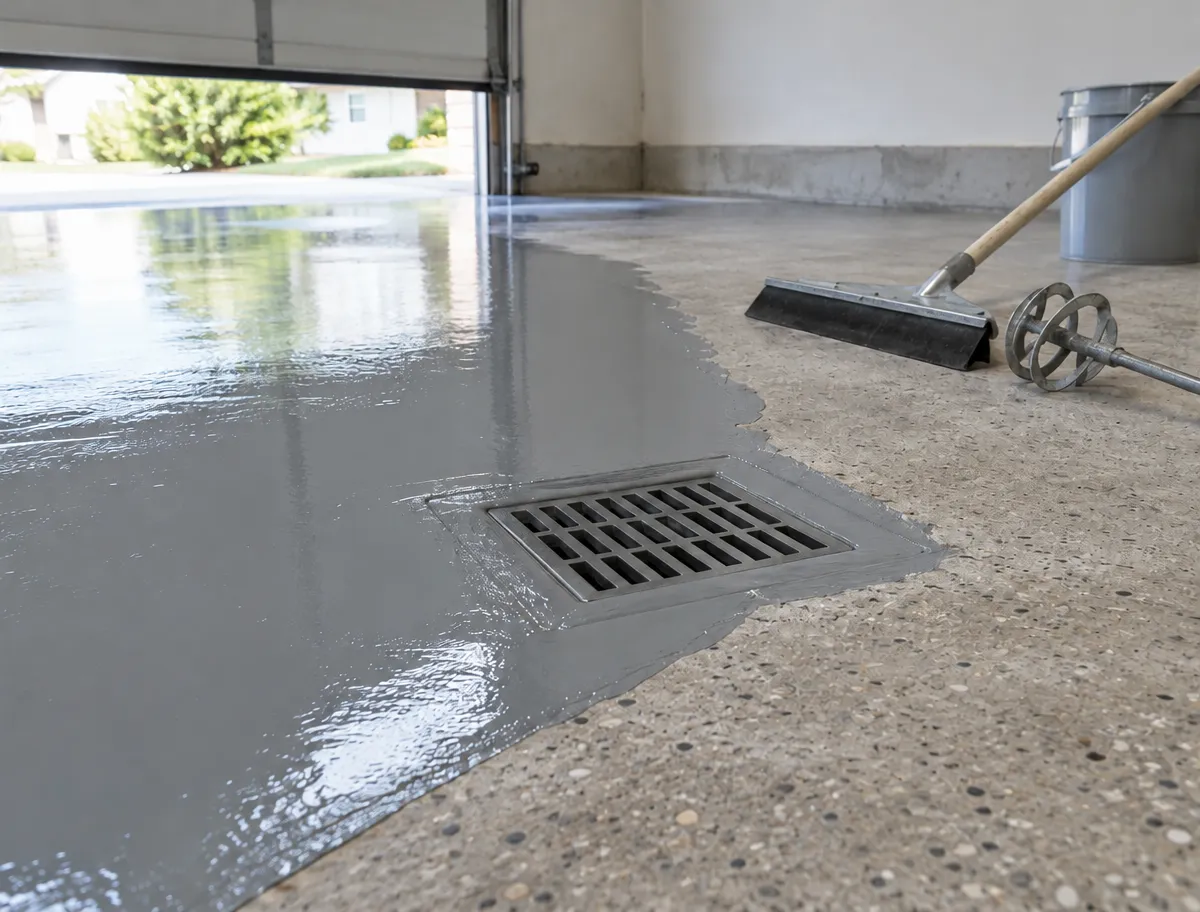
- Apply the polyurea basecoat. The polyurea basecoat is designed for strong adhesion to properly prepared concrete. This layer bonds to the freshly ground slab and forms the foundation of the coating system.
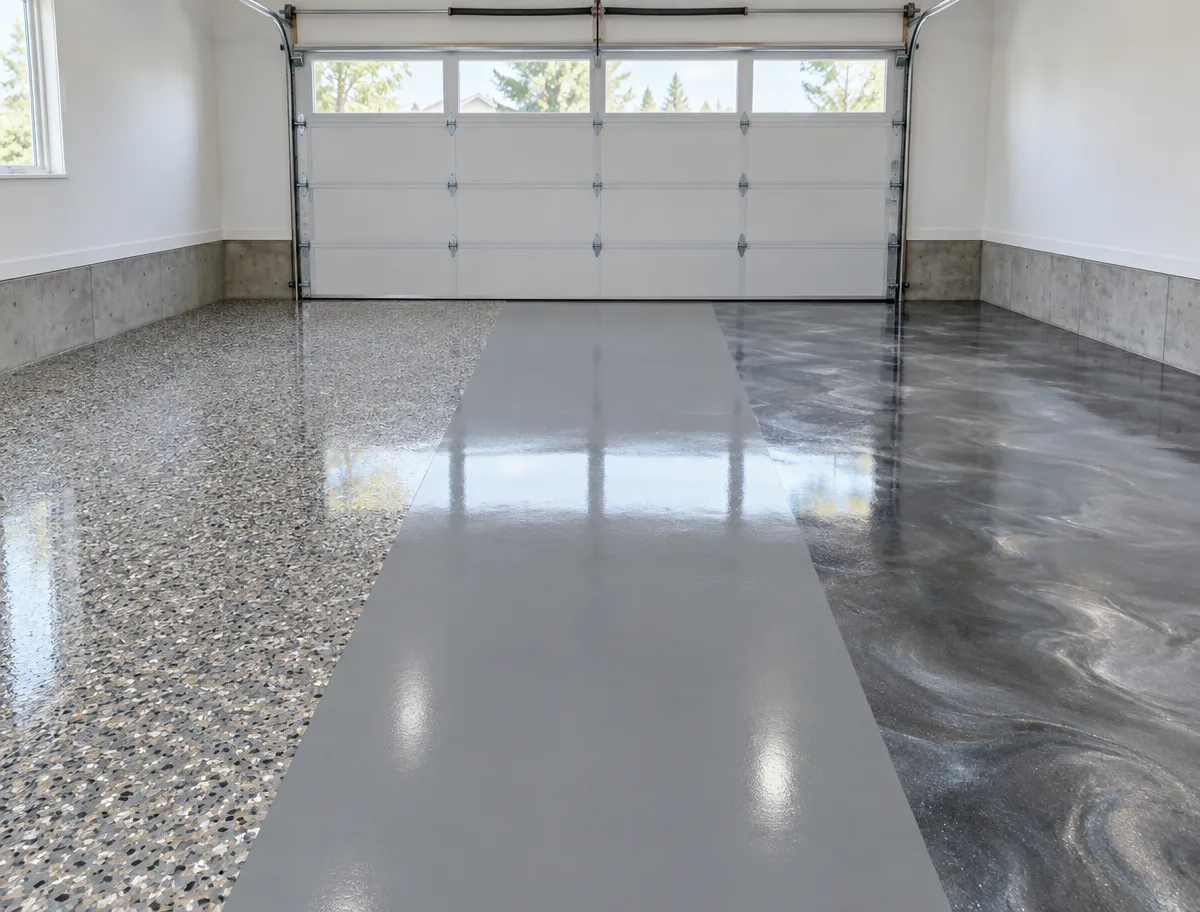
- Hand-broadcast vinyl color chips. Installers hand-broadcast vinyl color chips across the wet basecoat for a customized look and added slip resistance.
- Scrape excess chips. Once the basecoat cures enough to hold the chips, excess chips are scraped away to create a uniform texture.
- Apply the UV-stable polyaspartic clear coat. A final clear coat seals the system and helps resist yellowing, abrasion, and chemicals.
Why Does the Clear Coat Matter for Pittsburgh Garages?
The clear coat is an essential layer. Without a UV-stable topcoat, floors exposed to sunlight can fade and yellow over time. The clear coat also helps protect against road salt, oil drips, and hot tire pickup. For commercial facilities, a similar system supports commercial floor coating in Pittsburgh, where chemical resistance and cleanability are critical.
In many cases, the full sequence from grinding to final clear coat is completed in one day. Floors are typically walkable after about 12 hours and ready for normal use within about 48 hours, although cure times vary with temperature, humidity, and the products used.
How Long Before You Can Use the Floor?
Specialty Concrete Coatings completes most installations in a single day. The floor typically becomes walkable about 12 hours after application.
Homeowners can usually move heavier items back onto the surface after about 24 hours, and vehicles can typically return to garage floors at about the 48-hour mark. These timelines reflect a multi-step process that pairs a polyurea basecoat with a UV-stable polyaspartic clear coat for fast curing.
What Determines the Curing Speed?
Polyurea basecoats generally cure faster than traditional epoxy systems. This chemistry supports the one-day installations Specialty Concrete Coatings offers across Greater Pittsburgh and Northwest Pennsylvania. Temperature and humidity influence exact cure times, but the 12-24-48 hour framework is a reasonable guide for most residential projects.
Can Furniture Go Back Sooner Than Vehicles?
Yes. The 24-hour window generally covers furniture, appliances, and storage units. Vehicle traffic needs the longer window because tires exert concentrated pressure and introduce heat that can damage a coating that is not yet fully hardened. Rushing this step risks surface damage.
For a broader look at material options in the region, our Pittsburgh PA garage floor coating guide outlines what to expect. The installation crew provides a specific timeline for your project based on job-site conditions.
Frequently Asked Questions
Why is diamond grinding necessary before coating concrete?
Diamond grinding mechanically profiles concrete, creating the rough anchor surface coatings need for strong adhesion. It removes laitance and contaminants, opening the pores so the polyurea basecoat can bond to solid concrete instead of weak surface material.
What happens if you skip diamond grinding before coating?
The coating may never form a strong mechanical bond and can separate from the slab. Common results include peeling at the edges, bubbling, and lifting, sometimes within months of installation.
Why do professionals choose diamond grinding over acid etching?
Acid etching can leave residue, produce an uneven profile, and cannot remove existing sealers or paint. Diamond grinding gives a more uniform, repeatable surface profile regardless of the slab’s age or prior coatings.
Is diamond grinding loud or dusty?
Grinding is the loudest step of a coating installation. Professional crews typically use grinders connected to vacuum dust collection, which greatly reduces airborne concrete dust and leaves a cleaner surface for coating.
Does diamond grinding damage the concrete?
Not when it is done properly. Grinding removes only a thin surface layer, such as laitance, old sealers, and contaminants, to expose sound concrete. Cracks and pits found during grinding are repaired before any coating is applied.
TL;DR — Diamond Grinding Concrete Floors at a Glance
- Diamond grinding opens the concrete surface so a coating can grip solid concrete instead of weak laitance.
- Grinding removes laitance, old sealers, paint, contaminants, and minor high spots.
- Acid etching is a weaker shortcut: it can leave residue, etch unevenly, and cannot remove sealers.
- A good prep sequence checks moisture, grinds, repairs cracks, and vacuums before the basecoat goes down.
- Expect noise on grinding day; vacuum-attached grinders help control dust.
- Next step: Request a free floor coating quote from Specialty Concrete Coatings.
Related Resources
- Concrete Floor Coatings
- Pittsburgh, PA Concrete Coating Company
- How to Fix a Peeling Epoxy Garage Floor
- DIY Epoxy vs. Professional Garage Floor Coating
- Polyurea Concrete Coating Explained
- Hot Tire Pickup on Epoxy Floors
Get a Free Floor Coating Quote
Diamond grinding is not a step to skip or shorten. It is the mechanical foundation that largely determines whether a coating system lasts or fails. Property owners who invest in professional preparation help protect their floors from peeling, bubbling, and premature wear before a single layer of coating is applied. Choosing to grind first is choosing to protect the entire investment, because it delivers the uniform, repeatable bond a durable floor needs. Contact Specialty Concrete Coatings today for a free, no-obligation quote.
About Specialty Concrete Coatings: Specialty Concrete Coatings is a concrete coating contractor serving Greater Pittsburgh and Northwest Pennsylvania, specializing in garage, basement, patio, and commercial floor coatings. The team grinds, repairs, and prepares every slab before applying a polyurea and polyaspartic coating system matched to its conditions. Contact us today for a free, no-obligation quote.