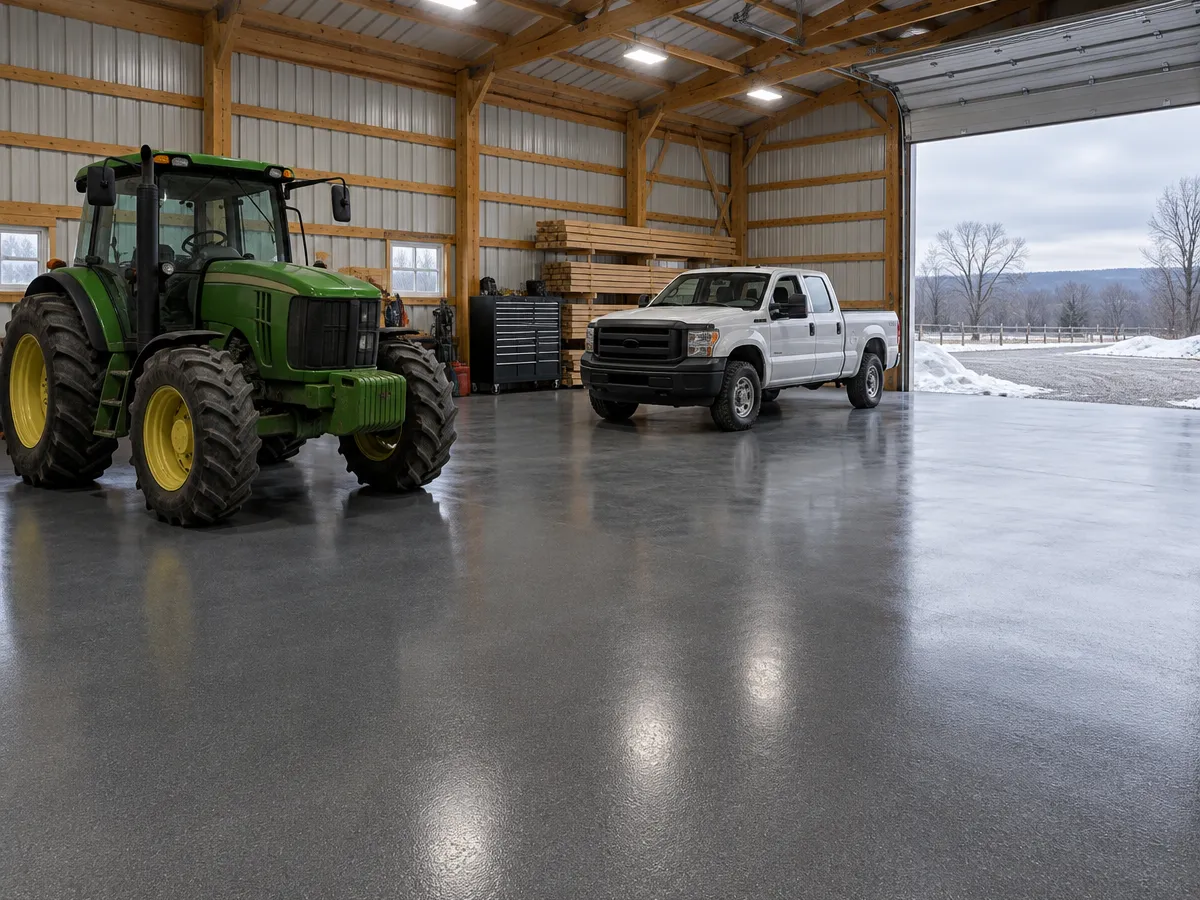
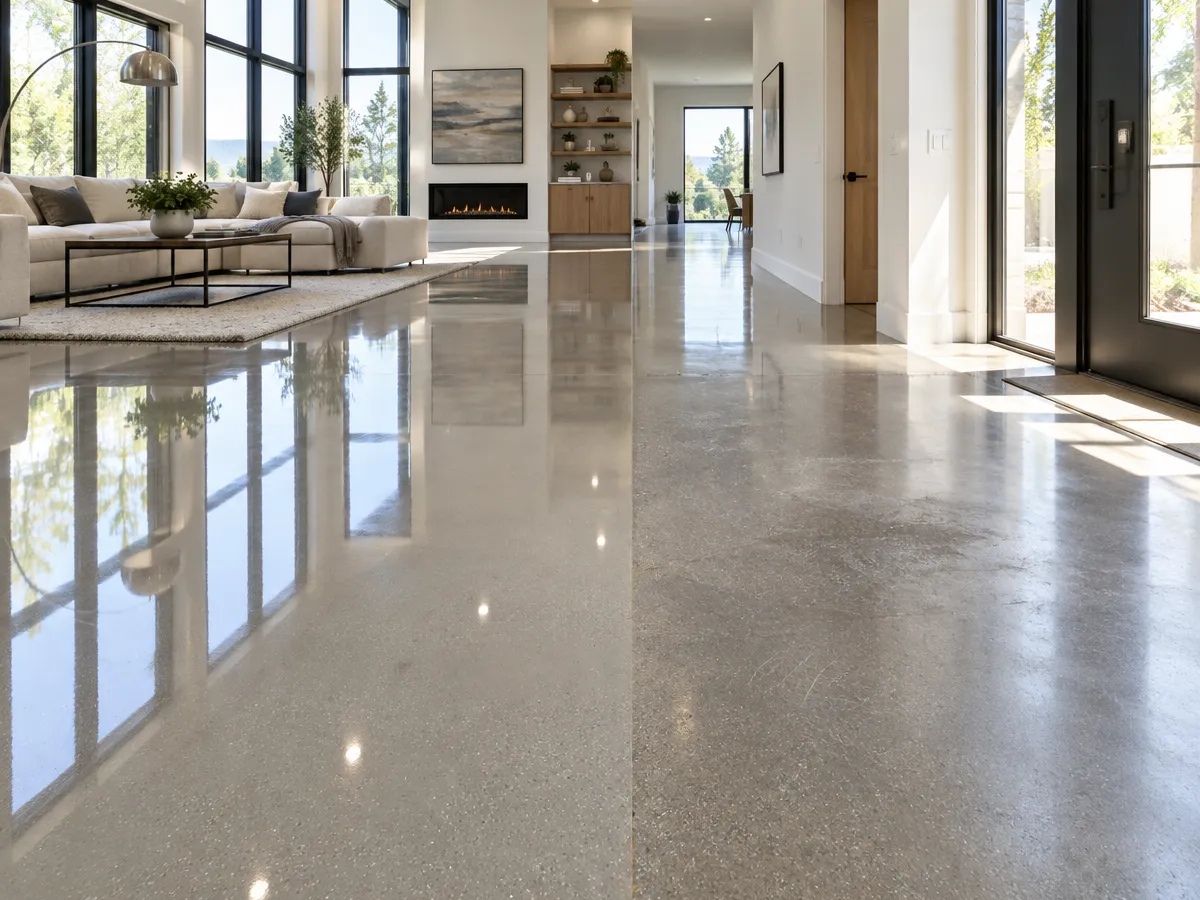
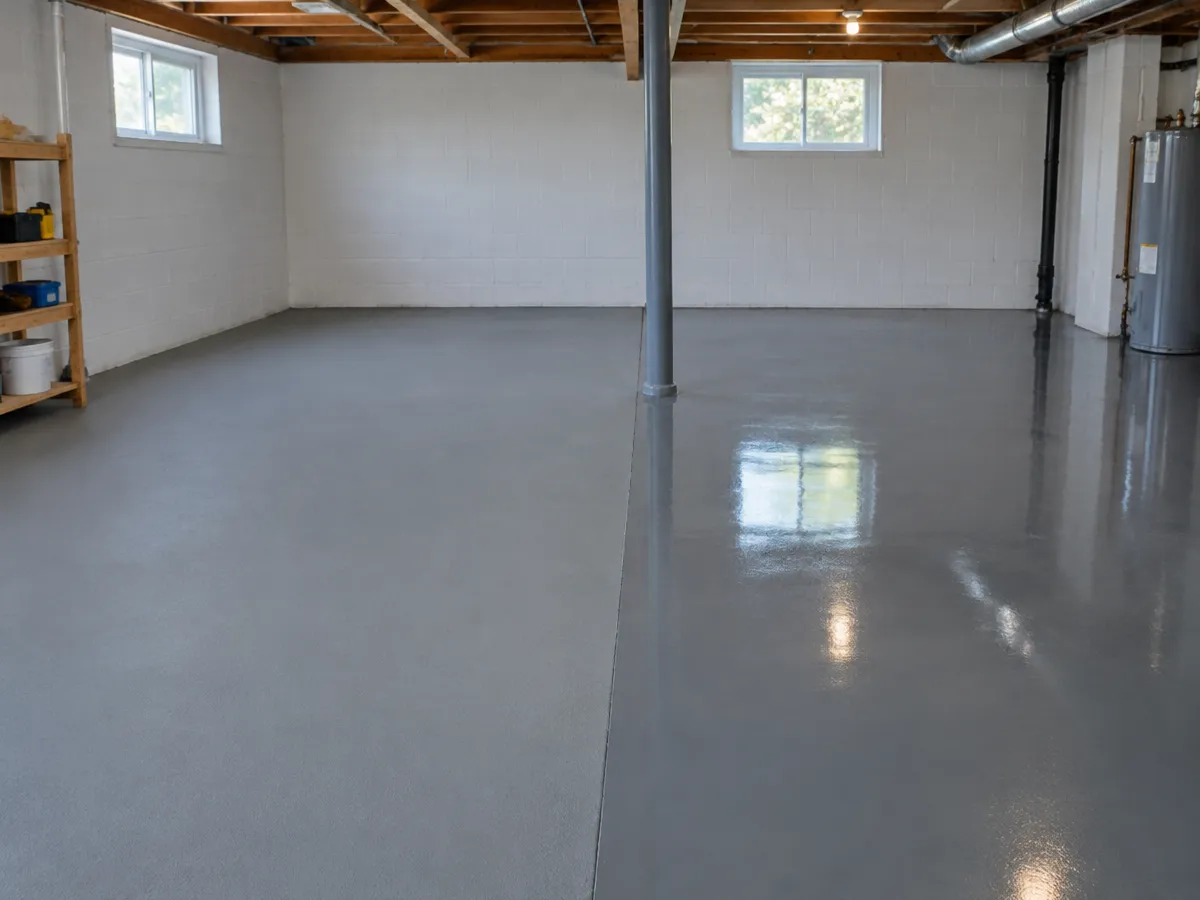
Quick Answer: The main pros of epoxy flooring are durability, a seamless surface that resists stains and chemicals, impact resistance, and customizable color-chip finishes at a lower upfront cost than premium systems. The main cons are moisture sensitivity, longer cure times, yellowing under direct sunlight, and heavy dependence on surface preparation. Epoxy is a strong fit for basements, interior workshops, and tighter budgets, while sun-exposed or fast-turnaround spaces are often better served by a polyurea and polyaspartic system.
What is epoxy flooring and how does it work?
Epoxy flooring is a surface created by applying resin and hardener over concrete. The two components react chemically to form a strong, seamless coating that resists abrasion and moisture. That bond is the foundation of every epoxy flooring pros and cons discussion, because performance depends on how well the coating attaches to the slab beneath it.
The chemistry matters more than the marketing. When resin and hardener combine, the resulting coating bonds directly to concrete and creates a seamless surface that resists stains, chemicals, and heavy foot traffic. A seamless surface leaves no grout lines or seams for dirt and moisture to collect in.
How does epoxy bond to a concrete floor?
Proper bonding starts with surface preparation, not the coating itself. Specialty Concrete Coatings mechanically prepares each surface by diamond grinding, then repairs cracks and spalls with concrete menders before applying a high-adhesion basecoat. This multi-step process gives the resin a clean, profiled surface to grip. Skipping preparation undermines the bond and shortens the life of the floor.
Where does epoxy flooring perform best?
Homeowners and property managers weigh epoxy for garages, basements, and workshops because the finished surface resists abrasion and moisture while remaining easy to clean. Basement applications deserve extra attention, since moisture and slab conditions vary widely below grade. A closer look at basement epoxy floor coating helps property owners judge whether the system suits a specific space.
| Evaluation Criterion | What Epoxy Delivers |
|---|---|
| Bond to concrete | Direct bond; seamless finish |
| Abrasion resistance | Resists wear from foot traffic |
| Moisture resistance | Resists moisture at the surface |
| Chemical and stain resistance | Resists stains and chemicals |
| Surface preparation | Diamond grinding and crack repair required |
The takeaway is straightforward: epoxy works when the slab is prepared and the resin and hardener are applied correctly.
What are the biggest advantages of epoxy flooring?
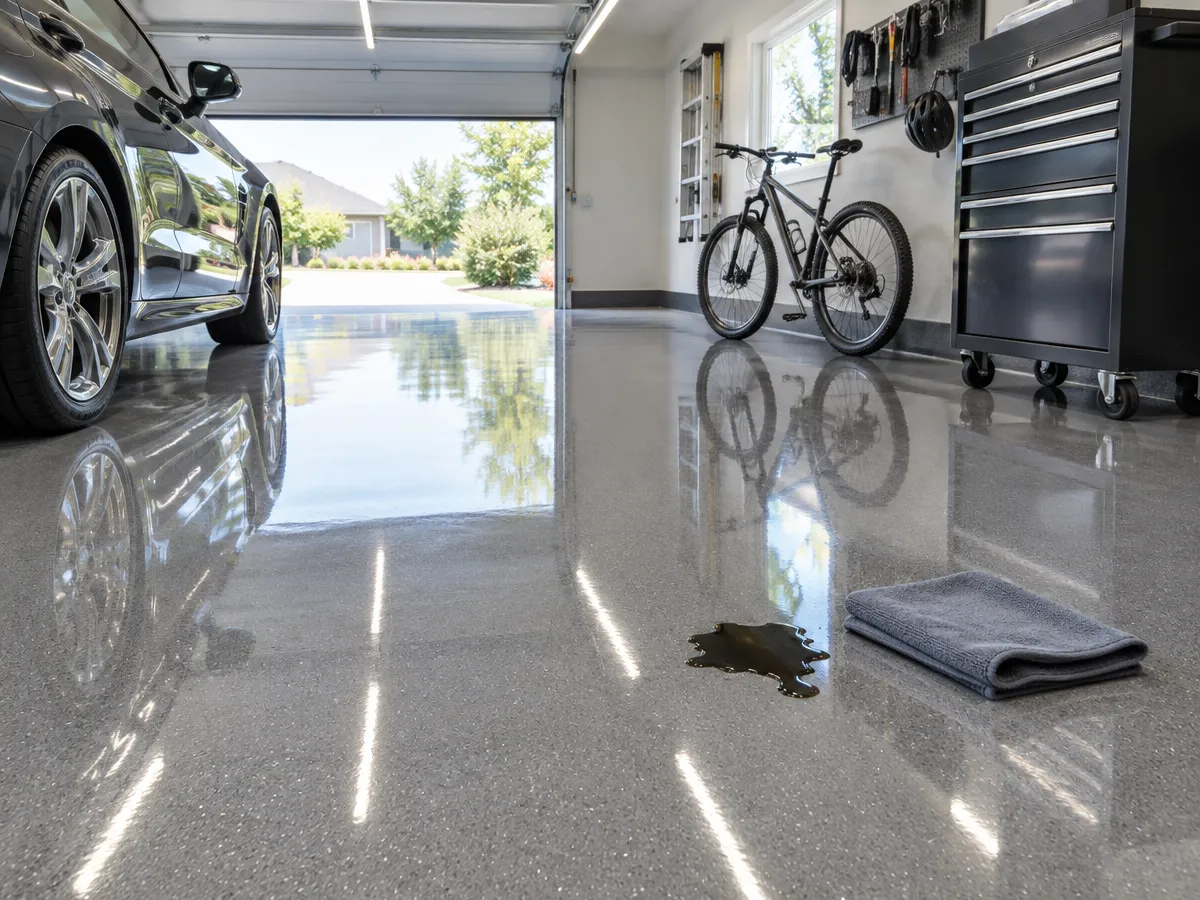
Durability ranks as the leading advantage of epoxy flooring. A properly applied epoxy coating bonds directly to concrete and creates a seamless surface that resists stains, chemicals, and heavy foot traffic.
The epoxy flooring pros and cons balance tips heavily toward the pros for garages, basements, and workshops. Epoxy handles heavy foot traffic, machinery, and equipment without wearing down quickly. The finish is also impact-resistant, so it withstands drops and heavy loads without cracking or chipping. Under normal use, an epoxy floor coating lasts a long time, though published lifetime estimates vary widely.
How does epoxy hold up in garages and basements?
Moisture and chemical resistance make epoxy a practical choice for hardworking spaces. The seamless surface keeps spills, oils, and cleaning products from soaking into the concrete beneath. Homeowners planning a garage upgrade can review garage floor coating options in Pittsburgh to compare systems and timelines.
Can epoxy be customized to match a design?
Color and texture flexibility give epoxy a strong aesthetic edge. Specialty Concrete Coatings hand-broadcasts vinyl color chips to achieve customized aesthetics and slip resistance on every installation. The result is a floor that complements a garage, basement, or workshop while adding traction underfoot.
| Advantage | What It Delivers |
|---|---|
| Durability | Long service life under normal use |
| Impact resistance | Withstands drops and heavy loads without chipping |
| Stain and chemical resistance | Seamless surface blocks spills and moisture |
| Customization | Color chips match any design and improve slip resistance |
Specialty Concrete Coatings brings more than 15 years of experience to every project, pairing these advantages with a disciplined multi-step installation process.
📞 Ready to Get Started? Not sure whether epoxy or a polyurea system fits your floor? Specialty Concrete Coatings provides free quotes and color guidance across Greater Pittsburgh and NW Pennsylvania. Get your free floor coating quote.
What are the main drawbacks of epoxy flooring?
Epoxy flooring carries real limitations that catch unprepared buyers off guard, including moisture sensitivity, extended cure time, and UV yellowing. Specialty Concrete Coatings addresses these limitations with proper surface preparation, crack repair, and UV-stable polyaspartic clear coats.
Moisture sensitivity ranks first among the concerns. Cracking and peeling follow, particularly in freeze-thaw climates like Pennsylvania. Proper surface preparation and crack repair before installation prevent cold-weather problems from showing up later.
UV yellowing affects appearance rather than structural integrity. Epoxy coatings can yellow when exposed to direct sunlight over time. Specialty Concrete Coatings addresses this by topping systems with a UV-stable polyaspartic clear coat that resists yellowing, abrasion, and chemicals.
Cure time limits how fast a space returns to service. Traditional epoxy requires several days to cure before the floor can be used. Specialty Concrete Coatings overcomes this by using rapid-curing systems that allow foot traffic in approximately 12 hours, heavier items in 24 hours, and vehicle traffic in 48 hours in garage applications.
Handling during installation is another consideration. Uncured epoxy resins and hardeners are chemicals that call for gloves, ventilation, and careful mixing; NIOSH guidance on epoxies and resins outlines the precautions, which is one reason professional installation is the safer route for most property owners.
| Drawback | What It Means for the Property | Mitigation |
|---|---|---|
| Moisture sensitivity | Bond failure, cracking, peeling | Diamond grinding and crack repair first |
| UV yellowing | Discoloration in sunlit areas | UV-stable polyaspartic topcoat |
| Cure time | Delayed return to service | One-day installation, 48-hour drive-on |
Can epoxy cracking be prevented?
Cracking traces back to the concrete slab, not the coating itself. Moisture, settling, and repeated freezing and thawing move the slab, and that movement telegraphs upward. Repairing cracks and spalls and grinding for proper bonding keep the system intact through seasonal swings. Reviewing common epoxy floor coating problems before installation helps owners plan for them.
Does epoxy yellowing mean the floor has failed?
Yellowing signals a cosmetic shift, not a structural breakdown. Sunlight exposure drives the change, and a UV-stable topcoat blocks it. Owners weighing the epoxy flooring pros and cons should treat yellowing as a materials question with a known solution.
How does epoxy compare to modern polyaspartic coatings?
Polyurea and polyaspartic systems outperform traditional epoxy in strength, cure speed, and UV resistance. Specialty Concrete Coatings builds every floor with a polyurea basecoat that is significantly stronger than standard epoxy, then seals it with a UV-stable polyaspartic clear coat. Homeowners and property managers who skip this upgrade risk yellowing, slower return-to-service times, and reduced chemical resistance.
Which coating cures faster?
Polyaspartic coatings cure dramatically faster than epoxy. Specialty Concrete Coatings completes most installations in a single day. The timeline tells the story: approximately 12 hours to walk on the surface, 24 hours to move heavier items, and 48 hours to drive on in garage applications. Epoxy systems often demand days of curing before full use, leaving spaces unusable and projects stretched across a week or more.
Which coating holds up better against chemicals and sunlight?
Polyaspartic topcoats resist yellowing, abrasion, and chemicals better than standard epoxy. Epoxy coatings yellow under UV exposure, a problem for patios, sunlit garages, and commercial showrooms. The polyaspartic clear coat Specialty Concrete Coatings applies eliminates that degradation. For basements where moisture and humidity attack floor coatings, the company’s basement floor coating systems combine polyurea and polyaspartic layers engineered for Pittsburgh’s clay-heavy soils and freeze-thaw cycles.
| Feature | Epoxy | Polyaspartic (Specialty Concrete Coatings) |
|---|---|---|
| Basecoat strength | Standard epoxy resin | Polyurea, significantly stronger |
| UV stability | Yellows over time | UV-stable, no yellowing |
| Cure time | Days | 12 hours walk-on, 48 hours drive-on |
| Chemical resistance | Moderate | High, resists abrasion and chemicals |
Epoxy coatings themselves resist cracking through Pittsburgh’s below-freezing winters and 90-degree summers when properly installed. The real vulnerability sits underneath: concrete substrates crack from moisture and freeze-thaw cycles, and that movement transfers through any coating. Specialty Concrete Coatings addresses this by repairing cracks and spalls before applying the high-adhesion polyurea basecoat. The result is a floor system that handles seasonal swings without the slow cure times and UV sensitivity of epoxy-only installations.
Is epoxy flooring the right choice for your property?
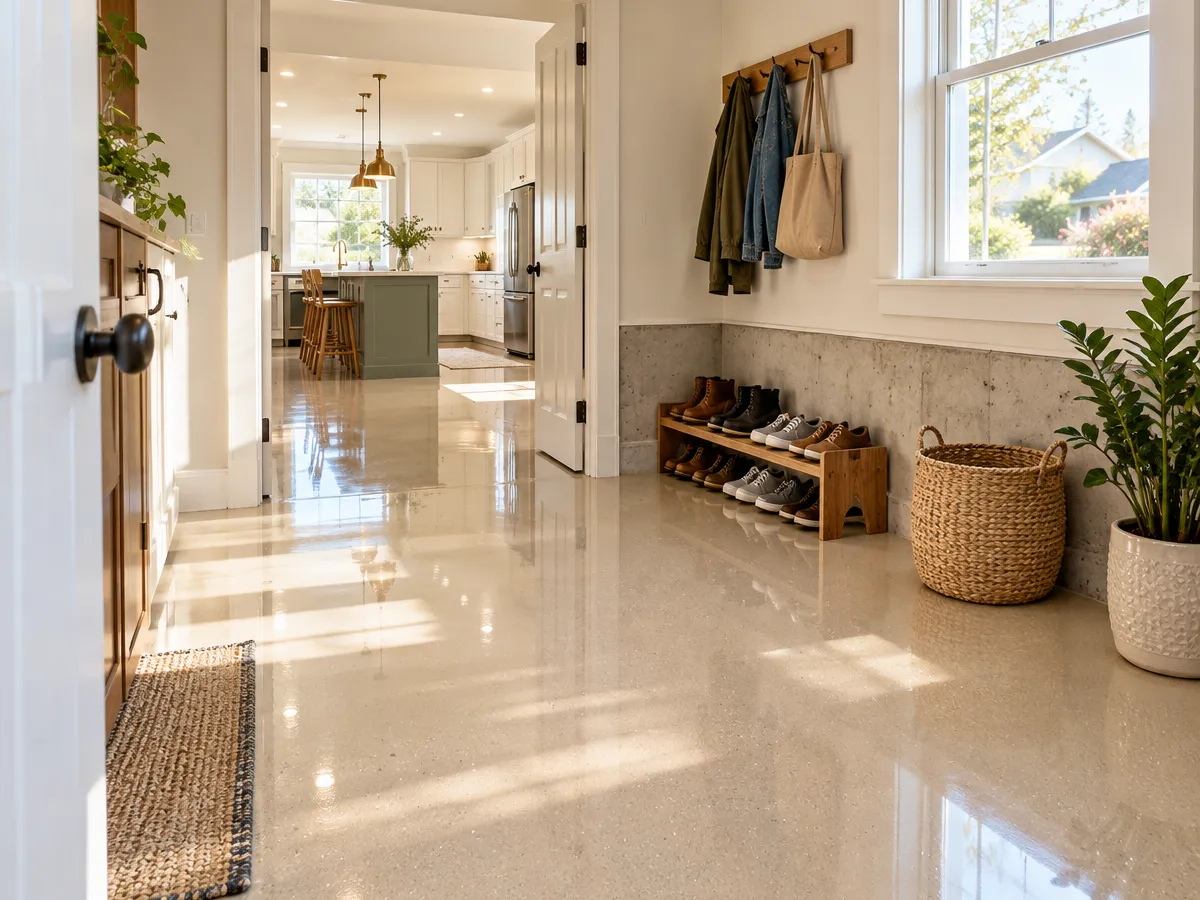
Epoxy flooring delivers outstanding performance in the right conditions and becomes a poor choice in the wrong ones. Property owners who match the coating system to their specific environment avoid costly failures. Those who ignore substrate moisture, UV exposure, or installation requirements face peeling, yellowing, and premature wear.
Specialty Concrete Coatings helps homeowners and businesses navigate this decision with over 15 years of experience serving Northwest Pennsylvania and Greater Pittsburgh. The company provides free quotes and guides clients through material and color selection tailored to each property’s demands. Financing options and a stated warranty program support property owners planning upgrades, reducing the financial risk of a flooring investment.
What conditions make epoxy flooring a poor choice?
Moisture-prone slabs with high vapor transmission undermine epoxy adhesion. Unprotected outdoor areas with direct sun exposure cause standard epoxy to yellow and degrade. The coating itself resists wear, but a failing concrete substrate transfers cracks upward through the finished surface.
How does Specialty Concrete Coatings determine the right flooring system?
The company evaluates each property’s substrate condition, moisture levels, and usage demands before recommending a system. Clients receive guidance through material options ranging from polyurea basecoats to UV-stable polyaspartic topcoats. This consultative approach prevents the mismatch that turns a durable coating into a liability.
Frequently Asked Questions
What are the biggest advantages of epoxy flooring?
Durability ranks as the leading advantage. A properly applied epoxy coating bonds directly to concrete to create a resilient surface that resists stains, chemicals, and heavy traffic.
What are the main disadvantages of epoxy flooring?
The main drawbacks are moisture sensitivity, longer cure times, yellowing in direct sunlight, a slicker surface when wet unless chips or grit are added, and heavy reliance on proper surface preparation.
Does epoxy flooring turn yellow?
Standard epoxy can yellow with prolonged direct sunlight. The change is cosmetic rather than structural, and a UV-stable polyaspartic topcoat helps prevent it.
How long does an epoxy floor take to cure?
Traditional epoxy often needs several days before full use. Specialty Concrete Coatings uses rapid-curing systems that allow foot traffic in about 12 hours, heavier items in about 24 hours, and vehicles in about 48 hours in garage applications.
Where does epoxy flooring perform best?
Epoxy performs best in garages, basements, and workshops. The finished surface resists abrasion and moisture while remaining easy to clean, though basement applications require attention to moisture and slab conditions.
TL;DR — Epoxy Flooring Pros and Cons at a Glance
- Epoxy bonds directly to concrete and creates a seamless surface that resists stains, chemicals, and foot traffic.
- Color chips add customized looks and better slip resistance.
- Drawbacks include moisture sensitivity, longer cure times, and UV yellowing in sunlit areas.
- Thorough prep, including diamond grinding and crack repair, decides how long any epoxy floor lasts.
- Polyurea and polyaspartic systems cure faster and resist yellowing when those factors matter.
- Want an expert recommendation? Call Specialty Concrete Coatings for a free quote.
Related Resources
- Epoxy Floor Coatings
- Erie, PA Floor Coatings
- Polyaspartic Coating Pros and Cons
- Common Epoxy Floor Coating Problems
- Epoxy Floor Coating Cost per Square Foot
- 100% Solids Epoxy vs Water-Based Epoxy
Get a Free Epoxy Floor Coating Quote
Epoxy flooring delivers real advantages in durability and stain resistance, but those benefits depend entirely on matching the system to the property’s conditions. Moisture, UV exposure, and cure time determine whether the investment pays off or leads to peeling and yellowing. Property owners who evaluate these factors before choosing a coating avoid costly mistakes and get a floor that performs as expected.
Contact Specialty Concrete Coatings to compare epoxy and polyurea options for your space and get a free quote.
About Specialty Concrete Coatings: Specialty Concrete Coatings LLC installs epoxy, polyurea, and polyaspartic floor systems for homes and businesses across Greater Pittsburgh and Northwest Pennsylvania. With more than 15 years of experience, the team handles diamond-ground prep, crack repair, and installation in-house, with free quotes, financing options, and a warranty program.