Quick Answer: The right factory floor coating Pennsylvania manufacturers choose depends on facility traffic, chemical exposure, and production schedule — most plants get the best long-term performance from a polyurea basecoat with a UV-stable polyaspartic topcoat. These industrial-grade systems resist forklift traffic, chemical spills, and constant foot traffic while curing fast enough to avoid extended production downtime. Epoxy systems work well for lighter-traffic storage areas, but heavy manufacturing floors typically need polyurea’s faster cure time and superior impact resistance to meet Pennsylvania’s demanding industrial standards.
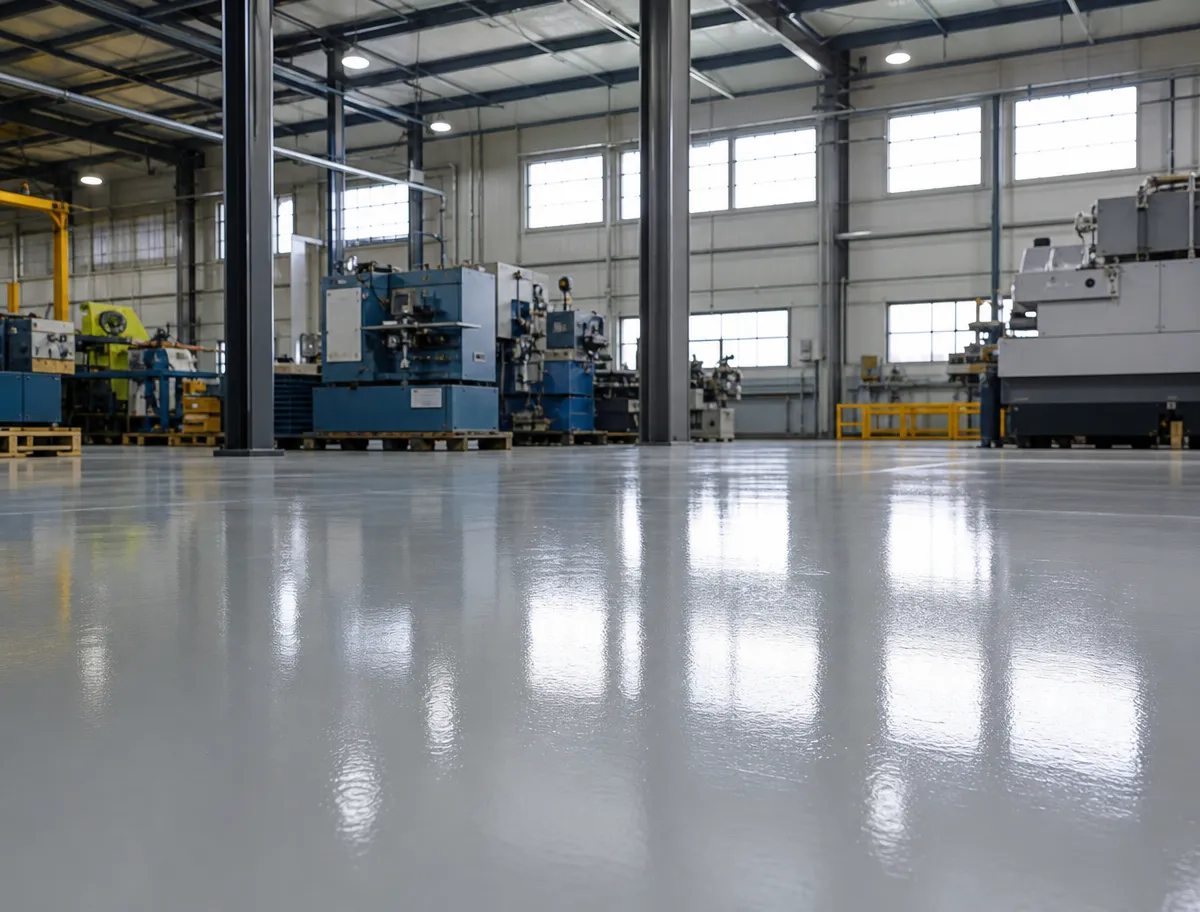
Factory floor coatings in Pennsylvania require durable, chemical-resistant systems built for heavy equipment and constant foot traffic. Specialty Concrete Coatings LLC, serving Greater Pittsburgh and Northwest Pennsylvania for more than 15 years, installs polyurea basecoats with UV-stable polyaspartic topcoats — completing most factory floor installations in a single day for minimal production downtime.
What Are the Key Takeaways for Pennsylvania Factory Floor Coatings?
- Specialty Concrete Coatings LLC operates from Sandy Lake, PA, serving the tri-state area’s industrial flooring needs.
- Factory floor coatings prevent cracks, chipping, and health hazards for employees and customers in facilities.
- Professional epoxy flooring contractors in Western Pennsylvania service major industrial brands and manufacturing plants throughout the region.
- All epoxy flooring work includes warranties and free quotes for commercial, industrial, and residential applications.
Why Do Pennsylvania Factories Need Floor Coatings?
Manufacturing plants across the state face relentless wear from forklifts, chemical spills, and heavy machinery, and untreated concrete simply cannot hold up. Pennsylvania ranks among the largest manufacturing states in the nation. That scale drives constant demand for floor systems built to last. Bare or damaged concrete slows production, creates safety hazards, and shortens the life of expensive equipment.
The state’s manufacturing footprint runs deep. Pennsylvania hosts a dense concentration of factories — production facilities ranging from steel and machining shops to food processing plants and automotive suppliers. Each of these operations depends on floors that resist abrasion, chemical exposure, and constant impact.
What Maintenance Challenges Do Pennsylvania Plants Face?
Every facility, regardless of what it produces, shares one requirement: scheduled maintenance. Concrete floors rank high on that list, since cracks, spalling, and surface degradation accelerate quickly under industrial traffic. Deferred maintenance compounds the problem, turning a minor crack into a costly repair or a safety liability within months.
Who Handles Factory Floor Coating Pennsylvania Projects for Local Plants?
Specialty Concrete Coatings serves commercial clients across manufacturing, food service, automotive, and property management sectors throughout Greater Pittsburgh and Northwest Pennsylvania. Plant engineers and facility directors rely on this regional expertise to schedule coating projects around production timelines rather than waste weeks on downtime.
A well-planned coating strategy addresses several priorities at once:
- Slip resistance for employee safety on high-traffic walkways
- Chemical resistance in areas exposed to oils, solvents, or cleaning agents
- Durability against forklift traffic and heavy equipment loads
- Reduced downtime through fast-curing installation systems
Facility managers who postpone floor maintenance risk unplanned shutdowns and rising repair costs. Those who invest proactively protect equipment, employees, and production schedules alike.
What Risks Do Untreated Factory Floors Pose?
Untreated concrete surfaces threaten both safety and productivity inside Pennsylvania manufacturing plants. Cracks, chipping, and pitted slabs create tripping hazards for employees and visiting inspectors alike, turning a maintenance oversight into a liability. Factory owners and plant managers across the Pittsburgh region and Northwest Pennsylvania carry direct responsibility for keeping these floors intact. A damaged surface affects operations far beyond appearance.
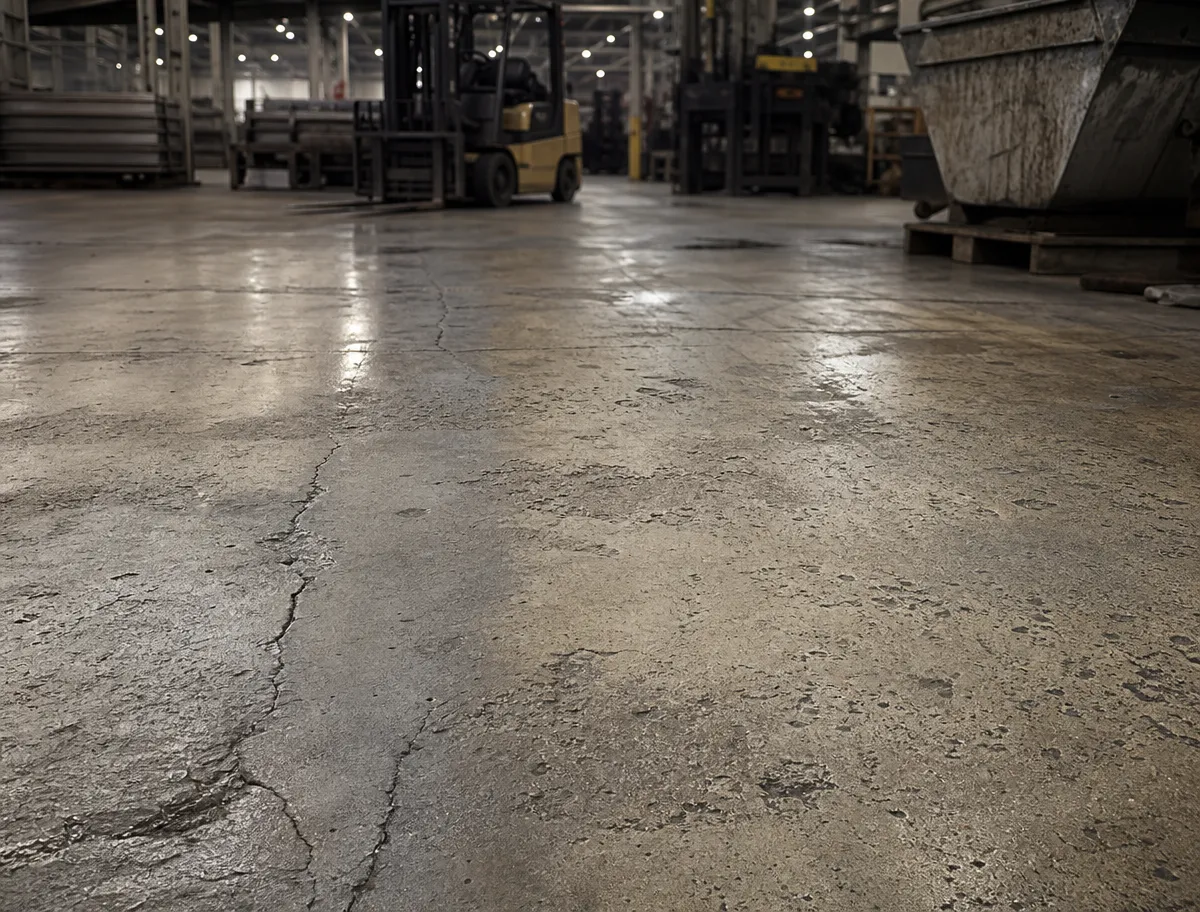
Chipped or cracked concrete does more than look neglected. Debris collects in fractured joints, moisture seeps beneath the slab, and uneven surfaces put foot traffic and rolling equipment at risk. Left unaddressed, small cracks widen under repeated stress from forklifts, pallet jacks, and heavy machinery, accelerating structural wear.
Why Does Floor Damage Matter for Plant Safety Compliance?
Damaged floors create documented hazards that safety inspectors flag during routine reviews, including violations of OSHA walking-working surfaces standards. A facility with visible spalling or pooled chemical residue faces greater risk of workplace injury claims and potential downtime for repairs.
Industrial environments also demand coatings engineered for punishment. A properly specified factory floor coating Pennsylvania facilities can rely on must resist:
- Constant foot and forklift traffic without delaminating
- High heat exposure near equipment and processing lines
- Chemical spills, oils, and staining common in production areas
- Repeated impact from dropped tools and materials
Untreated concrete withstands none of these consistently, leading to premature surface failure and costly rework.
Does Floor Coating Chemistry Affect Indoor Air Quality?
Yes. Some coating products off-gas harmful compounds during and after installation, exposing workers to airborne chemicals. Formulations using low-VOC (volatile organic compound) technology avoid releasing those substances, protecting employee health without sacrificing floor durability or shortening the facility’s return to full production.
📞 Ready to Get Started? Don’t let a cracked or untreated slab put your production schedule at risk. Contact Specialty Concrete Coatings today for a free, no-obligation quote on industrial-grade factory floor coating in Pennsylvania.
Which Coating System Suits PA Factory Floors?
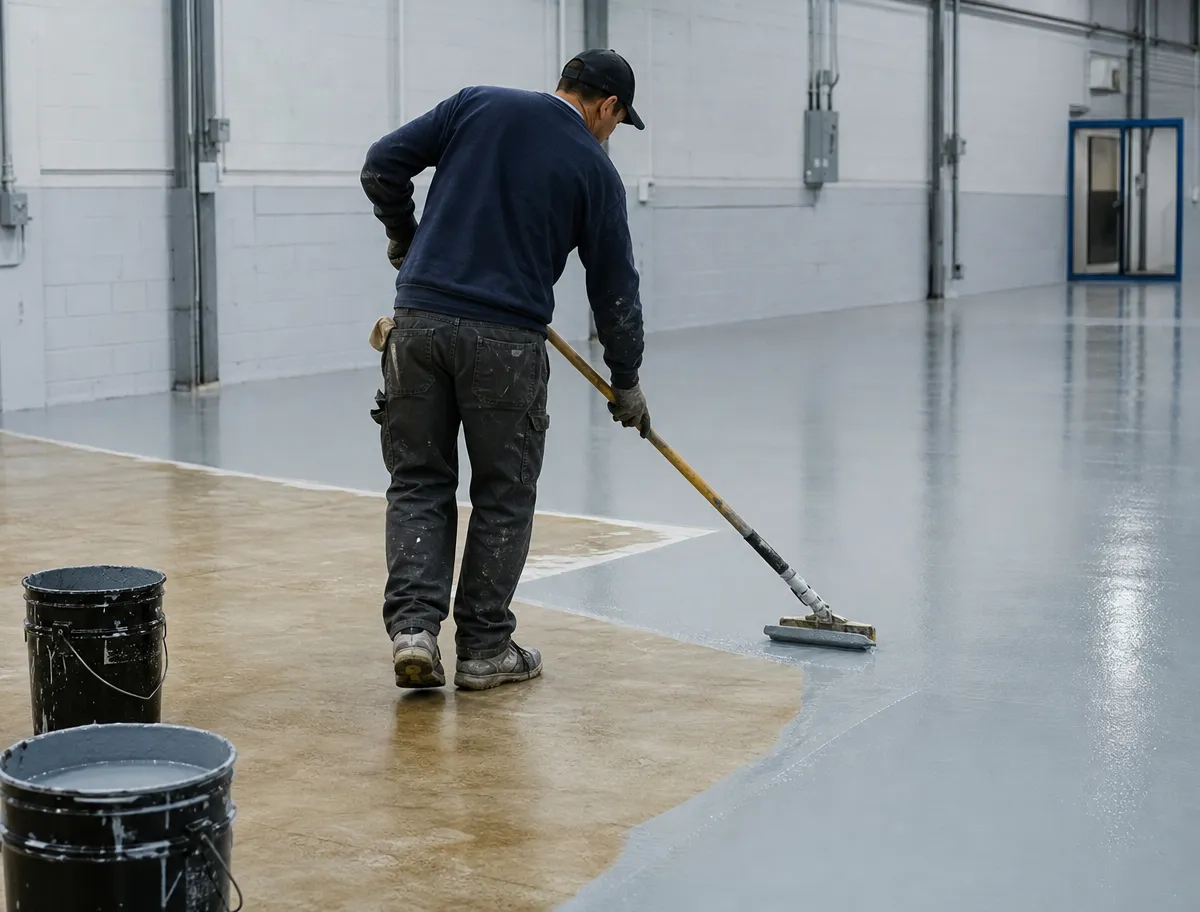
Polyaspartic-based systems stand out as the premier choice for Pennsylvania factory floors, handling both indoor production areas and outdoor loading zones with equal strength. Plant engineers weighing coating options need a system that resists chemical spills, forklift traffic, and constant foot travel without breaking down within a few years. A properly specified factory floor coating Pennsylvania facility owners can rely on starts with matching the material to the actual demands of the space, not just the budget.
The same coating technology that transforms a residential garage or basement scales up effectively for large commercial and industrial floors. That consistency matters: a system proven on smaller surfaces carries known performance data into warehouse-sized applications, reducing guesswork for facility directors managing multi-thousand-square-foot slabs.
Specialty Concrete Coatings applies epoxy and polyurea systems across Pittsburgh and Northwest Pennsylvania, bringing the same industrial shop and factory flooring expertise to garages, basements, and commercial floor spaces. Facility managers get one point of contact for evaluating which base material fits their production environment.
Epoxy or Polyurea — Which Holds Up Better in a Factory Setting?
Epoxy delivers a hard, chemical-resistant base coat suited to moderate traffic and dry storage areas, typically verified against ASTM D4060 abrasion resistance testing. Polyurea, layered with a UV-stable topcoat, handles heavier impact and faster temperature swings common in production floors. Facility directors running multi-shift operations often lean toward polyurea-based systems for that added resilience.
| Factor | Epoxy System | Polyurea System |
| Chemical resistance | Strong | Very strong |
| Impact tolerance | Moderate | High |
| Typical use | Storage, light assembly | Heavy production, loading areas |
A worn factory slab full of cracks and stains doesn’t require tear-out or weeks of reconstruction. A professionally applied coating restores the surface without shutting down operations for long stretches — see the results for yourself in our before-and-after project gallery.
How Does Factory Floor Installation Work?
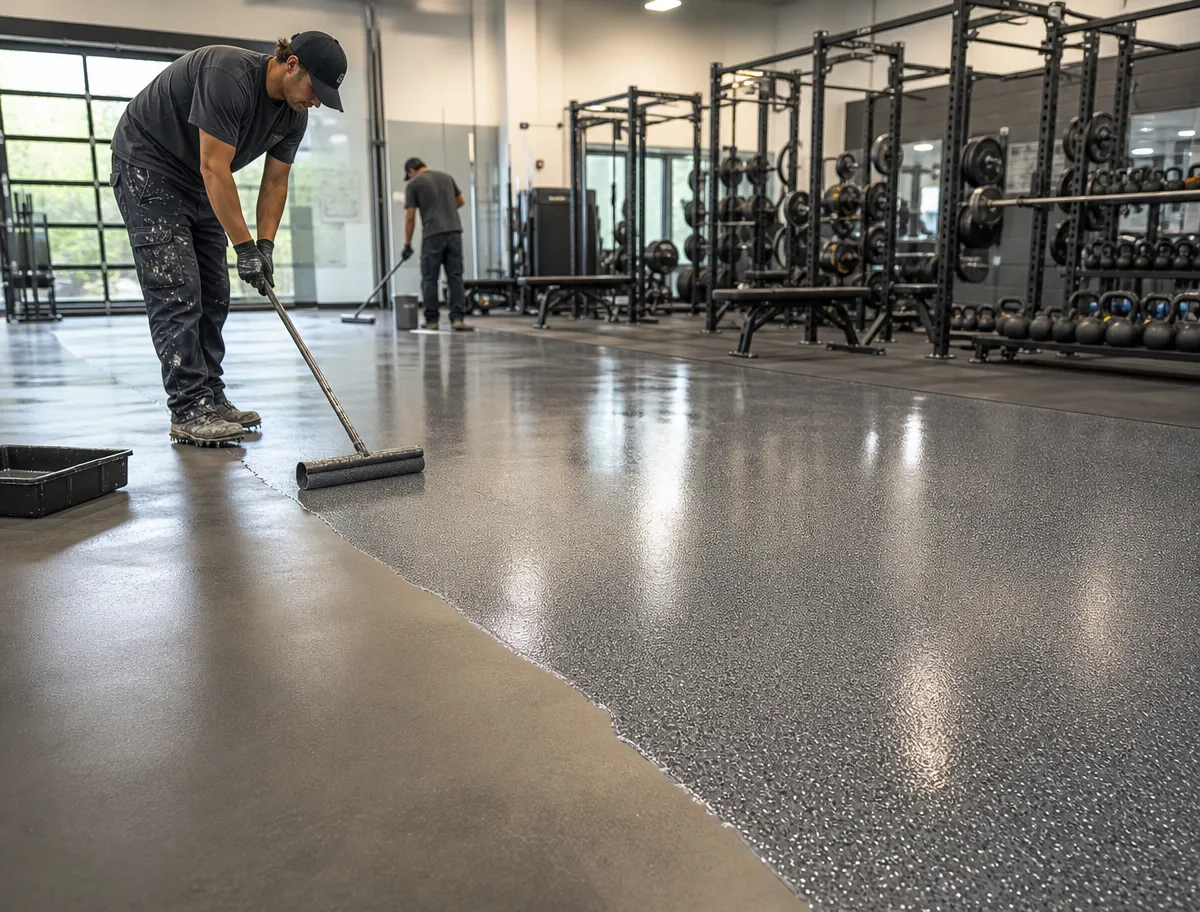
Factory floor installation follows a disciplined, multi-step process built for durability, consistent with ACI concrete floor and slab construction guidelines. Crews grind each concrete slab down to bare material, removing coatings, contaminants, and weak surface layers before any product touches the floor. Every crack gets filled with a concrete mender, closing gaps that would otherwise trap moisture or widen under heavy machinery. Once the surface sits clean and repaired, installers apply the chosen chip or solid color system, then seal everything under a UV-stable topcoat that locks the whole system together, meeting adhesion benchmarks such as
ASTM D7234 adhesion strength testing for coatings applied over concrete.
This approach reflects more than 15 years of experience serving industrial and commercial clients across Pittsburgh and Northwest Pennsylvania. Specialty Concrete Coatings LLC has built its reputation as a factory floor coating Pennsylvania provider trusted by plant engineers and facility directors who need coatings that hold up under forklift traffic, chemical spills, and constant foot traffic.
Why Does Installation Scheduling Matter for Factory Floors?
Pennsylvania manufacturing plants share a common need: scheduled maintenance that keeps production moving. Facilities producing very different goods still face the same pressure to limit downtime. Coating work has to fit tight operational windows without stalling output.
Typical installation steps include:
- Diamond grinding to expose bare concrete
- Crack and spall repair using concrete mender
- Basecoat application and chip or solid color placement
- UV-stable topcoat sealing for chemical and abrasion resistance
Facility directors ready to plan a project can request a free estimate through the standardized conversion prompt used throughout the site, connecting them directly with a scheduling consultation built around their production calendar.
How Do You Choose a PA Coating Contractor?
Selecting the right partner starts with comparing track record, not just price quotes. Pennsylvania factory owners face a crowded field of regional epoxy flooring providers. Several firms market themselves as the leading choice in their local markets. That variety makes due diligence essential before signing a contract for factory floor coating Pennsylvania projects.
Plant engineers and facility directors should weigh a few factors before hiring:
- Regional presence: Does the contractor actively work in Greater Pittsburgh and Northwest Pennsylvania, or only advertise there?
- Commercial specialization: Has the crew handled manufacturing, food service, automotive, or property management clients specifically?
- Maintenance integration: Does the provider treat epoxy flooring as part of routine scheduled maintenance, alongside industrial painting, rather than a one-time fix?
- Service radius: Will the company travel to the facility, or does the plant need to work around a distant shop?
Does Location Matter When Hiring a Coating Contractor?
Location shapes response time and job-site familiarity more than most owners expect. Specialty Concrete Coatings operates from Sandy Lake, PA, and travels throughout the region to reach factory clients rather than requiring plants to come to a fixed location. That regional travel model matters for facilities that cannot afford long lead times between quote and installation.
What Commercial Experience Should a Contractor Have?
Manufacturing plants need more than a residential garage specialist. Specialty Concrete Coatings works with commercial clients across manufacturing, food service, automotive, and property management sectors throughout Greater Pittsburgh and Northwest Pennsylvania. Scheduled maintenance programs at Pennsylvania manufacturing facilities routinely fold epoxy flooring in alongside industrial painting work. A contractor familiar with that rhythm keeps downtime predictable rather than reactive.
TL;DR — Factory Floor Coating Pennsylvania at a Glance
- Polyurea basecoats with UV-stable polyaspartic topcoats offer the best durability for PA factory floors.
- Untreated concrete creates safety hazards, chemical damage, and costly downtime.
- Installation includes diamond grinding, crack repair, basecoat application, and topcoat sealing — most jobs finish in a single day.
- Choose a contractor with regional presence and proven commercial/industrial experience.
- Recognized standards like ASTM D4060 and ASTM D7234 help verify a coating’s abrasion and adhesion performance.
- Next step: Request a free quote from Specialty Concrete Coatings for a custom factory floor coating plan.
Frequently Asked Questions
Why do Pennsylvania factories need floor coatings?
Forklifts, chemical spills, and heavy machinery wear down untreated concrete quickly. Coatings prevent cracks, chipping, and health hazards while protecting equipment and employees in facilities across Pennsylvania’s dense manufacturing sector.
What system does Specialty Concrete Coatings install for factory floors?
Specialty Concrete Coatings installs polyurea basecoats with UV-stable polyaspartic topcoats. The Sandy Lake, PA company completes most factory floor installations in a single day, minimizing production downtime.
What does a factory floor coating strategy address?
A well-planned strategy addresses slip resistance, chemical resistance against oils and solvents, durability against forklift traffic, and reduced downtime through fast-curing installation systems for Pennsylvania manufacturing plants.
How much does factory floor coating cost in Pennsylvania?
Cost varies by square footage, existing floor condition, and coating system selected, since heavier prep work and multiple coating layers add to the total. Specialty Concrete Coatings provides a free, no-obligation quote after evaluating your facility’s specific needs.
How long does a factory floor coating installation take?
Most factory floor coating installations finish in a single day thanks to fast-curing polyaspartic topcoats, which minimizes production downtime. Larger facilities or floors needing extensive crack repair may require additional time.
Related Resources
- Factory Floor Coating Services
- Pittsburgh, PA Concrete Coating Company
- Commercial Concrete Floor Coatings for Long-Lasting Performance
- The Ultimate Guide to Commercial Floor Coatings
- Polyaspartic Coating Pros and Cons
- Understanding Concrete Coating Weather Resistance
Get a Free Factory Floor Coating Quote
Factory floor coatings represent a strategic investment in workplace safety, durability, and professional appearance for Pennsylvania manufacturers. Specialty Concrete Coatings brings more than 15 years of regional expertise, delivering high-performance polyurea and epoxy systems engineered for demanding industrial environments. Our proven multi-step installation process and commitment to quality ensure your facility gains a long-lasting, low-maintenance surface that supports operations and reflects your business standards. Contact Specialty Concrete Coatings today for a free, no-obligation quote.
About Specialty Concrete Coatings: Specialty Concrete Coatings has served Greater Pittsburgh and Northwest Pennsylvania for more than 15 years, specializing in polyurea and epoxy floor coating systems for industrial, commercial, and residential clients. Contact us today for a free, no-obligation quote on your factory floor coating project.