Quick Answer: Warehouse floor coating cost in Pennsylvania depends on the coating system selected, the size of the floor, and how much surface preparation the concrete needs before application. Basic epoxy systems cost less upfront but wear faster under heavy forklift traffic, while polyurea and polyaspartic systems cost more but last longer in industrial settings. Specialty Concrete Coatings, based in Sandy Lake, PA, provides free itemized quotes for warehouse facilities across Greater Pittsburgh and Northwest Pennsylvania, with most installations completed in one day and floors ready for foot traffic within about 12 hours.
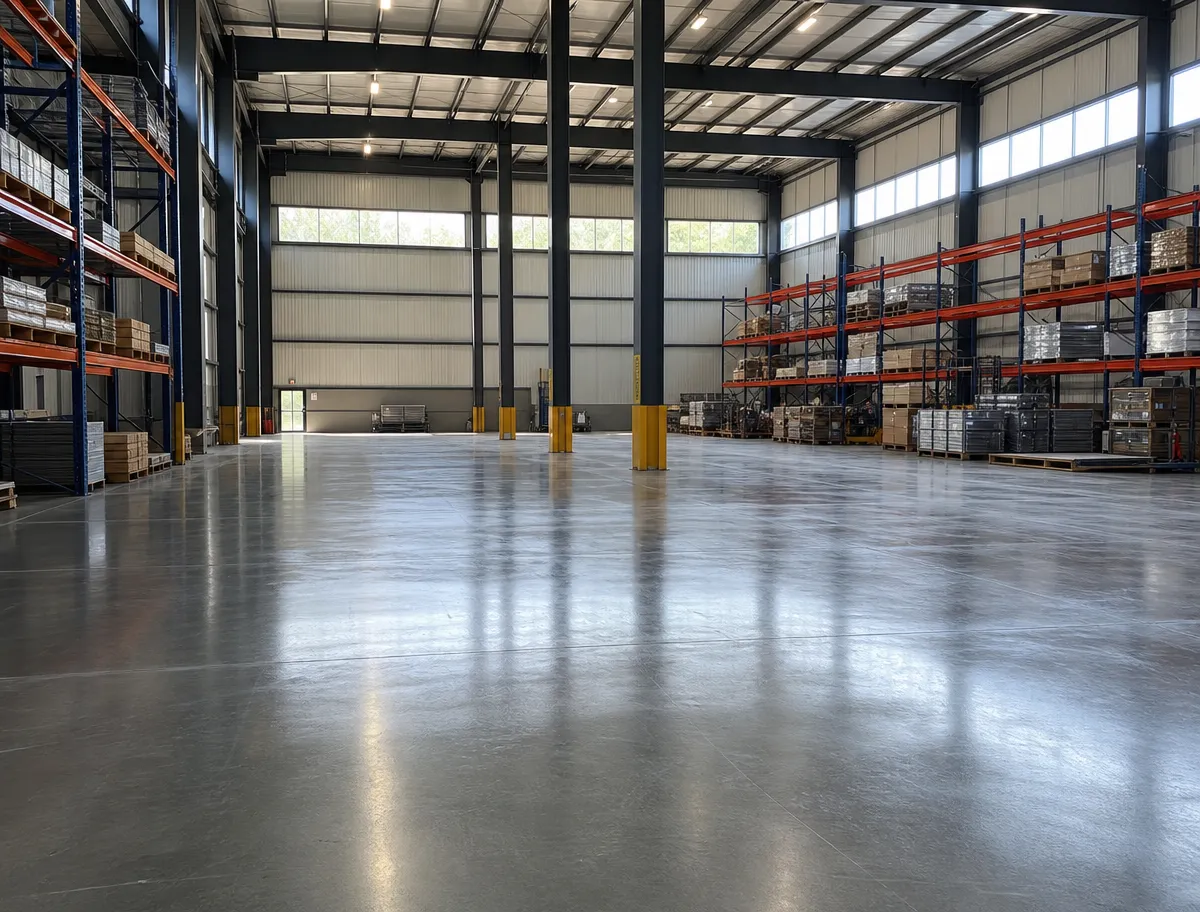
Specialty Concrete Coatings LLC, based in Sandy Lake, PA, provides professional installation and accurate project quotes for warehouse facilities throughout the region. Polyurea basecoats and UV-stable polyaspartic clear coats affect final pricing, and the company offers free quotes as seen across its service pages, with installations completing in one day and floors ready for foot traffic in 12 hours.
What Are the Key Takeaways for Warehouse Floor Coating Costs?
- Specialty Concrete Coatings LLC operates in Sandy Lake, PA, serving warehouse flooring needs across Pennsylvania.
- Epoxy and polyaspartic coatings withstand heavy industrial use while maintaining professional aesthetic appearance standards.
- Western PA providers offer custom commercial floor coating solutions designed for demanding warehouse environments.
- High-performance warehouse coatings deliver long-term durability in high-traffic industrial and commercial facility applications.
Why Do Warehouse Floor Coating Costs Vary?
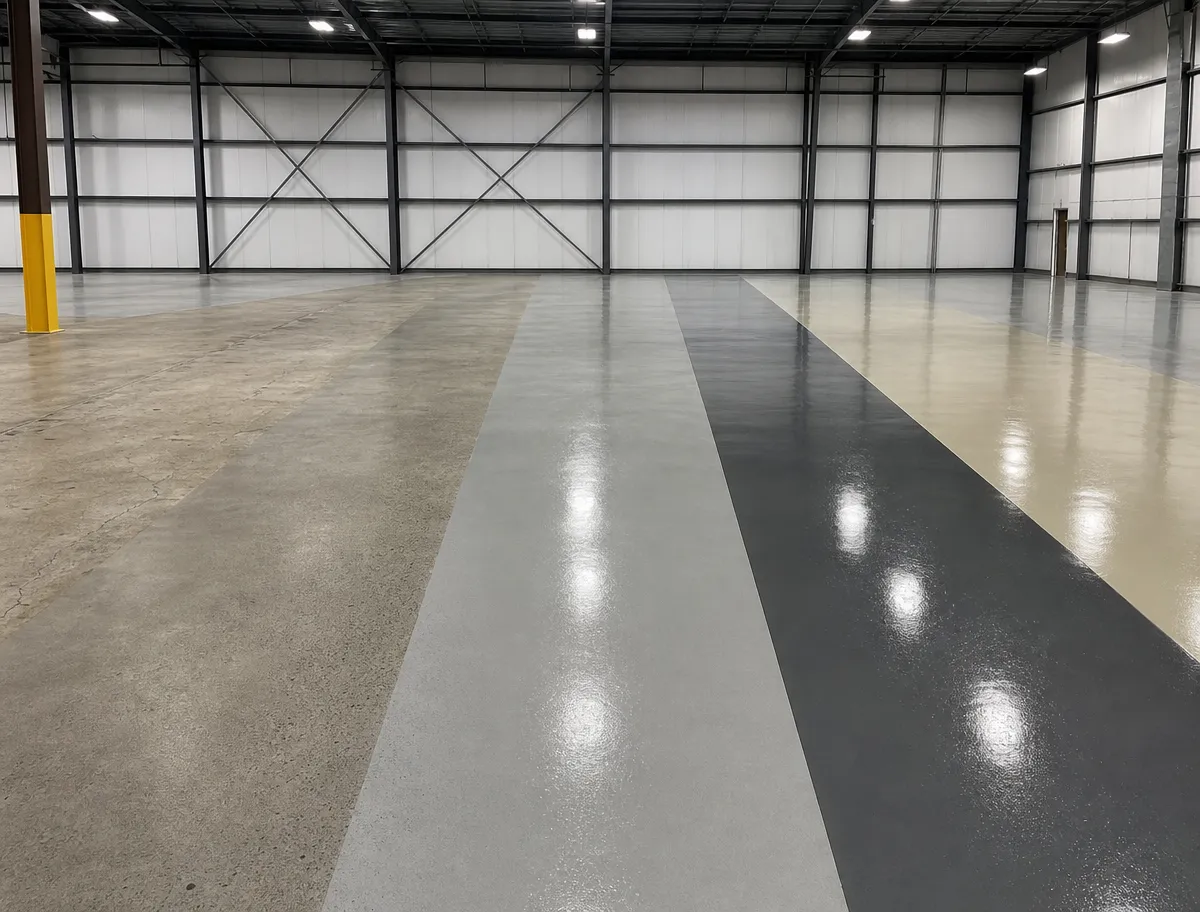
Warehouse floor coating cost shifts from one Pennsylvania facility to the next because no two warehouses face identical wear, traffic, or surface conditions. Bare concrete that looks solid today often hides weaknesses that surface under sustained industrial use. Facility managers who ignore those weaknesses tend to pay far more later in repairs, downtime, and lost productivity than they would have spent on proper coating upfront.
Standard concrete floors in Pennsylvania warehouses frequently fail under heavy forklift traffic, pallet jacks, and constant foot movement. Cracks form, dust rises from the surface, and damage spreads across high-traffic zones. Left unaddressed, this deterioration accelerates and drives long-term maintenance costs upward.
What Factors Affect Warehouse Coating Pricing in Pennsylvania?
Pricing depends on a combination of variables rather than a single number. Facility managers evaluating quotes should expect costs to reflect:
- Coating type selected, since different systems carry different material and labor demands
- Surface size of the warehouse floor requiring coverage
- Preparation required, including grinding, crack repair, and moisture mitigation before coating application
Surface prep work involving concrete grinding falls under the OSHA Respirable Crystalline Silica Standard for Construction, which governs dust control on job sites, while moisture readings typically follow the ASTM standard test method for determining relative humidity in concrete floor slabs before any coating is applied.
Is Epoxy Still the Best Choice for Pennsylvania Warehouses?
Many Pennsylvania businesses initially default to standard epoxy because of its familiarity and lower upfront quotes. Modern warehouse coating systems now outperform traditional epoxy in durability and flexibility, making them a stronger long-term investment for demanding facilities.
| Consideration | Standard Epoxy | Modern Coating Systems |
| Durability under heavy traffic | Lower | Higher |
| Flexibility against cracking | Limited | Improved |
| Long-term maintenance costs | Higher | Lower |
Coating contractors that follow AMPP industry standards for surface preparation and coatings typically deliver more consistent, longer-lasting results than crews cutting corners on prep work.
Protective coatings exist for a reason beyond appearance. They enhance durability significantly and reduce maintenance needs against the environmental and mechanical stress warehouse floors endure daily. Specialty Concrete Coatings LLC serves facility managers and commercial building owners across Greater Pittsburgh and Northwest Pennsylvania with coating systems built for that reality, including facilities in Somerset, PA, Clearfield, PA, and Greensburg, PA.
What Factors Drive Warehouse Floor Coating Cost?
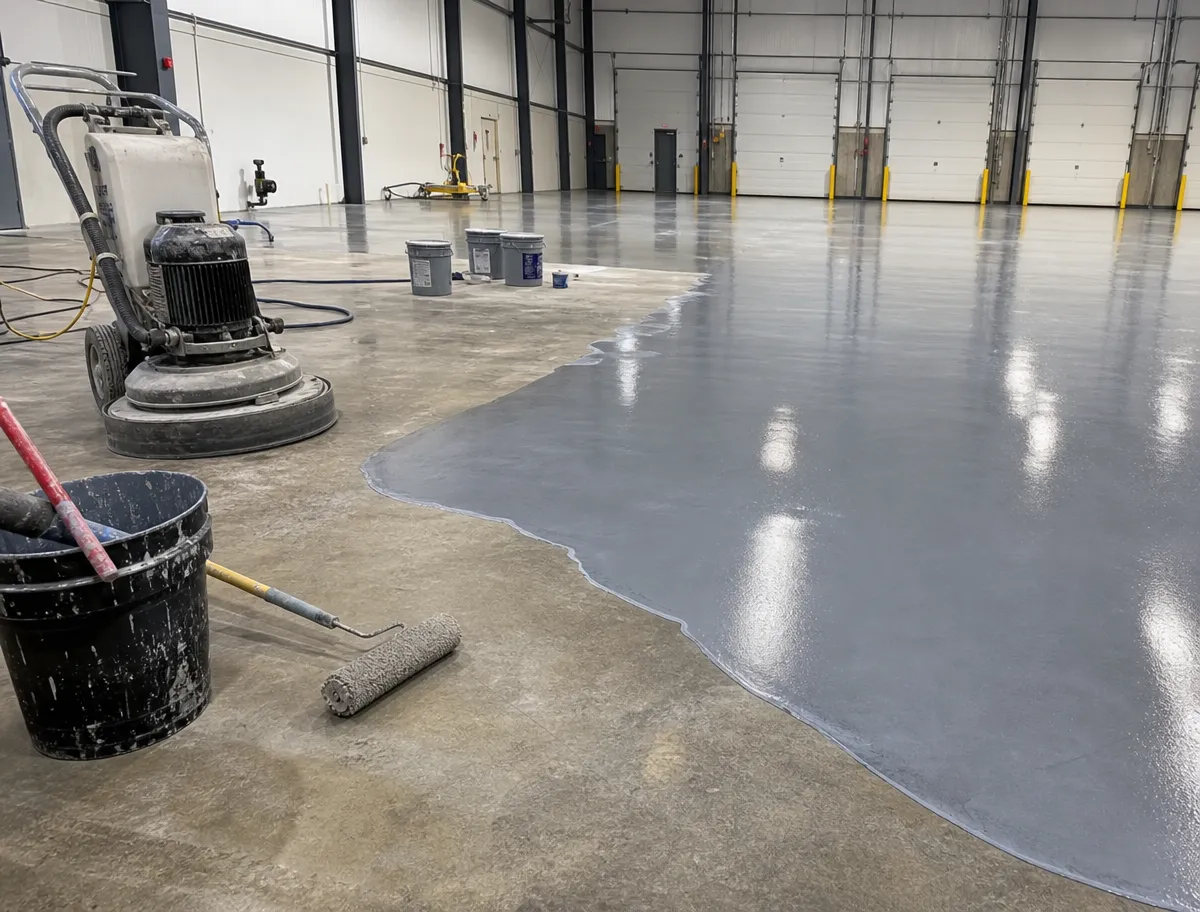
Several variables determine warehouse floor coating cost for Pennsylvania facilities, from surface prep needs to the performance level required for daily operations. Pricing swings are common across the state. Facility managers requesting quotes across Pennsylvania often receive bids with widely varying pricing, a gap wide enough to leave any property owner questioning what separates a bargain estimate from a premium one.
That kind of spread isn’t unusual, and it rarely reflects apples-to-apples proposals. Low bids often skip diamond grinding, crack repair, or multi-coat systems. Higher bids build in the labor and materials needed for lasting performance. Warehouse directors comparing contractors should ask what surface preparation, coating thickness, and warranty terms each number actually includes.
Why do commercial coating quotes vary so much across Pennsylvania?
Commercial coating systems get tailored to the specific space and brand standards of the business ordering them, not sold as one-size-fits-all packages. A showroom floor built to impress customers costs differently than a back-of-house production area built purely for traffic resistance.
Does higher upfront cost mean better long-term value?
Often, yes. Coatings engineered to withstand foot traffic and heavy machinery carry higher material costs upfront. That investment translates into floors built to look sharp and hold up over years of industrial use rather than needing early recoating.
Facility managers budgeting for warehouse floors in Pennsylvania should weigh:
- Surface condition — cracked or spalled concrete requires mending before coating begins
- Coating system — polyurea basecoats generally outperform standard epoxy under heavy loads
- Square footage and layout — larger, obstacle-heavy floor plans add labor time
- Traffic demands — forklift and machinery use call for thicker, more abrasion-resistant systems
- Aesthetic requirements — showroom or brand-facing areas add design and finish costs
The International Concrete Repair Institute publishes additional guidance on evaluating and repairing cracked or spalled concrete before a coating system is applied.
Understanding these drivers helps operations managers separate a truly economical bid from one that simply cuts corners.
📞 Ready to Get Started? Get a free, itemized warehouse floor coating quote from Specialty Concrete Coatings and see exactly what your Pennsylvania facility would pay.
Which Coating System Fits Your Warehouse Budget?
Budget decisions for Pennsylvania warehouses hinge on traffic volume, chemical exposure, and how long a facility can afford downtime. Heavy forklift traffic, dropped equipment, and constant rolling loads wear down standard concrete fast, which is why warehouse floor coating cost should be measured against performance, not just price per square foot. A coating that handles heavy traffic, machinery, and daily industrial use justifies a higher upfront investment for demanding facilities across Greater Pittsburgh and Northwest Pennsylvania.
Facility managers typically choose between three tiers of protection.
- Basic epoxy systems — lower cost, adequate for light foot traffic and storage areas with minimal equipment movement.
- Heavy-duty polyurea/polyaspartic systems — built for facilities running forklifts, pallet jacks, and continuous shift work.
- Chemical-resistant commercial systems — designed for plants and warehouses handling oils, solvents, or manufacturing byproducts.
Heavy-duty and commercial-grade systems carry a higher sticker price. They deliver long-lasting protection that reduces the frequency of costly re-coating projects. Cutting corners on prep work or material grade often means repeating the job within a few years, erasing any short-term savings.
Does a better coating actually save money long-term?
Yes. Epoxy and polyaspartic systems reduce ongoing maintenance demands, saving facility owners time and resources that would otherwise go toward patching, sealing, and cleanup. Fewer maintenance cycles mean less production downtime and lower labor costs over the life of the floor.
Specialty Concrete Coatings has applied finishing systems to concrete floors for more than 15 years, giving Pennsylvania facility managers a proven benchmark when comparing bids. Warehouse operators evaluating multiple quotes should weigh installer experience alongside material grade before committing to the lowest number on paper. A properly matched system, installed correctly the first time, protects the investment far longer than a cheaper alternative ever could.
How Do You Avoid Overpaying on Quotes?
Overpaying on warehouse floor coating cost estimates usually starts with accepting the first bid without comparison. Facility managers across Pennsylvania who skip competitive bidding risk paying far more than necessary for identical square footage. A single quote rarely reveals whether a contractor understands surface prep, material grade, or traffic demands specific to a warehouse floor.
Experience separates accurate pricing from guesswork. Contractors who have quoted dozens of epoxy and polyaspartic floors, having handled more than 40 similar projects, tend to explain their numbers with more clarity than newer providers. That track record lets Pennsylvania facility directors ask sharper questions and catch vague or inflated estimates before signing a contract.
What should a fair commercial flooring quote include?
A trustworthy quote spells out surface preparation, material system, square footage, and labor separately rather than bundling everything into one lump figure. Commercial epoxy flooring providers commonly promote free quotes, warrantied installations, and available discounts, giving property owners a clearer basis for comparison.
Before signing, facility managers should confirm the quote covers:
- A free, itemized estimate with no obligation
- Written warranty terms on materials and labor
- Any applicable discounts for larger commercial square footage
- A clear timeline for downtime and return-to-service
Why does a contractor’s regional track record matter?
Regional history shows whether a contractor can handle Pennsylvania’s climate swings and industrial traffic loads. Specialty Concrete Coatings has completed floor coating projects across hundreds of properties and businesses throughout Greater Pittsburgh and Northwest Pennsylvania with coating systems built for that reality. That volume of regional work gives facility managers a measurable history to evaluate rather than relying on promises alone.
Comparing three quotes, checking warranty language, and verifying regional experience protects budgets from surprise costs later.
What Should You Do Next to Budget?
Budgeting begins with a side-by-side comparison of multiple bids. Pennsylvania facility owners who skip this step risk paying wildly different amounts for similar square footage. Warehouse floor coating cost depends heavily on coating type, surface size, and the level of surface preparation required. A polished concrete job in one plant may need extensive grinding and crack repair. Another needs only minor patching before basecoat application.
Specialty Concrete Coatings LLC’s brand identity, used consistently across all service descriptions, helps Pennsylvania operations managers know exactly what system they’re comparing across proposals. That consistency matters when quotes list different coating names for essentially the same polyurea-based process.
How Can Pennsylvania Facility Managers Avoid Overpaying?
Request itemized quotes that break out surface prep, materials, and labor separately. Facilities with heavier machinery traffic or chemical exposure typically require additional prep work, which raises the total. Comparing three or more bids on identical scope criteria exposes outliers before contracts get signed.
Budgeting also means weighing downtime against upfront price. Fast-curing systems allow staff to walk surfaces in roughly 12 hours and move heavy equipment within 24 hours, limiting lost production time. Protective coatings reduce long-term maintenance spending by resisting wear from forklifts and daily traffic. A standardized conversion prompt used throughout the site connects operations managers to a free quote request for accurate, project-specific numbers.
Frequently Asked Questions
What factors affect warehouse floor coating cost in Pennsylvania?
Cost depends on the coating type selected, the surface size requiring coverage, and the preparation needed, such as grinding, crack repair, and moisture mitigation before application.
Why does warehouse floor coating cost vary between facilities?
Costs vary because no two warehouses face identical wear, traffic, or surface conditions, and bare concrete often hides weaknesses that surface under sustained industrial use, driving up long-term expenses.
Is epoxy the best coating option for Pennsylvania warehouses?
Modern warehouse coating systems outperform standard epoxy in durability and flexibility against cracking, offering lower long-term maintenance costs despite epoxy’s lower upfront pricing and familiarity.
How much does warehouse floor coating cost per square foot in Pennsylvania?
Warehouse floor coating cost per square foot varies with the coating system, surface prep, and project size, so facility managers should request an itemized quote from a local contractor for accurate, project-specific pricing.
How long does warehouse floor coating installation take?
Most warehouse floor coating installations are completed in about one day, with floors ready for foot traffic in roughly 12 hours and ready for heavy equipment within 24 hours, minimizing downtime for facility operations.
TL;DR — Warehouse Floor Coating Cost at a Glance
- Coating type (epoxy vs. polyurea/polyaspartic), floor size, and surface prep are the three biggest cost drivers for Pennsylvania warehouse floors.
- Basic epoxy costs less upfront; heavy-duty polyurea/polyaspartic systems cost more but last longer under forklift and industrial traffic.
- Comparing at least three itemized quotes helps facility managers avoid overpaying and catch bids that skip necessary prep work.
- Most installations are completed in about one day, with floors ready for foot traffic in roughly 12 hours.
- Specialty Concrete Coatings has served Greater Pittsburgh and Northwest Pennsylvania facilities for more than 15 years.
- Ready to budget accurately? Request a free warehouse floor coating quote from Specialty Concrete Coatings today.
Related Resources
- Industrial & Warehouse Floor Coating Services
- Concrete Coating Services in Pittsburgh, PA
- Commercial Concrete Floor Coatings for Long-Lasting Performance
- Polyaspartic Floor Coating Cost Breakdown
- Scheduling Commercial Concrete Coating Installation in NW Pennsylvania
- DIY vs. Professional Garage Floor Coating Cost Study
Get a Free Warehouse Floor Coating Quote
In closing, warehouse floor coating costs in Pennsylvania reflect the complexity of your facility’s unique requirements, surface condition, and desired performance specifications. Investing in a professional coating system protects your concrete investment while enhancing safety and durability for years to come. Specialty Concrete Coatings LLC brings over 15 years of regional expertise to help you understand your options and select the right solution for your operation.
Ready to see accurate, project-specific numbers for your facility? Request your free warehouse floor coating quote from Specialty Concrete Coatings today.
About Specialty Concrete Coatings: Specialty Concrete Coatings LLC, based in Sandy Lake, PA, has installed epoxy, polyurea, and polyaspartic floor coatings across Greater Pittsburgh and Northwest Pennsylvania for more than 15 years, serving residential, commercial, and industrial facilities with free itemized quotes and warrantied installations.