Quick Answer: The best concrete patio coating options for Pennsylvania winters are polyurea basecoats paired with UV-stable polyaspartic topcoats, which bond tightly to concrete, resist deicing salts, and flex with thermal movement instead of cracking. These systems typically last 5-10+ years, far outperforming paint’s roughly one-year lifespan and traditional epoxy’s moderate salt and thermal resistance. Professional installation from a Pennsylvania-based contractor like Specialty Concrete Coatings LLC ensures the coating is prepped, applied, and sealed correctly before winter’s freeze-thaw cycles begin.
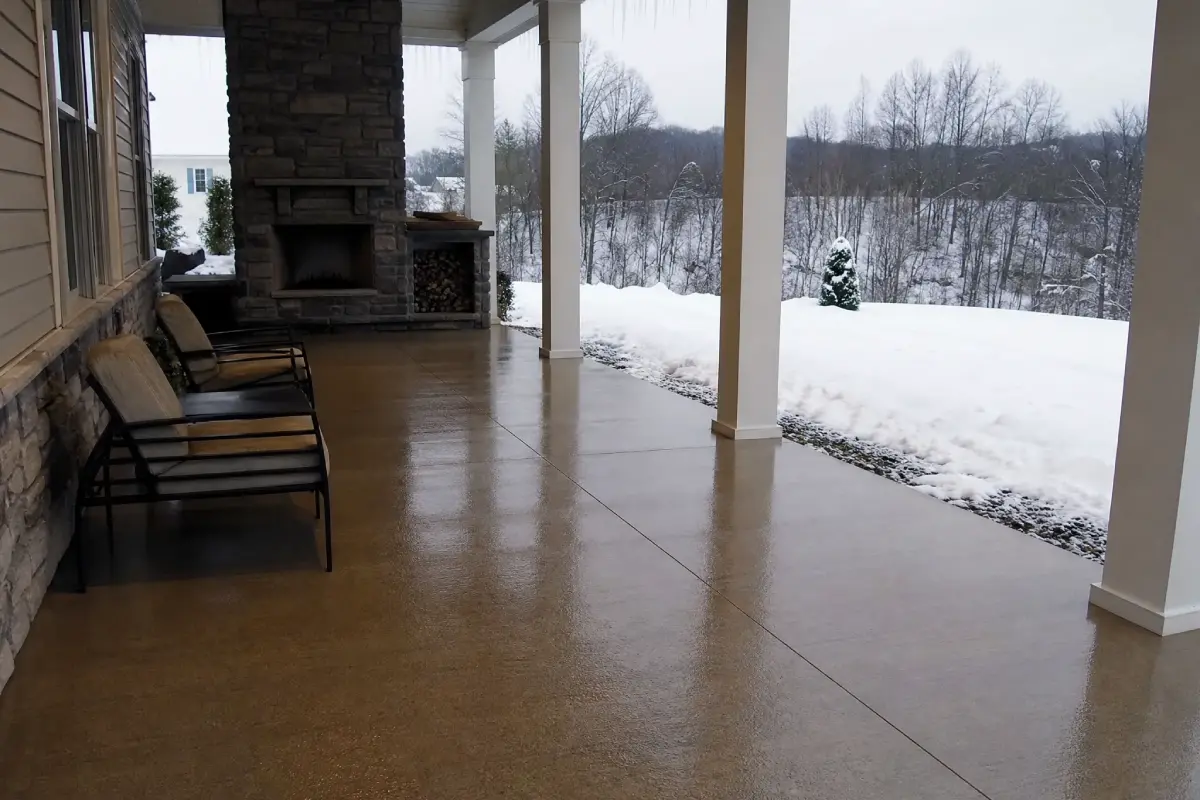
Epoxy coatings as the top options for concrete patios facing Pennsylvania winters. Polyurea withstands freeze-thaw cycles and resists salt damage, making it a strong choice for harsh Pennsylvania winter conditions.
Polyurea and polyaspartic coatings are the strongest options for Pennsylvania patios facing freeze-thaw winters. These systems bond tightly to concrete, resist deicing salts, and flex with thermal movement. Untreated concrete is porous and vulnerable. A professionally applied coating from Residential Patio Coatings from Specialty Concrete Coatings LLC protects the surface and extends its service life significantly.
What Are the Key Takeaways for Pennsylvania Patio Coatings?
- Concrete patio coatings outlast paint by 5-10+ years in Pennsylvania’s freeze-thaw climate.
- Epoxy and polyaspartic coating systems resist deicing salts and thermal cracking better than paint.
- Specialty Concrete Coatings LLC, a Pennsylvania-based contractor, provides winter-ready coating solutions across the region.
- Winter preparation prevents costly concrete deterioration from frigid temperatures and moisture damage.
Why Does Pennsylvania Winter Destroy Uncoated Patios?
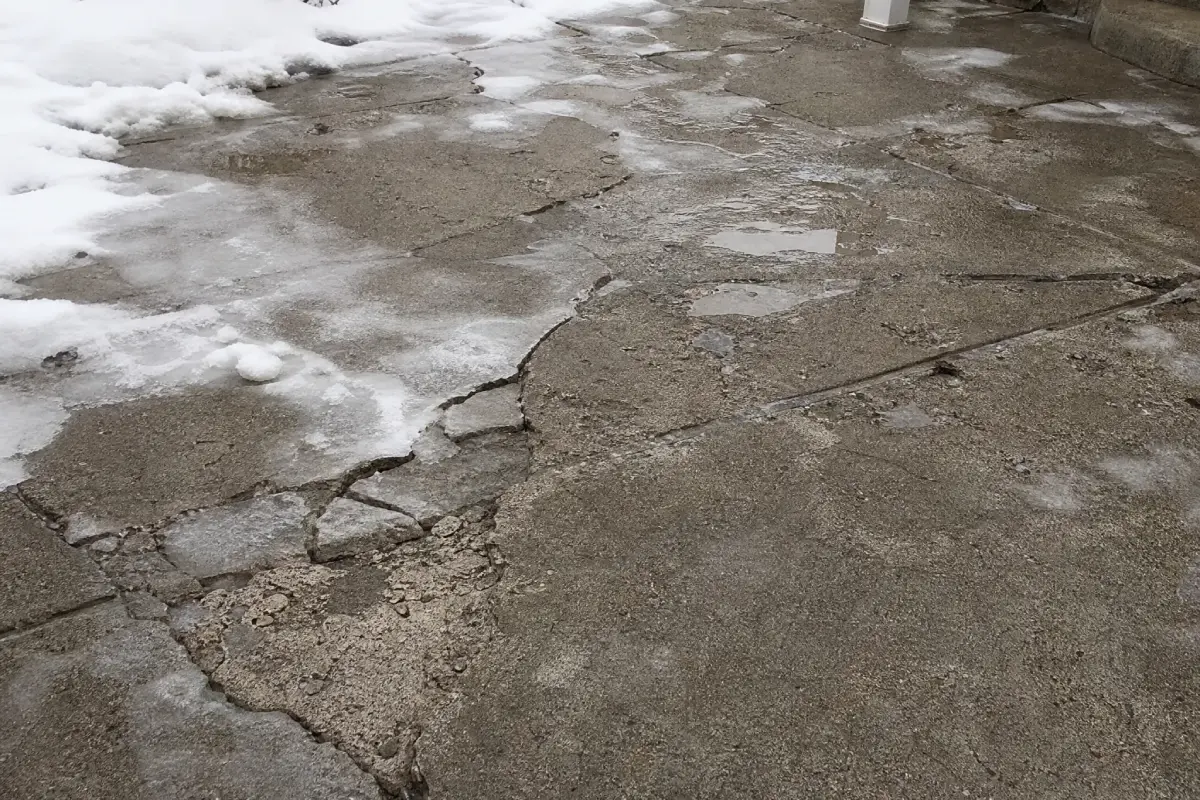
Pennsylvania winters inflict serious structural damage on uncoated concrete patios through a relentless combination of moisture, freezing temperatures, and de-icing chemicals. Untreated concrete is surprisingly porous, and that porosity makes every slab vulnerable the moment temperatures drop below freezing. Winter-proofing your concrete is a step many Pennsylvania homeowners overlook until it’s too late.
What Happens to Concrete During a Freeze-Thaw Cycle?
Water seeps into the tiny pores and hairline cracks that exist in every concrete slab. When that trapped moisture freezes, it expands. And that expansion fractures the surface from the inside out, producing chips, cracks, and eventually potholes. Pennsylvania homeowners who skip concrete patio coating options before winter often discover far more extensive damage by spring than they anticipated. Research on freeze-thaw resistant concrete mixture criteria confirms that porosity and moisture exposure are the primary drivers of this damage.
Does Road Salt Make the Damage Worse?
Road salt and de-icing products compound the problem significantly. These chemicals actively break down the concrete surface, leaving behind white staining. Pitting that weakens the slab’s integrity over time. The damage is not cosmetic — it is structural. Anti-icing solution durability research shows how repeated salt exposure accelerates surface breakdown over successive winters.
The three primary winter threats work together, not independently:
- Moisture infiltration — water enters pores and micro-cracks
- Freeze-thaw expansion — trapped water expands and fractures the slab
- De-icing chemicals — salts accelerate surface breakdown and cause pitting
Specialty Concrete Coatings, a Sandy Lake, PA-based contractor serving Mercer, PA and Pennsylvania properties, applies protective coating systems specifically engineered to seal out moisture. Resist chemical exposure before winter damage begins.
Which Coating Options Perform Best in Pennsylvania?
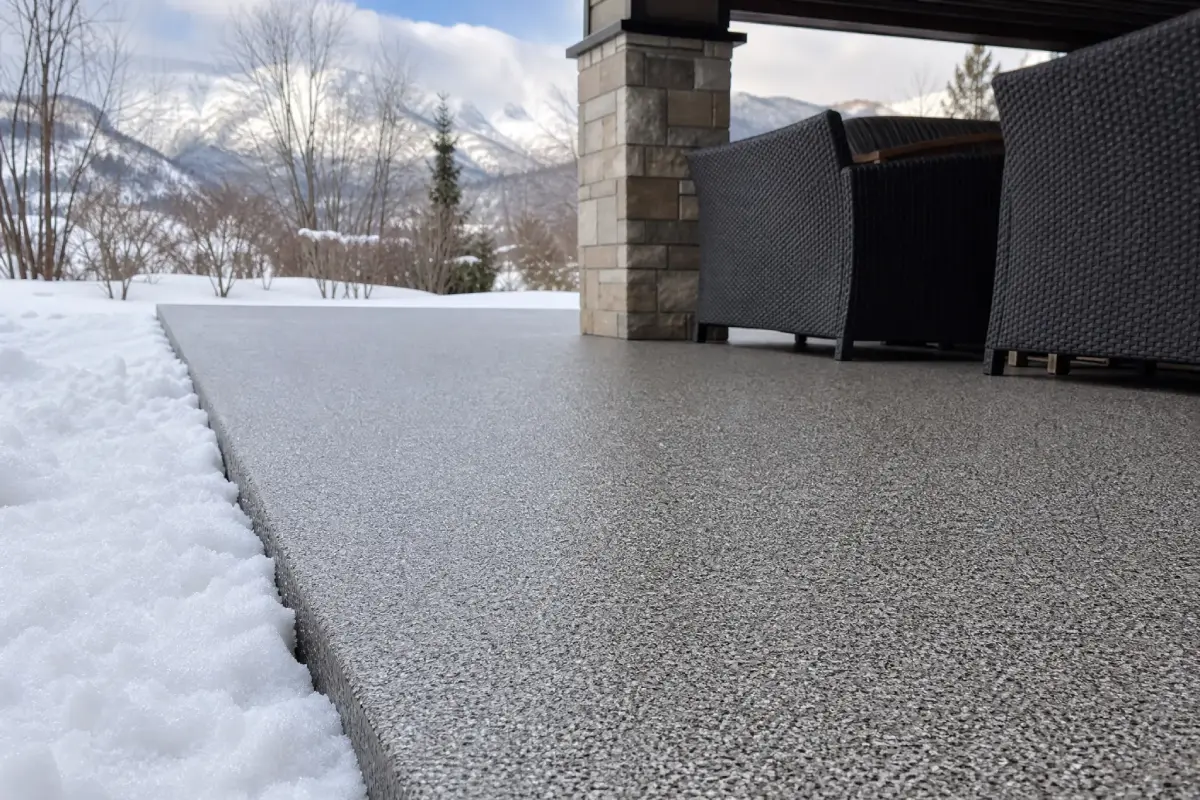
Concrete patio coating options that combine polyurea basecoats with polyaspartic topcoats deliver the strongest performance for Pennsylvania’s demanding climate. Pennsylvania winters bring repeated freeze-thaw cycles, road salt runoff, and temperature swings that destroy weaker surface treatments within a single season.
Why Do Epoxy and Polyurea Outperform Paint on Pennsylvania Patios?
Paint fails fast in Pennsylvania. Polyurea concrete coating explained details how epoxy and polyurea floor coatings withstand temperature fluctuations without chipping or cracking. A critical advantage when a patio surface can swing from below freezing to above 50°F within days.
Polyaspartic systems bond more aggressively to concrete than paint, flex with thermal movement. Resist deicing salts, producing a service life of 5-10+ years compared to paint’s roughly one-year lifespan under similar conditions.
How Do Polyurea and Polyaspartic Systems Compare?
| Feature | Traditional Epoxy | Polyurea + Polyaspartic System |
| Bond strength | Moderate | Stronger |
| Thermal flexibility | Limited | High |
| Deicing salt resistance | Moderate | High |
| UV stability | Yellows over time | UV-stable topcoat resists yellowing |
| Estimated service life | Shorter | 5-10+ years |
Specialty Concrete Coatings, a Sandy Lake, PA-based contractor serving Pennsylvania homeowners, installs a polyurea basecoat paired with a UV-stable polyaspartic clear coat engineered to resist yellowing, abrasion. Chemical exposure on patio surfaces. Advanced polyurea materials are stronger and longer-lasting than old-school epoxy systems. Pennsylvania property owners who skip a professional-grade coating risk accelerating surface deterioration every winter. A costly outcome that a properly applied coating system prevents.
📞 Ready to Get Started? Don’t wait until a Pennsylvania freeze-thaw cycle cracks your patio. Contact Specialty Concrete Coatings LLC today for a free, no-obligation quote on polyurea and polyaspartic coating systems built for PA winters.
How Should Pennsylvania Homeowners Prepare and Maintain Coated Patios?
Pennsylvania homeowners protect coated patios most effectively by combining professional installation with consistent seasonal upkeep. A high-quality concrete coating acts as a shield, preserving both the appearance. Structural integrity of a patio through the state’s demanding winters.
What Makes Professional Installation the Right Starting Point?
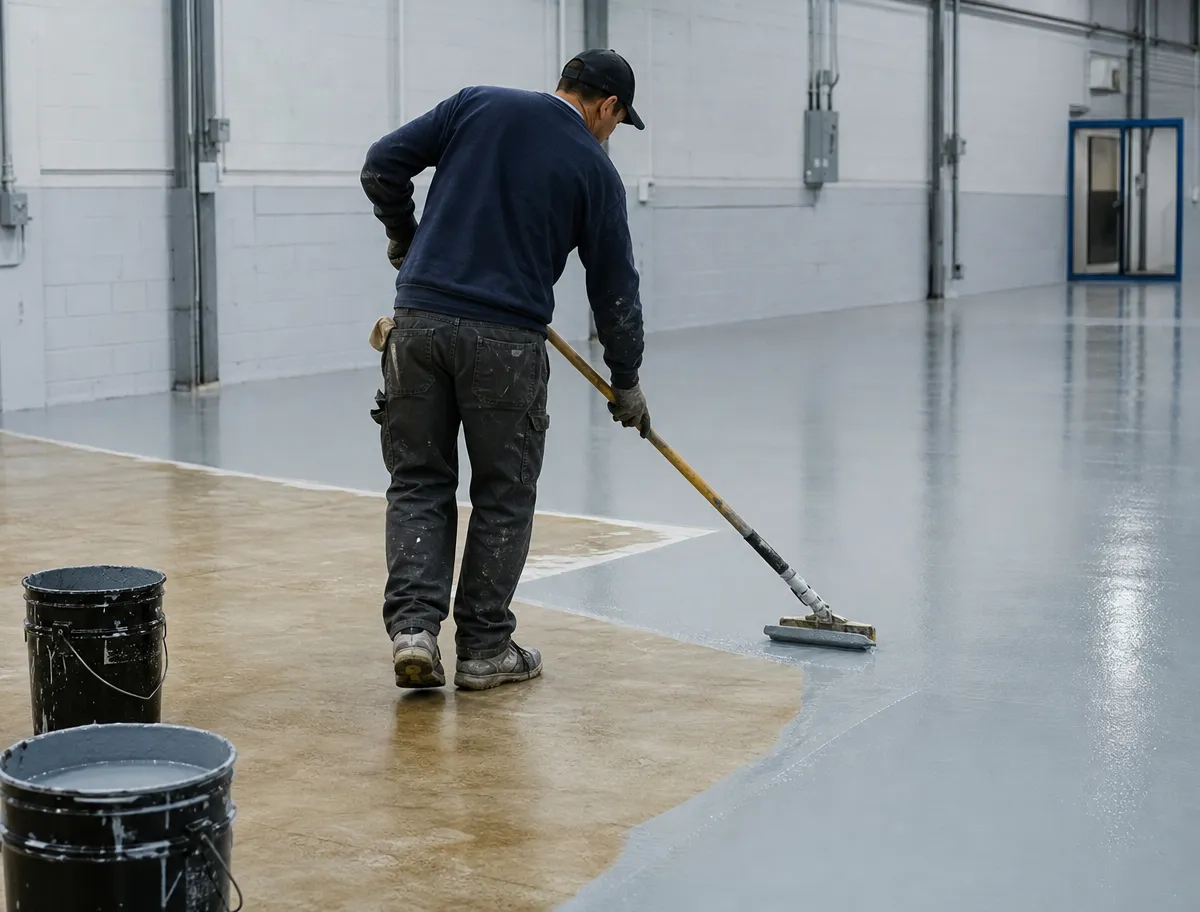
Specialty Concrete Coatings, a Sandy Lake, PA-based contractor serving Pennsylvania, follows a rigorous multi-step process on every project. Surfaces receive mechanical preparation through diamond grinding, cracks and spalls are repaired with concrete menders. A final clear coat seals the entire system. That foundation determines how well the coating performs for years ahead.
What Ongoing Maintenance Do Coated Patios Require?
Even durable coatings need routine care to reach their full service life. Pennsylvania homeowners should follow these maintenance practices:
- Remove debris promptly to prevent surface abrasion
- Rinse away de-icing chemicals after winter storms
- Inspect for edge lifting each spring before temperatures climb
- Avoid harsh abrasive cleaners that degrade the topcoat
Exploring the right concrete patio coating options early — before winter arrives gives Pennsylvania homeowners the best chance of avoiding costly slab repairs come spring.
Pennsylvania winters demand concrete patio coatings engineered for durability and performance. Whether you select polyurea, epoxy. Polyaspartic systems, the right finish protects your investment against freeze-thaw cycles, salt exposure, and seasonal wear. Our experienced team serves Pennsylvania homeowners and businesses throughout the region, ready to guide you through material selection. Professional installation, ensuring your patio remains both functional and attractive year after year.
Frequently Asked Questions
What is the difference between polyurea and epoxy coatings for an outdoor patio?
Polyurea coatings bond more aggressively to concrete than traditional epoxy, and they flex with thermal movement instead of staying rigid, which matters when a Pennsylvania patio swings from below freezing to above 50°F within days. Epoxy is a moderate performer with limited thermal flexibility and a topcoat that tends to yellow over time, while a polyurea basecoat paired with a UV-stable polyaspartic topcoat resists yellowing, abrasion, and deicing salts far more effectively. That combination typically delivers 5-10+ years of service life outdoors, compared to a noticeably shorter lifespan for standalone epoxy systems exposed to the same freeze-thaw conditions.
Is a concrete sealer enough to protect a Pennsylvania patio through winter, or does it need a full coating system?
A basic sealer alone generally cannot match the protection of a full polyurea or polyaspartic coating system. Untreated and lightly sealed concrete stays porous, so moisture can still seep into pores and hairline cracks, freeze, expand, and fracture the surface, while deicing salts continue to cause staining and pitting. A professionally installed coating system bonds tightly to the slab, resists deicing chemicals, and flexes with thermal movement rather than cracking under it. For Pennsylvania’s repeated freeze-thaw cycles, a polyurea-based system offers considerably more durable, long-term protection than a sealer alone.
Can a coating be applied over an existing patio instead of full resurfacing?
In many cases, yes. Rather than replacing the slab outright, a contractor can prepare the existing surface through diamond grinding and repair any cracks or spalls with concrete menders before applying a polyurea basecoat and a polyaspartic topcoat. This process restores a worn or damaged patio’s appearance and structural resistance without the cost and disruption of full resurfacing. Specialty Concrete Coatings LLC follows this multi-step preparation process on its projects specifically so the finished coating bonds properly and performs well through Pennsylvania’s freeze-thaw winters, rather than failing prematurely over an improperly prepped surface.
When should Pennsylvania homeowners have their patio coated before winter?
Homeowners get the best results by exploring concrete patio coating options well before winter arrives, rather than waiting until freezing temperatures and de-icing chemicals have already begun attacking an uncoated slab. Since moisture infiltration, freeze-thaw expansion, and de-icing chemicals work together to damage concrete, scheduling installation while temperatures are still moderate gives the coating time to cure properly before its first freeze-thaw cycle. Homeowners who wait until winter has already set in risk discovering cracks, chips, or pitting by spring that a timely coating could have prevented.
What areas does Specialty Concrete Coatings LLC serve?
Specialty Concrete Coatings LLC is a Sandy Lake, Pennsylvania-based contractor that serves homeowners and businesses throughout the surrounding Pennsylvania region. The company installs polyurea and polyaspartic coating systems on residential and commercial concrete patios, guiding property owners through material selection and professional installation. Because winter conditions vary somewhat across Pennsylvania, having a local, Pennsylvania-based team means the coating recommendations and installation process account for the freeze-thaw cycles, road salt exposure, and temperature swings typical of the region, rather than applying a generic, one-size-fits-all approach to every property.
TL;DR — Concrete Patio Coating Options at a Glance
- Untreated concrete is porous and vulnerable to moisture infiltration, freeze-thaw expansion, and de-icing salts.
- Polyurea basecoats paired with polyaspartic topcoats deliver the strongest bond strength, thermal flexibility, and salt resistance for PA winters.
- These systems last 5-10+ years, compared to roughly one year for paint and a shorter lifespan for standalone epoxy.
- Coatings can often be applied over an existing patio after diamond grinding and crack repair, without full resurfacing.
- Routine maintenance — removing debris, rinsing off de-icing salts, and avoiding harsh cleaners — extends the coating’s service life.
- Next step: schedule installation while temperatures are still moderate so the coating cures before winter’s first freeze-thaw cycle.
Related Resources
- Residential Patio Coatings
- Grove City, PA Service Area
- What Homeowners Don’t Know About Polyurea and Polyaspartic Coatings
- Understanding Concrete Coating Weather Resistance
- 15 Best Patio Floor Ideas in 2025
Get a Free Patio Coating Quote
Pennsylvania winters are hard on uncoated concrete, but a professionally installed polyurea and polyaspartic system protects your patio’s appearance and structure for years to come. Request a free quote from Specialty Concrete Coatings LLC and get expert guidance on the right coating system for your property. Contact Specialty Concrete Coatings LLC today for a free, no-obligation quote.
About Specialty Concrete Coatings LLC: Specialty Concrete Coatings LLC is a Sandy Lake, Pennsylvania-based contractor specializing in polyurea and polyaspartic concrete coating systems for residential and commercial patios, garages, and basements throughout Pennsylvania. Contact us today for a free, no-obligation quote.