Weather plays a crucial role in determining the longevity and durability of concrete coatings. As homeowners and property managers seek to protect their investments, understanding how various weather factors affect these coatings becomes essential. This article delves into the impact of temperature fluctuations, moisture levels, and UV exposure on concrete coatings, providing insights into how to choose the right products for specific climates. Additionally, we will explore maintenance strategies that can extend the life of these coatings, particularly in regions like NW Pennsylvania, where unique weather challenges exist. By the end of this article, readers will be equipped with knowledge on the best practices for ensuring the durability of their concrete coatings against the elements.
What Weather Factors Affect the Durability of Concrete Coatings?
The durability of concrete coatings is significantly influenced by various weather factors, including temperature extremes, moisture levels, and UV exposure. Understanding these elements is vital for selecting the right coating and ensuring its longevity. Each factor contributes uniquely to the degradation or preservation of concrete surfaces, making it essential to consider them during application and maintenance.
How Do Temperature Fluctuations Influence Concrete Coating Lifespan?
Temperature fluctuations can have a profound impact on the lifespan of concrete coatings. Extreme cold can cause coatings to become brittle, leading to cracking and peeling, while excessive heat can result in softening and deformation. Flexible coatings are particularly beneficial in regions with significant temperature variations, as they can expand and contract without losing adhesion. This adaptability helps maintain the integrity of the coating over time, ensuring that it continues to protect the underlying concrete.
Research further supports the importance of selecting coatings that can withstand varying thermal conditions to maintain their structural integrity. The American Concrete Institute (ACI) provides extensive guidance on how thermal exposure affects concrete and surface coating systems, making it a valuable resource for understanding best practices.
Concrete Coating Durability at Elevated Temperatures
The use of surface coating in enhancing the mechanical properties and durability of concrete exposed to elevated temperature was investigated. The concrete with water–cement ratios of 0.59, 0.50 and 0.36 were exposed to temperatures up to 700°C to evaluate the effect of surface coating of concrete (SCC) on the mechanical properties and durability of concrete.
What Role Does Moisture and Freeze-Thaw Cycles Play in Coating Degradation?
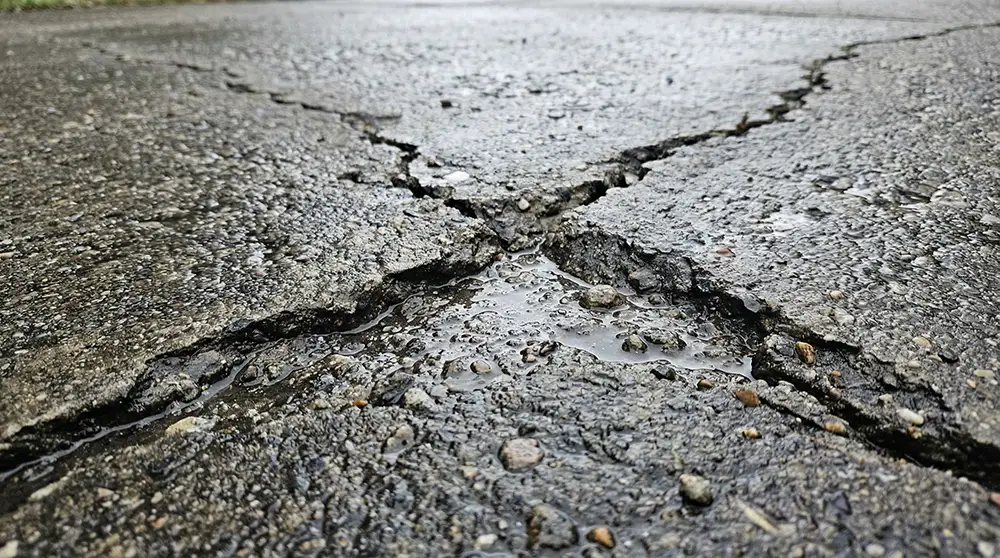
Moisture infiltration is a critical factor in the degradation of concrete coatings, especially in climates that experience freeze-thaw cycles. When moisture seeps into the coating and freezes, it expands, causing stress that can lead to cracking and delamination. This cycle can be particularly damaging if the coatings lack adequate moisture resistance. For a deeper look at how to prepare your surfaces before winter arrives, see our guide on winter-proofing your concrete, which covers the specific steps NW Pennsylvania homeowners should take before temperatures drop.
Studies have specifically investigated how polyurea coatings perform under the combined stress of freeze-thaw cycles and salt exposure, highlighting the accelerated degradation that can occur.
Polyurea Concrete Coatings: Freeze-Thaw & Salt Durability
The deterioration of coated concrete subjected to co-action of freeze-thaw cycles and NaCl solution immersion double factors exposure was investigated in this study. Adhesion, chloride content and resistance of chloride ion diffusivity of two types of polyaspartic ester polyurea coated concrete were analyzed. The degradation process of coated concrete simultaneously exposed to co-action exposure was significantly accelerated.
Which Types of Concrete Coatings Offer the Best Weather Resistance?
Selecting the right type of concrete coating is essential for ensuring optimal weather resistance. Various coatings offer different levels of protection against environmental factors, making it crucial to understand their characteristics.
Coating Type / Weather Resistance / Durability / Best Use:
Epoxy Coatings — High / Excellent / Indoor and outdoor applications
Polyurethane Coatings — Moderate to High / Good / Areas with UV exposure
Polyaspartic Coatings — Very High / Superior / Fast curing and extreme conditions
How Do Epoxy and Polyurethane Sealers Compare in Durability?
Epoxy and polyurethane sealers are two popular choices for concrete coatings, each with distinct durability characteristics. Epoxy coatings are known for their strong adhesion and resistance to chemicals, making them ideal for industrial settings. In contrast, polyurethane sealers offer better UV resistance and flexibility, which is beneficial for outdoor applications. If you are weighing your options for a garage, our detailed breakdown on choosing between epoxy and polyurea for your garage floor walks through the key differences to help you decide. Understanding these differences can help property owners choose the right product based on their specific needs.
What Are the Benefits of UV Resistant Concrete Sealers?
UV resistant concrete sealers provide several advantages that enhance the longevity of coatings exposed to sunlight. Prevention of Fading: UV resistant sealers help maintain the original color of the coating, preventing unsightly fading over time. Enhanced Durability: By protecting against UV damage, these sealers extend the life of the coating, reducing the need for frequent reapplications. Improved Aesthetics: UV resistant coatings maintain their gloss and finish, contributing to the overall appearance of the concrete surface.
These features make UV resistant sealers a valuable investment for outdoor concrete surfaces. For standardized testing methods used to evaluate UV resistance in coating systems, ASTM International’s concrete standards library is one of the most authoritative references in the industry.
UV Degradation of Concrete Coatings: Polyurea & Epoxy
In this study, comparative degradation studies were carried out on two kinds of coatings, namely polyurea and epoxy coatings, with the major focus on the relationship between the structure, adhesion, and protection performance of the coatings and their UV degradation behavior.
How Can Proper Maintenance Extend the Longevity of Concrete Coatings?
Proper maintenance is crucial for extending the life of concrete coatings. Regular upkeep not only enhances the appearance of the surface but also ensures that the protective qualities of the coating remain intact. For a comprehensive walkthrough of maintenance best practices, our article on how to extend the life of your concrete surfaces covers everything from seasonal care routines to product recommendations for NW Pennsylvania conditions.
What Are Essential Maintenance Tips for Weatherproof Concrete Coatings?
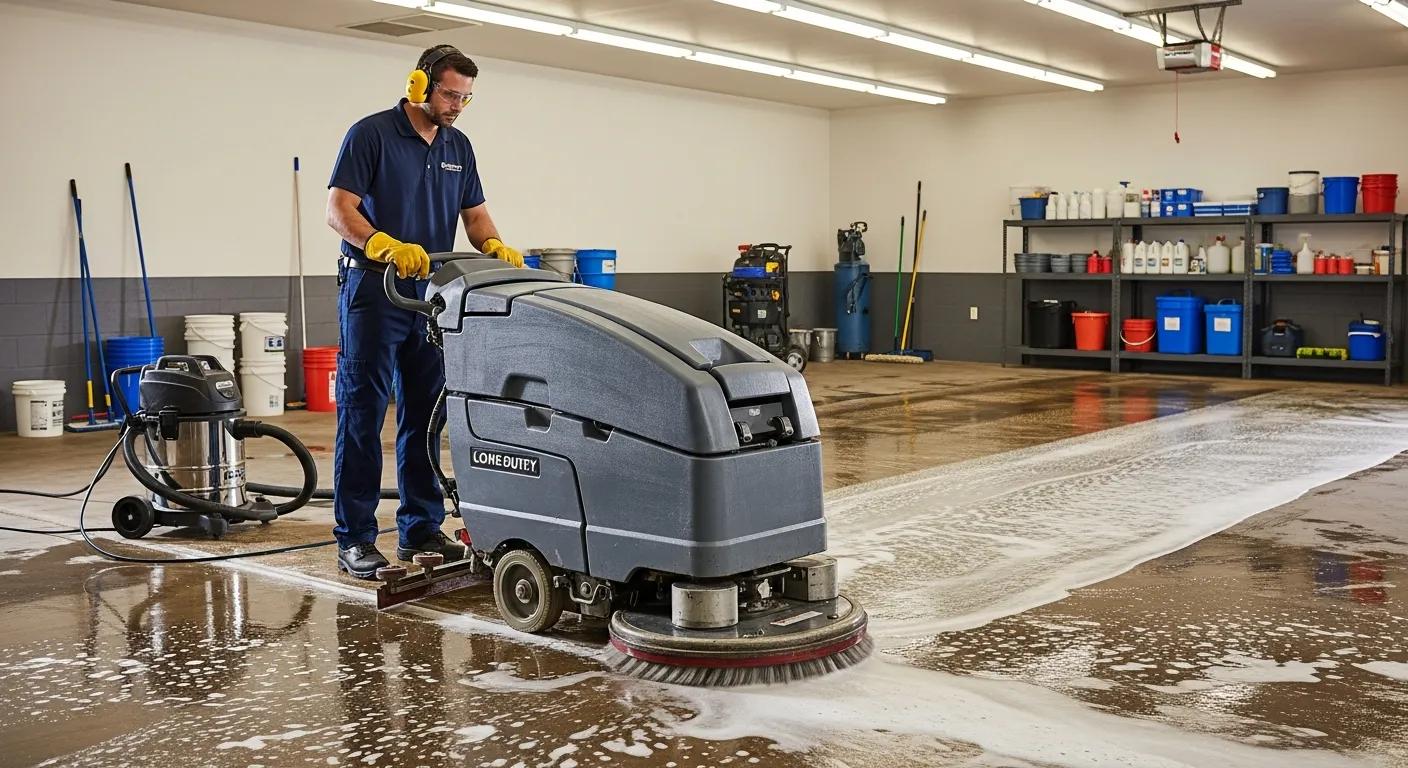
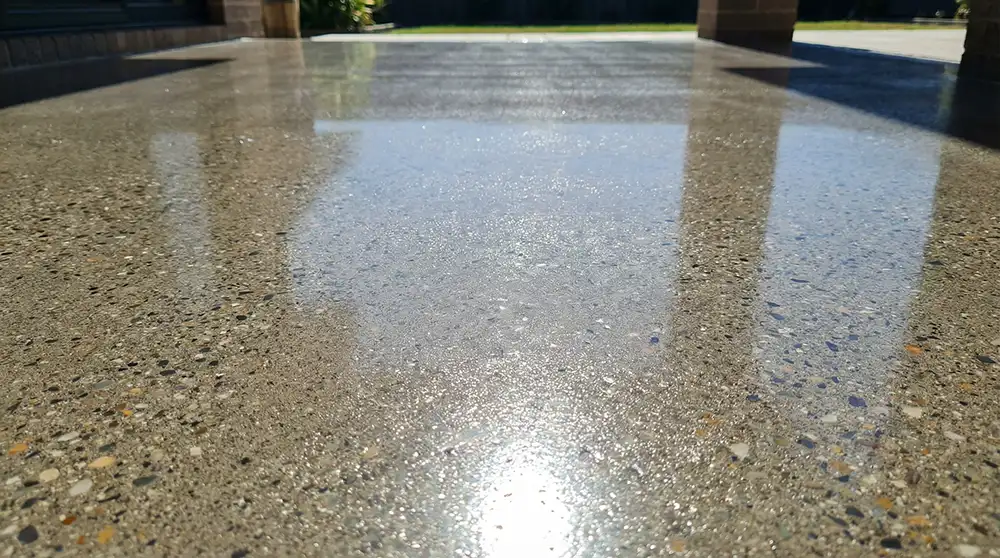
To keep concrete coatings in optimal condition, consider the following maintenance practices. Regular Cleaning: Remove dirt and debris regularly to prevent staining and deterioration. Immediate Stain Removal: Address spills and stains promptly to avoid permanent damage to the coating. Periodic Resealing: Reseal the coating every few years to maintain its protective properties and enhance its lifespan.
By following these practices, property owners can ensure their concrete coatings remain effective against weather-related wear.
When and How Should Concrete Coatings Be Repaired or Reapplied?
Understanding when to repair or reapply concrete coatings is essential for maintaining their effectiveness. Signs that a coating may need attention include visible wear, peeling, or discoloration. Repairs should be made promptly to prevent further damage, while reapplication may be necessary every few years, depending on the coating type and environmental conditions. Professional inspections can help determine the best course of action for maintaining the integrity of the coating.
How Does the NW Pennsylvania Climate Influence Concrete Coating Performance?
The climate in NW Pennsylvania presents unique challenges for concrete coatings, including significant temperature fluctuations and high moisture levels. These factors can affect the performance and longevity of coatings, making it essential to choose products specifically designed for such conditions.
What Weather Challenges Are Unique to NW Pennsylvania and Greater Pittsburgh?
In NW Pennsylvania and Greater Pittsburgh, several weather challenges are particularly relevant. Freeze-Thaw Cycles: The region experiences frequent freeze-thaw cycles, which can lead to significant stress on concrete coatings. High Humidity: Elevated humidity levels can contribute to moisture infiltration, increasing the risk of coating degradation. Salt and Chemical Exposure: Road salt and other chemicals used during winter can damage coatings, necessitating the use of specialized products for protection.
Understanding these challenges is crucial for selecting the right concrete coatings that can withstand local weather conditions. Many of our customers who have gone through this decision-making process have shared their results in our Lake Latonka walkway case study, which illustrates how the right coating choice holds up through full Western Pennsylvania seasons.
How to Choose the Right Concrete Coating for Local Weather Conditions?
When selecting a concrete coating for NW Pennsylvania, consider the following criteria. Moisture Resistance: Choose coatings that offer superior moisture resistance to combat the effects of humidity and freeze-thaw cycles. Durability: Opt for products known for their durability in extreme weather conditions, such as polyaspartic coatings. To learn more about how polyaspartic and polyurea systems differ from traditional options, our post on what homeowners don’t know about polyurea and polyaspartic coatings covers the key advantages in plain language. UV Protection: Ensure the coating provides UV protection to prevent fading and degradation from sunlight exposure.
By considering these factors, property owners can make informed decisions that enhance the longevity of their concrete coatings.
What Are Common Weather-Related Concrete Coating Failures and Their Solutions?
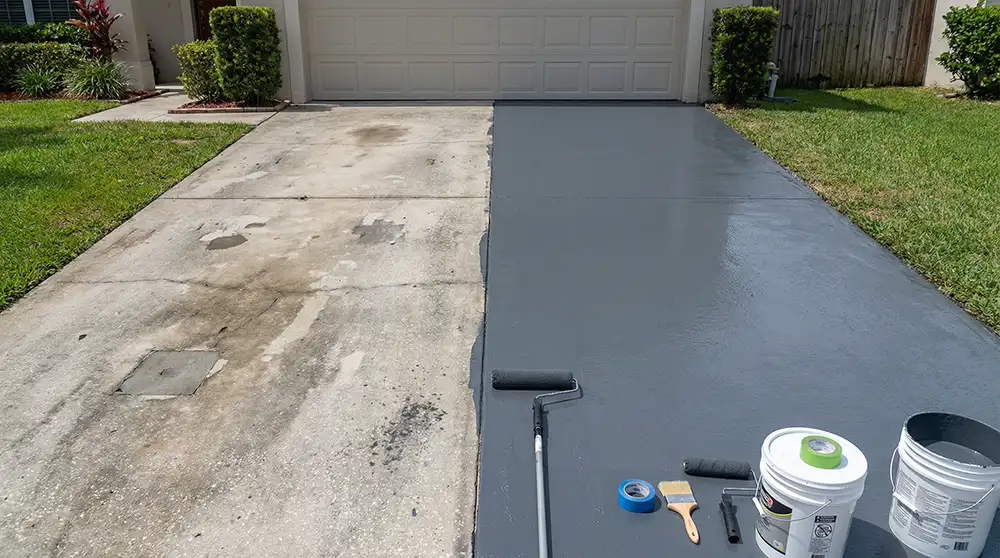
Concrete coatings can fail due to various weather-related factors, leading to costly repairs and replacements. Understanding these failures and their solutions is essential for maintaining the integrity of concrete surfaces.
How Does Freeze-Thaw Damage Affect Concrete Coatings?
Freeze-thaw damage occurs when moisture infiltrates the coating and freezes, causing expansion and cracking. This cycle can lead to significant deterioration if not addressed. To mitigate freeze-thaw damage, it is crucial to select coatings with excellent moisture resistance and flexibility, allowing them to withstand these cycles without failing.
What Repair Techniques Restore Coating Durability After Weather Damage?
When weather damage occurs, several repair techniques can restore the durability of concrete coatings. Periodic Resealing: Resealing the coating can help restore its protective properties and enhance its lifespan. Repairing Minor Damages: Addressing small cracks and peeling promptly can prevent further deterioration. Regular Professional Inspections: Engaging professionals for routine inspections can identify potential issues before they escalate, ensuring the coating remains effective.
By implementing these repair techniques, property owners can maintain the durability of their concrete coatings and protect their investments against weather-related damage.