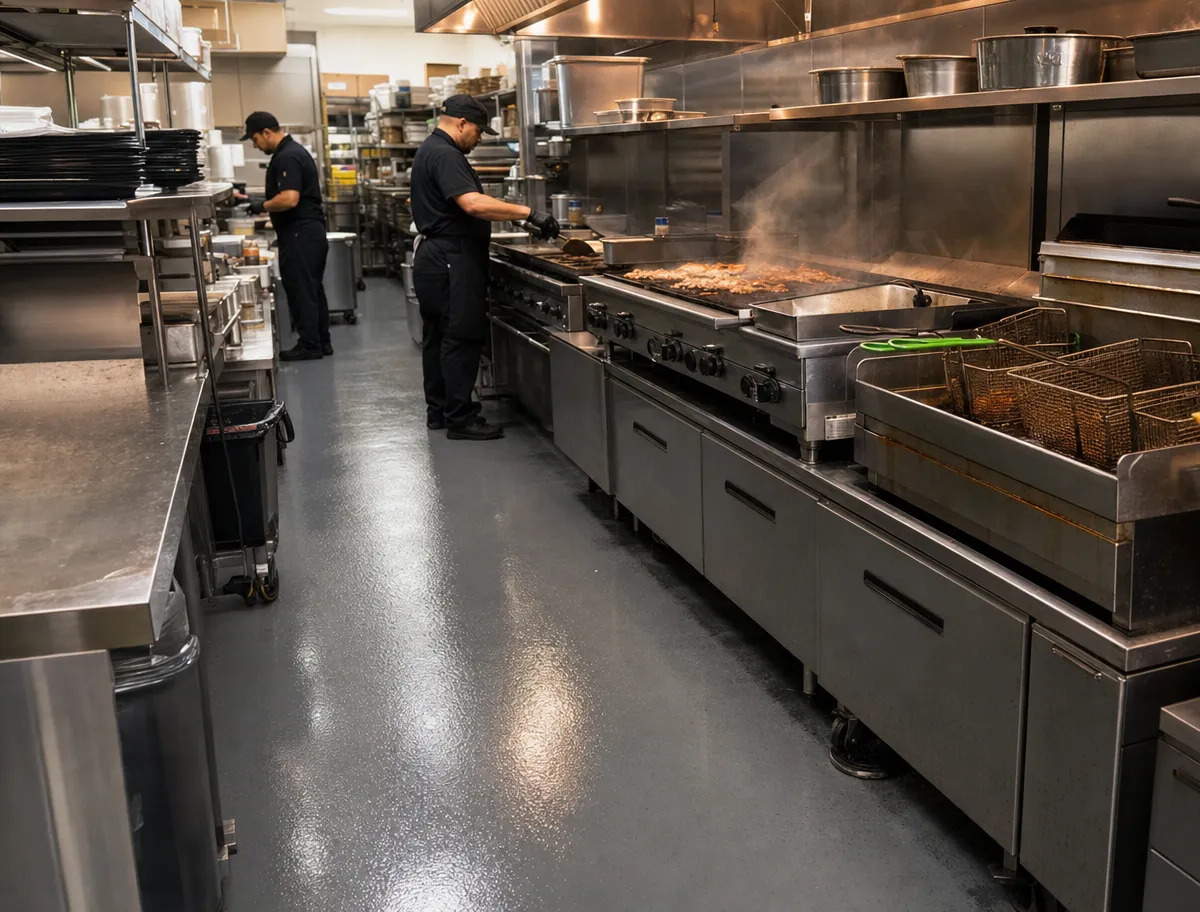
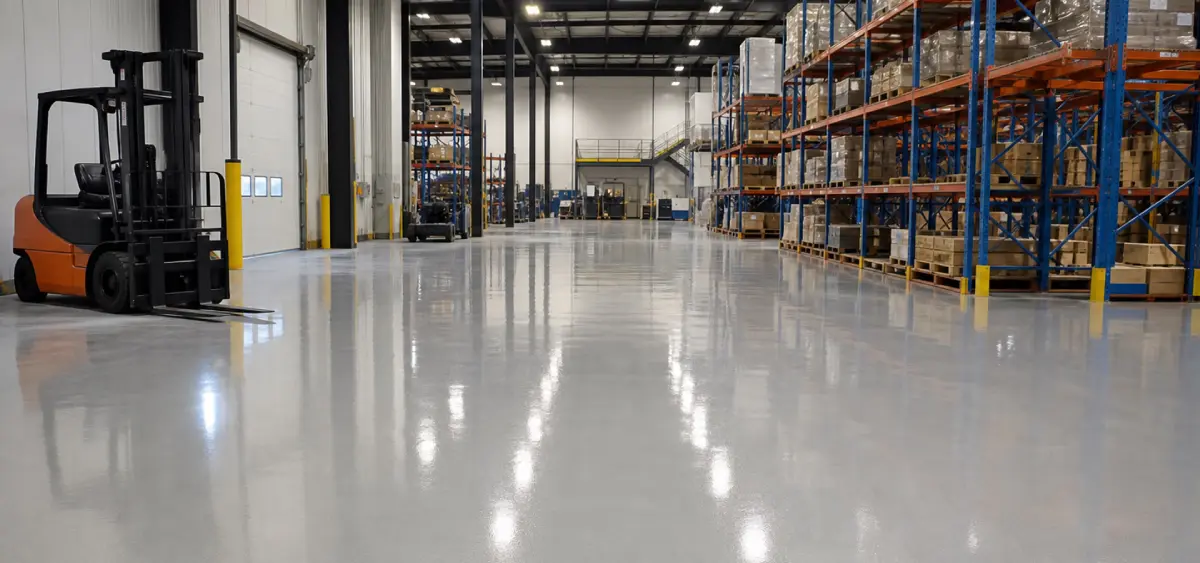
Quick Answer: A dog kennel floor coating from Specialty Concrete Coatings LLC uses polyaspartic and epoxy systems to create seamless, non-porous kennel floors that block moisture, urine, and bacteria penetration. These industrial-grade systems withstand pressure washing, disinfectants, and daily scrubbing without degrading, eliminating embedded odors and stains common in bare concrete kennel flooring.
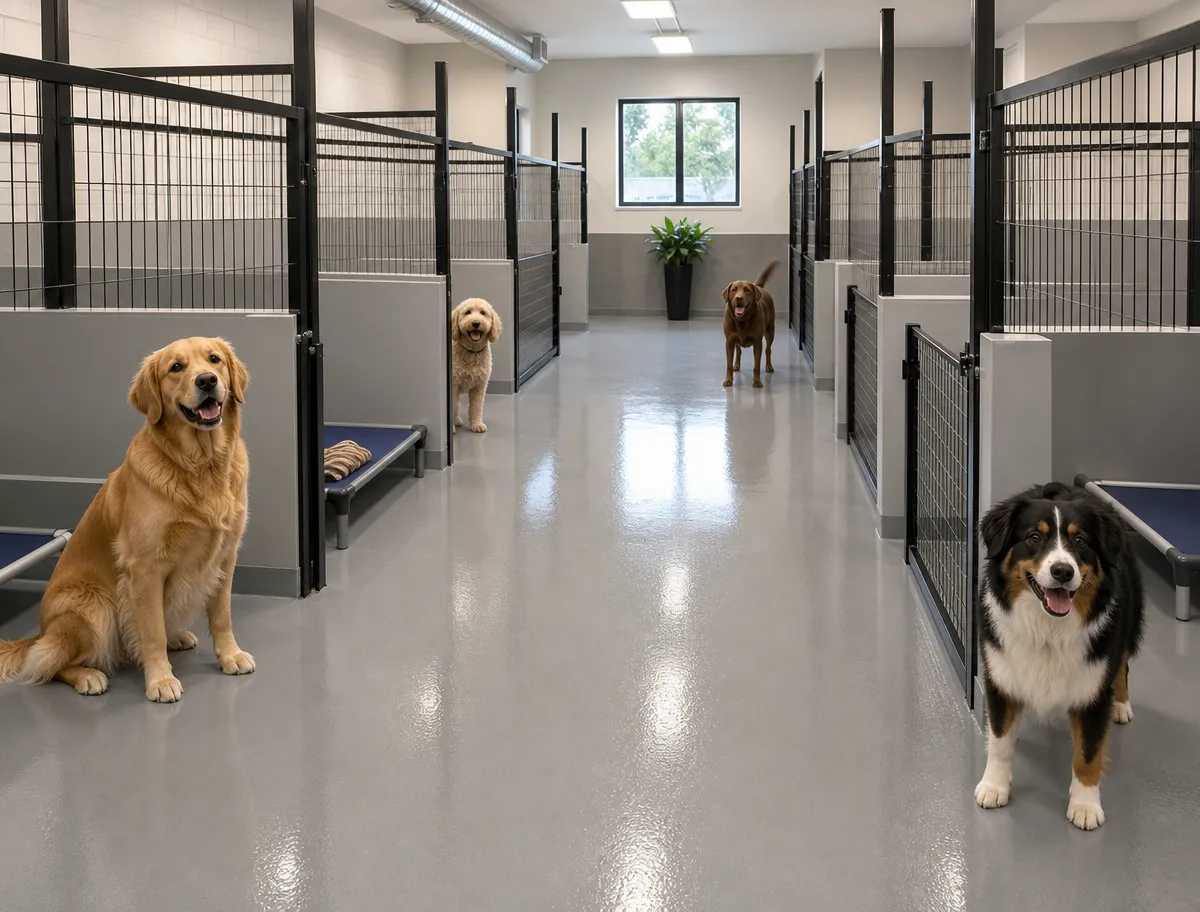
Seamless polyurea kennel flooring from Specialty Concrete Coatings resists stains, odors, and bacteria buildup that damage bare concrete. A UV-stable polyaspartic clear coat seals the surface against moisture and waste. The nonporous system withstands heavy washdowns and disinfectants. Installed in about one day, it delivers a durable, low-maintenance surface built for demanding dog kennel floor coating services and boarding environments.
What Are the Key Takeaways for a Dog Kennel Floor Coating?
- Specialist two-pack epoxy coatings like EverFlor-KennelCoat Tough resist moisture, bacteria, and odor absorption effectively.
- Traditional concrete and tile floors absorb odors and stains over time in kennels.
- Professional epoxy flooring withstands heavy traffic from paws and cleaning equipment without deterioration.
- Specialty Concrete Coatings LLC in Sandy Lake, PA provides kennel floor coating solutions.
What Do You Need Before Coating a Kennel Floor?
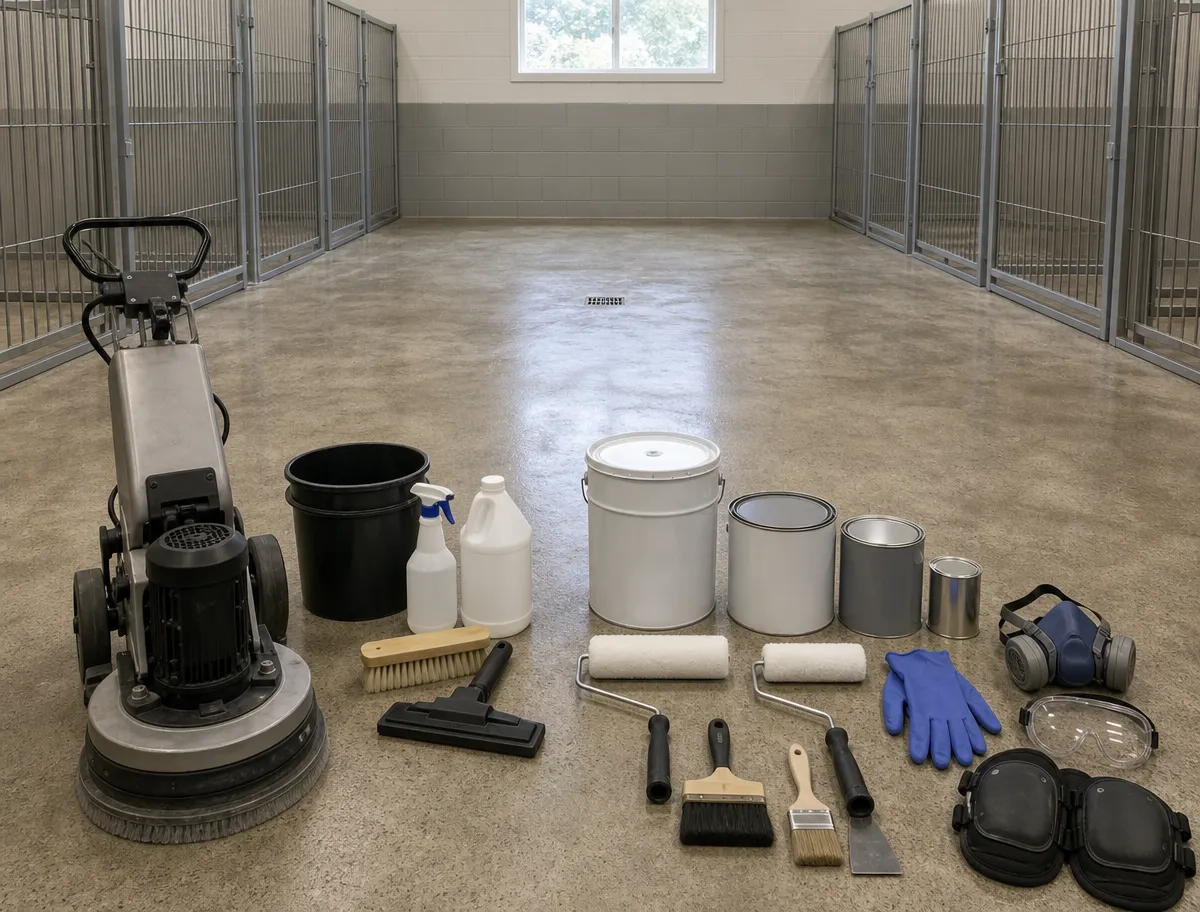
Bare concrete cannot handle the daily reality of a working kennel. Concrete is porous by nature, so it soaks up water, urine, and bacteria long before staff notice a problem. That absorption breeds odor and gives pathogens a place to hide, which is exactly why a dog kennel floor coating replaces raw slab with a sealed, cleanable surface, a point backed by research on flooring’s effects on kenneled dog health.
Preparation matters more than the coating itself. Kennel owners should confirm a few things before scheduling installation:
- Current condition of the slab, including cracks, moisture issues, or previous coatings that need removal
- Daily traffic patterns — paw traffic, cart wheels, and washdown equipment all stress a floor differently
- Chemical exposure from disinfectants and cleaning solutions used during routine sanitation
- Timeline flexibility, since boarding facilities and clinics need to plan around kennel occupancy
How does a contractor determine the right coating system?
A qualified contractor starts with a free quote and an on-site walkthrough. Specialty Concrete Coatings LLC uses that visit to review slab condition, traffic levels, and color or texture preferences before recommending a system suited to the space, and installations align with commercial floor coating systems built for demanding facilities.
Does location affect scheduling and support?
Yes — proximity shapes response time and site access. Operating from Sandy Lake, PA, Specialty Concrete Coatings LLC serves commercial clients throughout the Greater Pittsburgh and northwest Pennsylvania service area, including boarding facilities and veterinary clinics, with an established installation history in the region. Commercial kennel operators in the state should also review the Pennsylvania commercial kennel flooring regulations that govern surface and sanitation standards.
📞 Ready to Get Started? Don’t let porous concrete keep breeding odor and bacteria in your kennel runs. Contact Specialty Concrete Coatings LLC today for a fast, free quote on a dog kennel floor coating built for Northwest PA facilities.
How Is a Kennel Floor Coating Installed?
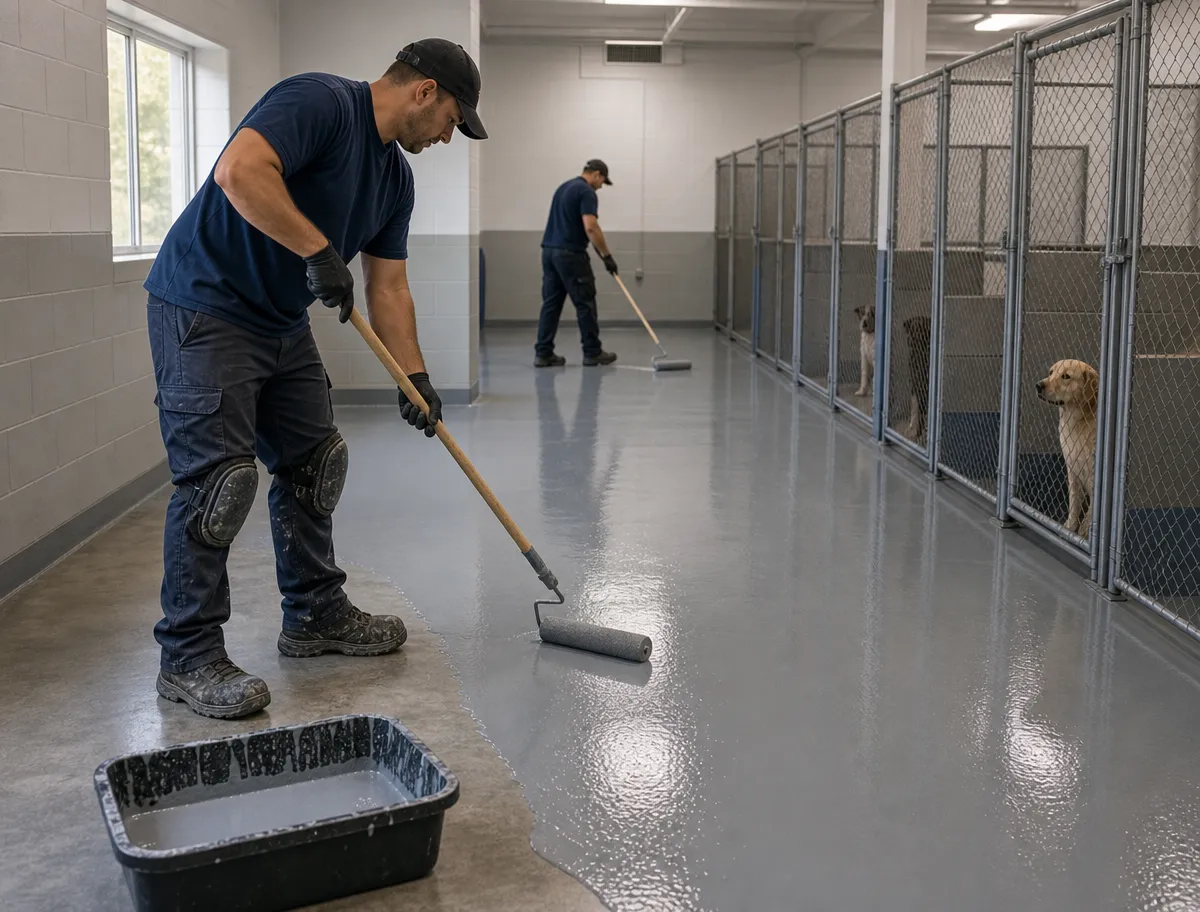
A dog kennel floor coating goes down in a defined sequence: surface grinding, crack repair, basecoat application, chip broadcast, and a protective topcoat. Kennel owners and facility managers should expect crews to prepare the concrete before any coating material touches the slab. Skipping preparation steps shortens the life of the system and invites peeling under heavy washdown cycles.
Installation follows a set order of operations:
- Grind the slab. Crews mechanically diamond-grind the concrete down to bare material, opening the surface for proper adhesion.
- Repair cracks and spalls. Technicians fill damaged areas with concrete mender before any coating layer goes on, closing gaps that would otherwise trap bacteria and odor.
- Apply the basecoat. A polyurea basecoat goes down next; it holds up better than traditional epoxy versus polyurea coatings against constant paw traffic, scratching, and disinfectant washdowns common in kennel runs.
- Broadcast the color chips. Vinyl chips are hand-broadcast across the wet basecoat, creating a customized look while adding slip resistance for wet, high-traffic runs.
- Scrape and seal. Excess chips get scraped for a uniform texture, then a UV-stable clear topcoat locks the entire system in place.
How Long Before a Kennel Floor Can Be Used Again?
Downtime stays short compared to tile or bare concrete replacement. Facilities typically see walkable surfaces around 12 hours after installation, safe placement of heavier kennel equipment near the 24-hour mark, and full traffic readiness within about 48 hours. That timeline keeps boarding operations and veterinary clinics running with minimal disruption to daily animal care schedules.
How Do You Avoid Common Coating Mistakes?
Avoiding failure starts with rejecting single-pack paint for kennel runs. Standard paint lacks the engineering to handle the biological and physical abuse animals cause, plus constant exposure to cleaning chemicals. Facilities that install it anyway often watch the surface scratch, peel, and absorb odors within a month.
What Steps Prevent a Failed Kennel Coating?
Kennel owners and facility managers protect their investment by following a clear sequence.
- Reject generic single-pack paint and select a dog kennel floor coating engineered for paw traffic and washdowns.
- Confirm the system is built to withstand constant paw traffic without premature scratching or peeling.
- Ask about financing options and warranty coverage before signing any contract.
- Nail down the installation timeline upfront — a professional coating job transforms a slab in a single day, with no tear-out and no weeks of closure.
Does a Kennel Coating Really Need a Warranty?
Skipping the warranty conversation ranks among the costliest oversights a facility manager can make. Specialty Concrete Coatings backs installations with financing options and a stated warranty program, giving kennel owners recourse if performance falls short of expectations. These standards echo broader animal shelter sanitation standards that call for durable, easily disinfected surfaces in any facility housing animals.
Frequently Asked Questions
Why does a dog kennel floor coating resist stains and odors better than bare concrete?
Bare concrete is porous and absorbs water, urine, and bacteria, breeding odor over time. The seamless polyurea system with a UV-stable polyaspartic clear coat creates a nonporous surface that seals out moisture and waste.
How long does it take to install a kennel floor coating?
Specialty Concrete Coatings installs the seamless polyurea system in about one day, delivering a durable, low-maintenance surface without requiring extended downtime for boarding facilities or veterinary clinics.
What steps happen during kennel floor coating installation?
Crews follow a defined sequence: grinding the slab, repairing cracks and spalls, applying a polyurea basecoat, broadcasting chips, and finishing with a protective topcoat for lasting durability.
How much does a dog kennel floor coating cost?
Pricing depends on square footage, slab condition, and the amount of crack repair needed before coating. Most kennel and boarding facilities get an accurate number after a free on-site walkthrough, since chemical exposure and traffic levels affect the recommended system.
Can a kennel floor coating handle daily disinfectant washdowns without breaking down?
Yes. Polyaspartic and polyurea systems are engineered to resist harsh disinfectants and repeated pressure washing without peeling, fading, or losing adhesion, which is why they outperform single-pack paint in kennel and boarding environments.
TL;DR — Dog Kennel Floor Coating at a Glance
- Bare concrete absorbs urine, moisture, and bacteria, breeding odor in kennel runs over time.
- Polyaspartic and polyurea kennel floor coatings create a seamless, nonporous surface that resists stains and stands up to disinfectants.
- Proper prep — grinding, crack repair, basecoat, chip broadcast, and topcoat — determines how long the system lasts.
- Most installations finish in about a day, with full traffic readiness within roughly 48 hours.
- Skipping single-pack paint and confirming financing and warranty terms upfront protects the investment.
- Next step: Contact Specialty Concrete Coatings LLC for a free quote on a dog kennel floor coating built for your facility.
Related Resources
- Dog Kennel Floor Coating Services
- Northwest Pennsylvania Service Areas
- Commercial Concrete Floor Coatings for Long-Lasting Durability
- Key Maintenance Considerations for Specialty Concrete Surfaces
- What to Do If Your Specialty Concrete Cracks After Installation
- Top Signs of Low-Quality Specialty Concrete
Get a Free Dog Kennel Floor Coating Quote
A durable concrete coating system transforms kennel floors into surfaces that withstand the demanding realities of animal care — resisting stains, containing odors, and simplifying the rigorous cleaning protocols that maintain health and hygiene standards. By choosing a professional-grade finish engineered for high-traffic, high-moisture environments, kennel operators invest in a long-lasting solution that reduces maintenance burden while supporting a cleaner, more sanitary facility for the animals in their care. Contact Specialty Concrete Coatings LLC today for a free, no-obligation quote.
About Specialty Concrete Coatings LLC: Specialty Concrete Coatings LLC, based in Sandy Lake, PA, specializes in polyaspartic and epoxy floor coatings for commercial and residential clients throughout Greater Pittsburgh and Northwest Pennsylvania, including kennel, boarding, and veterinary facilities. Contact us for a free, no-obligation quote.