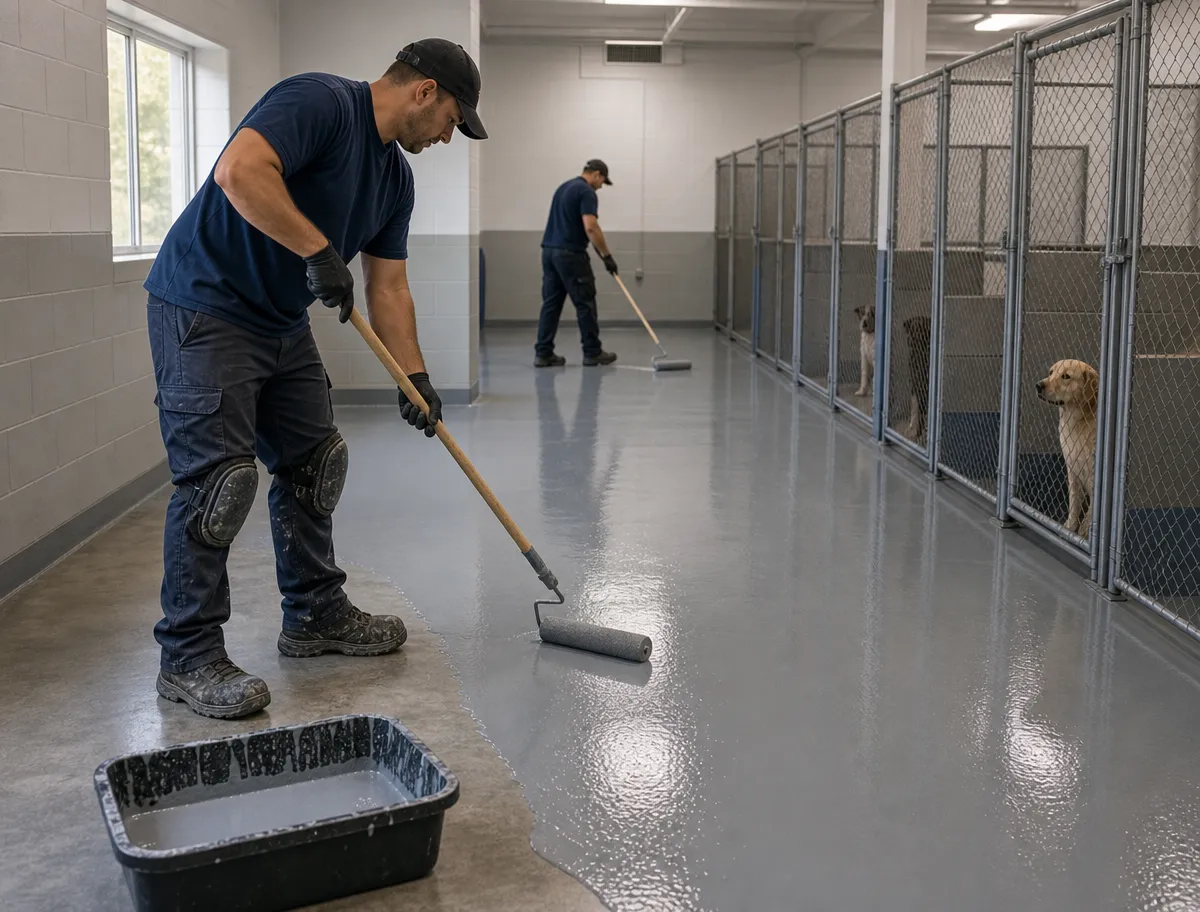
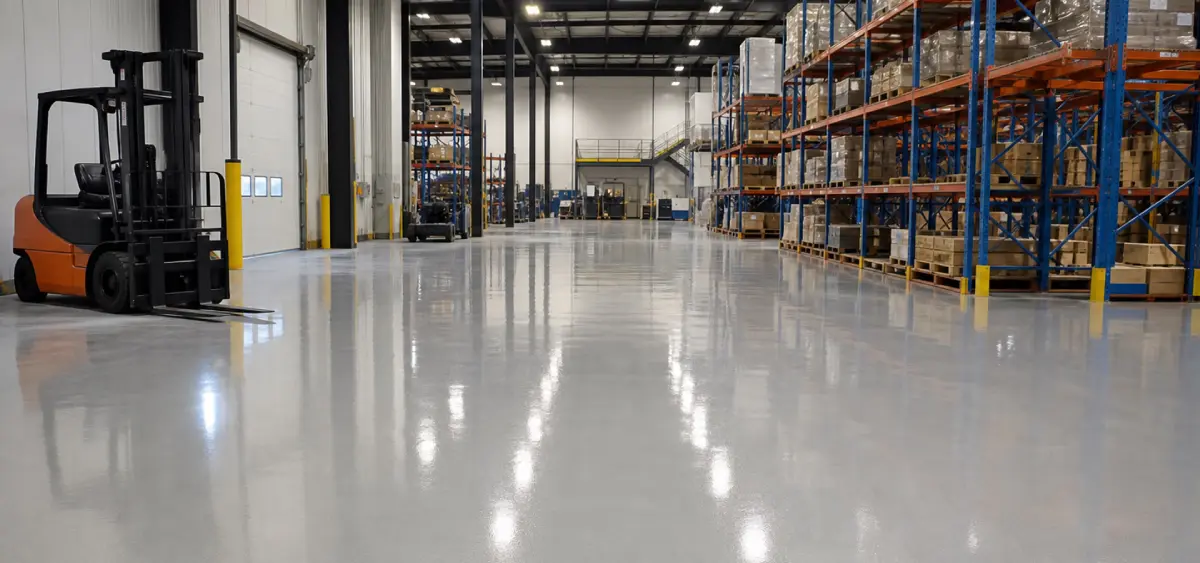
Quick Answer: Pennsylvania restaurant kitchens need seamless, non-porous, sanitizable floor systems that survive hot washdowns, grease, and constant traffic without cracking. A polyurea basecoat topped with a UV-stable polyaspartic clear coat meets this standard, eliminating the grout lines and cracks that trap bacteria and fail health inspections. Specialty Concrete Coatings LLC installs these systems statewide, giving Pennsylvania restaurant owners a compliant floor built to pass inspection and hold up for years of daily commercial kitchen abuse.
Key Takeaways
- Specialty Concrete Coatings LLC in Sandy Lake, PA specializes in commercial kitchen floor coatings for restaurants.
- Seamless polyurea and polyaspartic flooring systems withstand hot washdowns, grease, and water without cracking or failing inspection.
- Seamless epoxy coatings shed grease and maintain traction during regular sanitization and chemical cleanings.
- Chemically hardened coating systems meet Pennsylvania health code safety standards for food service facilities statewide.
What Does PA Health Code Require For Kitchen Floors?
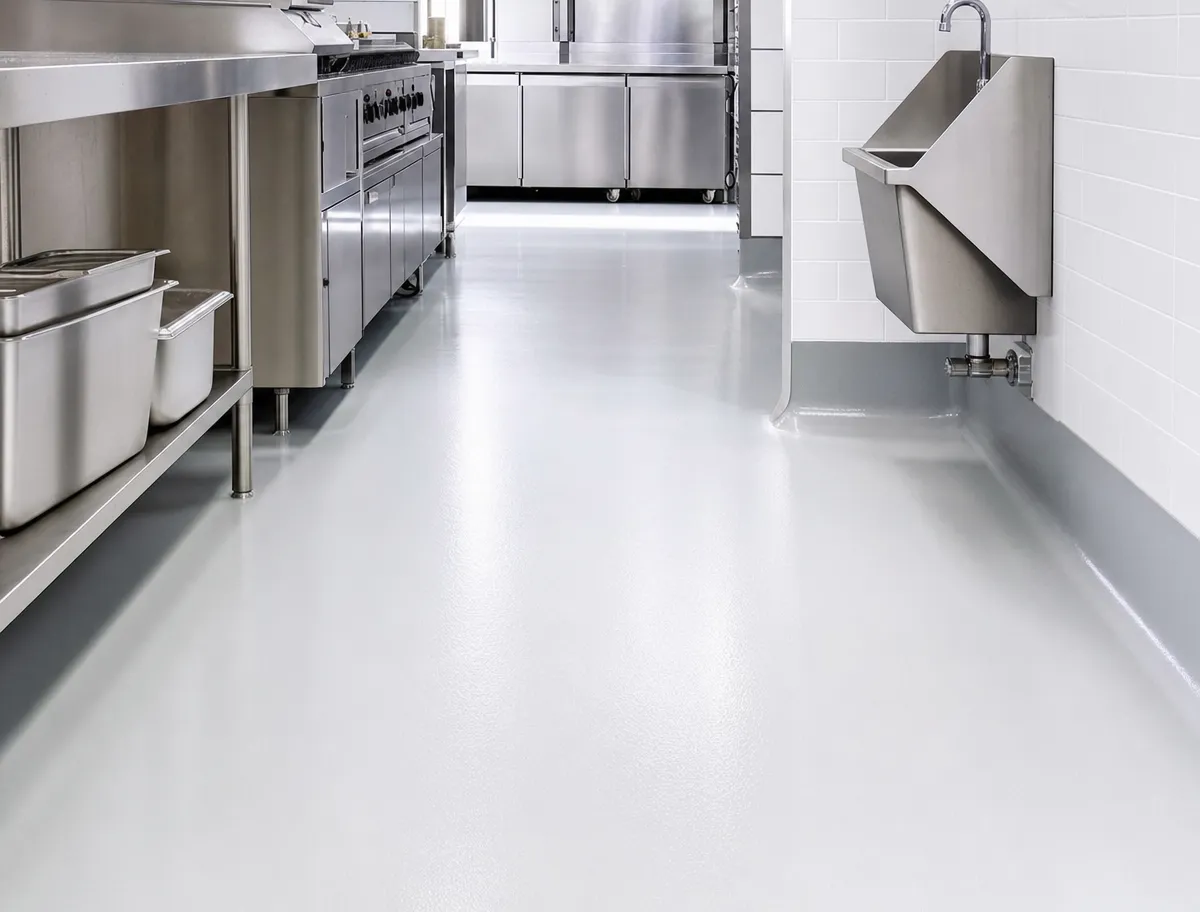
Pennsylvania health inspectors expect commercial kitchen floors to pass sanitation reviews that enforce state safety and health standards, following guidance such as the Pennsylvania Department of Agriculture’s sanitary practice guidelines and the FDA Food Code 2022. Restaurants, food processors, and cafeterias across the Commonwealth face regular scrutiny, and worn or cracked concrete rarely survives that scrutiny intact. A properly installed restaurant kitchen floor coating gives operators a surface built to satisfy inspectors rather than fight them.
Surfaces need to hold up under daily cleaning cycles while still meeting the safety benchmarks inspectors check for. That means no exposed cracks where bacteria collect, no porous concrete that soaks up grease, and no slick spots that create fall hazards.
What makes a floor “health-code ready”?
A compliant surface stays seamless and non-porous, so staff can sanitize it thoroughly after every shift. Grout lines, pitted concrete, and hairline cracks all give bacteria a place to hide, and inspectors look for exactly those gaps.
Why do restaurant floors fail inspection so often?
Kitchen floors absorb brutal daily punishment. Hot oil splatter, sudden temperature swings, standing moisture, dropped metal pans, and nonstop foot and cart traffic wear down untreated concrete fast. Bare or damaged slabs crack under that stress, creating the exact conditions inspectors flag.
Common failure points include:
- Cracked or pitted concrete that traps grease and moisture
- Porous surfaces that resist proper sanitation
- Worn areas where slip resistance has broken down
- Seams and joints that collect debris
A durable coating system addresses each of these before the next inspection date arrives, keeping kitchens compliant and operational.
Which Coating System Survives Grease And Heat?
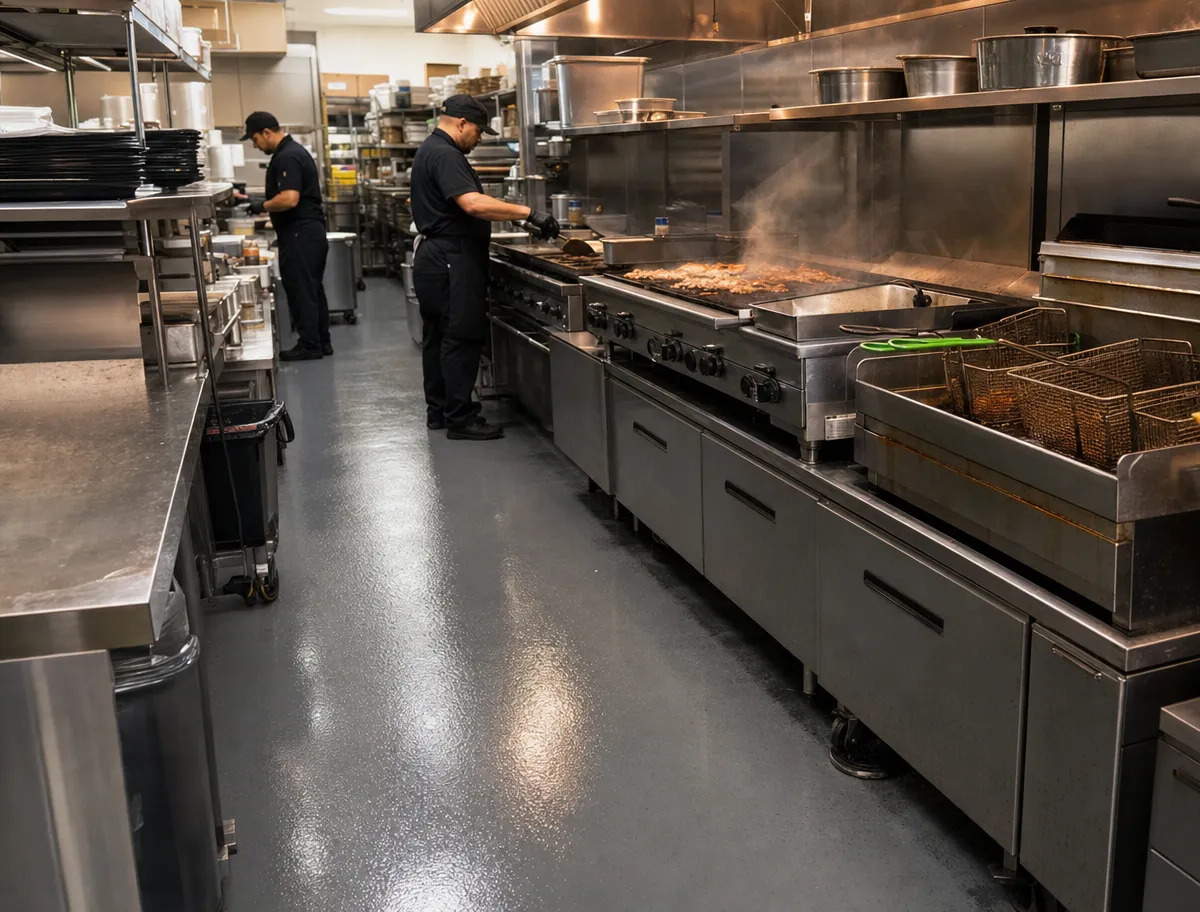
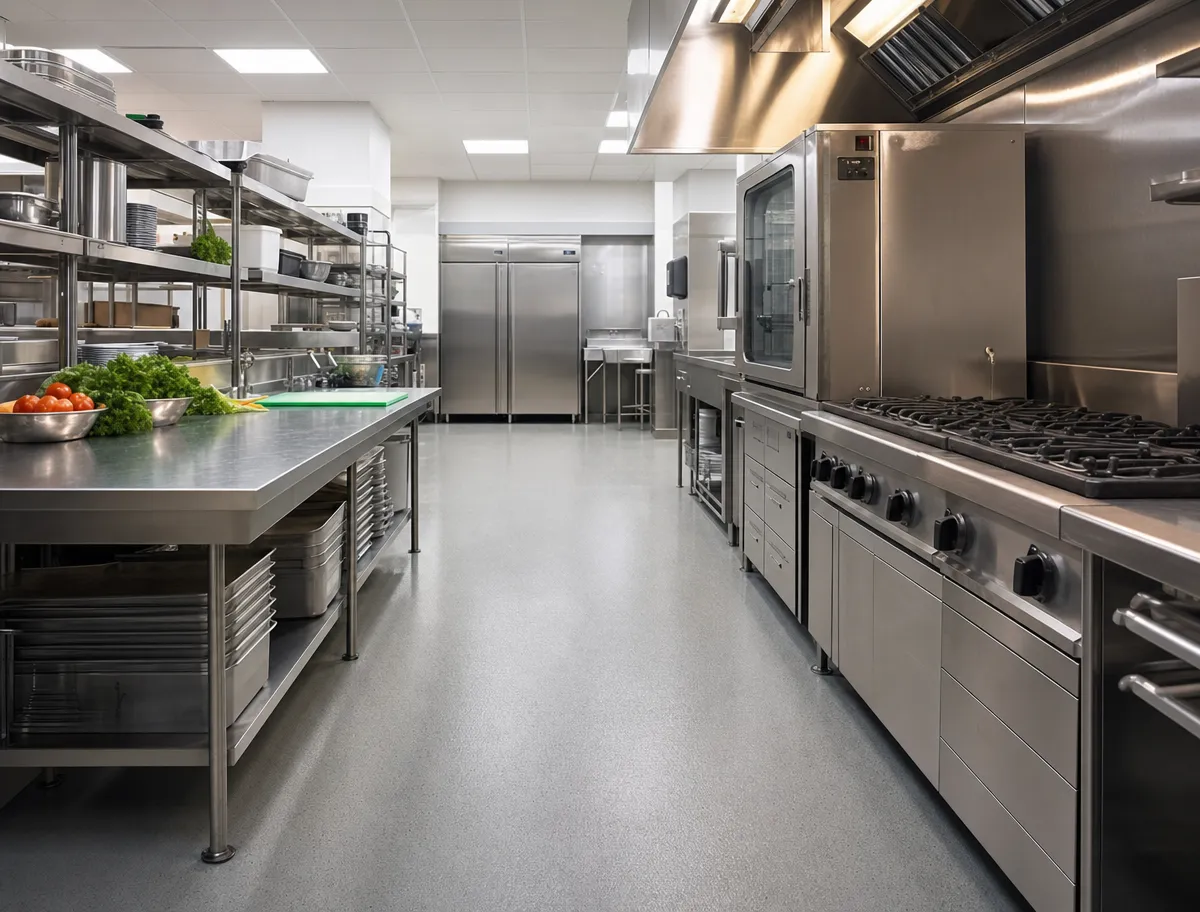
Seamless, grease-shedding epoxy concrete coating systems answer the question directly. Pennsylvania restaurant kitchens need a surface built to shrug off hot oil, standing water, and constant washdowns without cracking or peeling. A properly engineered restaurant kitchen floor coating eliminates seams where grease and bacteria collect. The whole slab stays sanitizable from wall to wall.
Traction matters as much as durability. Kitchen floors in Pennsylvania facilities stay wet and oily for hours during service. A slick surface invites falls and workers’ comp claims, which is why CDC/NIOSH slip, trip, and fall prevention guidance calls out flooring as a leading risk factor. Epoxy floor coating systems designed for food-service environments hold their grip under grease and water while tolerating hot washdowns that would crack an untreated or poorly sealed slab.
Does the coating resist mold and bacteria?
Yes. Correctly installed kitchen coatings create a waterproof, sanitary barrier that resists mold, mildew, and bacteria growth. The nonstick finish wipes clean quickly, which shortens end-of-shift cleaning and supports faster health inspection turnarounds.
What makes a coating hold up to daily kitchen abuse?
A polyurea and polyaspartic hybrid blend delivers the toughness restaurants and commercial kitchens across Pennsylvania require. This combination stands up to repeated heavy cleaning cycles over years of service, not just months. Facility managers gain a floor that resists the daily punishment of dropped pans, rolling carts, and aggressive sanitizing chemicals without breaking down.
| Ready to stop worrying about your next health inspection?
Specialty Concrete Coatings LLC offers a free on-site assessment for Pennsylvania restaurants and food-service facilities. Request your free quote and find out how fast your kitchen floor can be inspection-ready. |
How Do You Install Without Closing Your Kitchen?
Restaurant kitchens rarely have a spare week to shut their doors. A properly planned restaurant kitchen floor coating project respects that reality. Crews phase the work around actual service hours, scheduling around nights, planned closures, and slower days rather than forcing operators to lose revenue. That flexibility keeps dining rooms open and staff on payroll while the floor system cures.
Can the work happen after hours?
Yes. Coating crews routinely handle prep, application, and cure phases overnight or during off-peak stretches, so line cooks and servers return to a finished floor rather than a construction zone.
How does a contractor plan around a busy kitchen?
Planning starts with a free on-site assessment. The space, traffic patterns, and slow periods get mapped out before any equipment arrives. This step lets Pennsylvania restaurant owners and facility managers set a realistic timeline before committing.
Experience matters here. Contractors bringing 20-plus years of resinous, urethane-cement installation work know how to sequence a kitchen job without disrupting prep lines or walk-in access. Pennsylvania operators can count on a Sandy Lake, PA-based crew traveling statewide to execute these phased installations, whether the venue sits in Philadelphia, Erie, or Pittsburgh’s restaurant corridors.
Frequently Asked Questions
What does Pennsylvania health code require for kitchen floors?
Inspectors require seamless, non-porous, sanitizable surfaces free of cracks or porous concrete that trap bacteria and grease. Floors must withstand daily cleaning cycles while meeting state safety benchmarks for food service facilities.
Why do restaurant kitchen floors commonly fail inspection?
Hot oil splatter, temperature swings, standing moisture, and constant foot traffic wear down untreated concrete, creating cracks, pitting, and worn slip-resistant areas. These conditions trap grease and debris, triggering inspection failures.
What coating system handles grease, heat, and washdowns?
Specialty Concrete Coatings LLC installs polyurea basecoats with UV-stable polyaspartic clear coats, forming a seamless, USDA-approved system. This design sheds grease, resists hot washdowns, and maintains traction without cracking or peeling.
How long does a restaurant kitchen floor coating installation take?
Most restaurant kitchen floor coating projects finish in one to three days, depending on square footage and prep work needed. Crews schedule installation overnight or during planned closures so kitchens can reopen with minimal disruption to service.
How much does a restaurant kitchen floor coating cost in Pennsylvania?
Cost depends on square footage, existing floor condition, and the coating system selected, but most Pennsylvania restaurant kitchens fall within a predictable per-square-foot range. A free on-site assessment gives operators an exact quote before any work begins.
TL;DR — Restaurant Kitchen Floor Coating at a Glance
- Pennsylvania health inspectors require seamless, non-porous kitchen floors free of cracks and grout lines that trap bacteria and grease.
- Polyurea basecoats with UV-stable polyaspartic clear coats create a sanitizable, grease-shedding surface that survives hot washdowns.
- Correctly installed coatings resist mold, mildew, and bacteria while meeting OSHA walking-working surface standards for slip resistance.
- Installation crews phase work around service hours, nights, and slow periods so kitchens stay open during the project.
- Ready to get your kitchen inspection-ready? Request a free on-site assessment from Specialty Concrete Coatings LLC.
Related Resources
- Commercial Kitchen Floor Coatings
- About Specialty Concrete Coatings LLC
- Your Complete Manual to Setting Up a Commercial Kitchen
- Kitchen Flooring Makeovers You’ll Absolutely Adore
- Commercial Concrete Floor Coatings for Long-Lasting Performance
- Understanding Concrete Coating Weather Resistance
Get a Free Restaurant Kitchen Floor Coating Quote
Don’t wait for a failed inspection to fix your kitchen floor. Specialty Concrete Coatings LLC serves restaurants and food-service facilities across Northwest Pennsylvania and statewide. Contact our team or request your free quote today to schedule a health-code-ready floor coating.
About Specialty Concrete Coatings LLC
Specialty Concrete Coatings LLC, based in Sandy Lake, PA, installs commercial and industrial floor coating systems for restaurants, food processors, and facilities throughout Northwest Pennsylvania and beyond. With more than 20 years of resinous and urethane-cement flooring experience, the team specializes in seamless, health-code-ready kitchen floor coatings that hold up under grease, heat, and daily sanitation demands.