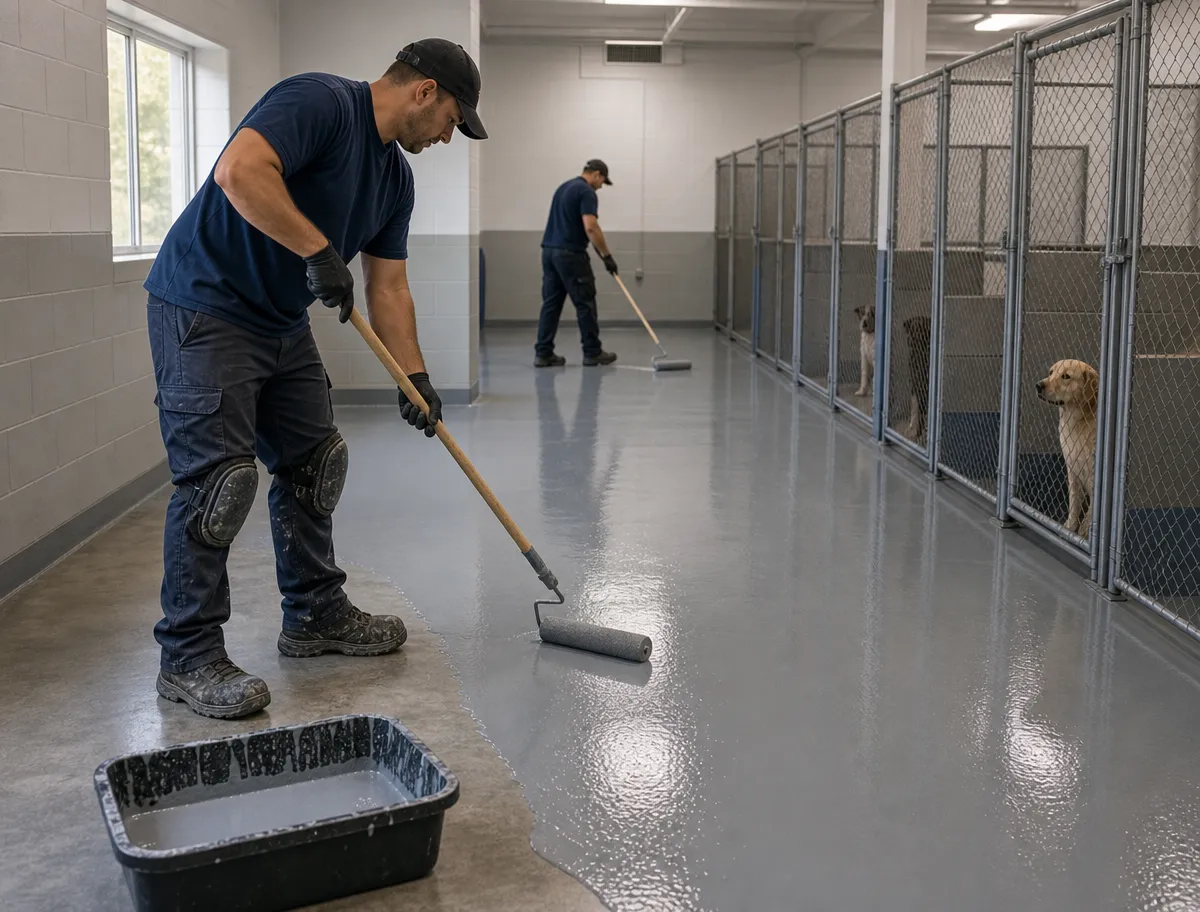
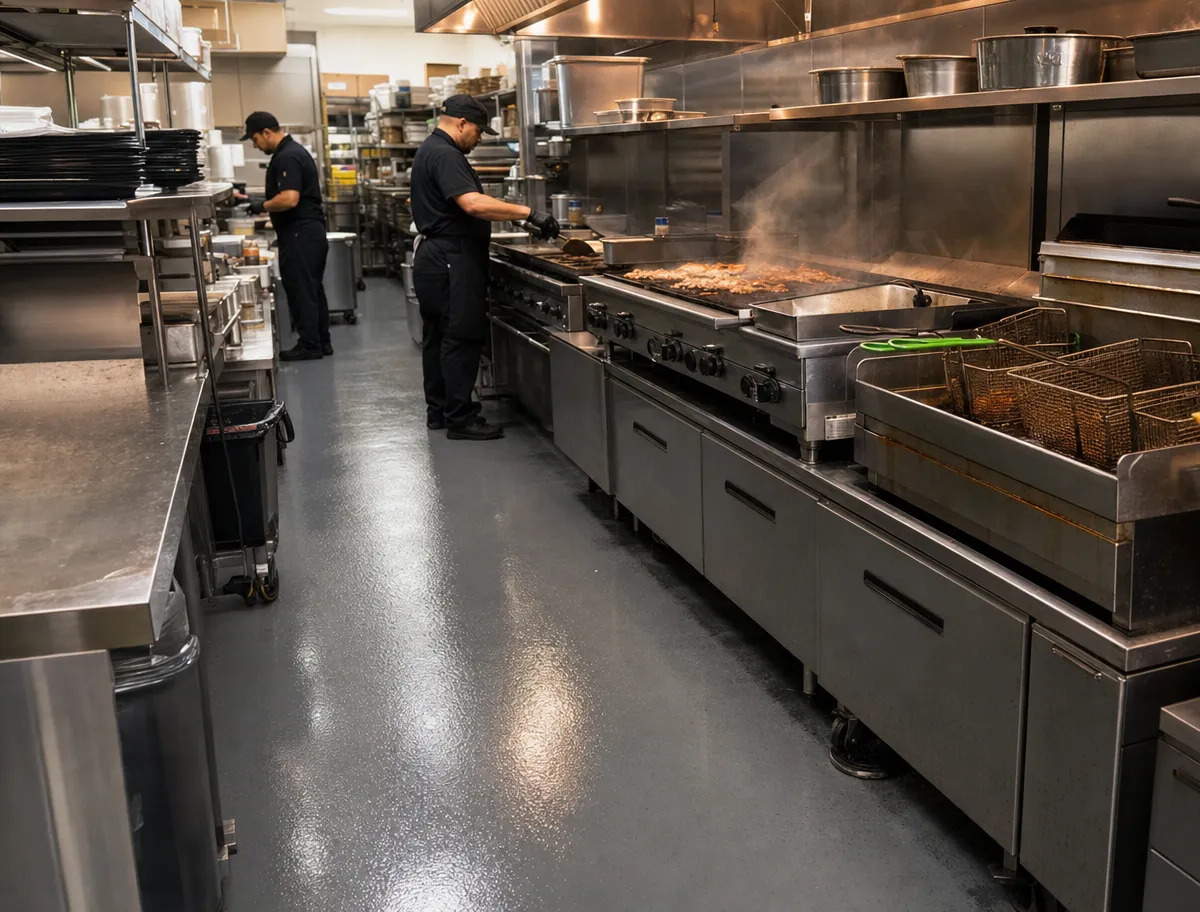
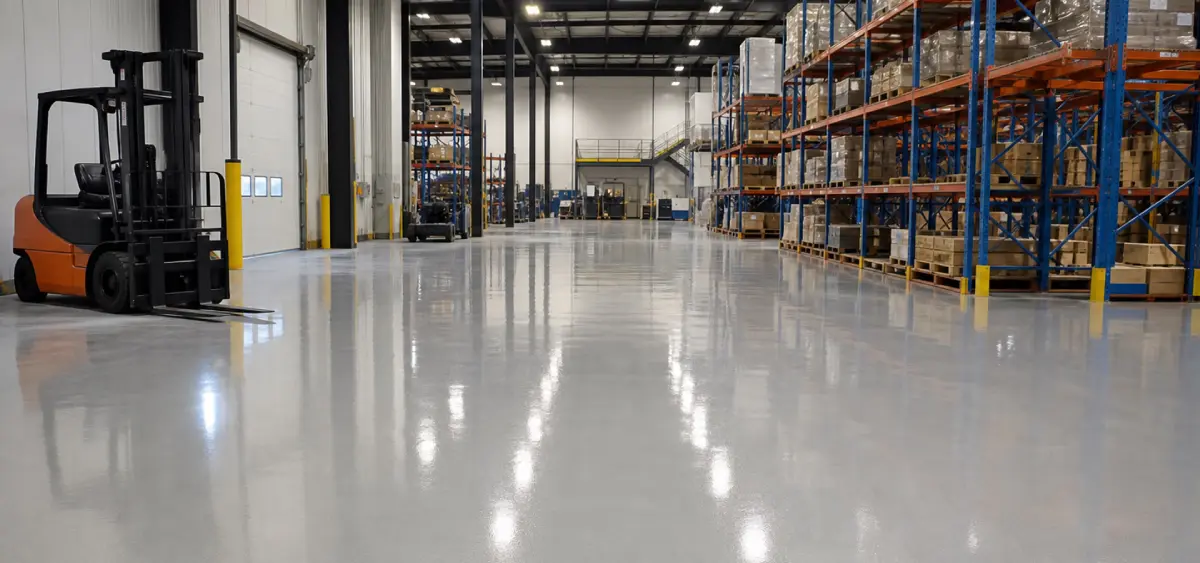
Choosing a commercial floor coating comes down to matching the system to what your facility actually does on that floor every day. Epoxy, polyurea, and urethane cement all protect concrete, but they’re built for different jobs — and picking the wrong one is one of the most common reasons commercial floors fail years ahead of schedule. Here’s how the three systems compare and which one fits your Pittsburgh facility.
What Is Urethane Cement, and How Is It Different from Epoxy and Polyurea?
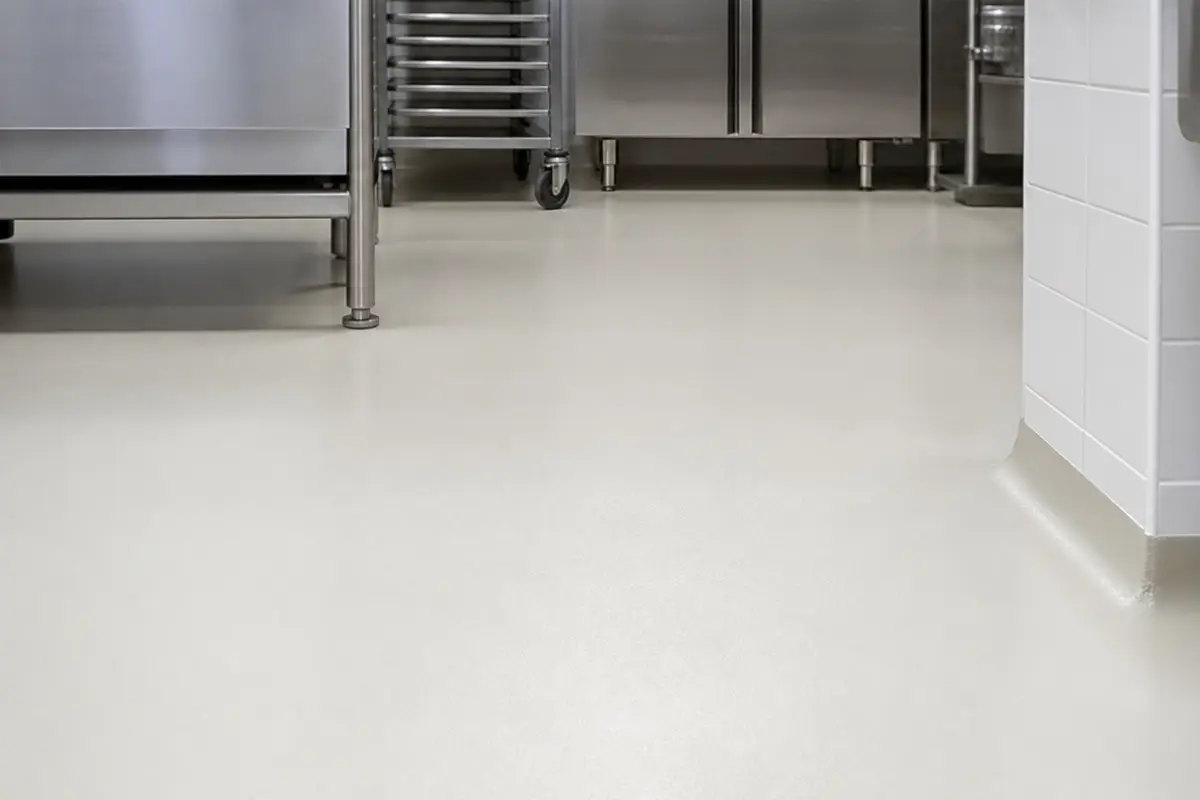
Urethane cement is a trowel-applied blend of urethane resin and cement aggregate, rather than a thin, poured resin layer like epoxy or polyurea. That aggregate-filled composition is what gives it two properties neither epoxy nor polyurea can match: a thermal expansion rate close to concrete itself, and resistance to the kind of hot-water washdowns and harsh chemicals found in food processing and commercial kitchens. Under the FDA Food Code’s requirements for indoor floors in food establishments, surfaces in food preparation and warewashing areas must be smooth, durable, and nonabsorbent — standards that push many commercial kitchens toward urethane cement over standard epoxy specifically because of how it holds up under repeated hot-water cleaning cycles.
Epoxy for Commercial Floors — Strengths and Limits
- Lowest cost of the three systems, and a familiar, proven option for showrooms, offices, and light-retail floors.
- Good chemical resistance for general use, but standard epoxy stays rigid and can crack under thermal shock — hot tires, hot water, or Pittsburgh’s freeze-thaw swings.
- Longer cure time (24-72 hours) means more downtime for a business that can’t close for multiple days.
- Best fit: showrooms, retail spaces, offices, and light-traffic commercial areas without extreme chemical or thermal exposure.
Polyurea for Commercial Floors — Strengths and Limits
- Cures in 2-4 hours, which is why it’s the go-to choice when a facility can’t afford multiple days of downtime.
- Flexible and impact-resistant, holding up well under forklift traffic, dropped tools, and heavy equipment loads.
- Very good chemical resistance, though not built specifically for the sustained hot-water and organic-acid exposure of food processing environments.
- Best fit: warehouses, auto shops, industrial shops, and factory floors where fast turnaround and impact resistance matter most.
Urethane Cement — Built for Extreme Environments
Urethane cement’s real advantage shows up in environments epoxy and polyurea weren’t designed for:
- Thermal shock resistance — a floor at 35°F hit with 180°F+ wash water is common in food processing; standard epoxy can crack or delaminate from that swing, while urethane cement’s expansion rate matches concrete closely enough to absorb it.
- Chemical resistance built for the full food-service chemistry stack — organic acids, caustic cleaners, sanitizers, and oils that gradually break down epoxy resin over time.
- Seamless, sloped, and integrally coved installation — no grout lines or 90-degree corners where bacteria and moisture can collect, which matters for commercial kitchen sanitation.
- Higher upfront cost and thicker application (typically 1/4″ to 3/8″, trowel-applied) than epoxy or polyurea, reflecting the more demanding environments it’s built for.
Side-by-Side: Epoxy vs. Polyurea vs. Urethane Cement
| Factor | Epoxy | Polyurea | Urethane Cement |
| Cure time | 24-72 hours | 2-4 hours | 24-72 hours |
| Thermal shock resistance | Poor — cracks under hot washdowns | Good | Excellent — built for 150°F+ swings |
| Chemical resistance | Good for general use | Very good | Best — built for acids, caustics, oils |
| Typical thickness | 20-60 mils | 40-100+ mils | 1/4″-3/8″ (trowel-applied) |
| Best fit | Showrooms, offices, light retail | Warehouses, auto shops, factories | Commercial kitchens, food/beverage plants, wash-down areas |
Which System Is Right for Your Pittsburgh Facility?
The right answer depends on what actually happens on your floor day to day. Auto shops, warehouses, and industrial and factory environments generally do best with polyurea’s fast cure and impact resistance. Commercial kitchens and any facility with sustained hot-water washdowns or heavy chemical exposure are the clearest case for urethane cement. Showrooms, offices, and lighter-traffic commercial spaces can often get excellent results from standard or decorative epoxy systems at a lower price point. For a full breakdown of coating specs by facility type across the Pittsburgh metro, including cure times and load ratings, see our commercial coatings overview.
Not sure which system fits your facility? Specialty Concrete Coatings offers free on-site assessments for commercial and industrial facilities across Pittsburgh and NW Pennsylvania. Call (724) 670-3655 for a free commercial quote.
Frequently Asked Questions
Can urethane cement be installed over an existing epoxy floor?
Generally no — the existing epoxy needs to be removed and the concrete properly profiled (typically by diamond grinding or shot blasting) before urethane cement is applied, since it needs a mechanical bond directly to the concrete substrate rather than to an existing coating layer.
Why does epoxy fail in commercial kitchens?
Standard epoxy is rigid and doesn’t handle rapid temperature swings well. Repeated hot-water washdowns in a commercial kitchen create thermal shock that can crack or delaminate epoxy over time — the exact failure mode urethane cement is engineered to resist.
Is polyurea or urethane cement better for a warehouse floor?
For most warehouses, polyurea is the better fit — it cures fast, resists impact from forklifts and dropped equipment, and doesn’t need the extreme chemical and thermal resistance that urethane cement is built for. Urethane cement’s strengths are most valuable in food and beverage environments.
How long does a commercial floor coating installation take in Pittsburgh?
It depends on the system and square footage. Polyurea systems are often walk-ready in 12 hours and fully cured within 24-48 hours. Epoxy and urethane cement typically need 24-72 hours to fully cure, though most commercial installations are still completed in a single visit.
Do commercial floor coatings meet Pennsylvania health code requirements for restaurants?
Yes — properly installed epoxy or urethane cement systems create the seamless, nonabsorbent, easily cleanable surface required under the FDA Food Code and adopted by Pennsylvania and Allegheny County health inspectors for food preparation areas.
Related Resources
- Commercial Concrete Coatings — Pittsburgh & NW Pennsylvania
- Commercial Kitchen Floor Coating
- Commercial Epoxy Floors Pittsburgh — Specs & Applications
- Polyurea Concrete Coating: What It Is & How It Works
Choosing the right commercial floor coating protects your investment for the next 10-20 years — the wrong choice can mean a failed floor within a couple of seasons. Specialty Concrete Coatings has installed commercial epoxy, polyurea, and urethane cement systems across Pittsburgh and NW Pennsylvania for over 15 years. Contact us today for a free on-site assessment.
About Specialty Concrete Coatings: Specialty Concrete Coatings LLC is a family-owned concrete coating contractor based in Sandy Lake, PA, serving Pittsburgh and NW Pennsylvania with residential and commercial epoxy, polyurea, and urethane cement floor systems since 2009. Contact us today for a free, no-obligation quote.