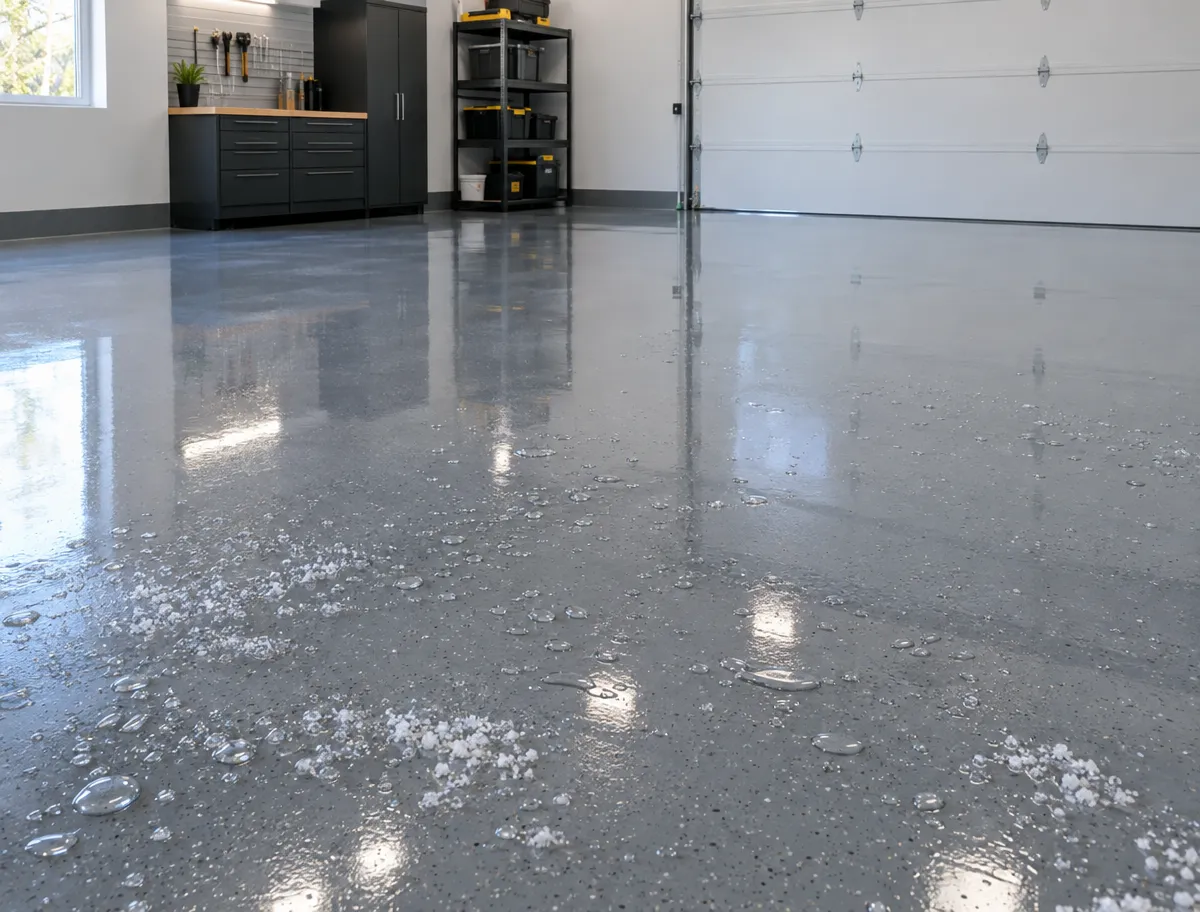
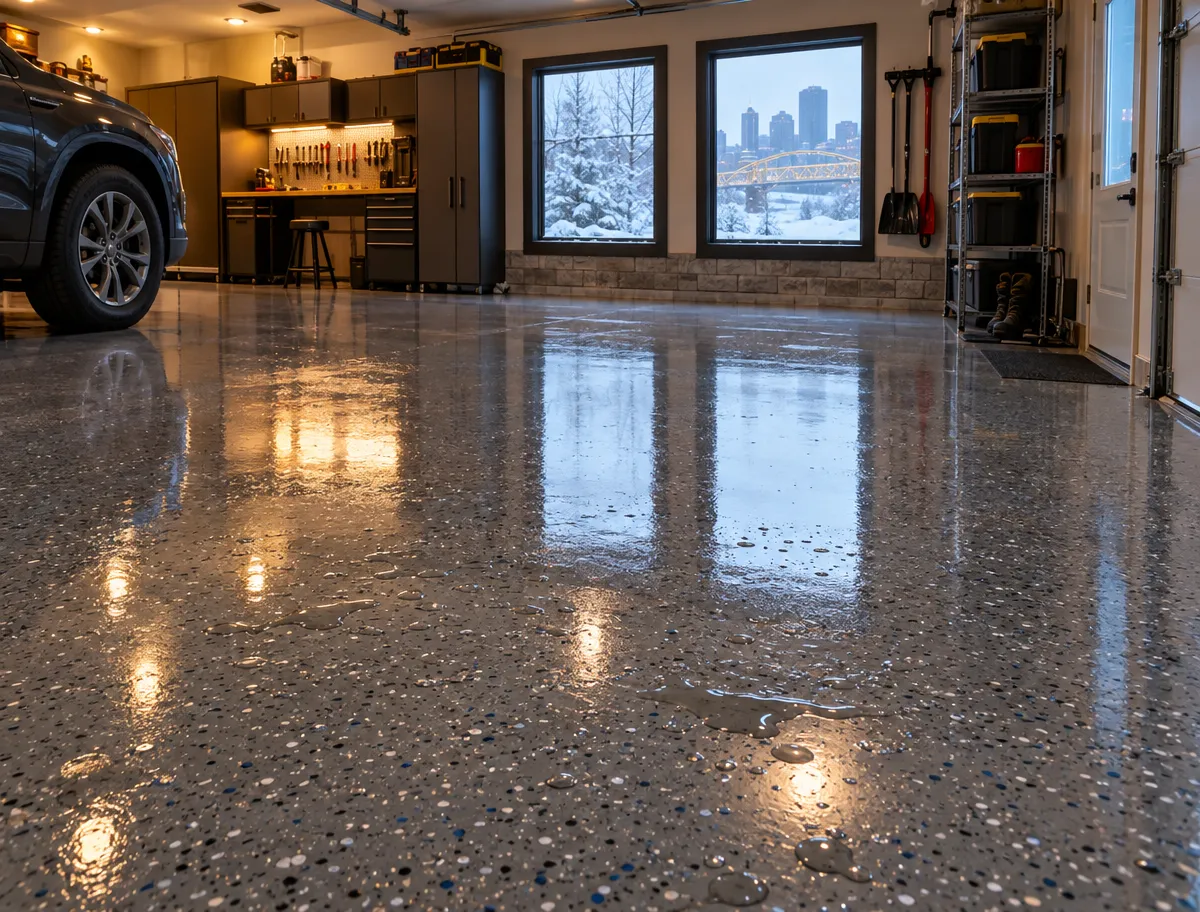
A genuinely slip-resistant pool deck coating combines a documented, tested texture — not just a marketing claim — with proper mechanical surface prep and a system actually rated for wet, barefoot, outdoor use. Plenty of products on the market call themselves “slip-resistant” without any objective measurement behind that claim, and plenty of DIY kits skip the prep step that determines whether a coating’s texture holds up past the first season. Here’s what separates the two, and what to check before you sign anything.
The Science Behind Slip Resistance: What DCOF Actually Means
Slip resistance isn’t a subjective feel — it’s measured. The industry standard is ANSI A326.3, which tests Dynamic Coefficient of Friction (DCOF): a numeric measurement of how much resistance a surface offers against sliding. A wet DCOF of 0.42 or higher is the industry’s general minimum threshold for a surface expected to be walked on when wet — a pool deck’s exact use case. The 2022 revision to this standard added specific product-use categories, including wet exterior and barefoot traffic, which are far more relevant to a pool deck than a generic interior flooring rating.
Ask this one question before you buy anything: “What’s the tested DCOF rating for this system, and under which use category?” A contractor or product that can’t answer with a number is asking you to trust a claim rather than a measurement.
What to Look For
Five specific things separate a coating that’s genuinely slip-resistant from one that just says it is.
| Look For | Why It Matters |
| A stated DCOF or documented slip-test result | The only objective way to compare grip between two systems rather than trusting a marketing claim |
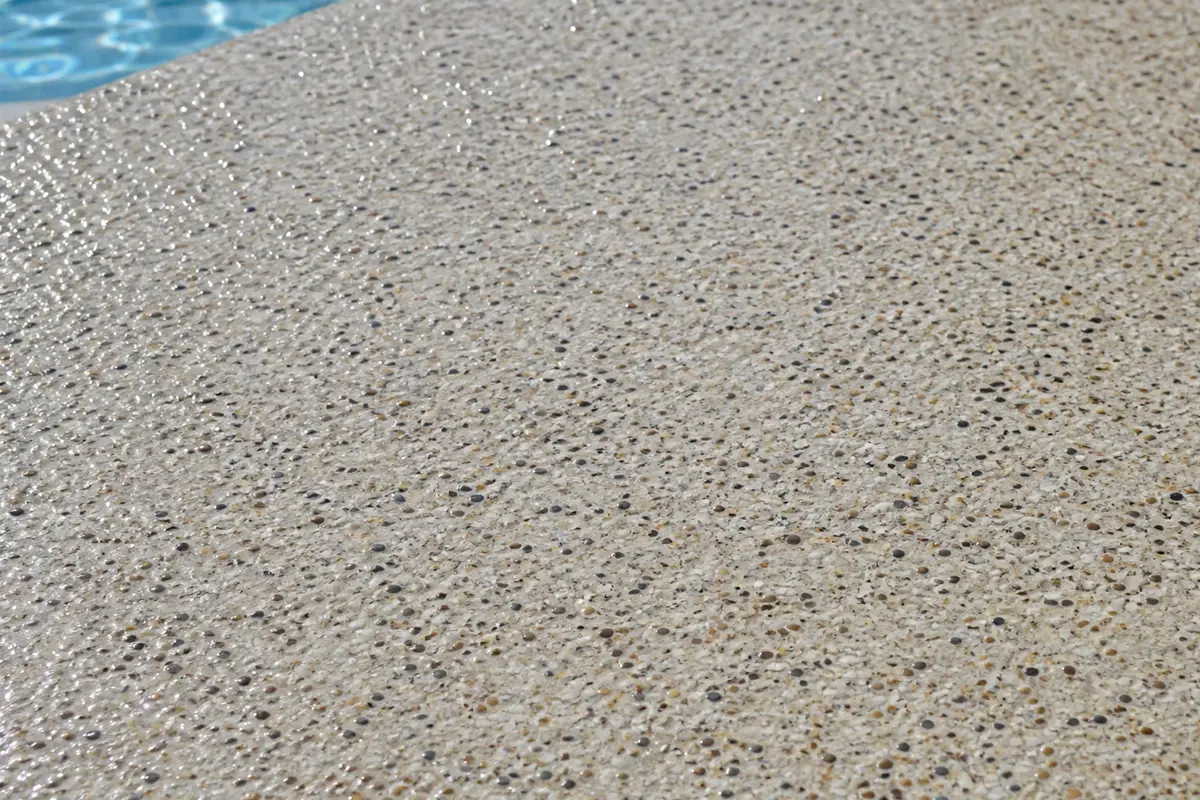
| Full broadcast aggregate or flake texture, not just an additive stirred into sealer | Uneven mixing means uneven grip; a full broadcast layer gives consistent texture across the whole deck |
| Mechanical diamond-grinding prep, not acid etching | Determines whether the coating actually bonds to the slab or peels within a season or two |
| A system rated for exterior, wet, and barefoot use | Interior-only rated products aren’t tested for the conditions a pool deck actually sees |
| A written warranty specifying peeling, delamination, and UV fading coverage | Vague “lifetime” language without specifics is not the same as an enforceable warranty |
What to Avoid
- A smooth acrylic sealer with no added texture: many basic sealers marketed for pool decks add gloss and stain resistance but little actual grip when wet.
- DIY paint-on kits with a texture additive stirred in by hand: hand-mixing leads to uneven distribution — some spots grip well, others stay slick, and you won’t know which is which until someone slips.
- A contractor who skips a written DCOF or slip-test disclosure: if slip resistance is the entire point of the project, get the number in writing before you commit.
- Overly aggressive texture that’s uncomfortable barefoot: more texture isn’t automatically better — a system engineered for pool decks specifically balances grip with comfort, rather than just maximizing roughness.
Balancing Grip and Comfort
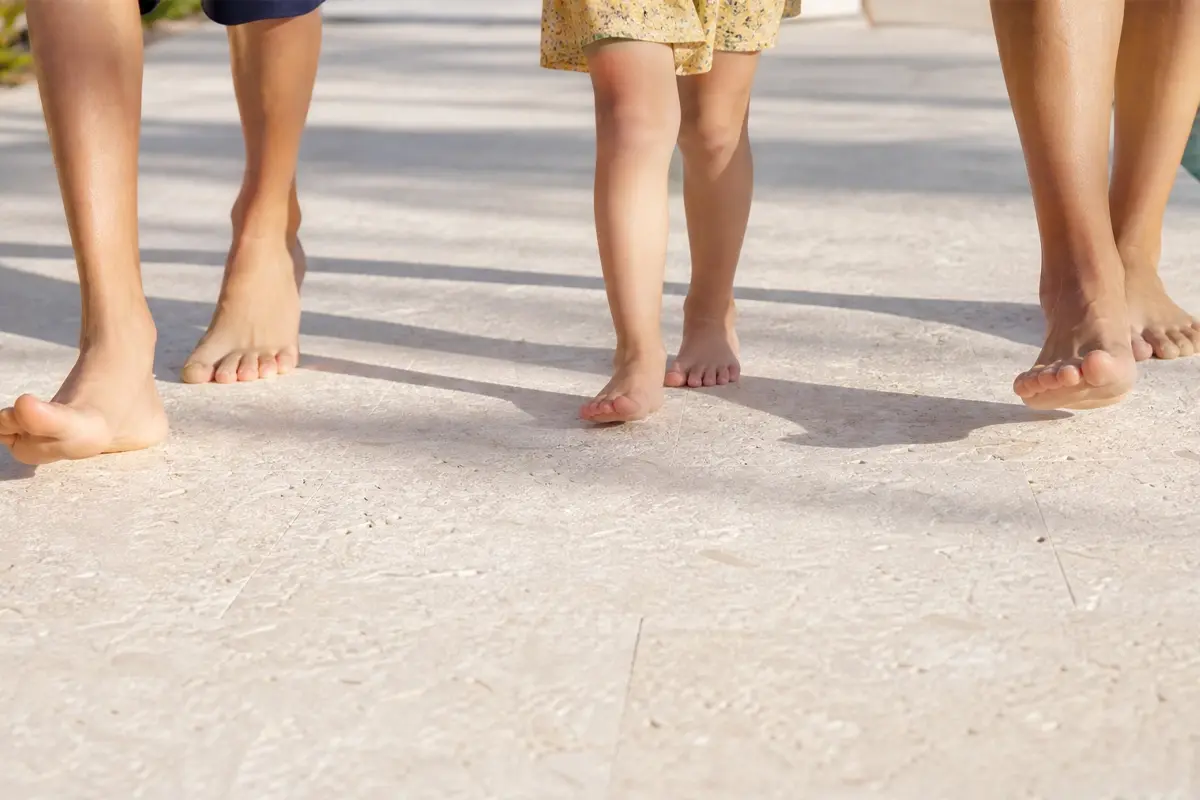
The best slip-resistant systems are engineered around a specific tension: enough texture to meet a real DCOF threshold, without creating a surface so rough it’s unpleasant on bare feet or hard on knees and hands during a fall. This is the difference between a professionally formulated broadcast system and simply adding as much grit as possible to a sealer — more friction isn’t automatically better once comfort and real-world foot traffic are part of the equation.
Why This Matters More in Pittsburgh & NW Pennsylvania
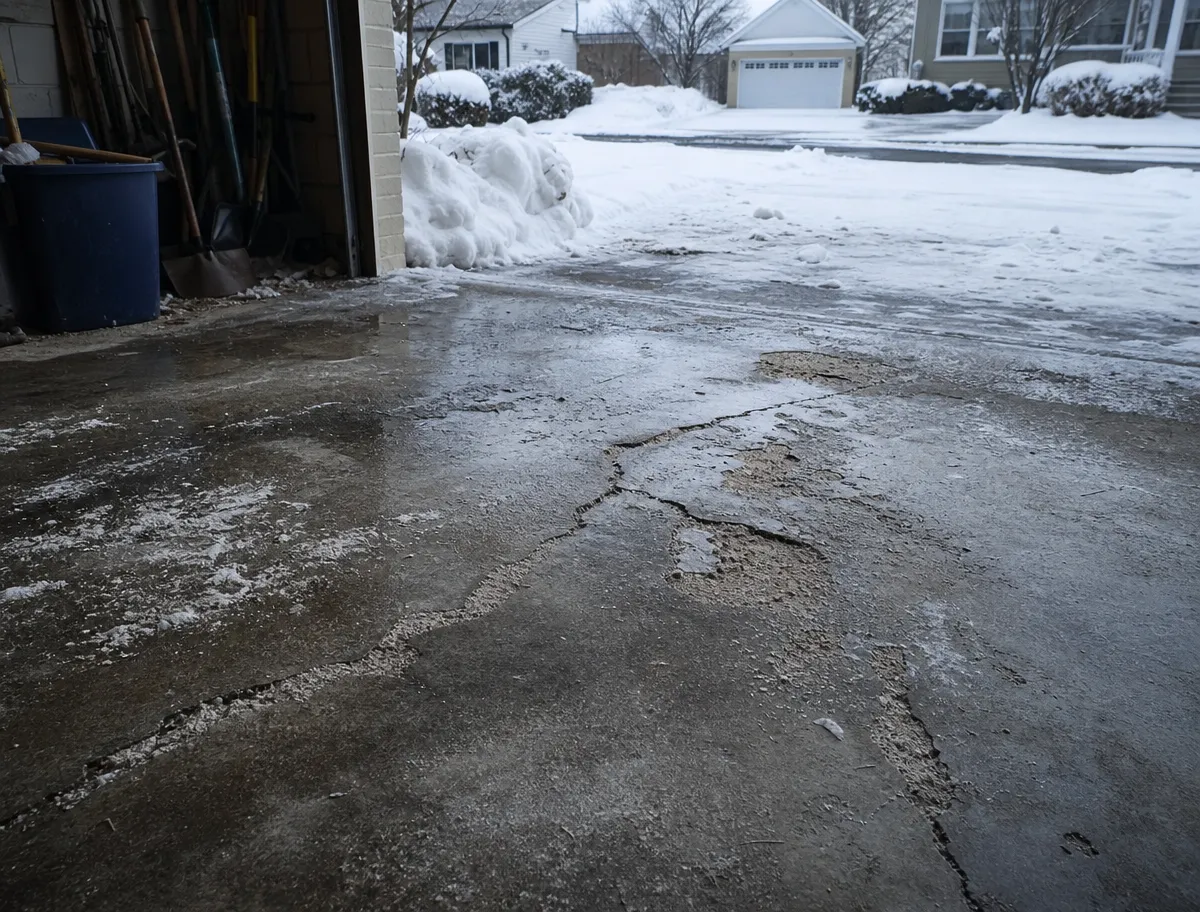
Freeze-thaw cycling adds a second demand on top of slip resistance: whatever coating you choose also has to flex with seasonal temperature swings without cracking or delaminating, since a cracked coating loses both its texture and its bond to the slab. This is why the same prep and material standards that apply to a patio floor coating in this region matter just as much for a pool deck — both surfaces face the identical winter stress, on top of a pool deck’s added chlorine, sunscreen, and constant water exposure.
Frequently Asked Questions
What DCOF rating should I look for in a pool deck coating?
Look for a wet DCOF of 0.42 or higher, ideally with a product use classification specifically covering wet exterior or barefoot traffic per the 2022 revision of ANSI A326.3, rather than a generic interior rating.
Are all slip-resistant coatings equally comfortable to walk on barefoot?
No. Some heavily-textured systems prioritize maximum grip over comfort, which can feel harsh underfoot. A well-formulated pool deck system is engineered to balance both, rather than simply maximizing roughness.
Can I make my existing pool deck slip-resistant without a full coating?
Standalone slip-resistant additives or topical treatments exist, but they typically wear off faster than a full broadcast coating system and don’t address any underlying cracking or staining in the concrete beneath.
How do I know if a contractor’s slip-resistant claim is legitimate?
Ask for the specific tested DCOF value and the product use category it was tested under. A legitimate slip-resistant product will have this documentation available; a vague answer or no number at all is a red flag.
A slip-resistant pool deck coating is only as good as the testing behind the claim. Ask for the number, check that the prep and product are rated for actual pool-deck conditions, and you’ll end up with a deck that’s safe when wet — not just marketed that way.
Choose Specialty Concrete Coatings for Your Pool Deck
Specialty Concrete Coatings has served Pittsburgh and NW Pennsylvania for over 15 years, with a 5-star rating and mechanically-ground prep on every job — the step that separates a coating that lasts from one that peels within a season.
Contact us today for a free on-site quote on a pool deck coating built for real slip resistance, not just the label on the can.
| Ready for a pool deck that’s actually safe when wet?
Specialty Concrete Coatings installs textured, slip-tested coating systems across Pittsburgh and NW Pennsylvania — free on-site quote, no pressure. (724) 815-1977 |